
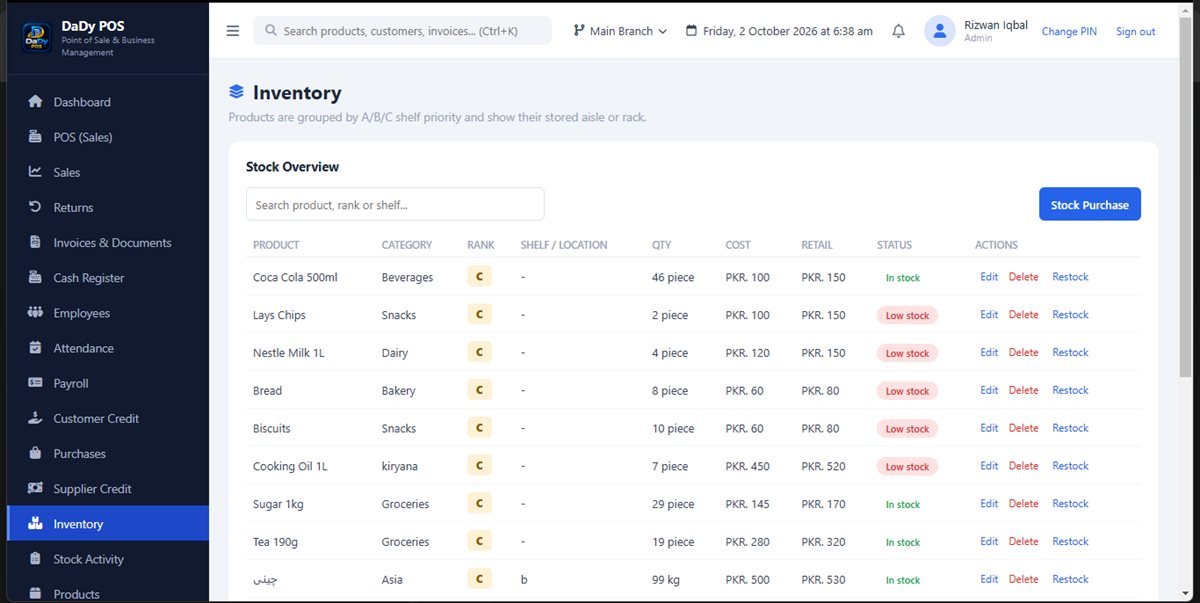
Know what an inventory screen can tell you
The inventory screen gives a shop owner a place to review product stock information in DaDy POS. Its value depends on what has been entered and how consistently the shop records stock-moving events. The number on a screen is not a physical count; it is a record that should be compared with the shelf when you need confidence about availability. Start by looking for products that matter to daily trading or appear low, then choose a manageable check rather than attempting to recount every item during the busiest part of the day. Good inventory management for small shops starts with comparing recorded stock against a consistent physical count.
Count with a consistent method
A useful stock count starts with a clear boundary: which shelf, product group, or set of items is being counted, and when. Choose a quieter moment if possible, count one area at a time, and record the date and person doing the check. Avoid counting the same items while another employee is moving goods without agreeing how those movements will be handled. These modest habits make it easier to compare a count with the system and to repeat the process later.
Investigate a difference before correcting it
When physical stock and the displayed figure disagree, first repeat the count and confirm that you selected the right product record. Look at recent purchases, sales, returns, and stock activity for the relevant period. Ask staff whether goods were moved, damaged, used internally, or left aside for a customer. A discrepancy may have a simple explanation, but a rushed adjustment can hide the reason and make the next count harder to interpret.
Link replenishment to supplier purchases
Inventory helps identify items that may need reordering, but it does not choose a supplier or determine how much a shop should buy. Before placing an order, consider actual shelf demand, space, expiry or condition where relevant, delivery timing, and the cash available to the business. Review recent purchase history if it helps explain how much the shop has received before. A visible low-stock status can bring an item to your attention; the owner still makes the purchasing decision.
Do not overlook returns and damaged goods
Customer returns can affect the stock picture, but a returned item may not be ready to go back onto the shelf. Check its condition and your shop’s return policy before treating it as available stock. The sales-return workflow should describe the customer event; stock availability is a further operational question. Likewise, goods returned to a supplier should be handled through purchase-return records rather than hidden as a normal adjustment. Keeping these events separate preserves a clearer history.
Pick a counting rhythm your shop can maintain
A small retailer can begin with a simple cycle: inspect fast-moving or frequently unavailable goods more often, review a chosen category on a quieter day, and schedule broader counts at a time the shop can manage. The exact rhythm depends on your range and staffing; there is no universal schedule that makes every shop accurate. Consistency is more valuable than planning a grand stocktake that never happens. If you cannot finish a count, mark what remains so nobody mistakes a partial check for a complete one.
Ask for a real shop demonstration
DaDy POS is an offline shop-management system. Before buying, ask the provider to demonstrate an item from initial product setup through purchase entry, a sale, and a physical count correction. Seeing that sequence helps you understand how the screens relate without assuming that a screenshot tells the whole story. Confirm how your shop’s product units and categories will be handled, and ask what the recurring price includes.
Separate counting from ordering decisions
A count tells you what appears to be on hand; it does not decide what to buy. Before placing an order, think about shelf space, expected local demand, how quickly a supplier can deliver, and whether the shop can afford the stock. A fast-selling item may justify a different review rhythm from a slow-moving one, but the owner should make that choice using experience and actual records rather than a single status colour.
Count at a time when stock can be checked properly
Try to avoid counting during a rush when products are continuously moving between shelves and customers. If a count must happen while the shop remains open, agree how sales or deliveries during that period will be noted. Mark the shelf or group already checked so another person does not include it twice. These practical boundaries make a comparison fairer and help the next count follow the same method.
Use supplier paperwork as a clue, not a stock count
A purchase bill can explain why inventory should have changed, but it cannot prove every billed unit reached the shelf. Compare paperwork with the receiving check and the purchase entry. If the figures differ, inspect both records and ask the person who received the delivery. This prevents a missing carton from being mistaken for a later sales or counting problem.
Record the boundary of a stock check
A count note is more useful when it says what was included. If a shop has a front shelf, back room, and goods held aside for inspection, make clear which locations were counted and which were not. Otherwise two careful people may arrive at different totals simply because they counted different places. Tell the next person whether the count is complete or a spot check, and avoid presenting a partial review as a whole-store figure. After entry, verify the matching product record and keep a note of any unresolved movement. Such context lets the owner compare checks over time without mistaking different methods for a sudden stock change.