
Keep the return connected to the original delivery
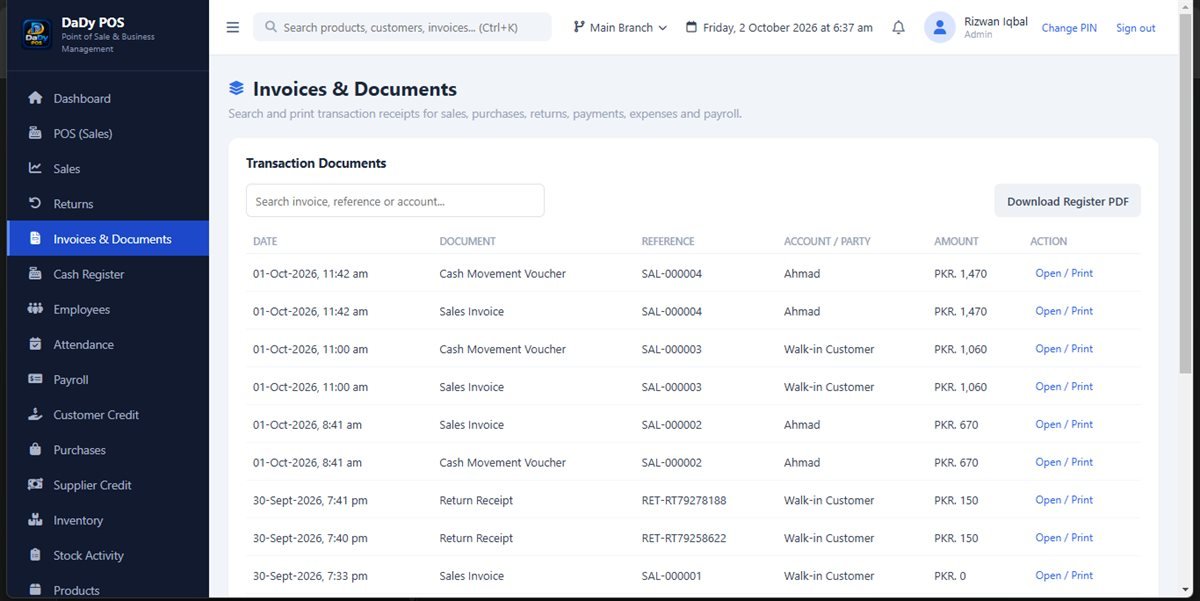
A purchase return is a supplier follow-up to goods the shop previously received. It should remain distinguishable from the original purchase, so a later review can see both what came in and what went back out. DaDy POS provides a purchase-return screen. Ask for a demonstration that shows how the return is associated with the original purchase or supplier record in the version you will use; do not assume the relationship from a screenshot alone. Accurate supplier purchase return records help explain what left the shop and why a supplier balance changed.
Check the supplier’s response before recording a settlement
A supplier may agree to replace goods, issue a credit, or handle a return another way. Those arrangements can differ, so record what actually happened rather than assuming one standard outcome. Ask how the purchase-return screen represents the physical goods and how the supplier-credit screen reflects any amount still owed or credited. A screen cannot establish what a supplier agreed unless the shop records the arrangement accurately and retains its supporting communication.
Separate physical stock handling from paperwork
Put goods intended for return somewhere staff will not accidentally sell them again. Label the area in a way your team understands and note the product identity and reason for holding it. When the supplier collects the goods or the shop delivers them, check the quantity leaving against the return record. The purchase-return entry is not proof that the physical item actually left the premises; staff still need to complete the real-world handoff.
Use evidence to explain the reason
A return reason should be factual and concise: wrong goods delivered, damaged packaging, or another observed issue, for instance. Include only details that help the owner follow the case. If a product must be inspected first, say so rather than recording a final conclusion. Keep photos or supplier correspondence using the shop’s existing safe process if that is useful, but do not assume the POS stores attachments unless the provider confirms it.
Coordinate a return across shifts
Supplier returns can remain unresolved for days, especially when collection is delayed or a replacement is promised. Leave a brief handover with the supplier, goods being held, last contact, and next action. Keep it accessible to authorized staff but do not leave sensitive account or contact details exposed unnecessarily. Tell the next shift what must not be sold, and update them when the supplier confirms a resolution.
Learn from repeated delivery issues
Repeated returns from one delivery route or recurring confusion about a product may signal that the shop should improve its incoming-goods check. Review the record and discuss the pattern with the people who receive stock. The goal is not to assume fault but to make the next delivery easier to verify. A clearer product list, written order notes, or a count before shelving may address the real cause.
Make the workflow part of your purchase routine
The easiest time to prepare for a return is when receiving the original goods. Check packaging and quantities, note exceptions promptly, and keep purchase documents where the owner can find them. If something later needs to go back, the shop can refer to a reliable record rather than reconstructing the delivery from memory. Ask the provider to demonstrate a full example from purchase receipt to supplier return and final balance review.
Plan how returned stock leaves the shop
Assign a place for goods that are waiting to go back to a supplier and keep that area separate from sellable stock. When a collection or delivery is arranged, count the goods at handoff and retain any acknowledgement. The return entry records a business event; the physical handoff still needs a person to check the items and quantity.
Keep a supplier follow-up date
When a supplier agrees to inspect goods, issue a credit, or send replacements, note who will follow up and when. Do not let a verbal promise disappear between shifts. A reminder should identify the relevant invoice or return without exposing unrelated supplier account details. Once the supplier responds, compare the outcome with what the shop recorded and update the appropriate workflow.
Ask before accepting a substitute resolution
A replacement or account credit may be useful, but it is not automatically the same as a refund or completed return. The owner should confirm the arrangement with the supplier and decide how it should be represented in the shop's records. Do not close the issue until the goods, replacement, or agreed balance outcome has actually been checked.
Make the final outcome visible to the receiving team
A supplier may collect goods, send a replacement, or resolve a claim through a later adjustment. Tell the staff who receive the next delivery what outcome is expected and how to recognize the relevant products. This helps them avoid shelving a replacement as an unrelated item or assuming a supplier credit has already been settled. Once the case closes, compare the purchase, return, and supplier balance records and keep the supplier's acknowledgement accessible. If the resolution is still pending, leave it marked as an open question in the shop's handover rather than presenting it as complete. A clear finish helps protect stock and makes supplier conversations easier.