
Separate the goods received from the amount outstanding
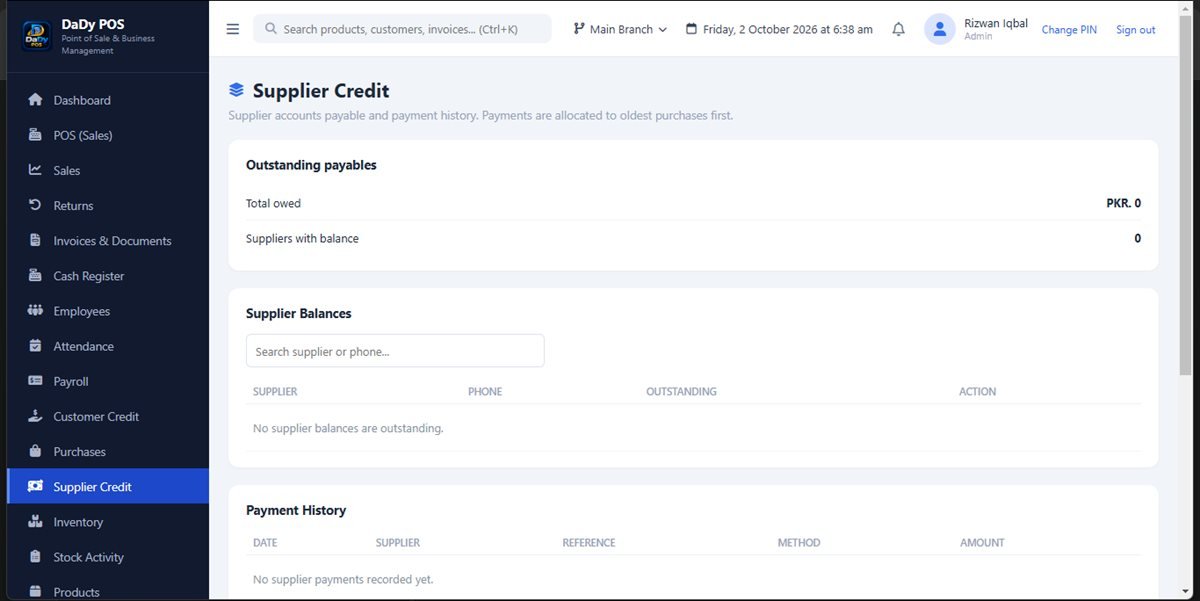
A supplier-credit record relates to the financial side of a buying relationship; a purchase entry describes goods received. They are connected but answer different questions. The supplier-credit screen in DaDy POS can help an owner review supplier account activity, while purchase screens record incoming stock. Ask the provider to show how those areas relate in your actual setup before entering a live supplier balance. Reliable supplier credit tracking for shops makes outstanding balances and later payments easier to review.
Agree on consistent supplier identification
Use one clear supplier record for each real supplier where practical, and search before creating another entry. Trading names, owners’ names, and branch names may vary across paperwork. Agree which name the shop will use and keep enough context to distinguish businesses with similar titles. A duplicate supplier record can divide purchase and payment activity, making both credit review and communication harder.
Record payments as they happen
A supplier payment should be recorded according to what was actually paid and when. If a payment is partial, leave the remaining amount visible and understandable. Retain the receipt, transfer reference, or other acknowledgement in the shop’s normal records. Ask how the software connects a payment to an existing supplier entry, and avoid marking a bill settled because a payment is planned or verbally promised.
Handle purchase returns without losing the balance story
Goods returned to a supplier may result in a replacement, credit, or another arrangement. Keep the purchase-return event distinct from the original delivery and ask how it changes the supplier-credit record in your installation. Do not assume every return immediately cancels an amount owed. Wait for the supplier’s confirmed resolution and record it through the appropriate process.
Review balances before placing more orders
Before ordering on credit, consider existing obligations and the shop’s ability to pay them. The owner should review outstanding supplier amounts alongside available cash, customer balances, and upcoming restocking needs. DaDy POS can organize records but cannot judge the business’s capacity or negotiate terms. Do not use a summary figure as the only basis for a commitment.
Make the workflow resilient across staff shifts
One employee may receive goods while another later pays the supplier. Use a handover process that says what was received, what remains unpaid, and whether a return or shortage is unresolved. Staff should know who can approve a credit purchase or payment and who can change the supplier record. This reduces accidental duplicate entries and inconsistent promises.
Keep reports in their proper role
Reports can make it easier to review supplier-related activity, but an aggregate does not replace invoices or payment evidence. Use the report to identify an entry that needs attention, then inspect the original purchase, return, and settlement. Check the period and supplier selection before comparing totals. A different date range can produce a different view without proving that any record is wrong.
Confirm the details with the provider
Ask for a demonstration covering a purchase on credit, a partial payment, a supplier return, and a balance review. Confirm what is linked automatically, what staff must record, and what source paperwork should be retained. The stated price is Rs 12,500 plus Rs 1,000 monthly. Contact WhatsApp +92 331 5184831 or juttrizaa@gmail.com to discuss the setup.
Bring documents to a balance conversation
Before discussing a disputed amount, gather the invoice, purchase entry, payment evidence, and any return correspondence that relates to it. Compare dates and references so both the owner and supplier can focus on the same event. A verbal recollection may help locate the issue, but documents make it easier to resolve fairly.
Plan payment commitments realistically
Before promising a payment date, the owner should consider expected cash needs and outstanding customer balances. Do not let an employee commit the business to a schedule they are not authorized to approve. If a supplier offers new terms, confirm them clearly and keep a record of what was agreed.
Close out a resolved supplier issue
When a return, credit, or payment has been agreed and completed, check that the related records and source documents tell the same story. Mark the follow-up as complete in the shop's chosen process, and communicate the outcome to staff who need it. This avoids an old reminder resurfacing as if it were still open.
Avoid settling an account from memory
A supplier visit may involve a cash payment, goods exchanged, or an informal discussion about an earlier bill. Before marking anything settled, identify the exact invoice or amount and keep the supplier's acknowledgement. If a payment covered several purchases, ask how to allocate it rather than applying it to whichever entry appears first. A consistent reference helps the owner compare the POS record with the supplier's own paperwork later. If there is no receipt, follow a deliberate shop process for documenting what is known, who made the payment, and what confirmation is still needed. A rushed balance change can create another disagreement instead of resolving the first one.