
Agree on the shop’s credit practice first
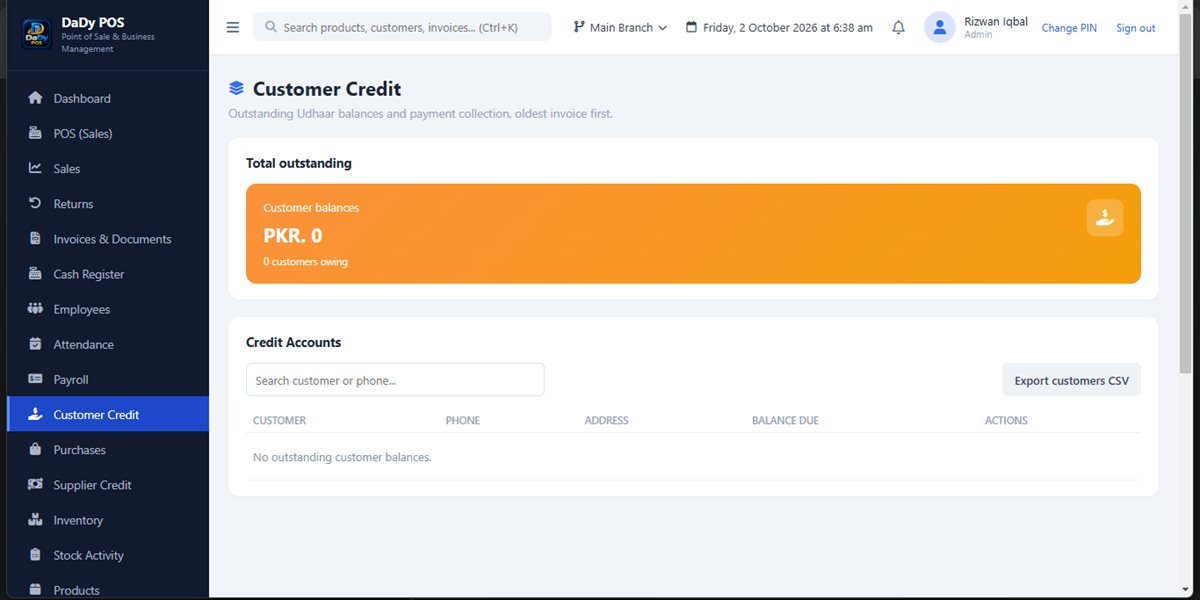
Customer credit is a business arrangement between a shop and a customer, not just a button on a screen. Decide who may approve credit, what information the shop needs, and how balances will be reviewed. A consistent rule protects both the relationship and the accuracy of the record. DaDy POS includes a customer-credit screen, but a screenshot cannot determine who your shop should extend credit to or what terms are suitable for your business. Useful customer credit records for shops show the agreed balance and the activity that changed it.
Identify the correct customer record
Before attaching a balance to an account, confirm that the customer record is the right one. Similar names, family members, and customers who share a phone can create confusion. Ask only for details the shop genuinely needs, and keep them private. Do not place one customer’s purchase under a relative’s account simply because that record is easier to find. A correct association makes follow-up less awkward and prevents unrelated transactions from being combined.
Record the purchase and payment as different events
A credit sale means that goods were provided while some payment remains outstanding under the shop’s arrangement. Later payment is another event. Ask the provider to demonstrate how the sales screen and customer-credit area connect, including a partial payment, before using the workflow. Do not mark an amount as paid because the customer promised to return tomorrow. The entry should reflect what the shop received, not what it hopes to receive.
Follow up like a person, not an automated demand
A credit reminder can be a sensitive conversation, particularly in a close community. Choose a private, respectful way to discuss an outstanding amount and refer to the recorded transaction calmly. Give the customer an opportunity to explain if their understanding differs. A balance screen helps the shop locate a record; it does not determine what tone or timing is appropriate. Avoid sharing someone’s account details with other customers or staff who do not need them.
Reconcile before changing an account
If a customer says the balance is wrong, open the related sales and transaction history and compare each entry with receipts, payment notes, or other reliable records. Check returns, partial settlements, and customer identity. Do not simply erase a disputed amount or add a payment to close the conversation. Record corrections through the approved workflow, and leave an understandable explanation according to the shop’s process.
Set a sensible boundary on outstanding credit
A shop should decide how much credit it can carry without endangering its ability to pay suppliers or restock. Review balances alongside cash needs and supplier obligations, rather than treating a high sales total as available money. DaDy POS provides a way to review customer-credit records, but it does not decide a safe lending limit. The business owner must make that judgment with a full understanding of local circumstances and risk.
Protect private information and train staff
Customer credit records may expose purchasing habits or personal details. Limit access to staff who need it and ask the provider what user controls are available in your installation. Do not display a customer’s outstanding balance where others can read it, and do not use a shared account casually. Explain which employee may create an account, approve credit, accept payments, and adjust a record.
Check the workflow and price before purchase
DaDy POS includes customer records, customer credit, sales, returns, transactions, and reports. Ask for a demonstration from a credit sale through a later payment and account review. Verify precisely what the screen records and what the shop must manage separately. The stated price is Rs 12,500 plus Rs 1,000 monthly; ask what that recurring amount covers.
Keep an agreement understandable to both sides
When the shop agrees to let a customer pay later, state the amount and what it relates to in everyday language. Confirm that the customer understands the arrangement and that staff know who approved it. Avoid vague promises such as 'settle it sometime' when a more specific expectation has been agreed. The software can retain a record but cannot replace an honest conversation.
Set a respectful follow-up rhythm
A regular review helps the owner notice balances that need a conversation without surprising customers at the counter. Choose a time and a private way to follow up. Keep reminders polite and factual, and allow time to check the record if the customer recalls a different amount. Do not discuss one person's credit with neighbors or other shoppers.
Know when to pause new credit
If an account is disputed or old payments have not been matched, the owner may choose to pause further credit until the facts are clear. Tell staff what to do when a customer requests another purchase and the balance is uncertain. They should not make a private promise or turn away a valued customer without following the owner's policy.
Agree how family purchases are handled
In neighborhood shops, one family member may collect goods while another person is known as the account holder. Decide in advance whether the shop allows that arrangement and how the customer should confirm it. Do not assume a shared surname or phone number means two people may use the same credit account. The owner should set the policy and make sure staff follow it consistently, including when a familiar customer is waiting. If an account is shared by agreement, record only the details the shop needs and explain the arrangement to everyone involved. When identity or consent is unclear, pause and ask the owner rather than attaching the sale to a convenient record.