Flock Camera Systems May Face a Constitutional Reckoning | American Enterprise Institute
My media feeds always feature privacy threats. But one that seems salient to a broad audience today is the Flock automated license plate reader (ALPR) network. In Kansas, an important response to Flock cameras is taking shape. The Kansas Justice Institute has filed a lawsuit against the city of Wichita, arguing that the use of ALPR systems violates the Kansas Constitution. It’s an opportunity to explore how changes wrought by technology can be reconciled with basic concepts and first principles.
There are mass public surveillance systems beyond Flock, but none has a name suggesting we’re sheep. So the debate features Flock.
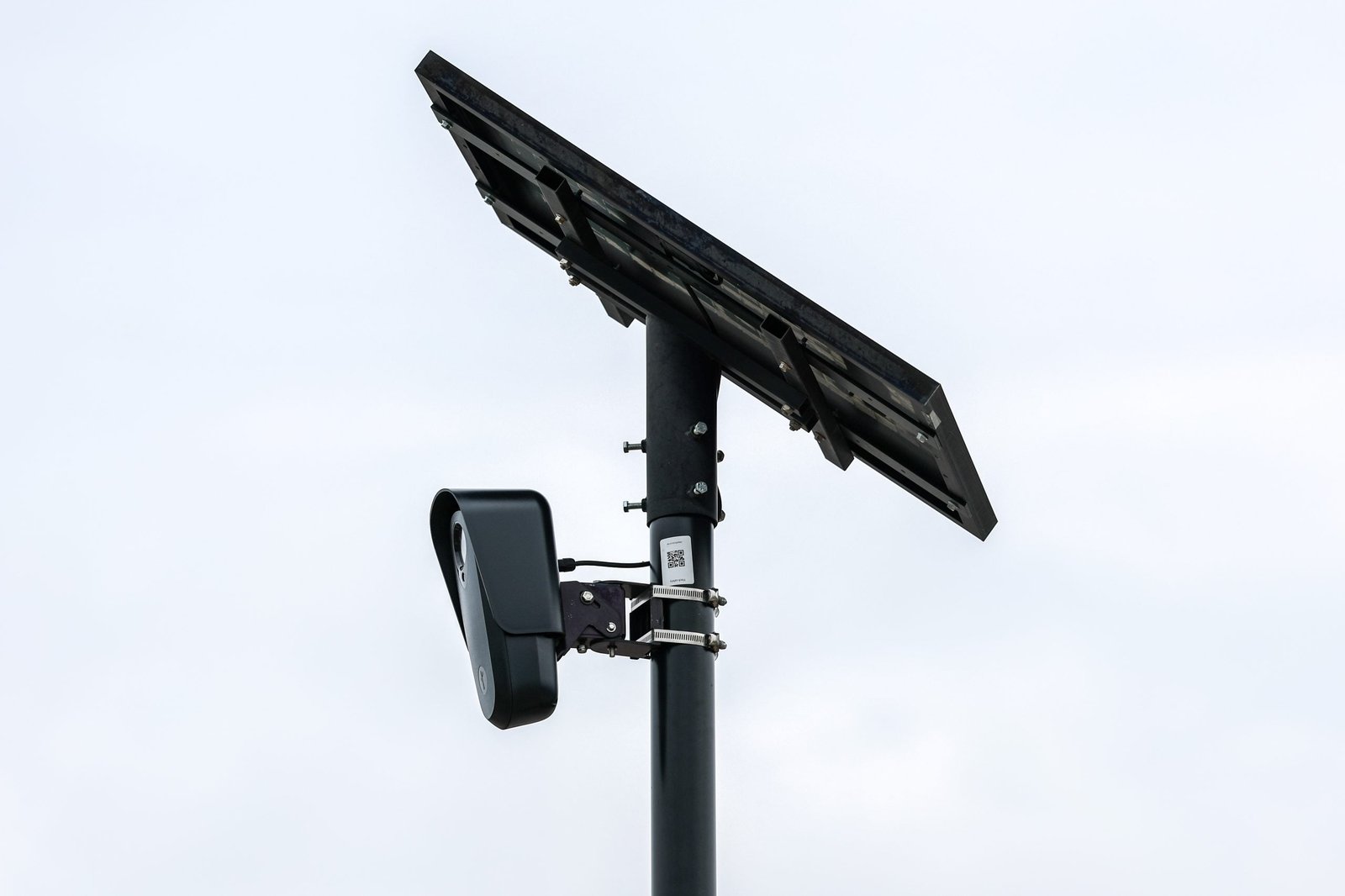
Generically, Flock uses fixed and mobile cameras to capture imagery of as many automobile license plates as possible, appending location and time data, then storing this data for a variety of later uses as well as wide sharing. These systems will continue to be debated as license plate readers, but some capture unique characteristics of cars, such as bumper stickers, racks, and custom wheels, creating identifying car signatures beyond license plate numbers.
Scientia potentia est: Knowledge is power. These systems amass power for their users. The powers range from locating stolen cars and catching absconding kidnappers to stalking people and arresting critics of the state.
Of the latter, maleficent powers, the first has already been used; the second has not—not in the United States, at least. Maybe it has been in China. “It’s bad civic hygiene to build technologies that could someday be used to facilitate a police state.”
So the Kansas Justice Institute has sued Wichita. The case is nicely written up here. It asserts that these systems violate Section 15 of the Kansas Constitution’s Bill of Rights, which states, similarly to the federal Constitution’s Fourth Amendment, “The right of the people to be secure in their persons and property against unreasonable searches and seizures, shall be inviolate.”
I read the filing, saying to myself, “mention the license plate requirement . . . mention the license plate requirement. . . .” And there it is! On page 32.
Kansas law conditions driving a car on displaying an identifying plate. Kansans will literally be pulled over, arrested, and ultimately jailed if they drive their cars without displaying an identifier that, today, is readily tied to the individual driving it.
As it goes forward, the case should examine the technical processing of information gathered by Flock cameras. In some form or fashion, they closely analyze the publicly available appearance of the car, producing a signature or signatures, unique identifying data about the car that has no purpose other than to tie each sighting of a given car to each later sighting. I said “closely analyze” to be coy. I think that analysis is in natural language a “search.”
You might think that there is a wrinkle in the case because it is Flock doing this stuff, not the city of Wichita. But Flock is a state actor for these purposes. It is working under contract to the Wichita government. It probably earns the majority—or vast majority—of its income from government contracts. It uses privileged access to public property to place its cameras. It even has its cameras on police and other government cars. There is a good Tenth Circuit decision (the Tenth includes Kansas) called Ackerman that goes into what makes a nominal private actor into a functional state actor.
Because of the lack of physicality to the intrusion, the use of Flock camera systems may seem like nothing is happening at all. Technology has a way of remixing things. There would be a clear seizure and search if Kansas police officers pulled over Kansans (the seizure) demanding them to identify themselves by showing their driver’s licenses (the search) in order to collect and warehouse their driver’s license numbers, correlated to time and location. Kansas law constructively seizes everyone who doesn’t display a license plate, then searches by taking the publicly available appearance of the license plate and analyzing it to render it as a unique identifier or signature.
We have long conceived of searches and seizures as discrete events aimed at suspects of crime. Technology has a way of remixing things. Through Flock, Kansas maintains an ongoing search for the location of everyone all the time.
The Kansas Constitution, like the Fourth Amendment, is not limited to episodic searches. The operative language in these texts doesn’t distinguish between searches of people and searches for people and their property. These constitutional limits cover searches—all of ‘em—including Flock searches of every car, to maintain data on the whereabouts of every driver all the time.
In Kansas, this is making some of the sheep a little wolfish.