

In March 2026, the global refugee crisis has reached a historic peak, with over 120 million people forcibly displaced. For the nearly 40% who are children, education is not just a peripheral service—it is a critical tool for protection, mental health recovery, and long-term economic integration.
However, providing education in displacement settings remains one of the most complex logistical and geopolitical challenges of the decade.
🚧 1. The “Double Crisis” of Access
Refugee children face a unique set of barriers that distinguish them from other marginalized groups:
- The Enrollment Gap: While global primary enrollment for refugees has reached roughly 68%, it plummets to 37% for secondary school and a mere 7% for higher education.
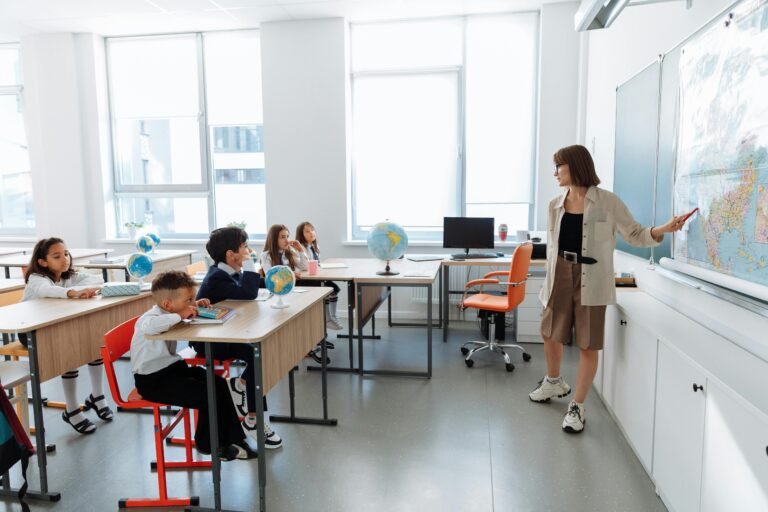
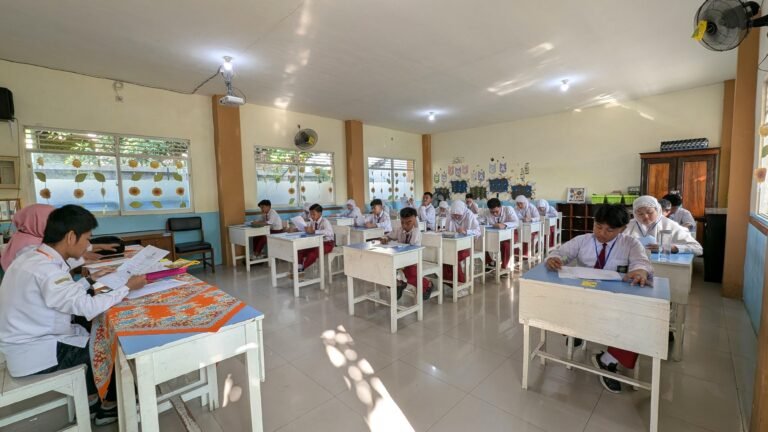
- National Integration vs. Parallel Systems: In 2026, the global consensus has shifted toward integrating refugees into national education systems rather than creating separate “refugee schools.” However, host countries (often low-income nations themselves) frequently lack the physical capacity and teacher headcount to absorb thousands of new students.
- Language and Curriculum Barriers: A child fleeing Ukraine to Poland or South Sudan to Uganda often faces a complete change in language of instruction and curriculum, leading to significant “learning loss” during the transition.
🧪 2. 2026 Digital Solutions: The “Portable Classroom”
Technology is being leveraged to bypass physical and bureaucratic hurdles:
- Digital Identity and Records: One of the greatest barriers to higher education is the loss of physical diplomas. In 2026, blockchain-based academic passports allow refugees to carry verifiable digital versions of their credentials across borders.
- AI-Powered Language Bridges: New “Live-Translate” educational platforms allow teachers to speak in the host language while refugee students receive real-time audio or text translations on tablets, preventing them from falling behind while they learn the local tongue.
- Offline Ed-Tech: In “off-grid” camps, solar-powered “Education-in-a-Box” kits provide local Wi-Fi hotspots pre-loaded with thousands of hours of curriculum-aligned content that requires no external internet.
📊 Barriers vs. 2026 Humanitarian Solutions
| Challenge | Impact | 2026 Solution |
| Legal Status | Lack of “Right to Education” docs. | Policy Reform: Decoupling residency from school enrollment. |
| Trauma | High anxiety/PTSD affecting focus. | SEL Integration: Social-Emotional Learning in every lesson. |
| Poverty | Children forced into labor. | Cash-for-Education: Stipends for families to keep kids in school. |
| Certification | Degrees not recognized in host country. | RPL: Recognition of Prior Learning frameworks. |
🏛️ 3. Policy Shifting: From “Temporary” to “Protracted”
In the past, refugee education was treated as a temporary “emergency” measure. By 2026, the international community has recognized that the average length of displacement is now over 20 years.
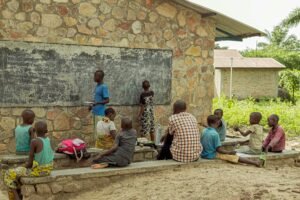
- Multi-Year Funding: The “Education Cannot Wait” (ECW) fund has moved toward predictable, multi-year funding cycles, allowing host countries to build permanent wings on schools rather than relying on temporary tents.
- Teacher Support: 2026 initiatives focus heavily on “Refugee Teachers”—qualified educators who are refugees themselves—by providing them with work permits and fast-track certification to teach in their new communities.
💡 4. The Role of Higher Education
The “15by30” Goal (aiming for 15% refugee enrollment in higher education by 2030) is the current North Star.
- Connected Learning: Universities are increasingly offering “Small Private Online Courses” (SPOCs) specifically for refugees, providing a pathway to internationally recognized degrees without the need for expensive travel or high tuition fees.
- List top 10 NGOs focused on refugee education
- Summarize the 2026 UNHCR Education Report
- Draft a policy brief for integrating refugees into schools