Why Your Tap Water May Suddenly Taste Moldy In The Summer
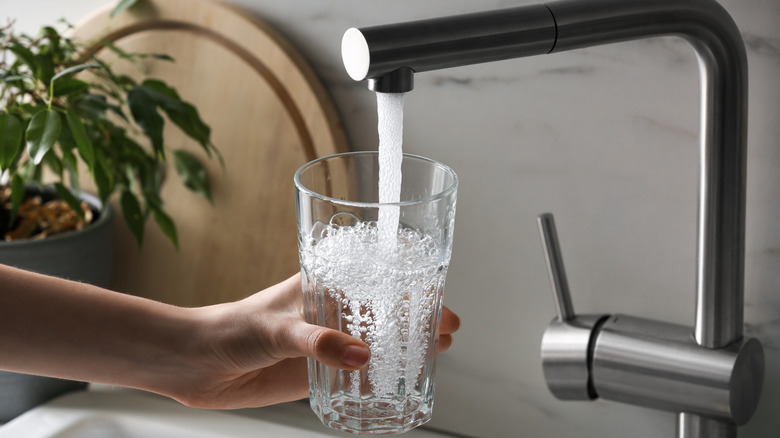
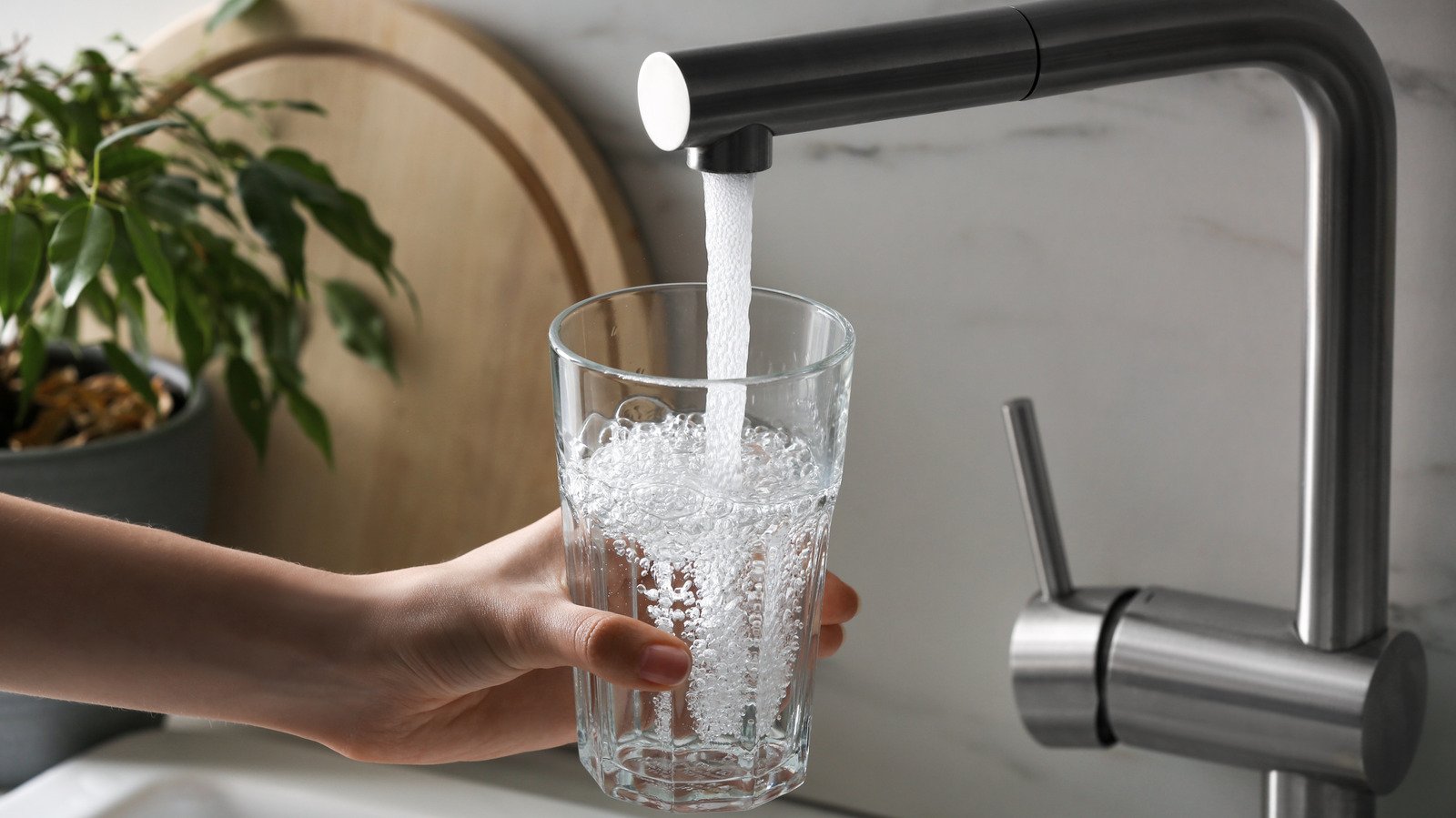
It’s the middle of summer, you take a sip from a glass of tap water from your kitchen sink, and suddenly realize something doesn’t taste right: Your water has developed a moldy, mildewy, musty, or unclean taste, with a scent maybe reminiscent of wet dog. It might even linger on your tongue after you drink causing you to wonder, Is something wrong with my sink?
The good news is that this is a common summer phenomenon, and it has nothing to do with your faucet or even the safety of your area’s water system. Your tap water first starts out in a reservoir, lake, or river, before being collected and sent to a treatment plant, making sure it’s safe to use and drink. During the summer, these reservoirs, lakes, and rivers are more likely to grow algae and bacteria, due to hotter temperatures, more sunlight, and lower water levels. Treatment plants will increase the amount of chlorine they use to treat your tap water, but some harmless leftover byproducts of algae can still remain. This is what can impart a moldy or musty aftertaste into your water.
Not everyone is sensitive to the musty taste of algae byproducts (it’s likely genetic), so you may or may not notice it. Fortunately, despite the taste, your water is still completely safe to drink. The issue will likely go away on its own as soon as the weather cools.
What to do about the weird taste in your tap water

While you can still safely drink tap water during the summer, you might not want to be sipping on something that reminds you of wet dog or moldy bread. Fortunately, addressing the issue is fairly easy. Most water filters — such as filtered water pitchers, fridge filters, and faucet filters — use an activated carbon filter to get rid of the harmless algae byproducts that cause your water to taste musty. Running your tap water through one of these filters should solve the taste (though if you happen to be extra sensitive, you may still detect a whiff). Alternatively, you can install a whole-home filter, here are the home water filter types to know about and the contaminants they can remove.
During the summer, it’s also a good idea to keep an eye out for tap water safety alerts in your area. Occasionally, algal blooms can grow to a point where tap water is no longer safe to consume. It’s always a good idea to have a small supply of bottled drinking water on hand if you’re in an area where this occurs regularly, as regular household filters can’t get rid of potential biological toxins, and they could make you sick. As long as there isn’t a local alert for algae overgrowth, feel free to keep using and drinking your tap water — even if it tastes a little mildewy. If you’re still concerned, you can always reach out to your local health department for more information.