What to Plant in August for an Abundant Fall Garden
August is an excellent month to plant heat-tolerant perennials, ornamental grasses, and late-blooming flowers, provided you water them deeply while they establish. Choose plants with immediate presence such as coneflower, black-eyed Susan, sedum, and salvia, and your backyard can look more abundant now while gaining structure and color for fall.
The trick is to plant early in the day, prepare generous planting holes, and keep the root balls reliably moist for their first few weeks. August gardening is less a sprint than a campaign conducted with a hose.
A few strategic additions can transform the whole scene, particularly when considered alongside these backyard ideas for creating an outdoor space that looks considered rather than merely busy.
Latest Videos FromHomes and Gardens
1. Coneflower (Echinacea purpurea)

(Image credit: Steve Taylor ARPS/Alamy Stock Photo)
Coneflower is the superhero of the late summer garden. It is one of the best things to plant in August in USDA Zones 3–9, offering cheerful daisy flowers in purple, pink, coral, orange, yellow, and white, just when some borders have begun to look a little emotionally exhausted.
Choose nursery-grown plants rather than seed at this point in the season. A clump of ‘Magnus’ or ‘White Swan’ coneflowers will make an immediate difference, then settle in to become more generous each year. Their raised central cones also age beautifully, becoming sculptural seedheads for birds if you can resist tidying everything away.
Plant in full sun and free-draining soil, water deeply every few days in dry weather, and mulch around, not against, the crowns. I have learned, mainly by watching young plants collapse in a hot spell, that regular soaking is far better than a daily sprinkle.
For a long season of flowers, combine coneflowers with the plants that thrive on neglect in a heatwave. You can find healthy ‘Magnus Purple’ coneflower plants at Nature Hills.
2. Sedum (Hylotelephium spectabile)

(Image credit: Future)
If your garden has a sunny spot where the soil is poor or dry, plant upright sedum (Hylotelephium spectabile). Often still sold as Sedum spectabile, it is one of those pleasingly unfussy perennials that looks good from late summer into winter.
Varieties such as ‘Autumn Joy’ begin with greenish flower buds, turn pink, then deepen to rusty red as fall approaches. The flowers hold their heads high above sturdy, succulent foliage and are magnets for late-flying pollinators. In Zones 3–9, this is a plant that earns its keep without requiring a supervisory committee.
You can get an Autumn Joy Sedum at Nature Hills
August is a fine time to introduce container-grown sedum, although plants will establish best if you can give them a thorough drink at planting and again whenever the top few inches of soil dry out. Avoid rich, damp ground.
3. Black-Eyed Susan (Rudbeckia fulgida)

(Image credit: SondraP / iStock / Getty Images Plus / Getty Images)
There are moments when subtlety is overrated, and black-eyed Susan (Rudbeckia fulgida) is one of them. Its golden petals and dark central cone bring exactly the kind of sunny confidence that a border needs in August, particularly after a punishing run of hot weather.
‘Goldsturm’ is the classic choice: dependable, long-flowering, and generally hardy in Zones 3–9. You can get a Goldsturm Black-Eyed Susan at Nature Hills.
Plant it in full sun, allowing enough room for eventual spread, and pair it with blue or purple companions such as Russian sage (Salvia yangii) or catmint (Nepeta). The combination has all the charm of a late-summer meadow, without requiring one to own a scythe or a shepherd’s crook.
I particularly like placing black-eyed Susans behind lower mounds of foliage, where their flowers can bob above the planting rather than line up like soldiers on parade. Keep them watered while newly planted, then deadhead regularly if you want to prolong the performance.
A sharp pair of Okatsune secateurs from Amazon makes light work of spent stems; this guide on deadheading flowers will help you make the right cuts.
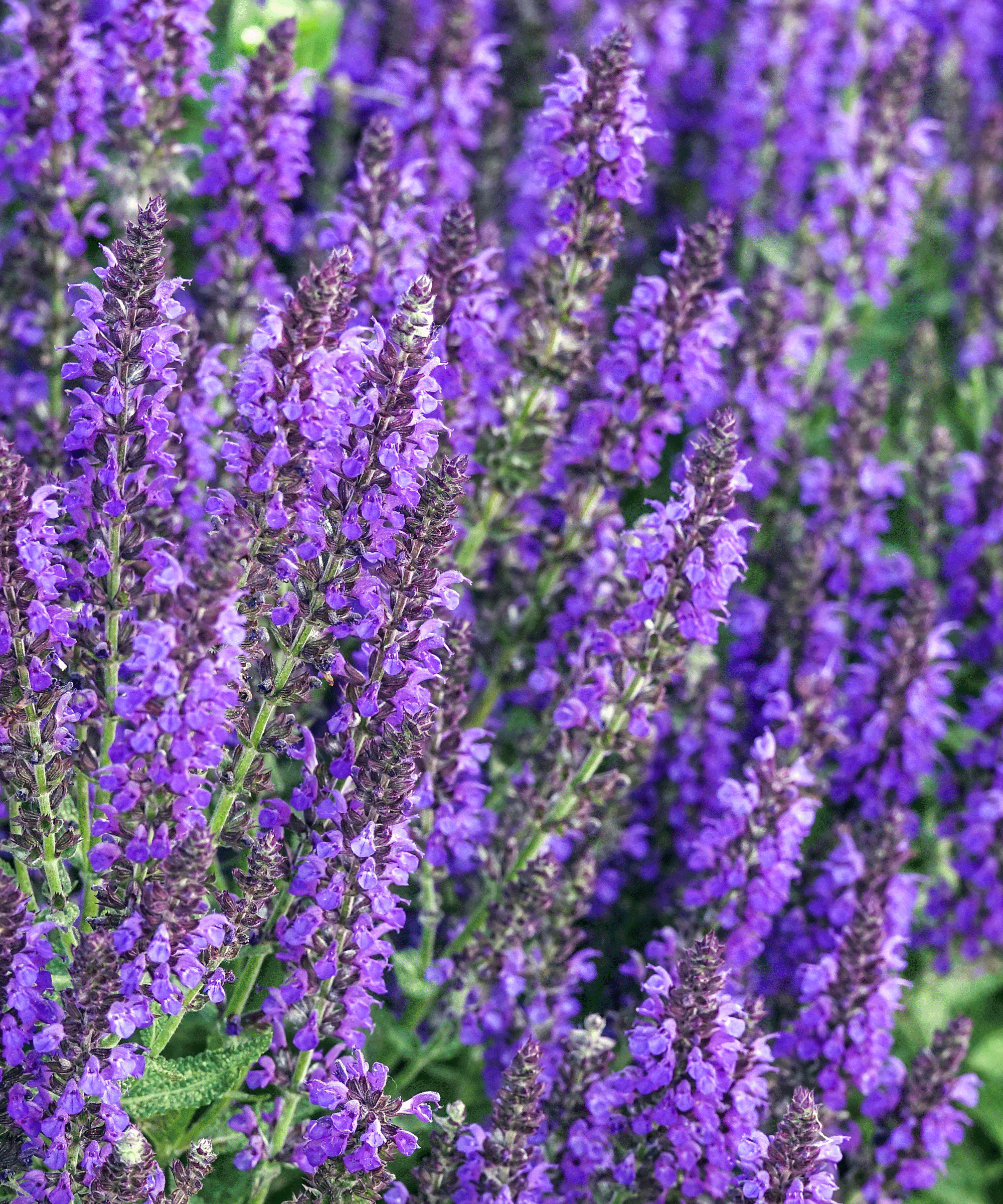
4. Salvia (Salvia nemorosa)
(Image credit: Botany Vision/Alamy Stock Photo)
Perennial salvia (Salvia nemorosa) is one of the great bargains of the flower border: elegant spires, aromatic leaves, and a willingness to bloom again after a trim. It is a particularly good answer to what to plant in August for gardeners in Zones 4–9, where cooler nights may be on the horizon but summer has not quite packed its bags.
Look for compact varieties such as ‘Caradonna’ or ‘May Night’, or try blue sage (Salvia farinacea) in warmer areas. Their violet-blue flowers make a handsome counterpoint to yellows and oranges, and bees regard them as something between an all-inclusive resort and a pilgrimage site.
Plant salvia in sunny, well-drained soil, and water it carefully until fresh growth appears. Once its first flush of flowers has faded, cut the spent stems back to a set of leaves, and it may produce another round before frost.
There is something deeply satisfying about persuading a plant to make a second effort. For more detail on repeat flowering, learn whether you should deadhead salvia.
‘White Profusion’ Salvia available at Plant Addicts adds a splash of calm to any border.
5. Ornamental Grasses

(Image credit: Penpak Ngamsathain / Moment / Getty Images)
Flowers may get the applause, but ornamental grasses hold the whole production together. August is ideal for planting well-grown grasses in the temperate zones, especially where you want immediate height, texture, and some elegant movement in a breeze.
Feather reed grass (Calamagrostis × acutiflora ‘Karl Foerster’), available from Plant Addicts, is a reliable vertical accent in Zones 4–9. Switchgrass (Panicum virgatum) brings softer, airy plumes and handsome fall color in Zones 4–9, while muhly grass (Muhlenbergia capillaris) produces its famous pink haze in warmer Zones 6–10.
Plant grasses where low evening light can pass through them. They will turn a perfectly ordinary Tuesday in September into something almost cinematic. Water consistently for the first month, especially if temperatures remain high, then leave the dry seedheads standing through winter for structure and wildlife.
6. Lantana (Lantana camara)

(Image credit: Getty/barbaraaaa)
Lantana (Lantana camara) is for gardeners whose pots have become a little weary by August, which is to say, almost all of us. Its clustered flowers arrive in sherbet shades of yellow, orange, pink, red, and purple, and it tolerates summer heat with an almost suspicious degree of good humor.
In Zones 9–11, lantana can be a perennial shrub. Elsewhere, treat it as a brilliant annual for containers and sunny borders. It thrives in heat, needs excellent drainage, and attracts butterflies in abundance. Choose a compact cultivar for pots, and use a container with generous drainage holes.
Refresh tired potting soil with compost, plant at the same depth as the nursery pot, and water in well. I would not overfeed lantana: too much fertilizer can result in a great deal of leaf and rather less floral theatrics.
For containers that remain attractive through fall, pair lantana with trailing sweet potato vine (Ipomoea batatas) and heed this advice on how to water container plants correctly.
Browse colorful container-ready lantana plants at Amazon.
7. Japanese anemone (Anemone hupehensis)

(Image credit: Getty Images/Ian Redding)
For a quieter, more poetic August planting, Japanese anemone (Anemone hupehensis) is hard to beat. Its pink or white flowers hover on wiry stems above handsome foliage, bringing grace to a partly shaded bed just as summer begins to loosen its grip.
Hardy in Zones 4–8, Japanese anemones prefer moist but well-drained soil and are best suited to a sheltered position out of blasting afternoon sun. They may take a season to settle, but their late-summer and early-fall flowering is worth the wait.
You can get a September Charm Japanese Anemone at Nature Hills for silvery-pink blooms in late summer and fall.
Plant them in soil enriched with compost, water regularly during their first season, and give them a little room. They have the pleasantly subversive habit of spreading once happy, so this is not a plant for a precious, tightly choreographed border.
To prepare new beds properly, this guide to fall gardening jobs is a useful next step. Stock up on compost from Ace Hardware before planting.
8. Aster (Symphyotrichum novae-angliae)

(Image credit: Alamy/P Tomlins)
New England aster (Symphyotrichum novae-angliae) from Plant Addicts is the grand finale plant. Its purple, pink, or blue flowers arrive when much of the garden is beginning to contemplate retirement, and they offer late nectar to butterflies and bees. For smaller spaces, look for compact cultivars such as ‘Purple Dome’.
Most asters are hardy in Zones 3–8 and thrive in sun with reasonably moist soil. Planting in August gives container-grown specimens time to begin rooting before fall, but do not let them dry out. A generous mulch will keep the soil cooler, conserve moisture, and make the whole area look as though someone competent has been in charge.
There is still scope to sow flower seeds in August. If you want a late dose of color come fall, or are thinking more long-term about blooms next year, our guide to flowers to sow in August contains a bit of both. You can discover some great flowers to sow, along with detailed sowing information to help you get brilliant blooms to enjoy.
If you love inspiring garden ideas, outdoor advice, and the latest news, why not sign up for our newsletter and get the latest features delivered straight to your inbox?