What do UK prime minister Andy Burnham’s efforts to rewire the state mean for the civil service?

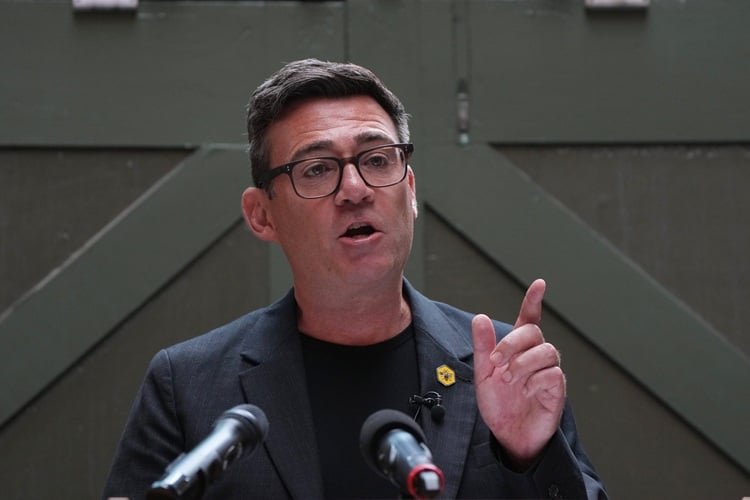
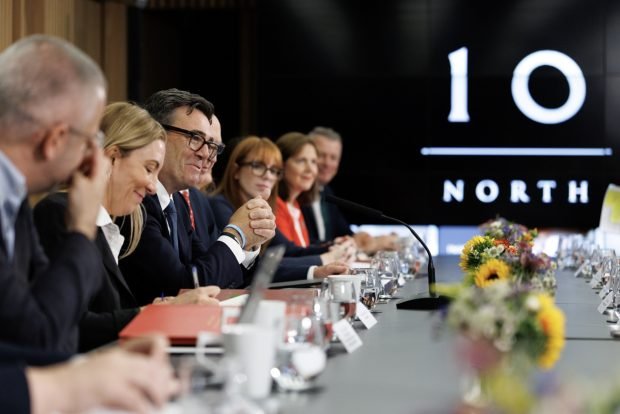
Prime minister Andy Burnham speaks to staff as he spends his first day working in the No10 North office in Manchester. Photo by Lauren Hurley / No 10 Downing Street
UK prime minister Andy Burnham is prioritising devolution of powers across the country in an effort to boost regional and local governments. Now the UK Cabinet has published a joint statement on the plans – so, what does this mean for civil servants?
Since becoming the prime minister of the UK, Andy Burnham has made devolving power an overarching priority for his time in office.
In his first speech as PM, Burnham said he wanted his time in 10 Downing Steet to act as a circuit breaker for Britain, “bringing forward the biggest changes in the last forty years”.
He pledged to introduce a new political model and a new economic model by taking power out of Whitehall to “carry it into every postcode in the land so that they can do more”, and using public procurement to back British industry and re-industrialise Britain.
Burnham said he would set out details of a 10-year plan for Britain, but details have already been emerging of what he will prioritise. A collective statement from the Cabinet appointed by Burnham outlined the basis of a new model of government, as well as the implication for central government, the civil service and other government bodies.
The government has also released some information about what its reforms to public sector procurement will cover, with a renewed focus on creating high-quality British jobs, tackling local skills shortages, and supporting young people into apprenticeships and work placements.
Read more: New UK prime minister unveils plan to ‘rewire government’ on first day in post
Rewiring the state: strategic authorities to bring services together
The priorities for devolution were set out in a Cabinet statement on 31 July.
“The government is committed to delivering good growth in every part of the United Kingdom, with places able to set their own ambitions and integrate services to meet people’s needs,” the statement said. “This is because economic progress goes hand in hand with social progress underpinned by democratic accountability.”
Specifically, the statement said that the government would “support the devolved governments, strategic authorities and local authorities to deliver that commitment, working in partnership with businesses and the voluntary, community, academic and faith sectors”.
The statement covered the overall strategy for the whole of the United Kingdom, but focused on potential changes to England in order to return “power that for too long has been held in Westminster and Whitehall… to people and the places where they live, work and invest”.
The government would work to develop and empower local leaders who “know what it will take to drive growth in their areas,” it said, adding: “They are also best placed to integrate public services to respond to the needs of their residents, improving people’s experiences as well as their outcomes and preventing the rising costs of failure.”
No.10 North – a new office in Manchester which is part of a series of machinery of government changes Burnham made by on his first day in office, including the creation of the Office for the Prime Minister and Cabinet – will be “the engine room making this happen”.
The government will work to establish strategic authorities – which are combined authorities and combined county authorities – in every area in England by the end of 2028. Areas will be urged to adopt mayors and, although these will not be imposed by government, those areas with directly accountable mayors will have access to greater powers.
“The government wants all areas that are ready to have a mayor as soon as possible, as long as there is strong local support. We will therefore invite all areas without strategic authorities to confirm their preference as to whether the strategic authority for their area should be mayoral or not.”
This place-based approach to government will focus on enabling greater alignment between public service boundaries, with funding then devolved and pooled for preventative services, and allow strategic authorities and constituent local authorities to invest in joint support.
The government will give leaders control over local tax revenues, starting by replacing grants from central government with a share of local income tax for every mayor beginning in 2028.
“Through devolution, we will ensure services work together as a single coherent system built around the priorities of people and places. We will therefore give areas more local democratic control over their public services, from health to policing to education, including through the establishment of deputy mayor roles with responsibility for key public services.”
Global Government Fourm research has focused on how to make the UK state more effective.
The Rewiring the State report, led by former Cabinet secretary Lord Gus O’Donnell and based on interviews with 12 permanent secretaries from the major departments, pinpointed priority focus areas to achieve the government’s aim of ‘rewiring the state’: making digital a core part of government leadership and driving a culture of delivery; building transformational capability at every level; unlocking the full power of data and AI through reuse of proven tools, removing the blockers to data sharing, and smarter procurement; and driving joined-up government through mechanisms that enable coordination and peer learning across departments.
The recommendations included streamlining approvals for high-impact digital projects; linking senior civil servant performance more clearly to the delivery of measurable citizen outcomes and government priorities; and introducing a digital training programme for all civil servants.
It also called for the formation of groups including HM Treasury, the Cabinet Office, 10 Downing Street and key departments to “sit together and resolve issues that cross departmental boundaries”.
Boosting exchange between central and local government: what it means for the UK civil service
The Cabinet statement also set out some of the implications for central government, acknowledging this would lead to “a smaller and more strategic civil service”, with a focus on the challenges that can best be dealt with at a national level.
Additionally, the Cabinet statement said the government’s approach “represents an opportunity for the civil service to adapt and learn through greater interchange with regional and local government, becoming more porous and working together to deliver better outcomes for the citizens we serve”.
As a result, the civil service will look to build new career paths between central government and the wider public sector, with the planned National School for Government playing an important role.
“The prime minister and the Cabinet secretary [Antonia Romeo] share an ambition for the future civil service to be a world-class, high-performing, technologically enabled institution that delivers for ministers and people across the country. They have therefore agreed that this statement will form a major part of the end goal for the civil service’s future operating model, as part of the Cabinet secretary’s wider review into the organisation, performance and transformation of the permanent civil service.”
Setting out the next steps to deliver change
The statement concludes with a pledge to “move quickly to deliver this agenda”, with immediate steps including greater flexibility to deploy funding within existing integrated settlements, and writing to areas without a strategic authority to confirm whether they wish to proceed with a mayoral or non-mayoral approach.
Separately, the government has announced changes to public procurement rules, with bidders for government contracts now to be judged on their commitment to creating high-quality British jobs, tackling local skills shortages, and supporting young people into apprenticeships and work placements. The weighting given to the score for bringing benefits to the local community will be raised from 10% to 20% for public contracts worth £5m (US$6.7m) or more, ensuring procurement, whether from UK or international providers, helps support communities.
First secretary of state Louise Haigh tied the changes to the efforts to boost local communities.
“For too long, securing government contracts has been a tick box exercise that fails to deliver the positive change that people feel in their pocket and see in the places they live.
“We are doing things differently. These new rules will ensure the £90bn [US$121bn] that is spent each year through government contracts supports British jobs, skills and people in every postcode.”