We’re raising our Apple price target, seeing plenty of good despite memory crunch
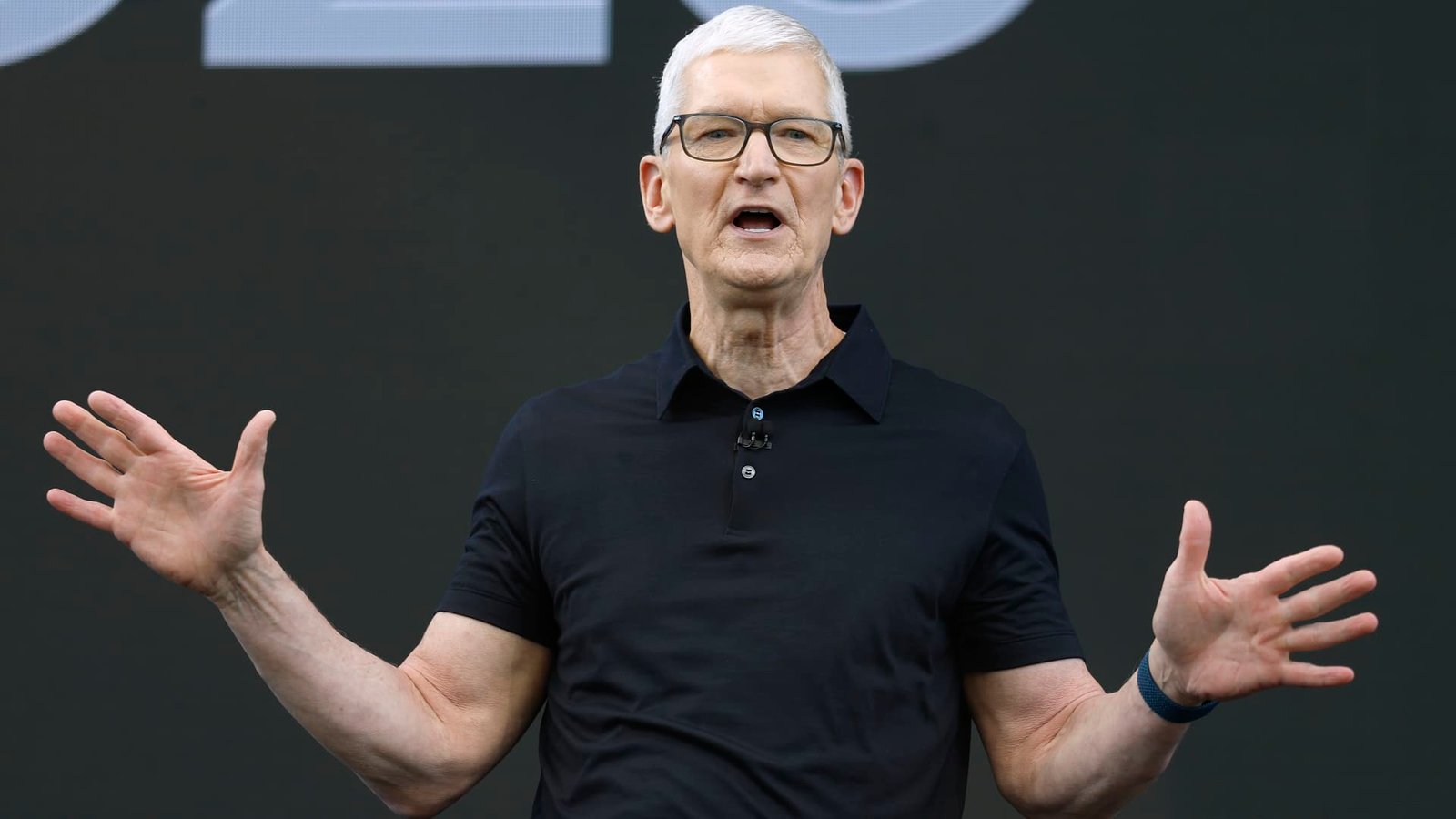
Apple on Thursday evening reported quarterly beats on its top and bottom lines. But even the world’s greatest consumer products company is not immune to skyrocketing memory prices caused by massive shortages. Revenue in Apple’s fiscal 2026 third quarter ended June 27 increased 16% to $109.42 billion, ahead of the $108.65 billion expected, according to LSEG. Earnings per share (EPS) jumped 29% to $2.02, ahead of estimates of $1.89, according to LSEG. Tariff refunds added about 11 cents to EPS. Stripping out the benefit, earnings exceeded expectations by 2 cents. Why we own it Apple’s dominant hardware and high-margin services businesses provide a deep competitive moat and plenty of bundling opportunities. Competitors: Samsung, Xiaomi, OPPO, Dell , and HP Inc. Most recent buy : April 8, 2014 Initiation : Dec. 2, 2013 Bottom line It was a good but not great quarter as Apple worked to mitigate the memory crunch, which impacted the reported quarter and is expected to be a greater headwind down the line. That sent shares down nearly 6% in after-hours trading. On the post-earnings call, outgoing CEO Tim Cook noted that fiscal Q3 did exceed expectations “despite supply constraints and sequential foreign exchange headwinds.” Ultimately, we view the print as about as good as we could have hoped for, given what we already knew about memory dynamics and the actions Apple finally took last month to pass along some of the pain to consumers. On June 25, the company announced bigger-than-expected price hikes on its MacBooks and iPads. The stock had its worst single session in more than a year and served as a near-term bottom. Since then, Apple shares soared to record highs and briefly became the second U.S. company with a market value over $5 trillion. AAPL YTD mountain Apple YTD Since the memory shortage is impacting all device makers, we see no reason to be overly negative that it’s hitting Apple and therefore still think this is a name you want to own long-term. That said, we have to acknowledge that the stock came into the print hot and forward commentary will likely put a cap on the near-term upside. Two wildcards are coming up. On Sept. 1, Cook steps back into an executive chairman role and turns the CEO reins over to John Ternus. September also brings Apple’s annual iPhone launch event, and that’s when we could hear whether prices on the company’s flagship device will be going up like Macs and iPads. Cook did say on the call that Against that near-term uncertainty, we’re reiterating our hold-equivalent 2 rating but raising our price target to $340 from $300 as we look out to 2027, when broader availability of Apple Intelligence will increase the value of an iPhone and, in turn, what folks may be willing to pay for an Apple device. On the call, Cook said, “We’re excited about the work we’re doing on the next generation of Apple intelligence, including Siri AI and the AI features we’re developing across our platforms.” He added, “These experiences are intuitive and useful, while also deeply integrated in a way that’s personal and private, with the latest models running on device and on servers using private cloud compute.” During the company’s annual Worldwide Developers Conference (WWDC), Apple announced a complete artificial intelligence overhaul — leveraging Google’s Gemini in a new conversational Siri and updating its own in-house AI efforts. We’ll see how those efforts impact sales and upgrades of the upcoming iPhone 18 line-up, which is expected to be unveiled this fall. Memory and gross margins As we noted coming into Apple’s release, gross margins were going to be scrutinized due to the impact of rising memory prices. While the reported gross margin of 50.1% did come in better than expected and was higher than a year ago, the Street isn’t giving Apple much credit for that. That’s because, on the release, management said the fiscal Q3 result included a roughly 2 percentage point benefit from tariff refunds, which would put the overall gross margin a tad shy of estimates. Since the rescinded tariffs impacted product sales, that is where we find the benefit of the refund. Excluding the refund benefit, the Products segment gross margin went from a reported 40.1% to about 38.1%. That was better than the 36.7% the Street was looking for. However, it was not quite enough to offset the Services segment gross margin miss, which declined sequentially due to the mix. It’s hard to complain when Apple’s Services gross margin came roughly flat year-over-year at 75.6%. That would be the envy of any company on the planet. While many components go into Apple hardware, it’s no secret that memory is the major issue at the moment, with Cook saying we’re in what he would characterize as a “100-year flood on the memory pricing.” It doesn’t seem like things are getting better any time soon. Apple paid more for memory in the March quarter than the December quarter, more again in Thursday evening’s reported June quarter. The company expects to pay even higher memory prices going forward. “If you look beyond September, we see the market pricing for memory continuing to increase,” Cook said. Guidance Taking a closer look at Apple’s current quarter guidance. September quarter revenue is expected to increase by 9% to 11% versus the year-ago period, below the 12.1% growth the Street was looking for, according to FactSet. This forecast includes a 2.5 percentage point growth headwind from foreign exchange dynamics. The company also expects “supply constraints to increase significantly sequentially” for iPhone, Mac, and iPad. Using the 10% growth midpoint, we get an implied forecast of about $112.7 billion, below the LSEG consensus estimate of $114.84 billion. Companywide gross margin for the September quarter is expected to be between 47% and 48%, compared with expectations of 47.4%, according to FactSet. That’s a tick better than the estimate, at the midpoint. However, it excludes the 2.5 percentage point topline headwind noted above. It also includes a 1 percentage point benefit from tariff refunds. Adjusting for all that, and were looking at a midpoint below expectations. On the call, Cook called out two offsets to the rising memory prices. First, Apple is still sitting on inventory purchased at lower prices that will help keep the cost of goods down a bit in coming quarters – though the benefit is diminishing as Apple will have no choice but to replenish that inventory at current higher prices. Second, Cook said he expects lower costs on certain non-memory components. Quarterly commentary Products revenue increased 18.1% year over year to $78.7 billion, outpacing the $77.62 billion estimate, thanks to strong iPhone and Mac sales. iPhone revenue is expected to grow “mid-teens” year over year, versus expectations for 18.1% year-over-year growth, according to FactSet. Services revenue in the reported June quarter missed the mark, but still managed to grow just over 12% versus the year-ago period. On the call, Parekh cited “significant sequential foreign exchange headwinds.” Services revenue for the September quarter is expected to grow in line with the rate we saw this past quarter, which is below the 13% growth the Street was looking for, according to FactSet. Companywide highlights The June quarter saw record EPS, operating cash flow, Services revenue, iPhone revenue, and Mac revenue. Record June quarter revenue was also achieved across all geographic segments. June quarter saw a record for iPhone in every geographic segment as well as for upgraders, according to IDC. As a result, iPhone gained global market share in the quarter. Mac sales benefited from both strong MacBook Pro sales (the higher end) as well as MacBook Neo sales (the recently released budget-oriented MacBook). On the call, Cook said MacBook saw global market share gains. The June quarter saw a record for Apple Watch upgraders. Installed base of active devices reached a new all-time high across all major product categories and geographic segments. (Jim Cramer’s Charitable Trust is long AAPL. See here for a full list of the stocks.) As a subscriber to the CNBC Investing Club with Jim Cramer, you will receive a trade alert before Jim makes a trade. Jim waits 45 minutes after sending a trade alert before buying or selling a stock in his charitable trust’s portfolio. If Jim has talked about a stock on CNBC TV, he waits 72 hours after issuing the trade alert before executing the trade. THE ABOVE INVESTING CLUB INFORMATION IS SUBJECT TO OUR TERMS AND CONDITIONS AND PRIVACY POLICY , TOGETHER WITH OUR DISCLAIMER . NO FIDUCIARY OBLIGATION OR DUTY EXISTS, OR IS CREATED, BY VIRTUE OF YOUR RECEIPT OF ANY INFORMATION PROVIDED IN CONNECTION WITH THE INVESTING CLUB. NO SPECIFIC OUTCOME OR PROFIT IS GUARANTEED.