Trump is about to get ‘unchecked authority’ to impose tariffs of up to 100% on top trading partners
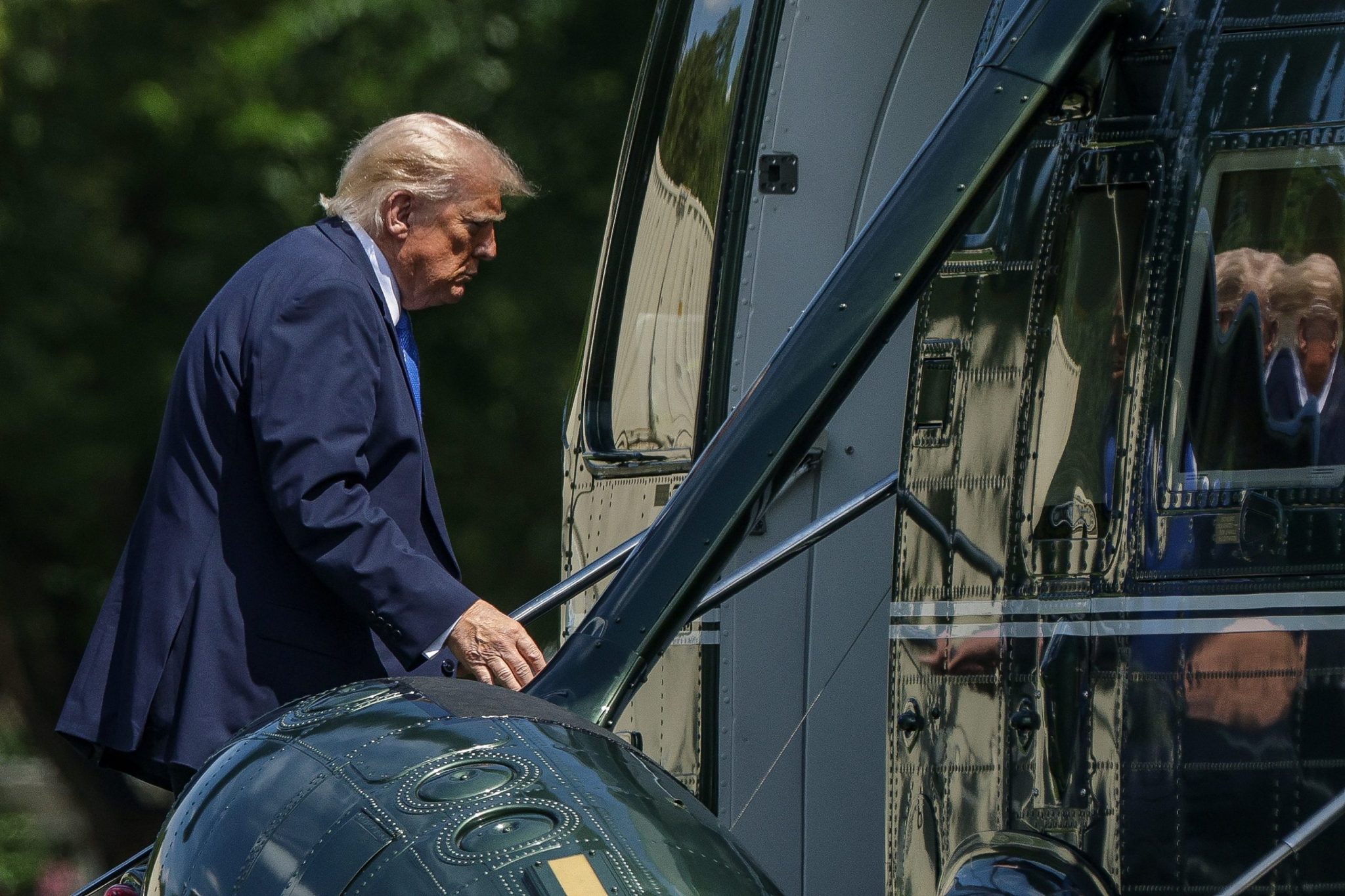
Courts have blocked President Donald Trump’s earlier attempts to use existing laws for his trade war, but Congress is advancing a new law that would provide broad discretion to impose steep tariffs.
In an 86-to-11 vote, the Senate passed the Lindsey O. Graham Sanctioning Russia Act of 2026 on Friday, with the House expected to approve the bill with similar bipartisan support next month.
It sanctions Russian President Vladimir Putin and senior Kremlin officials while also targeting the country’s energy sector to cripple the economy amid its war on Ukraine.
The bill would let Trump impose fresh tariffs as high as 100% on the top five importers of Russian oil and gas. While that could include U.S. allies like the European Union, South Korea, Japan as well as top trading partners like China and India, the president also has the ability to issue waivers if he deems it “in the national interest of the United States.”
Despite the overwhelming support, Sens. Rand Paul, R-Ky., and Ron Wyden, D-Ore., tried to remove the bill’s tariff authority, but failed.
“It will not bring peace to Ukraine, but rather will deliberately make American families poorer by increasing tariffs, which are nothing but a tax on imported goods,” Paul said on the Senate floor.
Sen. Raphael Warnock, D-Ga., also balked at the tariff power but eventually voted for the bill after receiving a written promise from U.S. Trade Representative Jamieson Greer that tariffs would be lifted after countries are no longer deemed top buyers of Russian energy or facilitators of sanctions evasion.
Still, he expressed unease about handing over sweeping new tariffs powers to Trump and vowed to remain vigilant.
“We should not have to choose between putting a check on Putin’s aggression and putting a check on this president’s tariffs regime,” Warnock said, adding that if Trump “oversteps his power, we will see him in court.”
The vote comes after the Supreme Court ruled in February that Trump can’t use the International Emergency Economic Powers Act to impose his “Liberation Day” tariffs, upholding a series of lower-court rulings.
But he pivoted to Section 122 of the Trade Act of 1974 to impose temporary 10% tariffs, then invoked Section 301 of the same law for new levies of 10%-12-5% on 60 trading partners.
Those duties are also expected to face lawsuits as they’re based on accusations of forced labor, even in top developed economies.
Tariffs under the Russia sanctions bill, however, would likely avoid similar legal challenges as it provides more open-ended authority to a president who has already tried to interpret trade laws extremely aggressively.
“The Russia bill is riddled with the same ambiguity the president has exploited in these other laws,” Cato Institute scholars Clark Packard and Scott Lincicome wrote in a Washington Post op-ed last week.
They pointed out that the bill doesn’t specify what data will determine which countries are the five largest importers of Russian energy. And while the tariff authority expires in five years, the bill doesn’t say how long the tariffs themselves will last.
Tariffs exemptions are also not automatic and are subject to the USTR’s determination that allies have taken “significant steps” to reduce their imports, Packard and Lincicome added. In addition, the tariff rates are at the president’s whim.
“Trump could direct the trade representative to set the tariff rate at 100% for one buyer of Russian energy and zero for another. That unchecked authority gives Trump leverage in disputes unrelated to Ukraine,” they warned.
For example, Trump could threaten India with new tariffs as part of trade talks that may cover farm exports, digital taxes or drug prices.
The ability to hit China with a new 100% U.S. tariff could also upset the fragile trade truce the world’s two biggest economies have been observing for the past year.
But even as Packard and Lincicome accuse Trump of abusing “nearly every tariff statute on the books,” they place most of the blame on Congress.
The Russia sanctions bill merely marks the latest instance of the legislative branch ceding trade authority to the executive branch.
“For more than half a century, Congress has delegated broad tariff powers to the president with few limitations,” they explained. “If the president has run wild, it’s only because lawmakers took away the guardrails.”