These 5 Small Flowers Can Instantly Elevate Your Garden Beds
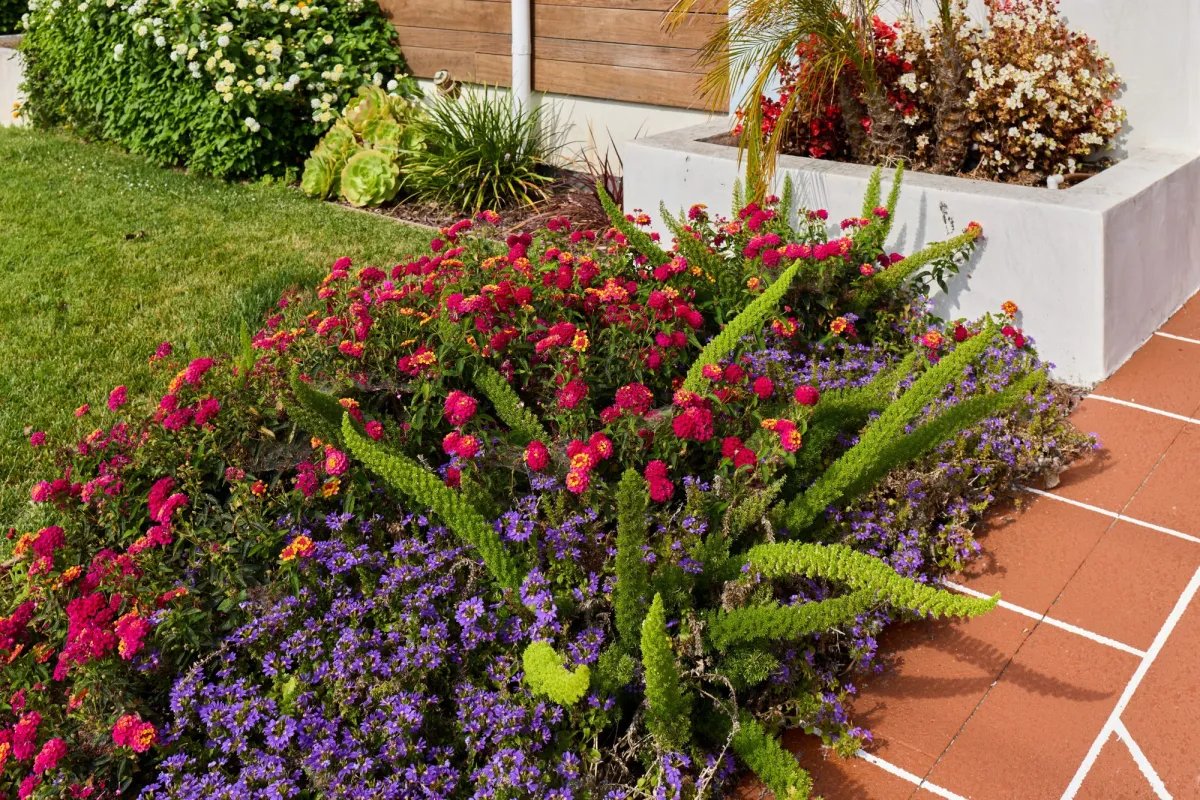
When designing a well-balanced home landscape, show-stopping blooms like peonies and dahlias often steal the spotlight, yet small flowers can tie together an outdoor space. Low-growing, compact flowers serve as the unsung heroes of garden design, helping to define bed edges, suppress weed growth, and stabilize topsoil, while adding color and texture to borders and walkways. By selecting climate-resilient perennials and annuals tailored to your yard’s specific sun exposure and soil conditions, these low-profile accent plants will bring charm and interest to your yard.
1. Coral Bells (Heuchera spp.)
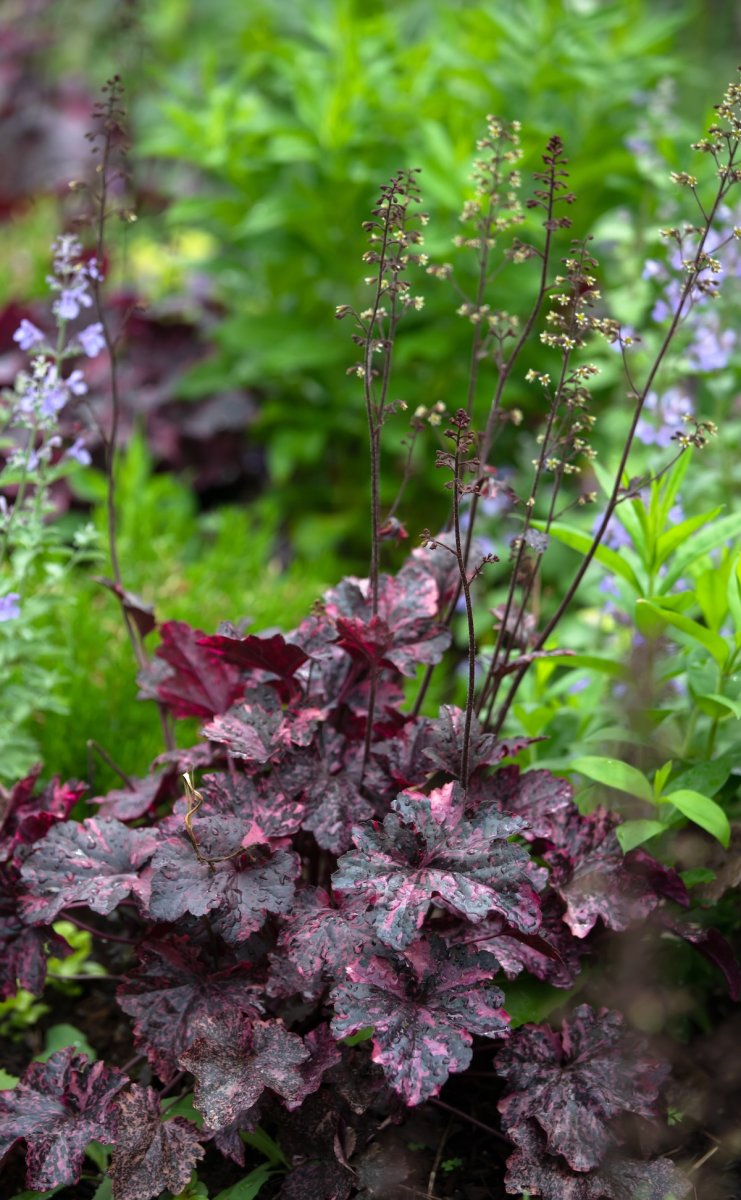
Native to North America, coral bells are versatile evergreen perennials known for their vibrant, rounded mounds of lobed, heart-shaped foliage. Available in a spectrum of colors—ranging from deep purple, wine-red, and bronze to lime green, gold, and variegated shades—their leaves provide visual interest. In spring and early summer, these plants sprout tall, airy stems topped with delicate, bell-shaped flowers in shades of pink, red, coral, or white. Depending on the variety, coral bells typically grow from 6 inches to 3 feet tall, so they are an ideal choice for garden edging, rock beds, or low-growing ground covers when planted in groups.
Once established, coral bells are exceptionally low-maintenance plants, requiring minimal care while remaining naturally resistant to deer and other pests. They thrive in rich, consistently moist, and well-draining neutral to acidic soil. Traditional varieties perform best in partial to full shade, but newer hybrids can tolerate full sun if they receive enough moisture.
Hardiness Zones: 4-9
Best For: Partly shady areas of the garden, including borders, containers, and ground cover, in just about any landscape style and most hardiness zones.
2. Creeping Phlox (Phlox stolonifera)
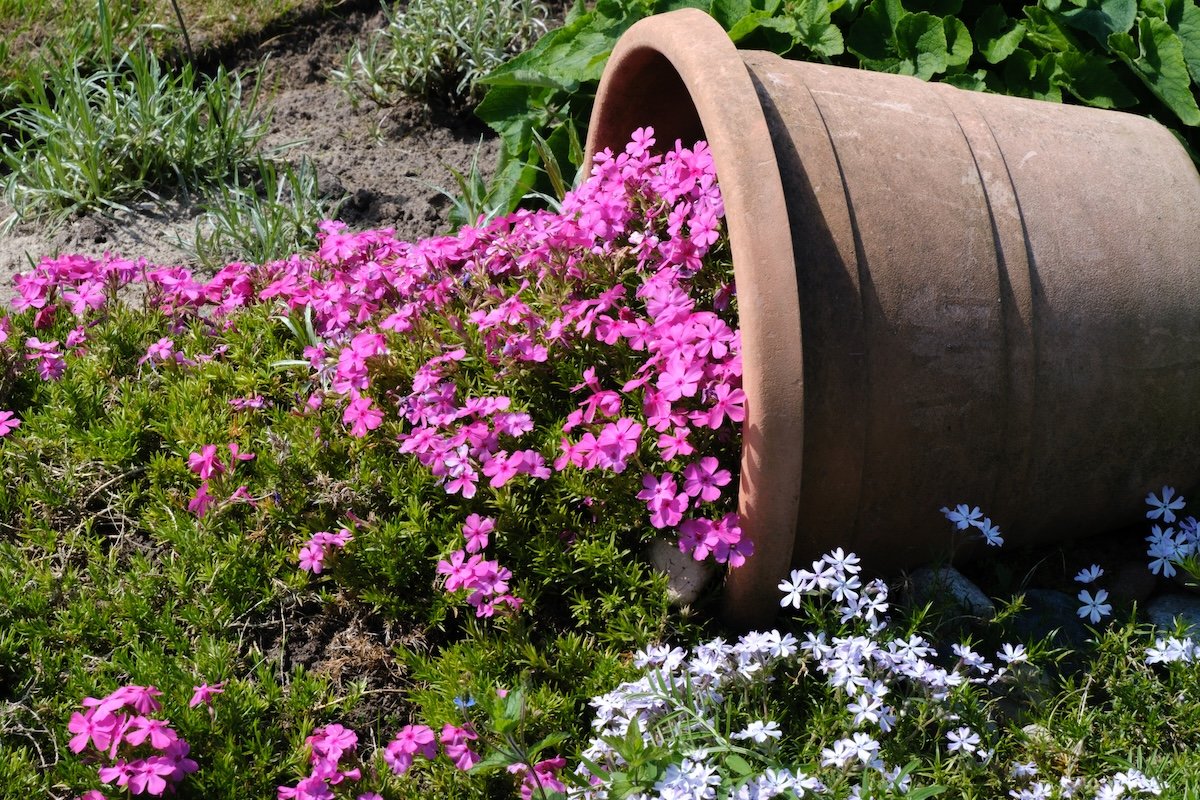
As a cold-hardy evergreen perennial, creeping phlox forms a carpet of dense foliage consisting of gorgeous pink, purple, red, white, or candy-striped star-shaped blossoms. These fragrant flowers only grow to a maximum of about 4 to 6 inches tall, staying close to the ground. They perform well planted on a slope, along the top of a retaining wall, cascading over rocks, or as a border for garden paths. As long as creeping phlox plants are exposed to full sun to partial shade and well-draining soil, they are very easy to care for.
Hardiness Zone: 5-9
Best For: Displaying a carpet of color cascading over rocks or defining the borders of garden paths.
3. Lantana (Lantana camara)
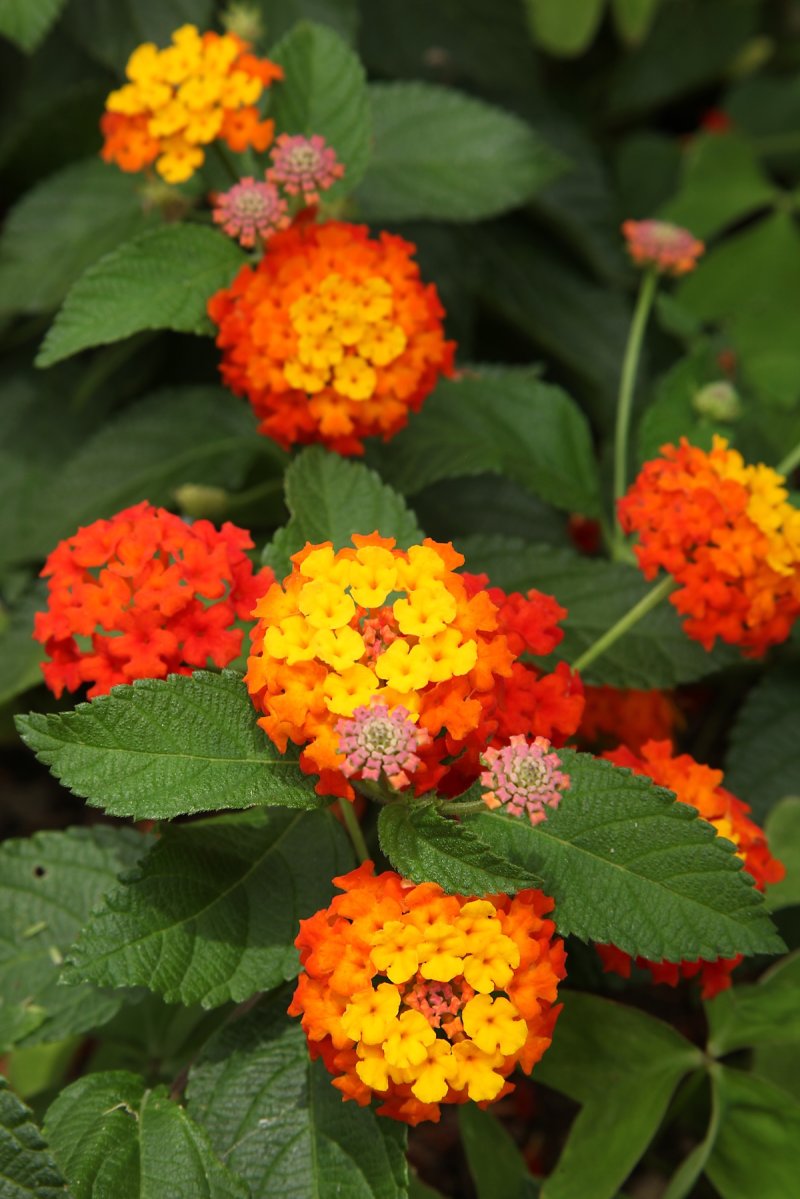
Lantana is a fast-growing plant native to North America that thrives in the heat. It produces rough, aromatic foliage and vibrant, confetti-like clusters of tiny flowers in shades of yellow, pink, orange, red, and purple. While it grows as a woody perennial shrub or low-spreading ground cover in mild, frost-free hardiness zones 9 through 11, gardeners in other areas plant it as an annual in borders, rock gardens, or containers for blooms from late spring until the first frost.
Ranging from low, compact 12-inch varieties to upright varieties, lantana does best in direct sun and well-draining soil with minimal fertilizer. It is also heat and drought tolerant once established. Though it attracts pollinators and resists most insect pests, lantana’s berries and foliage are toxic, so take care planting it around areas with pets and children.
Hardiness Zone: 7-11
Best For: Well-draining beds, borders, rock gardens, or containers in full sun with well-draining soil.
4. Lungwort (Pulmonaria spp.)
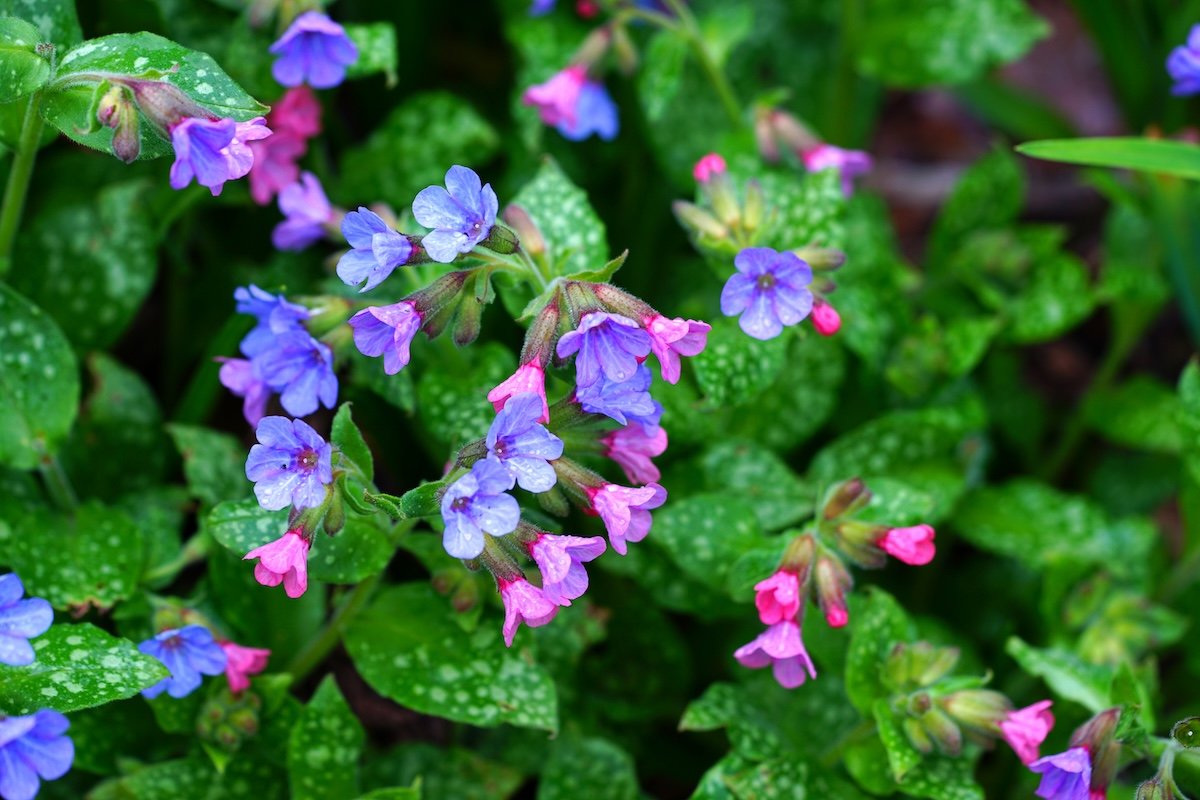
Lungwort is a shade-loving perennial that is often planted to create attractive borders or garden edges. Reaching a mature height of 8 to 18 inches, this sturdy and easy-care plant features green leaves spotted with silver variegation. In late winter to mid-spring, lungwort sprouts stalks of tiny, funnel-shaped blossoms in shades of pink, purple, white, or blue. They frequently display multiple colors on the same plant at the same time. Bees, hummingbirds, and butterflies love to flock to lungwort blossoms. Finally, this plant thrives when planted in full to partial shade with organically rich, moist, and well-draining soil.
Hardiness Zone: 3-9
Best For: Creating eye-catching borders and garden edges in shady areas.
5. Moss Rose (Portulaca grandiflora)
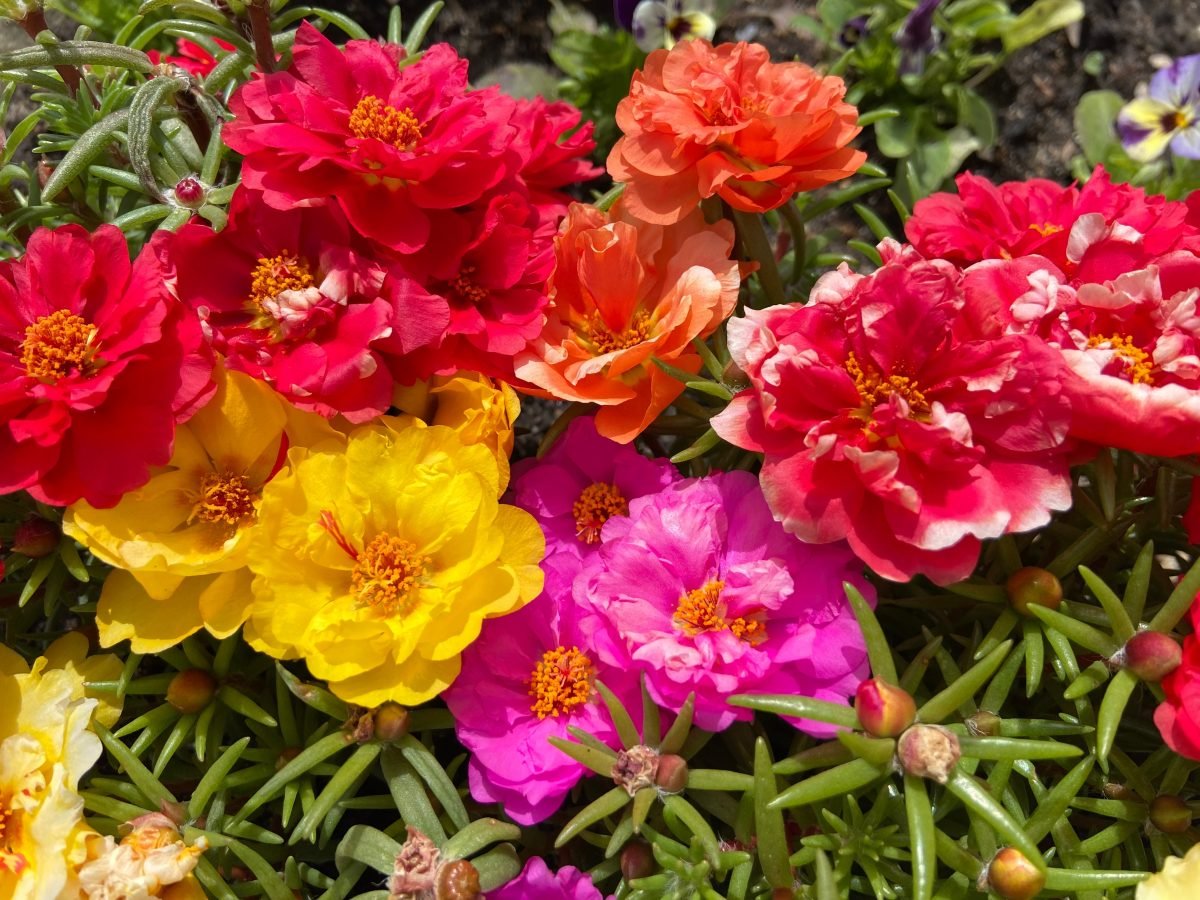
Moss rose is a tough, low-growing annual succulent native to South America that reaches just 6 to 9 inches tall and spreads into a dense, carpet-like ground cover. Featuring mossy, cactus-like foliage (but no spikes), this heat- and drought-tolerant plant produces an abundance of ruffled blooms that look like miniature roses in vivid shades of pink, red, orange, yellow, cream, and white. The foolproof flowers should keep coming from early summer until the first frost.
Portulaca plants love full sun and the flowers open during the day, closing back up at night. They are ideal for rock gardens, stone walls, walkway edging, hanging baskets, or sunny container pots. This plant also prefers poor, dry, or sandy soils, along with good drainage to avoid root rot. Although grown mostly as an annual, the flower can last longer in the warmest zones (10 and 11) and often reseeds. Note that while moss rose is deer-resistant, it is toxic to cats and dogs.
Hardiness Zone: annual 2-11
Best For: Rock gardens, stone walls, walkway edging, hanging baskets, or sunny container pots in warm, dry, sunny locations.

Our Best Advice for Beginner Gardeners