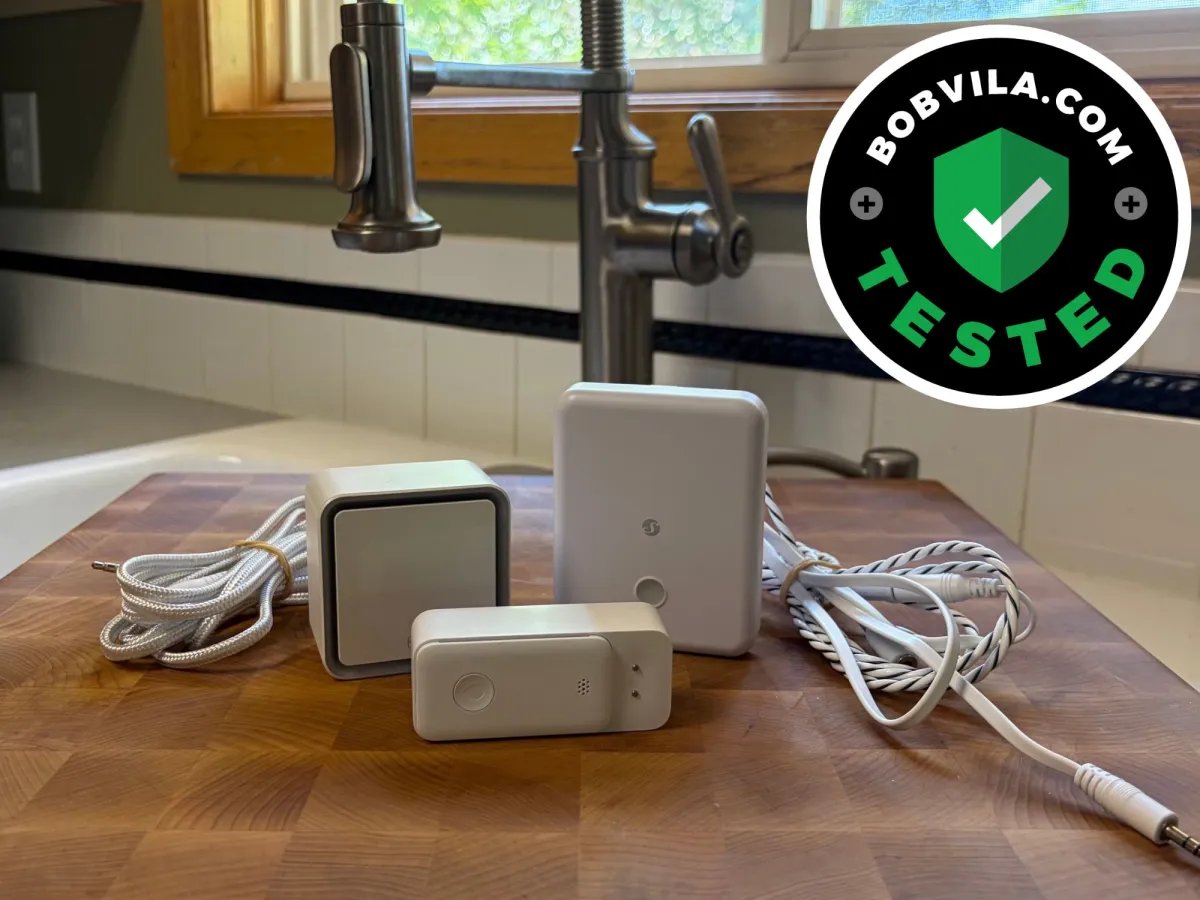
The Best Water Leak Detectors, Tested and Reviewed
With serious plumbing issues affecting more than 2.5 million homes every year, investing in a water leak detector is a smart move. Not only do leaks add to your water bill, but the resulting damage often costs thousands of dollars to repair. Identifying leaks before they wreak havoc is a wise way to avoid a financially devastating problem.
Since there are so many water leak detectors on the market serving this very purpose, we set out to see if the $100 versions are really that much better than the $15 ones. After several weeks of testing, our favorite fell much closer to the lower end than the higher. With its easy installation, useful audible and app alerts, wide coverage area, and indoor/outdoor functionality, the Shelly Flood Gen4 Smart Water Leak Detector has pretty much every feature you could want—and for a very reasonable price. Read on to learn more about all the models we tested and to see what matters when choosing the best water leak detector for your needs.
- BEST OVERALL: Shelly Flood Gen4 Smart Water Leak Detector
↓ Jump to Review - BEST BANG FOR THE BUCK: SwitchBot Smart Water Leak Detector
↓ Jump to Review - UPGRADE PICK: YoLink Water Leak Sensor & Hub Smart Home Starter Kit
↓ Jump to Review - BEST FREEZE DETECTION: Kidde 60WLDR-W Water Leak + Freeze Detector
↓ Jump to Review - BEST AUDIBLE-ONLY: The Basement Watchdog BWD-HWA Water Alarm
↓ Jump to Review - BEST SMART: Govee Wi-Fi Water Sensor Alarm + 3 Sensors
↓ Jump to Review - BEST FOR HOMEKIT USERS: Eve Water Guard Smart Water Leak Detector
↓ Jump to Review
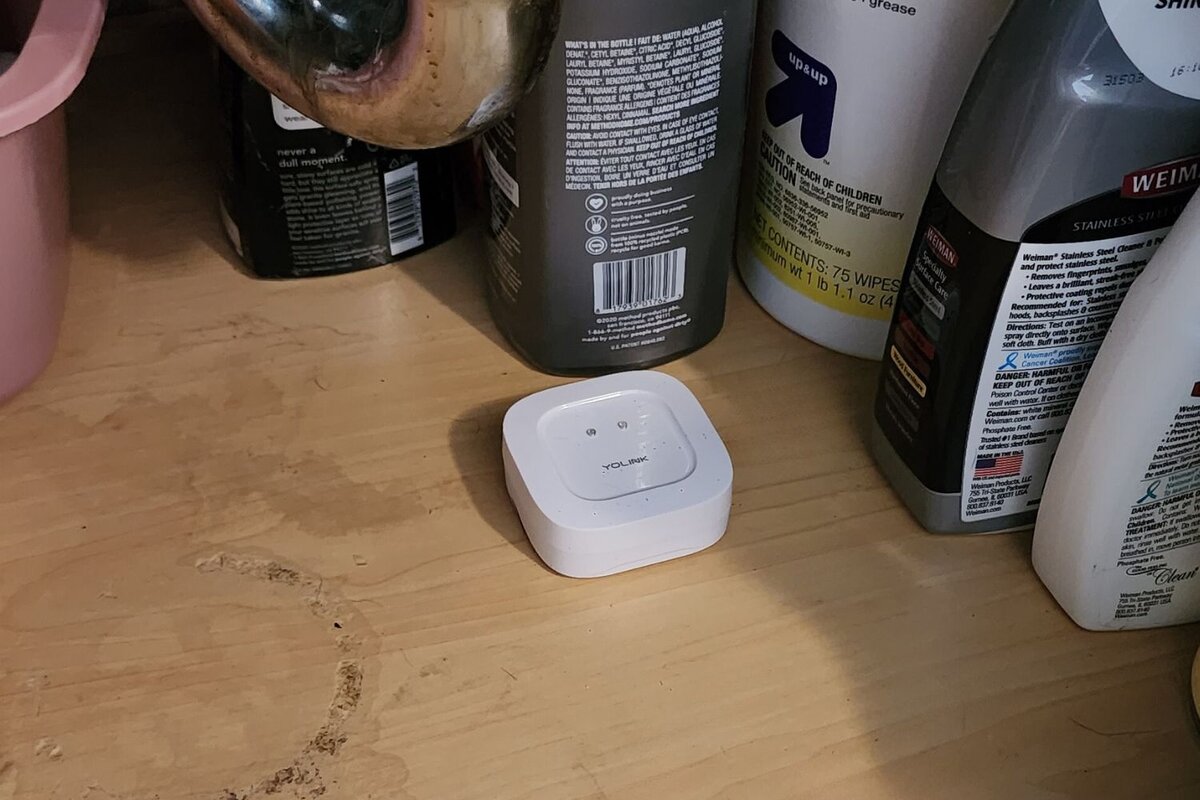
Best Water Leak Detectors Compared
Our Top Picks
We performed real-world testing on the following leak detectors to ensure they offer reliable performance. Be sure to compare each product to find the one that’s best for your home.
Best Overall
Photo: Amazon
What We Like
- Easy app pairing and reliable alerts
- Users can link multiple cables to increase coverage
- Beeps when battery life is below 20 percent
- Also offers outdoor functionality
What We Don’t Like
- 65-decibel audible alarm isn’t as loud as others
Product Specs
-
Power source:
4 AA batteries -
Alarm type:
Audible, measured at 65 decibels; app notifications -
Waterproof:
Sensing cord only; main hub is not
Our Ratings
| Ease of Use | 4.5/5 | Reliability | 4.8/5 | Functionality | 4.5/5 | Value | 5/5 |
Unlike standard water sensors that only trigger when liquid touches a specific spot, the Flood Gen4 electronic leak detector uses a 2-meter (about 6.5-foot) sensing cable that can detect moisture along its entire length. That means you can install the main hub up off the floor (that part’s not waterproof) yet wind the sensing cord across the area where water could potentially fall. The hub has two modes: Flood Detection Mode for indoor use, which sounds an alarm and alerts your phone the instant it detects water, and Rain Detection Mode for outdoor use, which doesn’t trigger an audible alarm but sends app notifications to your phone. When integrated with inline switches or other smart devices, you can even shut off water valves if there’s a leak or trigger a motorized awning during a storm.
In our tests, the Flood Gen4 was super easy to set up: Simply insert the enclosed AA batteries, download the app, attach the hub via the included 3M tabs, and extend the sensing cable where you want it. If you need more coverage, you can link multiple sensing cables together to cover up to 150 meters (almost 500 feet). Since this is a battery-powered rather than plug-in model, there’s no risk of a major leak or sudden flood tripping the breaker and killing it—plus, the detector alerts you via the app and an audible beep should battery life fall below 20 percent. There are also three modes (Intense, Normal, and Economic) that adjust reporting frequency so that you can balance battery life against how often you want updates. The only downside for those relying solely on the audible alarm is that the 65-decibel output may not be loud enough to reach other floors of the home right away, but that’s what the app is for.
Read our full review: Shelly Flood Gen4 Smart Water Leak Detector
What our tester says: “When you look at what you get for the price, the Flood Gen4 is hard to beat. I love the app functionality for peace of mind when I’m away from home, and the fact that it uses a sensing cable to detect water over a large area just makes sense.”—Michelle Larson, Product Reviews tester and writer
Get the Shelly water leak detector at Amazon, The Home Depot, or Best Buy.
Best Bang for the Buck
Photo: Amazon
What We Like
- IP67 waterproof
- Loud alarm plus app and email alerts
- Great price for so many features
What We Don’t Like
- Battery cover may be confusing to open at first
Product Specs
-
Power source:
2 AAA batteries -
Alarm type:
Audible, measured at 80 decibels; app notifications and emails -
Waterproof:
Yes
Our Ratings
| Ease of Use | 4.5/5 | Reliability | 4.5/5 | Functionality | 4.3/5 | Value | 4.7/5 |
When you’re worried about basement flooding or under-sink blowouts, having a waterproof leak detector that can handle full submersion is reassuring. But the SwitchBot is more than just one of the few fully waterproof units on this list; it’s also easy to set up, offers a loud alarm as well as app and email notifications, and integrates with Alexa, Google Home, and Siri—all for a very reasonable price.
Our first impression of the SwitchBot was that it seemed pretty basic. About the size of a garage door opener with a single button and two sets of sensors, it looks like your standard audible-alarm-only unit. As we started to set it up, though, our opinion changed. Yes, it has a loud alarm like all the rest of the sub-$20 detectors, but it has smart features as well, including app and voice control. Performance was also solid. So long as we had it in a good spot, it detected even a small amount of moisture quickly. That said, the fact that both of its water-detecting probes are located on the unit itself rather than along a sensing cable means putting it somewhere water is likely to fall or pool is essential to catching leaks the moment they start. Still, that’s the case for many models, even ones with far fewer features.
What our tester says: “Provided you get the placement right and don’t have dogs or kids that will move it once it’s set, the SwitchBot has every feature you could want at an almost surprisingly low price.”—Michelle Larson, Product Reviews tester and writer
Get the SwitchBot water leak detector at Amazon or SwitchBot.
Upgrade Pick
Photo: amazon.com
What We Like
- Sends notifications in just 5 seconds
- LoRa technology doesn’t impact home internet performance
- QR code and app simplify setup
What We Don’t Like
- No audible alarm
- Requires installing a hardwired hub
Product Specs
-
Power source:
Wall outlet and 2 AAA batteries -
Alarm type:
App notifications, texts, and emails -
Waterproof:
Sensors only; main hub is not
Our Ratings
| Ease of Use | 4/5 | Reliability | 4.8/5 | Functionality | 4/5 | Value | 4.2/5 |
Looking for a leak-detection solution that’s capable of integrating with smart devices? This smart water sensor from YoLink can send leak alerts through smartphone banner notifications, SMS text messages, and emails. It can even transmit alerts by integrating with Android and Apple smart devices.
Once the detector is integrated with a smart device, the paired app sets up monitoring routines and tracks history logs to ensure leaks are discovered and noted as soon as possible. Boasting one of the longest wireless ranges in the smart home industry, the base can connect to individual detectors from up to 1,320 feet in the open air outdoors.
Unlike other smart home leak detectors, this model isn’t dependent on a home’s Wi-Fi network. Instead, it uses long-range radio frequencies to transmit signals so it doesn’t impact network bandwidth. This unit uses notifications to alert you of issues and doesn’t feature a built-in siren alarm, but a compatible siren alarm is available for purchase. YoLink also offers other accessories, like an automatic shut-off valve for sinks.
The YoLink was the only leak detector for water that we tested that didn’t have an audible alarm. Thus, if the power goes out, there won’t be an alert. However, the individual devices are compact and feature three sets of contacts (two on the bottom and one on the top), ensuring they detect water leaking as long as the power is on. In testing, the YoLink alerted us to a leak quickly, sending a notification within 5 seconds. This speedy notification is likely due to the hub’s hardwired connection, which does make up for the extra bit of hardware in the house. And, as promised, the hub didn’t have a noticeable impact on the home’s internet service.
What our tester says: “The biggest downside to the YoLink home water leak detector was that its physical hardware (the hub) has to be attached directly to your router. However, once that process is done, adding devices couldn’t be simpler.”—Tony Carrick, Product Reviews tester and writer
Get the YoLink water leak detector at Amazon or Walmart.
Best Freeze Detection
Photo: Amazon
What We Like
- Easy to set up using app and QR code
- Emits water leak and freezing temperature alerts
- Works with or without Wi-Fi
What We Don’t Like
- Spacing between contacts may delay tripping
Product Specs
-
Power source:
2 AA batteries -
Alarm type:
Audible, measured at 95 decibels -
Waterproof:
Yes
Our Ratings
| Ease of Use | 4.5/5 | Reliability | 4.8/5 | Functionality | 4.3/5 | Value | 4.5/5 |
Kidde’s 60WLDR-W water leak and freeze detector is one of our favorite picks for its combined value and reliability. This device is Wi-Fi–compatible, but it doesn’t require it. Those seeking straightforward operation need simply to unbox the sensor, install batteries, and set it in the desired location.
However, hooking it up to Wi-Fi for smart operation is equally as easy. Just download the Kidde app, set up a profile, and add the device with the QR code. The app will ask for other information, such as the home’s location and emergency contact information, a feature that alerts a friend if you aren’t around to respond to any notifications. The Kidde leak and freeze detector is compatible with Alexa, Google Home, and iPhone and Android devices.
This model runs on two included AA batteries. It’s relatively small and compact and can fit under a dishwasher, refrigerator, or around a water heater. It has two alert modes: leak mode, which occurs when water touches both contacts and creates a short, and freeze mode, which alerts when the temperature around the device reaches 37 degrees Fahrenheit.
We really liked the multipurpose uses the Kidde offers. Many bad leaks are caused by freezing, and the Kidde’s sensor quickly and loudly alerted us to an issue when we threw it in the freezer. We liked that the unit was easy to set up using the Kidde app, and that the app will automatically bring up emergency contact information if an alert sounds. But we also liked that this device can operate without Wi-Fi, meaning it will trip even if the power and internet service are down. The biggest complaint we can muster is that the contacts are much farther from each other than with other models (about ½ inch), which means it could take longer for the device to trip, though we definitely didn’t have that issue.
Get the Kidde water leak detector at Amazon, The Home Depot, or Walmart.
Best Audible-Only
Photo: amazon.com
What We Don’t Like
- Low per-unit cost
- Very loud 100-decibel alarm
- Extension reaches up to 6 feet
What We Don’t Like
- No smart features or Wi-Fi compatibility
Product Specs
-
Power source:
9-volt battery -
Alarm type:
Audible, measured at 100 decibels -
Waterproof:
Sensor only; main body is not
Our Ratings
| Ease of Use | 5/5 | Reliability | 5/5 | Functionality | 5/5 | Value | 4/5 |
The Basement Watchdog water alarm is one of the most affordable water leak sensors on the market. It’s also among the easiest to set up: Just insert the battery, position it, and turn it on. The sensor will detect pooling water at just 1/32 inch deep, alerting users with a piercing alarm. Although called the Basement Watchdog, it is suitable for use anywhere indoors.
This unit comes with 6 feet of cable that connects the main unit to the sensor. That means it’s really only suitable for use in a single room. If you purchase additional wire and connectors, you can extend this distance to a maximum of 100 feet, but each main unit connects with one sensor only. Battery life is excellent, as power is only required in the event of an alarm.
The Basement Watchdog doesn’t have any kind of Wi-Fi integration, and the unit itself is somewhat utilitarian in appearance, but it nevertheless represents excellent value for the money. Despite being a more basic model than others we tested, it reliably detected leaks and excess moisture, which makes it especially nice for dusty basement locations where you might not want an expensive detector. It was also one of the loudest units we tested, measuring around 100 decibels. The biggest complaint anyone could register is that it doesn’t have Wi-Fi, but for the price, it certainly has its perks.
Get the Basement Watchdog water leak detector at Amazon, Lowe’s, The Home Depot, or Walmart.
Best Smart
Photo: Amazon
What We Like
- Comes with 3 sensors (can connect up to 10)
- Loud alarm works without Wi-Fi
- Simple installation process
Product Specs
-
Power source:
Outlet for hub; 2 AAA batteries for sensors -
Alarm type:
Audible, measured 105 decibels; app notifications -
Waterproof:
Sensors only; main hub is not
Our Ratings
| Ease of Use | 5/5 | Reliability | 4.8/5 | Functionality | 4.5/5 | Value | 4.5/5 |
This water leak detection device from Govee detects leaks and can send alerts through Wi-Fi and an audible alarm. Once connected to a home’s Wi-Fi gateway, the detector prioritizes sending alerts via SMS and email, but if the Wi-Fi connection is unavailable, a built-in 100-decibel siren alarm will sound. This leak detector also boasts a high waterproof rating, so it won’t be damaged or destroyed during extended periods of use in high-moisture areas or in the event of full water submersion.
This was by far the easiest set of leak sensors to set up. All we had to do was download the app, set up a profile, and plug in the hub. The hub came preloaded with the sensors in the kit, so we didn’t have to add them but could rename them. Each sensor came with batteries that simply required us to pull tabs out to activate them. When we tested the devices, they provided a louder-than-rated 105 decibels and sent an alert to our phone within 10 seconds. The biggest complaint we could come up with was that the sensors themselves aren’t very compact. In fact, they’re quite a bit larger than the other hub model, but at least this hub doesn’t require hardwiring.
Get the Govee water leak detector at Amazon.
Best For Home-Kit Users
Photo: Amazon
What We Like
- Local data privacy with no cloud subscription
- 6.5-foot sensing cable for extended coverage
- Extremely loud 100-decibel alarm
What We Don’t Like
- Exclusive to iOS devices
- Requires Apple hub for remote alerts
Product Specs
-
Power source:
Wall outlet -
Alarm type:
Audible, measured at 85 decibels; app notifications -
Waterproof:
No
Our Ratings
| Ease of Use | 4/5 | Reliability | 4.8/5 | Functionality | 4.5/5 | Value | 4.3/5 |
If you’re an Apple ecosystem user, the Eve Water Guard is an easy way to add leak detection to your setup. Like our pick for Best Overall, it features a 6.5-foot cable that detects moisture along its entire length rather than just a single spot, which makes it great for wrapping around a water heater or feeding along the backside of kitchen cabinets. Smart setup is simple via HomeKit, running directly on Bluetooth or Thread.
Like the other smart water leak detectors we tested, the Eve app plus its audible alarm made it easy to tell when the unit detected moisture. But this was one of the only units that also adds a strong visual cue in the form of a large flashing red light, which was bright enough to see in our basement utility room. This would be convenient, for example, if you heard an alarm in the night but weren’t sure where it was coming from. However, because it requires an iOS device like an iPhone or iPad to work at all, plus an Apple TV or HomePod that acts as a home hub for notifications while you’re away, this leak detector won’t be right for everyone. That said, if you’re a dedicated Apple user and want leak detection and data privacy without an external cloud subscription, we think it’s worth the investment.
Get the Eve Water Guard water leak detector at Amazon, Walmart, or Eve.
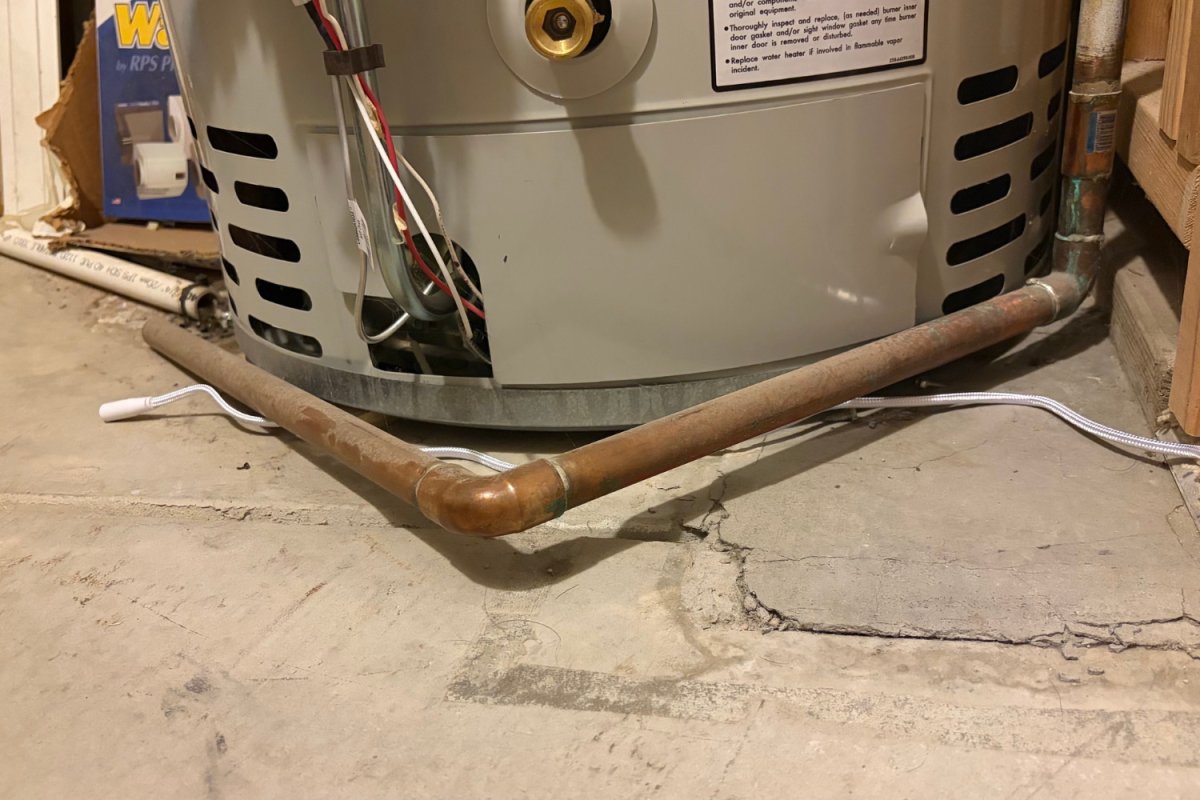
How We Tested the Best Water Leak Detectors
| Products tested | 7 |
| Time spent testing | 3 weeks |
| Tests performed | 7 |
| Price range | $15 to $110 |
There’s obviously a lot riding on leak detection devices. If they fail, you could be facing devastating water damage from a flood, broken appliance, or leaking water supply line that you may have otherwise been able to stop.
To ensure all our recommendations are reliable, we put seven highly rated products to the test, focusing on setup and installation, time to alarm when misted with a spray bottle vs. submerged in a bowl of water, noise level, and extra features like app functionality. We even threw one in the freezer to see if it would warn us of freezing conditions akin to those that might cause frozen pipes.
We then rated the products according to an established rubric, assigned an award to each based on its strengths, and developed our list of top picks as a result.
Our Testing Scores
What to Consider When Choosing a Water Leak Detector
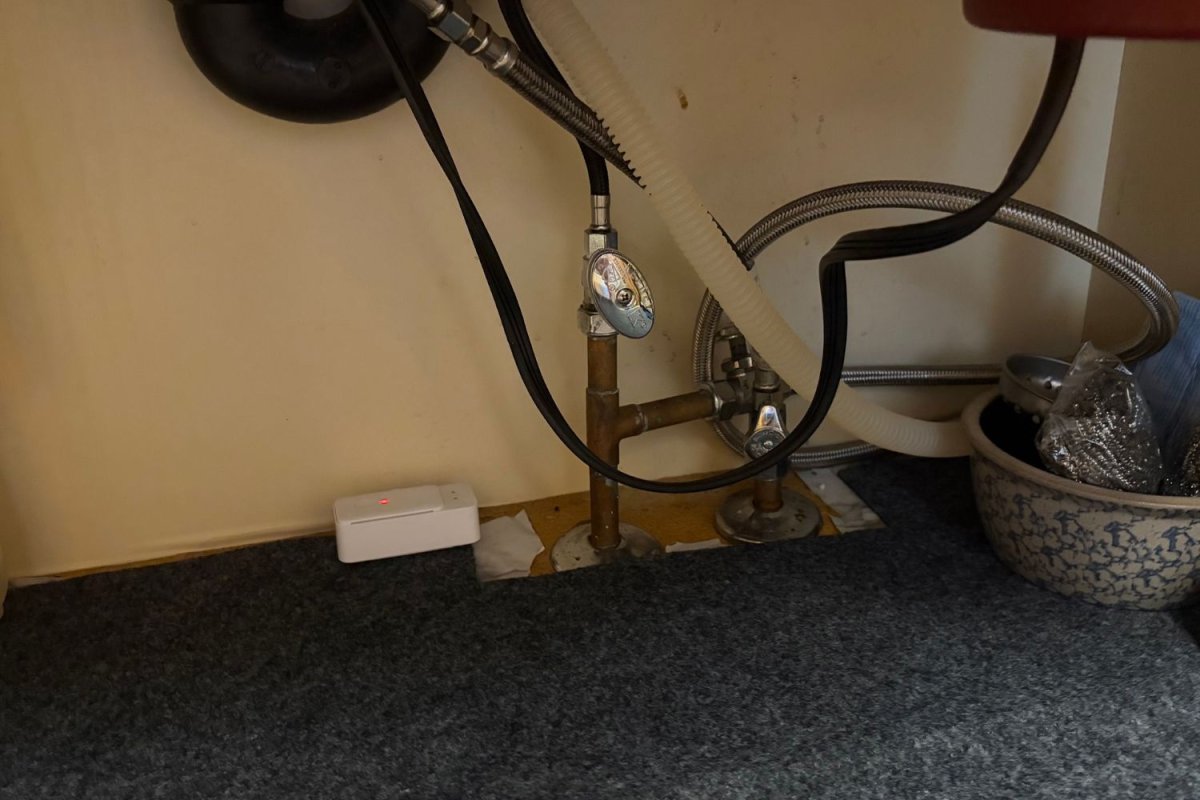
Water leak detectors offer a variety of features that impact their functionality. Understanding the differences between these features will help you choose the right water leak detector for your home.
Detection Type, Coverage, and Location
When choosing a water leak detector, consider what kind of sensing method fits the location you want to protect, as detection type impacts coverage. Spot-style detectors with one or two sensors on their bodies are best for pinpointing leaks near toilets, sinks, washing machines, water heaters, dishwashers, and refrigerators, while cable-style detectors are better at providing extended coverage behind cabinets and appliances or along walls in basements, garages, or utility rooms. Putting a device in the upper areas of your home can help quickly identify leaks in the roof or ceiling.
Alert Type and Smart Features
Alert type is an essential consideration because becoming aware of a leak as quickly as possible is the entire purpose of a detector. Basic detectors usually rely on very loud built-in alarms, typically with the same or greater decibel rating (85+ decibels) as smoke detectors (75+ decibels), and will stay active for several hours to a few days until manually silenced. Audible alarms work well if someone is home, while smart models that send app alerts, texts, or emails alert you to issues even if you’re away. Many models offer both types of alarms, and some also offer freeze and humidity notifications to help prevent frozen pipes and mold and mildew growth.
If you already use platforms like Alexa, Google Home, or Apple Home, smart–home-compatible leak detectors can be useful because some integrate directly with those ecosystems, while others rely on their own app and your home Wi‑Fi. Some models also require a separate hub or gateway to send alerts and support automations. Before buying, consider how the detector works to make setup and use easier and to avoid having to add extra equipment.
Of the many types of smart tools and appliances we’ve tested, smart water leak detectors are some of the most useful. Remote notifications can give you a major advantage if you travel often, own a second home, or want some peace of mind over less frequently accessed areas of your home, such as basements or crawl spaces.
Installation and Power Source
Installation and power source also affect which detector is right for you. Battery-powered models are usually the easiest to install because they can go almost anywhere, while plug-in or wired units require a nearby outlet. Some detectors also use sensing cables or extension probes, which can be helpful if the water source is a distance away from the main unit.
Battery-powered leak detectors are the most common and are often seen as the most convenient since they don’t need a plug and will continue working even if a leak causes a circuit breaker to trip. Their main disadvantage is that batteries will eventually run out, which can leave the area unprotected if not caught in time. Fortunately, many battery-powered models last for years and have indicators that signal when battery life is low.
Automatic Water Shutoff
Although uncommon, some water leak detectors include an automatic water shut-off system that turns off the supply as soon as it detects a leak. These “in-line” units are installed directly onto a water supply plumbing line and continually monitor a home’s water usage to detect leaks. Should a leak occur, they function much like a manual water shut-off valve by closing off the home’s water supply.
Leak detectors that incorporate automatic shutoff are typically expensive—usually several hundred dollars—but could potentially prevent thousands of dollars in water damage, making the extra cost worthwhile. These units are especially valuable for vacation homes and rental properties where the owner is frequently off-site and unable to monitor for leaks personally.
Tips for Using a Water Leak Detector
To gain the most benefit from a water leak detector, start by identifying the sources of potential leaks. If you’re primarily concerned about plumbing fixtures, a small and compact leak detector will fit in the tight, confined spaces under sinks and next to toilets, washing machines, and dishwashers. If you’re concerned about flooding and need to cover a large floor area, consider a leak detector with a long, extendable sensor cable.
If the detector relies on a built-in siren for alerts, it needs to be loud enough to be heard throughout the house, regardless of where the detector is located. Generally speaking, this is relatively easy to accomplish inside the house, but some alarms might not be loud enough for use in a garage (especially a detached one) or an insulated basement. If you can’t hear the alarm from those locations, consider upgrading to a detector with a louder siren or one that can send alerts directly to a smartphone. Here are a few more tips for using a water leak detector:
- Just like with a smoke alarm, routinely test a leak detector once every 1 to 2 months to verify it’s still working.
- If a battery-operated leak detector doesn’t include a battery-life indicator, replace the batteries every 1 to 2 years to ensure they’re fully charged.
- If a leak detector isn’t rated to withstand full water submersion, don’t place it in an area prone to flooding.
Water leaks caused by corroded pipes can also affect the color and taste of water. However, a number of other factors may be the cause, so it’s a good idea to check our article on common water problems.
FAQs
Still have some lingering questions about water leak detectors? Consider the answers to the following frequently asked questions.
You can put a water leak detector next to toilets, sinks, dishwashers, washing machines, and hot water heaters, as well as in garages, basements, or anywhere else prone to flooding. Putting a water leak detector in the attic can help identify problems with the roof caused by snow or storm damage.
If your water leak detector features a local alerting sensor and siren, the leak will be coming from where your detector is located and the siren was triggered. If you have a Wi-Fi–enabled or smart leak detector, your smartphone and other connected devices will help you find a water leak.
Set a water leak detector directly on the ground (for waterproof units) or install it on the wall with double-sided tape, adhesive, or a similar mounting material.
The average lifespan of a water leak detector varies between manufacturers, but most detectors will last several years. However, this lifespan could be reduced by extreme temperatures or total water submersion.
According to First Alert, the most common water leaks “are often visible to the eye, stemming from places like underneath the kitchen sink, bathrooms or laundry rooms, burst plumbing pipes, and HVAC systems.”
Yes, water leak detectors work, especially when placed in the right location and maintained properly. They won’t fix the leak, but they can catch it early enough to help you reduce damage.
No, homeowners’ insurance is more likely to cover repairing water damage from a leak than it is finding the issue. However, each insurer and policy is different, so it’s worth checking with your agent.
Yes, water leak detection is usually worth it because catching a leak early can prevent far more expensive water damage, mold, and repairs. It’s especially valuable in spots with hidden plumbing, such as near appliances or behind cabinets, where problems can go unnoticed for a long time.
Meet the Testers
Michelle Larson has been a writer and editor for more than 10 years in the fields of health, business, and the home. Because she’d rather spend a little more up front than buy something twice, she strongly believes in the power of testing and reviews for finding tools and appliances that are meant to last.
Tom Scalisi has been in the trades for over two decades. He loves to share his knowledge of construction, home improvement, tools, techniques, and products with the readers of Bob Vila.
Additional research provided by James Fitzgerald and Deirdre Mundorf.
After Testing 20 Air Purifiers, We Found One That Does Something the Rest Can’t