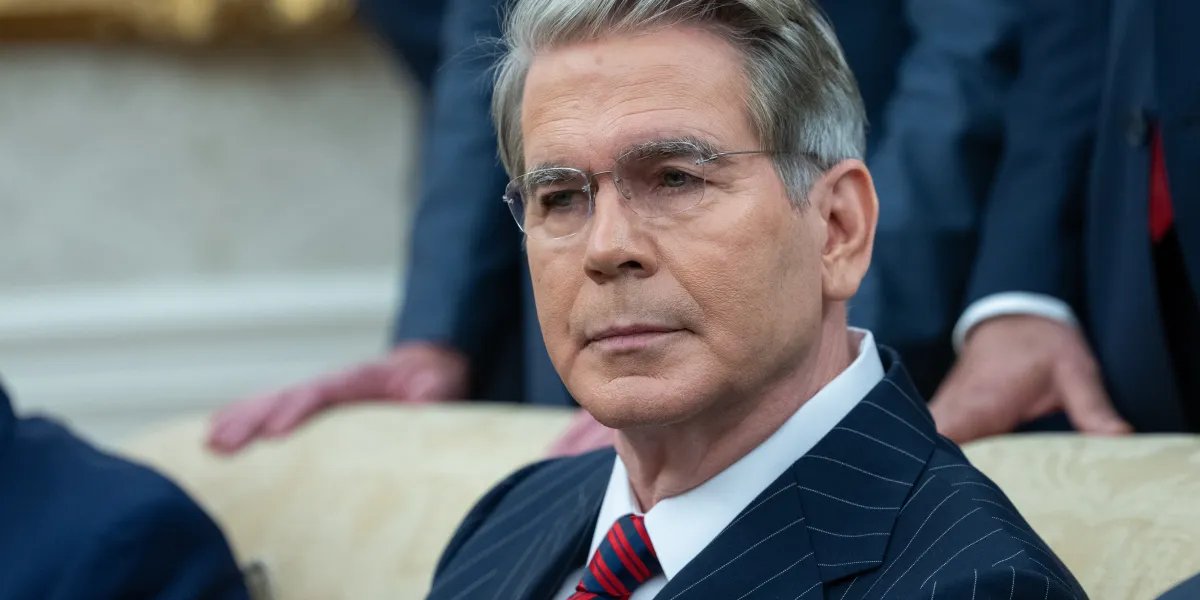
Scott Bessent is ‘sick of hearing about’ the K-shaped economy and declares it’s over
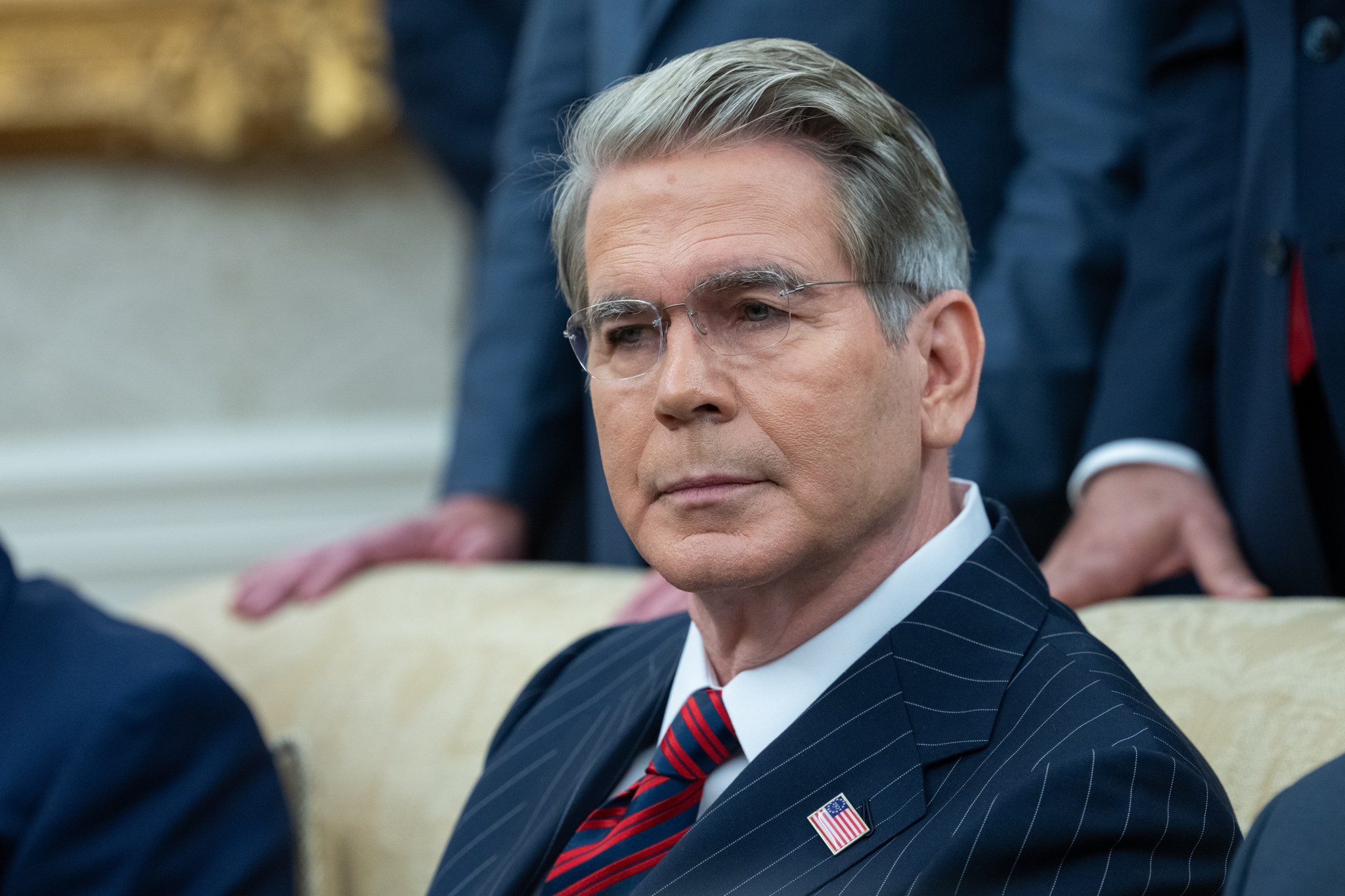
Scott Bessent has some good news for consumers this morning: The K-shaped economy is officially over! Consumers on the lower end of the income spectrum are no longer being left behind by their richer counterparts, he insists.
The Treasury Secretary said he is “sick of hearing about this K-shaped economy,” during a CNBC interview yesterday, adding: “I can say here definitively, the K-shaped economy is over.”
Instead, Bessent said U.S. households are in a C-shaped economy “where the lower end of wage earners are finally calling it back, just like they did in President Trump’s first term.”
Bessent said the bottom 25% of workers have seen a 2% real wage gain. That’s likely a reference to Treasury data for 2025 that showed blue-collar workers saw growth of 1.7% in the first five months of Trump’s presidency.
The Treasury Secretary also pointed to White House policy under the One Big Beautiful Bill Act (such as no taxes on tips or overtime, as well as reduced taxes for seniors on Social Security) as having a meaningfully positive effect on household finances. The act, described by the White House as the biggest tax break in history, purported to give Americans earning between $15,000 and $80,000 an average tax cut of 15%.
The bill also promised to increase tipped and overtime workers’ take-home pay by $1,500 a year, and has reportedly increased after-tax income for a typical two-child family by $7,600 to $10,900.
Bank of America has also observed that some elements of the K-shaped economy are beginning to close. In a note last week, chief U.S. economist Aditya Bhave wrote that consumer spending (excluding gas) has ceased to be K-shaped on a year-over-year basis—at least it had been for the previous fortnight.
There are three reasons for this trend, Bhave wrote: stronger job growth and/or lower tax withholding, June’s drop in gas prices, and the fact that the gap really opened up in June last year, meaning the base effect was favourable for the gap to reduce.
“With everything that we’re seeing in the media, it’s difficult to discern” economic upsides, Bessent added.
Broader data is yet to agree
Nonetheless, the data does not yet fully support Bessent’s theory. On the One Big Beautiful Bill Act, for example, both Goldman Sachs and Morgan Stanley have suggested that the Iran war’s knock-on effect on gasoline prices has almost entirely canceled out the promised windfall.
Likewise, wage growth by income percentile data doesn’t support the notion that the K-shaped economy has ended. The Federal Reserve Bank of Atlanta evaluates a 12-month moving average of wage growth by income quartile on an hourly basis. Its June update found the lowest quartile of wage distribution saw growth of 3.6%, while the top 25% of earners saw growth of 3.9%.
At no point in 2026, per the Atlanta Fed, has median wage growth for the bottom percentile of earners exceeded that of the top percentile. The quartile that has seen the most growth throughout 2026 has been the third.
Likewise, current drivers of wealth gains (notably, equities courtesy of the AI boom) are concentrated among higher earners. Joe Brusuelas, chief economist at RSM, wrote in June that 75 cents of every spent dollar generated by the equity rally flows through the top income quintile. “If we are counting on the stock market to sustain the consumer economy, we are leaning on a channel that deepens the K-shape rather than offsets it,” he said. “When it comes to overall spending, no matter which estimate of spending concentration you use, the wealth-effect channel is more skewed toward the top.”
In a note Thursday, BNP Paribas’s markets team echoed: “Equity holdings are concentrated among higher-income individuals, where the marginal propensity to consume (MPC) tends to be lower, but the overall gains have been much stronger.”
MPC measures the extra income a person spends rather than saves, and while this tends to be lower among higher earners (because their basic needs can be met by a smaller percentage of their income)—that doesn’t mean their consumption isn’t what’s powering the economy.
“The K-shaped economy—with the well-to-do thriving and everyone else lagging—remains firmly intact,” Moody’s chief economist Mark Zandi wrote last month. Citing Fed data, he highlighted for the 12 months ending in the first quarter of 2026, outlays by earners of $200,000 a year or more grew an estimated 6.5%—nearly 4% in real terms. Meanwhile, outlays by those in the bottom 80% were unchanged after inflation.