When we recently featured Tuckey Design’s rammed earth house in rural Wiltshire, we found ourselves wanting to learn more about one of the project’s collaborators: ERDEN, the architectural consulting practice built on more than 25 years of expertise at Lehm Ton Erde, the Austrian earthen-construction company founded by ceramic artist and earth-building expert Martin Rauch. Since establishing the practice in Schlins, Austria, in 1999, Rauch has helped reestablish earthen construction as a viable building method for the modern age. Today, Lehm Ton Erde works alongside architects around the world, consulting on projects from the earliest design stages through construction while advancing research and education around earthen building.
We wanted to know more. Ahead, the team at Lehm Ton Erde Studio answers our questions on everything from soil testing and sustainability to collaborating with architects and incorporating rammed earth into projects of every scale.
Photography courtesy of Lehm Ton Erde, except where noted.
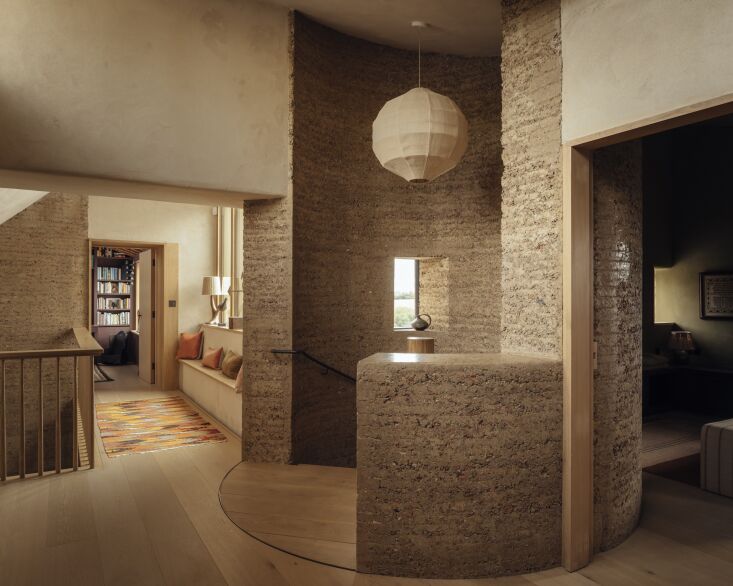 Above: Rauch consulted on the rammed earth Wiltshire house with Tuckey Design Studio, using a 25/25/25/25 ratio of clay, demolition aggregate formed of crushed brick and concrete, locally sourced limestone gravel, all mixed with water. Photograph by Jim Stephenson for Tuckey Design Studio.
Remodelista: What exactly is rammed earth?
Lehm Ton Erde: Rammed earth is a construction method in which layers of natural earth are compacted to form solid walls. In our projects, we use 100% earth from excavation material—without cement or other stabilizers. A common misconception is stabilized rammed earth (“dirty rammed earth”), where cement is added to the soil. We deliberately distance ourselves from this approach and work exclusively with pure, unstabilized rammed earth made from natural excavation material.
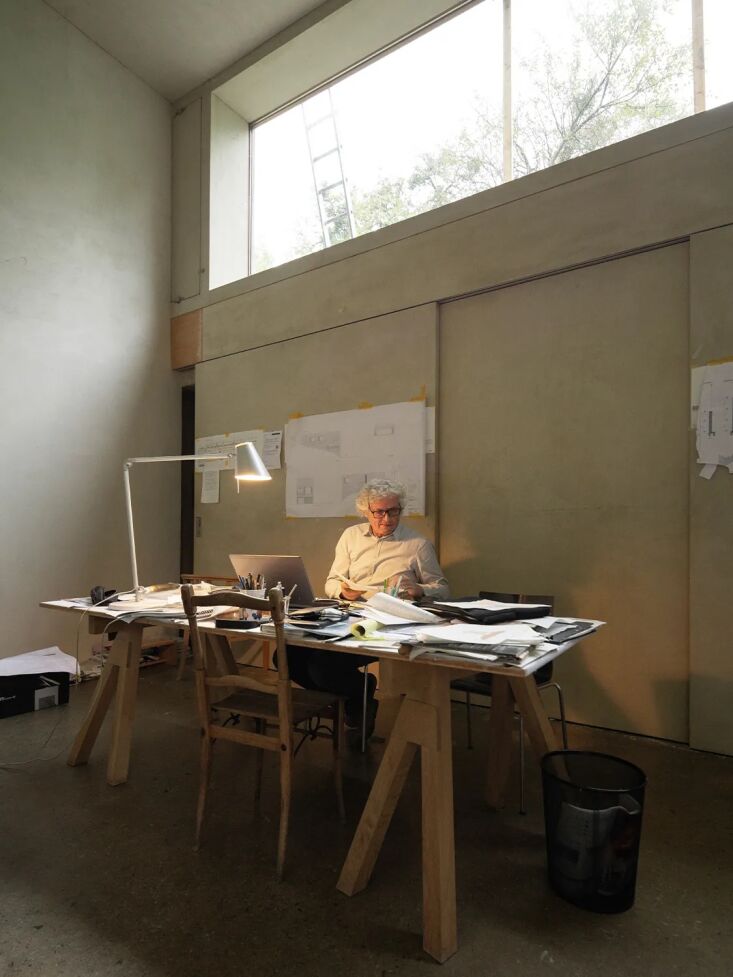 Above: Martin Rauch in the Lehm Ton Erde atelier. Photograph by Daniel Ammann for Lehm Ton Erde.
R: Rammed earth is one of the oldest building techniques. Why does it feel so relevant today?
Lehm Ton Erde: Rammed earth feels more relevant than ever because the construction industry is facing the urgent challenge of reducing its environmental impact. In the context of climate change, building with 100% natural earth from excavation material offers a low-carbon, circular alternative that turns locally excavated material into a valuable resource.
R: Can any site become a rammed earth project?
Lehm Ton Erde: In principle, almost any site can become a rammed earth project. We first look closely at the location and assess whether the existing soil is suitable and uncontaminated. We then take soil samples and carry out material tests to determine the composition, quality, and suitability of the earth for rammed earth construction.
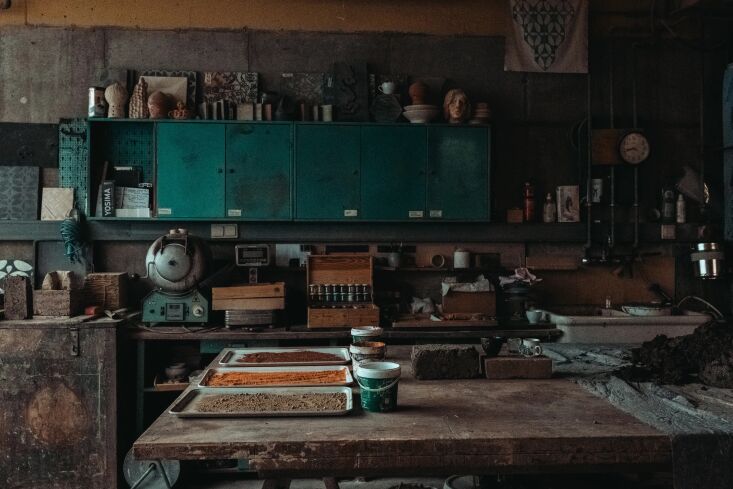 Above: Trays of clay, loam, and earth.
R: Is rammed earth always sustainable?
Lehm Ton Erde: Its environmental benefits decrease when heavy soil has to be transported long distances for production and then shipped back to the construction site. That’s why we set up our temporary field factories directly on or near the building site, where the excavation material is available. This minimizes transport and keeps the process as local and low-impact as possible.
R: How does Lehm Ton Erde typically collaborate with architects?
Lehm Ton Erde: The earlier we are involved in the planning process, the better. Early collaboration allows us to optimize the design for rammed earth from the outset, making the project more efficient and sustainable. We also have our own architectural design office, ERDEN Studio, which enables us to support projects from the initial concept through construction.
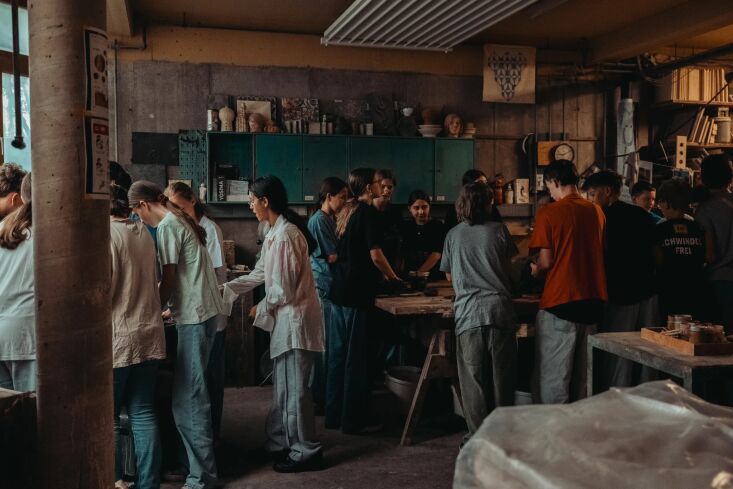 Above: Students working with clay, loam, and earth at the ERDEN School in Austria.
R: What’s the biggest misconception about building with rammed earth?
Lehm Ton Erde: The biggest misconceptions are often linked to a lack of knowledge and the regulatory requirements surrounding rammed earth. Because it is still an unfamiliar material in many places, architects and clients can be hesitant, and approval processes are often more complex. As experience and standards continue to develop, confidence in the material grows.
R: What can rammed earth do that concrete, brick, or stone can’t?
Lehm Ton Erde: One of rammed earth’s greatest advantages is that it is 100% reusable without any loss of quality. Unlike concrete or many other conventional building materials, it can be returned to the earth or reused as a building material again, making it a truly circular resource.
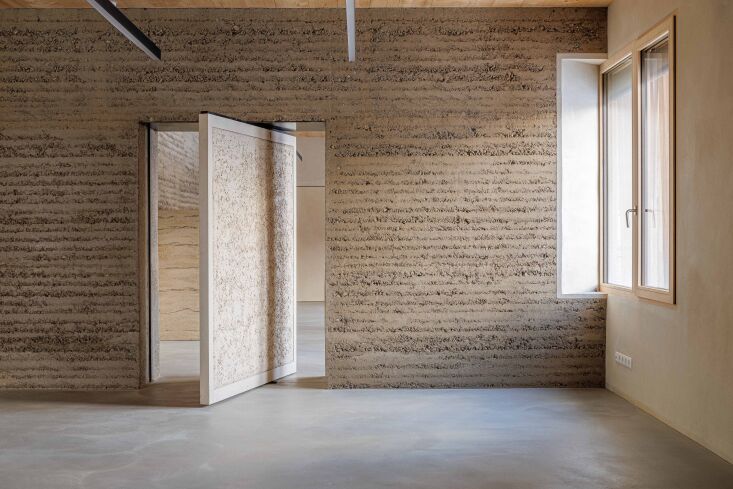 Above: The versatility of rammed earth construction exemplified in a pivot door.
R: Where should someone begin if they’re interested in building with rammed earth?
Lehm Ton Erde: The best place to start is by experiencing the material firsthand—for example, by visiting us in Schlins. Our workshop and new office building showcase the versatility of earth construction, from floors, walls, and ceilings to casein finishes, plasters, and ceramics. It doesn’t have to be an all-or-nothing approach. There are many ways to introduce earth into a project, and every step can be a starting point.
R: What does every successful rammed earth project have in common?
Lehm Ton Erde: Our company name actually expresses what every successful rammed earth project needs: a balance between material and craftsmanship (Lehm), a thoughtful design approach (Ton), and ecological responsibility (Erde).
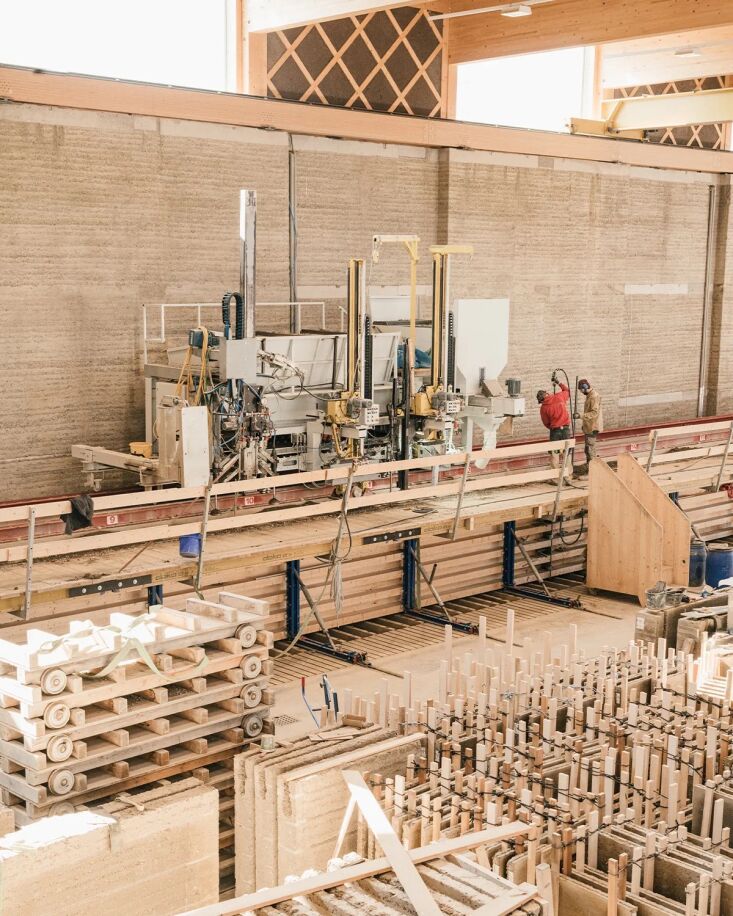 Above: Above: Lehm Ton Erde’s workshop in Schlins, Austria was designed as both a factory for prefabricated rammed earth elements and a working model for contemporary earthen construction. Photograph by Hanno Mackowitz.
R: Where do you see earthen construction heading in the next decade? A specialist material, or the future of building?
Lehm Ton Erde: We see earthen construction as a key part of the future of sustainable building. It has the potential to become not just a specialist material, but a fundamental approach to building for the next generation.
For sustainable build tips from other experts, see our posts: