President Donald Trump is increasingly urging the U.S. Senate to pass landmark crypto legislation known as the Clarity Act.
In a Truth Social Post, Trump said the Senate should pass the bill in honor of the late Sen. Lindsey Graham (R-SC) and to stay ahead of other countries in terms of crypto.
Trump and proponents of the bill are up against an increasingly tight window. Here’s the most likely scenario of what happens next.
What is the Clarity Act?
The Clarity Act is one of several pieces of legislation that Trump has pushed to support the crypto sector. The bill is intended to provide a broad policy framework to help clarify regulatory gray areas.
The bill accomplishes this on a few fronts. It attempts to more clearly state where regulatory jurisdiction lies, notably stating that the Commodities Futures Trading Commission (CFTC) will have oversight of the crypto-spot markets.
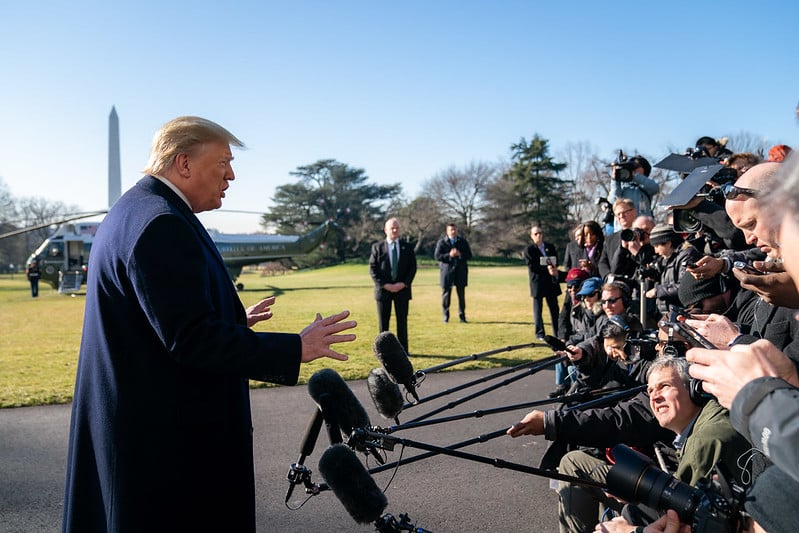
Official White House photo by Tia Dufour.
The bill also defines what a “mature blockchain” is, a key term that will set legal criteria and could ultimately determine whether tokens are treated as securities or cryptocurrencies. This is important because securities are subject to tighter regulation under the Securities and Exchange Commission (SEC).
The Clarity Act also contains important stablecoin language that defines when yield can be paid on stablecoins. This is a key topic because banks are concerned that too much leeway on this matter could drain deposits.
Specifically, the bill would not allow yield to be paid on idle stablecoins but would permit rewards on certain stablecoin activities or transactions. The bill also seeks to add consumer protections related to crypto and stablecoins.
Facing a tight window
The Senate will break for recess on Aug. 11 and won’t return until mid-September, leaving only a few weeks before both the Senate and House are out of session until the midterm elections.
“In order to pass a cryptocurrency market structure bill this year, we think Congress needs to finish the bill before the August recess,” Sitfel‘s Chief Washington Policy Strategist Brian Gardner said in a research note at the end of June, according to The Hill. He added:
Passing a bill during the lame duck session following the midterm elections is hypothetically possible, but unlikely… We expect that talks will continue, but the calendar is the enemy. Time is running short.
Odds of passage
The good news for hopefuls like Trump is that Kalshi paces a 73% likelihood of a Senate vote on the Clarity Act before its August recess (as of July 16).
The bad news is that the Senate has a thin majority and needs seven Democrats to help Republicans pass the bill. Although the legislation is viewed as bipartisan, the partisan nature of Congress makes passing any bill difficult.
There are also several concerns about the bill from various Senators and stakeholders. Some Democrats want more language to prevent members of Congress from making money on crypto. Notably, Trump has reportedly made more than $1 billion on various crypto ventures in 2025, according to his financial disclosures.
There are also concerns about the extent to which the legislation would permit criminal investigations into crypto-related matters, and banking trade groups continue to push back on the stablecoin language.
Interestingly, as of this writing, Kalshi assigned a 70% likelihood that the Clarity Act would receive at least 60 votes in the Senate, which are needed for passage. However, this number changes frequently and was only at 21% a few days ago.
So the most likely scenario is that a vote happens before the Senate’s August recess and that the bill passes, although I still wouldn’t call passage a guarantee.