New MLS Commissioner Offers Chance To Reset Financial Playing Field

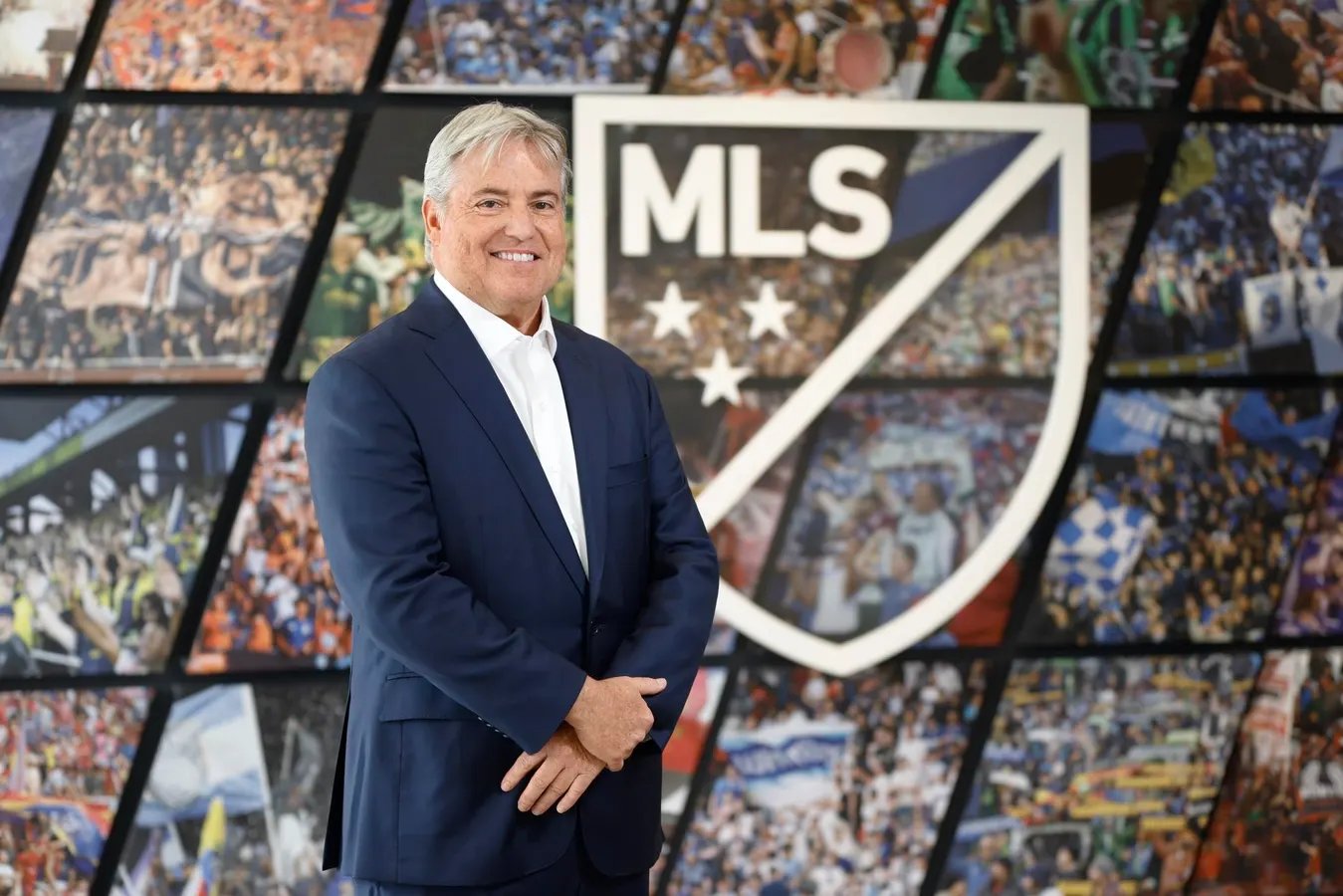
NEW YORK, NEW YORK – AUGUST 03: (EXCLUSIVE COVERAGE) Larry Berg poses for a portrait after being introduced as the next Commissioner of Major League Soccer on August 3, 2026 in New York City. (Photo by Mike Stobe/MLS via Getty Images)
MLS via Getty Images
After 27 years at the helm, Major League Soccer Commissioner Don Garber will step down effective at the end of 2026.
And as announced on Monday, his replacement comes in the form of a (relatively) familiar face for fans of the league: Los Angeles Football Club part owner Larry Berg will succeed Garber.
Berg was selected during a vote among MLS club owners, over fellow finalist David Nathanson – a former Fox executive.
Before he takes the helm, Berg will have to divest himself of his stake in LAFC. Yet his experience as part of that club could prove foundational in how he handles the head MLS job at a critical time in the history of the 30-year old league.
Since entering the league in 2018, LAFC has finished top-three in the Western Conference six times, played for two MLS Cups (winning one in 2022), and took home a U.S. Open Cup title in 2024. The club also regularly competes for top talent transferring into the league, and prioritizes spending money on the roster.
While Berg has not been solely responsible for that spending or on-field success, it’s likely to rub off on his early priorities for MLS on January 1, 2027.
New Salary Rules
In the short-term, MLS is on the precipice of a significant shift in its business model.
For 2027, the league will hold a 14-game “sprint” season starting in February, that concludes in May. That will be followed by a brief break, before returning to the field in August and aligning to the traditional autumn-to-spring schedule most of the world’s top leagues observe.
In doing so, MLS changes its primary player acquisition window from winter (December/January) to summer (June/July). But trying to compete for top talent against clubs across Europe and South America – among other regions – requires having money to spend. Money the current salary structure doesn’t necessarily allow for, as most teams spend south of $20 million per year on their entire rosters.
Even before Berg takes over, some of those mechanisms may be changing, however.
In late July, The Athletic’s Paul Tenorio and Tom Bogert reported that MLS would be hearing a presentation on “significant” changes to its salary structure – potentially including a more open salary cap system.
Berg, coming from LAFC, would almost certainly be in favor of pushing those ideas forward. Other, more recent ownership groups in Atlanta, New York and Miami would likely be in favor as well, as would clubs like the LA Galaxy and New York Red Bulls.
An adjusted cap wouldn’t simply benefit bigger-spending clubs, though. It would increase the overall quality of play in the league and push the entire product forward. On that front…
AUSTIN, TX – JULY 22: The MLS logo and Apple TV logos are displayed on a microphone flag ahead of the MLS All-Star Skills Challenge on July 22, 2025, at Q2 Stadium in Austin, TX. (Photo by David Buono/Icon Sportswire via Getty Images)
Icon Sportswire via Getty Images
Crucial Moment For TV
Just three full seasons after the start of MLS and Apple’s landmark 10-year, $2.5 billion exclusive rights deal, the sides renegotiated to conclude the contract after the 2028-29 season.
When those rights head back to the open market, ESPN’s Ben Strauss has reported that the league is eyeing annual payouts of $400-$500 million per year; nearly twice what Apple had for complete exclusivity.
The challenge for Berg will be how to make that happen given the factors at play.
First, when MLS signed the deal with Apple, that was fueled in part by the fact that the tech giant was willing to pay far more for those rights than other potential suitors. While also getting the full slate of games.
Additionally, Apple and MLS came to that agreement when MLS was primarily in a summer timeframe – a stretch when there’s less TV competition for live sports (and new shows) beyond baseball.
As MLS moves to the “traditional” soccer calendar, it will be competing directly with the English Premier League, La Liga (Spain), Serie A (Italy), Bundesliga (Germany), Ligue 1 (France) and others around the world for eyeballs.
Without those challenges, MLS has not necessarily made significant progress with its matches entirely housed on Apple. Now, a new U.S. media partner or group of partners will have to go up against the NFL, NBA, NHL, college football and basketball, plus all of the aforementioned, “better” leagues with established U.S. fandoms as well.
Berg and MLS will be faced with an unenviable task: How do you convince would-be TV partners that the current product can jump-start its growth when up against global clubs with far more resources? Never mind the domestic behemoth that is the NFL?
It’s also worth wondering which potential partners even have the space to give MLS a premier spot in its TV lineup, given all of the sports it would be up against in this fall-to-spring alignment.
NBC has no room, or need, given its existing Premier League, NFL, college football and NBA investments. CBS has the NFL and March Madness, plus the UEFA Champions League. Fox has football. ESPN has limited room for soccer in its own crowded lineup.
No matter how well-suited Berg is for the job (and he is), those media hurdles would indicate he has his work cut out for him as MLS plots the way forward. And even with higher salaries and better players, improved exposure and revenues from the media rights deal are what will dictate his success in the role.