I Watched the Iconic Togo Chair Being Made | Livingetc
We landed in Lyon just as France was celebrating a World Cup win. Sitting at the iconic Café Comptoir Abel in the heart of the city, we listened to cheers drifting in through the open windows. I found myself wondering how many people watching from the apartments above were doing so from the unmistakable folds of a Togo, one of France’s most iconic sofa designs.
There’s a reason it’s on my mind. I’m visiting France on a fact-finding mission, and the next morning, we left the city behind and drove just an hour away east to Briord and Montagnieu — two small, quiet towns where the story of Ligne Roset, creators of the Togo and many other design classics, really unfolds.
Our first stop was Studio 1860, the brand’s bright and welcoming showroom. Walking through the space with Olivier Roset didn’t feel like a guided tour. It felt more like catching up over coffee and opening a family photo album, with each piece revealing a little secret from the brand’s past that’s always set it apart.
Togo is the perfect example. Dreamed up in 1973, a slouchy, all-foam sofa with no frame and no fuss, a cloud-like seat that broke all the old rules. With more than a million sold of them sold, it remains a reference point when considering what separates the best sofas to buy from those that simply look good for a moment. But standing in Studio 1860, you realize the Togo isn’t a one-off. It’s part of a much bigger story about taking risks, collaborating with designers, and always asking, ‘What if we did things differently?’
“The idea is to expand the storytelling of our history and really make it a destination where you can view the archive like a book or even better, a museum,” Olivier told me.

Inside Studio 1860, original sketches and material samples trace the creative process behind decades of Ligne Roset designer collaborations.
(Image credit: Future)
And the Togo might be its most compelling chapter. We know the slouched silhouette and unmistakable 1970s ease, but seeing it within the archive revealed how much of its story goes beyond the shape. As a stylist, I arrived eager to see the craft behind each fold; what I left with was a sense of why some designs endure, shaping the way we live, and what it really means to bring a piece like this home.

At Studio 1860, an armchair’s upholstery pattern is displayed beside the finished design, revealing just how much precision sits behind its sculptural form.
Image credit: Future

A playful study in form and function of Tolozan Lounge chair by Eric Jourdan, 2002 where a vivid pink lounge chair is paired with an integrated side table.
Image credit: Future

A display of colorful Ligne Roset chairs and sculptural stools at Studio 1860, tracing decades of experimental furniture design.
Image credit: Future

Downtown sofas, 2006 displayed beneath Poisson suspended lights designed in 1998.
Image credit: Future
The Effortless Slouch Redefined Living
The Togo arrived just as the living room was becoming less formal and far more central to everyday family life. By the 1980s, French homes were increasingly organised around television, conversation and longer evenings spent together, with the arrival of colour TV and video recorders making the room feel more lived in than ever. Seen in that context, the Togo’s low, enveloping form feels less like a stylistic rebellion and more like a design that understood where domestic life was heading. There’s an effortless, lived-in charm to the Togo that continues to intrigue today. That signature low-slung profile immediately changes the energy of a space — suddenly, the room feels less formal and more inviting. Its modularity is an interior stylist’s secret weapon: whether you’re after a laid-back reading nook or a sprawling zone for friends to gather, it flexes to fit your life. No wonder, decades on, the Togo remains the go-to to shift how a room looks and feels.
Seeing it inside the Roset family’s preserved home, and yes, we were lucky enough to be invited in, made that shift feel tangible.

Stepping inside felt like entering a beautifully preserved chapter of the Roset family story, where every piece still carries the warmth of a home truly lived in.
Image credit: Future

Seeing the Togo in the setting it was made for, beside the ML80 bookshelves, textured green walls and thick carpet, transported me straight back to the era that shaped it.
Image credit: Future

The living space brings together collectables from across the world, from South African art to Nordic furniture, all layered with the Roset family’s own design history.
Image credit: Future

This corner felt especially personal, where antique furniture, playful art and sculptural finds sit together like pieces gathered across generations.
Image credit: Future
For me, that is what separates a piece that belongs to an era from one that goes on to define it.
The iconic folds are designed with intention
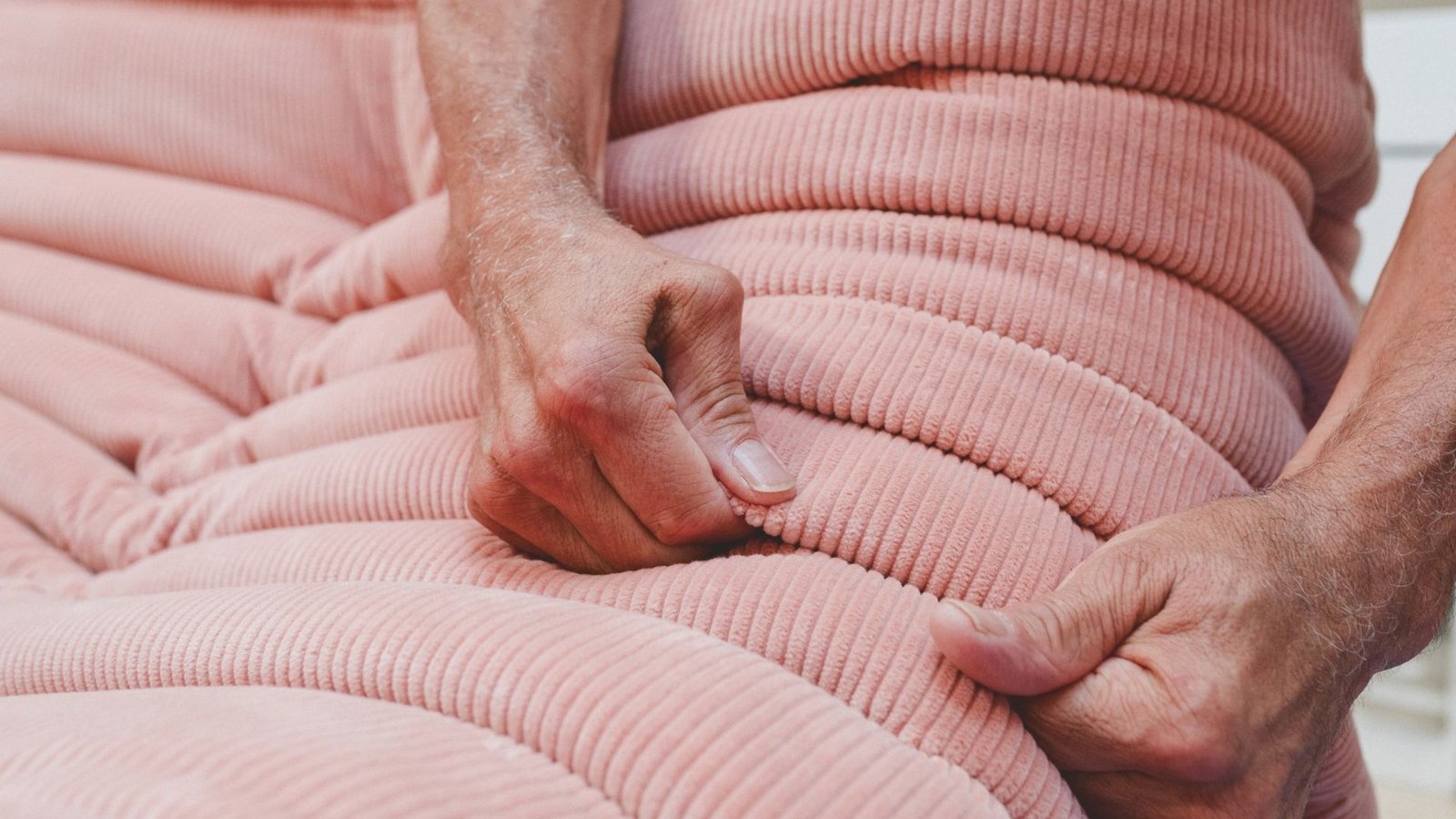
The iconic folds, it turns out, are as intentional as they are inviting. At the factory, we watched as a master upholsterer began to dress a two-seater armless Togo in Kyoto Gold leather. Every movement was purposeful and a choreography honed over more than a decade. Each fold is shaped and secured with blind tufting — a subtle but brilliant detail that makes all the difference. You really do feel it when you sit down: that sense of genuine craft, right down to the last detail. It is a reminder that how long a sofa lasts has as much to do with the craftsmanship beneath its surface as the material we see.

(Image credit: Ligne Roset)
The process begins long before any sewing. On the factory floor with Asa Hirst, Ligne Roset’s UK Director, we watched hides move under scanners that spot even the smallest flaw. Technology provided accuracy, but human judgment still determined how each material could be used to its fullest potential. “As sustainability becomes ever more essential, we’re committed to repurposing and reusing every viable piece,” Asa said. It’s the kind of care you notice in every Togo.
Icon status hasn’t changed its making
Now being carried forward by a fifth generation, the company has grown without letting its most recognisable designs rely on reputation alone. Keeping production in house means the care behind each piece is still visible, from the first cut of foam to the final hand finished detail.
For me, that was the real lesson in longevity. A famous name may draw you in, but lasting value comes from continuing to uphold the standards that made the design matter in the first place.
For more inspiration, subscribe to the Livingetc newsletter.