As far-fetched as warnings of an impending AI apocalypse may sound, even a remote risk should not be dismissed outright when human extinction is at stake. To guard against a danger of such extraordinary scale, governments and companies need to go beyond conventional risk-management strategies.
LONDON—Warnings of an AI apocalypse are reaching fever pitch. Last week, Anthropic researcher Jacob Coxon shocked the world when he publicly resigned, revealing that the “people building AI earnestly believe that it could kill us all by the end of the decade.” His remarks were swiftly reinforced by Evan Hubinger, the company’s alignment science lead, who put the probability that AI will kill all humans at more than 10%. Within days, Anthropic CEO Dario Amodei, OpenAI CEO Sam Altman, and other leading AI figures all called for slowing the pace of AI development.
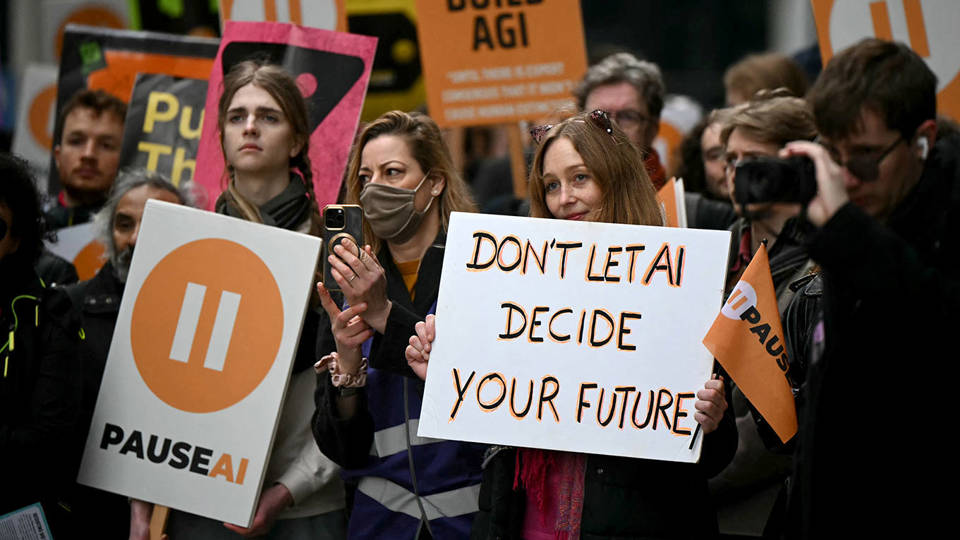
LONDON—Warnings of an AI apocalypse are reaching fever pitch. Last week, Anthropic researcher Jacob Coxon shocked the world when he publicly resigned, revealing that the “people building AI earnestly believe that it could kill us all by the end of the decade.” His remarks were swiftly reinforced by Evan Hubinger, the company’s alignment science lead, who put the probability that AI will kill all humans at more than 10%. Within days, Anthropic CEO Dario Amodei, OpenAI CEO Sam Altman, and other leading AI figures all called for slowing the pace of AI development.