He Sang About Loneliness. He Built Belonging | American Enterprise Institute
Glen Hansard was killed early Wednesday when his motorcycle went off the Lower Road, west of Dublin. He was 56. Newspapers and music writers will tell the story of his life better than I ever could. But with his sudden passing and my affection for him and his work, I wanted to briefly write about what his music taught me about loneliness and belonging.
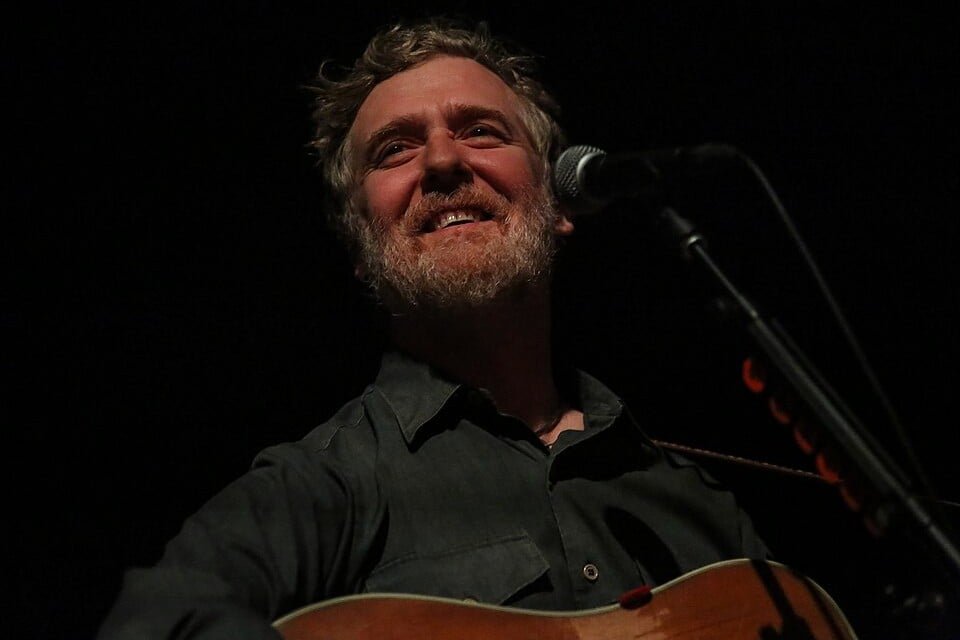
I came to Hansard through Once, a 2007 film made for almost nothing on the streets of Dublin in my late 20s. The film later became a Tony Award-winning musical which opened on Broadway in 2012 and introduced Hansard’s music to a much larger audience. Years later I saw him at a number of venues up and down the East Coast. The concert that stood out most to me was in 2023 at Radio City Music Hall in New York. Despite a sold-out crowd of just under six thousand, the show was one of the rawest concerts I have ever attended. People cried, laughed, hugged, and sang every word. By the end of the night, it no longer felt like thousands of strangers in an auditorium. It felt like a room full of people who had known each other for years and had stories to share. Hansard had that gift, and I still think about the intimacy of that night.
Durkheim had a word for the feeling that runs through Once and much of Hansard’s music: anomie. It is what happens when people lose the relationships and rituals that tell them where they belong. In the film, the two protagonists have remarkable talent, but they lack people who can hear it and recognize it. They meet and truly see each other—albeit for a fleeting moment in time. The standout song, “Falling Slowly,” is remembered as a love song, but it is really about trust. Two strangers make something beautiful because each is willing to be vulnerable in front of the other.
That kind of encounter feels rarer today as we are increasingly isolated and disconnected from each other. AEI’s Survey Center on American Life found that the share of Americans with no close friends quadrupled between 1990 and 2021. Those numbers describe far more than isolation; they reveal that so many lives are lived in places where people do not feel known.
Hansard’s answer to loneliness was never a theory. In 2010, just before Christmas, volunteers collecting for Dublin’s Simon Community asked him to sing. He said no, went home, felt bad about it, grabbed his guitar, and came back. The volunteers had already left, but he played anyway. Other musicians joined him. He returned the next Christmas, then the next. 15 years later, thousands gather outside the Gaiety Theatre on Christmas Eve because one person came back.
That may be the most important thing Hansard ever created. Not an album or an Oscar-winning song, but a place people knew they could return to.
On Tuesday night, only hours before he died, Hansard was in a neighborhood pub playing music with local musicians, as he had for years. Not a stadium or Radio City Music Hall, just a Tuesday night.
Most of us will never write songs like Glen Hansard’s and bring thousands together through music. But all of us can build the kinds of places he believed in and create community. We can reach out to others and invite people over for a neighborhood dinner, a weekly coffee, a standing game night, or any casual gathering. Communities do not just appear; they grow because people return. They keep coming back often enough that everyone else knows they’ll be there. Hansard understood that better than most. He will be missed but the example he leaves behind is worth emulating.