Hallelujah in the Berkshires | American Enterprise Institute
Every year since graduate school, I try to get to the Berkshires in western Massachusetts and visit Tanglewood, where I enjoy the music of the Boston Symphony Orchestra (BSO).
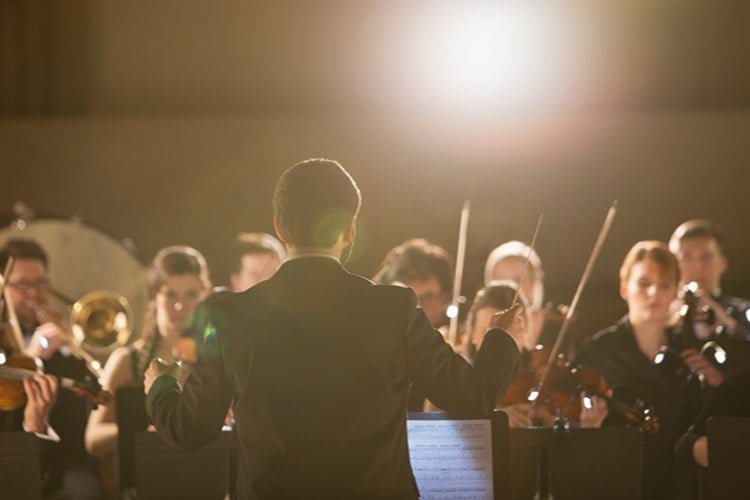
This past Friday, I made it to the Koussevitzky Music Shed and—as is the case at so many Tanglewood performances—there was an encore. But instead of another short piece of traditional classical music, the symphony played Leonard Cohen’s “Hallelujah.”
With the first note, the Shed grew quiet, and during the song’s refrain, the audience began to sing. It was an uplifting, almost spiritual moment, and I have been thinking about Cohen’s masterpiece and the entire evening since.
The concert was billed as “Gratitude and Friendship,” and was framed as a tribute to France within the Symphony’s “We the People”—an America at 250 celebration. The host and featured performer, the famed cellist Yo-Yo Ma, described music as a form of friendship across time and geography.
The concert opened with Gabriel Fauré’s haunting Cantique de Jean Racine and continued with work from Brahms and Messiaen.
It was only on the drive home, however, that I realized what I had been listening to. Nobody had planned a Jewish evening; the program said France, friendship, gratitude, and 250 years of America. But a clear and powerful Jewish thread ran through the entire night, starting with the very building I had been sitting in.
First, it’s worth noting that the Shed at Tanglewood is named for Serge Koussevitzky, the celebrated conductor of the Boston Symphony Orchestra for a quarter century. He founded an academy at Tanglewood in 1940 and taught a young Leonard Bernstein to conduct in the rolling Berkshire fields. He was born in 1874 into a family of Jewish musicians in rural Russia and his father made a living as a klezmer violinist.
At the piano was Emanuel Ax—a globally admired pianist who has said, “My parents were fully assimilated Jews, but I identify myself as Jewish and go to Israel regularly. I perform with the Israel Philharmonic and do benefits.”
Ax was born in Lviv in 1949 to Joachim and Hellen Ax, both of whom survived World War II, his father in the concentration camps. His family crossed the Atlantic when he was ten, arriving with no English and no money. Ax has said his parents pinned all their hopes on him and today he supports Israel. At an April 2025 concert in Israel, Ax declared “From the bottom of my heart I dedicate the encore to my fellow pianist Alon Ahal and to the release of all the hostages.” Thankfully, Ahal was released from Gaza in October 2025.
After Ax, the BSO performed the Brahms Double Concerto, which the program rightly called a gift of reconciliation. The history here is that Brahms wrote it in 1887 in hopes of repairing a seven-year silence with his collaborator, Joseph Joachim—the Hungarian-born Jewish violinist who had helped make his career; fortunately Joachim accepted the olive branch, their friendship resumed, and he played the premiere.
And at the end, Leonard Cohen’s unannounced piece—“Hallelujah”—whose very title is itself a Hebrew word. The chorus of the song cannot be sung without pronouncing a name of God in a language most of the singers do not know they are speaking.
I have to note that not a word of this Jewish thread was mentioned from the stage—no acknowledgment or framing and nothing was in the evening’s printed program about Jewish contributions to American music. But the evening was nevertheless thoroughly Jewish.
What I keep dwelling on is that this concert was not a case of Jewish erasure—rather, it was an American evening, and the Jewish influence in it had been so deeply accepted that any special mention would have been odd.
This is exactly what the American Dream should look like: thousands listened to and enjoyed the work of Jewish creators and performers all evening, and nobody had to mention the Jewish thread—that is authentic impact and belonging.
We hear constantly that Jews are a people apart and many narratives of hate now argue that Jewish influence is imposed on American life rather than woven into it. This is not how so many Jews saw their own American odyssey—certainly not in my own family which sought to become American first and foremost. Many Jews would prefer quiet acceptance as part of the nation, and that is what my summer concert night in the Berkshires exemplified.
I was part of a huge audience in the Berkshire hills that sang a Hebrew word together in the dark. The song had Jewish origins and themes, but the song is not and was never intended to be for Jews—it was written for everyone.