
Future-proofing government digital capability must include citizens too

Image: Magnific.com
The final extract from Global Government Forum’s new study on future-proofing digital capability explores why governments must build digital capability beyond the civil service – equipping citizens with the skills, trust and support needed to adopt digital services
The Future-proofing government digital capability study, led by Kevin Cunnington, executive advisor at Global Government Forum (GGF) and former director general of the UK Government Digital Service, explores how government organisations can ensure they have the right capability in place to deliver on their digital visions.
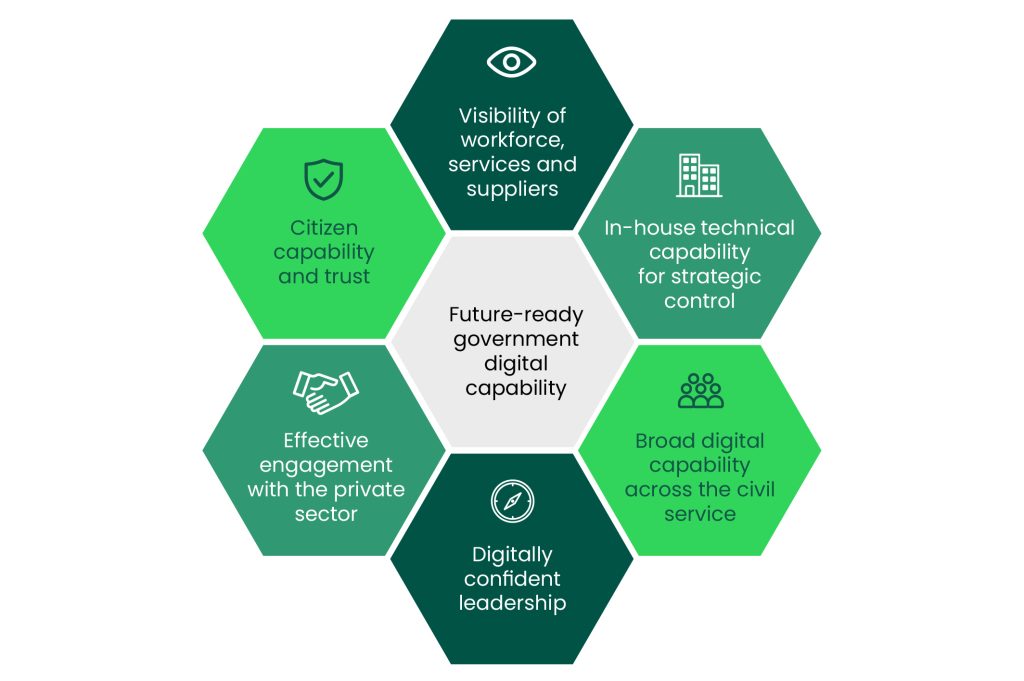
Based on interviews and a roundtable with over 20 digital leaders from around the world, including the UK, the US, Canada, Singapore, Australia and New Zealand, the report identifies six common foundations that underpin digital capability across governments, and how to make sure these foundations are resilient in a fast-changing environment.
Cunnington writes in the foreword: “The ability to meet today’s expectations and capitalise on tomorrow’s opportunities depends on capability – the right people, skills and partners to deliver. Governments need a clear understanding of their digital service priorities; strong in-house technical capability to retain control; a workforce that is confident in using digital tools and approaches; and a strategic approach to engaging and shaping the supplier ecosystem. They also need to ensure citizens are well-equipped to adopt digital services.”
This extract explores the sixth pillar: citizen capability and trust.
Download the report: Future-proofing government digital capability: Six foundations for success
Citizen capability and trust
Digital capability is no longer confined to the state itself. As services move online and digital channels become the default, governments can only transform as fast as citizens are able to adopt and use these services.
Across interviews, it was clear that this issue is increasingly on the minds of government leaders. As one interviewee put it: “We need to make sure that we educate the broad population, not only civil servants.”
A central aspect of this concern is also trust. Several countries have experienced resistance or backlash to digital programmes, including digital identity systems, AI initiatives and the use of data. While these reactions are shaped by multiple factors, interviewees consistently pointed to limited public understanding as a contributing issue.
“It comes down to building digital trust and digital literacy because people don’t understand these concepts,” one said. As another interviewee noted: “We definitely need to be more aggressive in terms of our digital literacy awareness.”
Alongside trust, digital inclusion remains a persistent challenge. The COVID-19 pandemic highlighted that while many citizens are willing to engage with digital services, some are unable to do so due to a lack of skills, access to devices or connectivity. This creates a risk that digital transformation may inadvertently exclude certain groups if these barriers are not addressed.
Read more: Why governments must ‘grab the nettle’ on digital capability
Building citizen capability
Governments are supporting citizen digital capability in different ways. Ukraine has launched Diia.Education, a free ‘edutainment’ platform enabling citizens to develop digital literacy and reskill. Estonia’s Eesti.ai project aims to train at least 100,000 people via practical workshops to help them understand how AI affects professions and roles and increase their ability to assess AI’s opportunities, risks and limits.
Ireland’s Digital Public Services Plan 2030 commits to services that are both “digital by default” and “inclusive by default”, supported by a Digital Inclusion Roadmap that includes assisted digital provision, such as through community infrastructure like libraries, where citizens can access devices and receive in-person support.
Despite these efforts, interviewees highlighted practical constraints, particularly funding. As one noted: “It’s like any government; it’s a funding issue… there are not many governments at the moment that can prioritise everything.”
Beyond formal training and support, governments are also rethinking how they communicate and engage with citizens. One interviewee reflected on the challenge of reaching the public effectively: “We are thinking about how to reach people… What platform should we be on? …Writing news is long outdated.”
There was broad agreement that consolidating services through a single government platform, rather than fragmented agency-level communication, helps citizens better understand and adopt digital services.
Turning strategy into delivery: Find out more about Global Government Forum’s training and advisory services
User-centred design
At the same time, interviewees emphasised the importance of designing services that are intuitive and easy to use. This means bringing citizens into the design process as well as ensuring there is adequate user experience expertise in place in the civil service.
Interviewees have found through surveys and other feedback mechanisms that for many users, interacting with government services can be “like a nightmare”. In response, several governments are aiming to make services “as easy as ordering an Uber or booking an Airbnb”. When services are designed effectively, interviewees reported that “people start to love it, and they start to have trust in government and in governmental products”.
This has led to a stronger focus on user- centred design, including involving citizens directly in service development, testing and iteration. Rather than relying on large, infrequent system changes, governments are increasingly adopting agile approaches that allow services to evolve based on user feedback. As one interviewee put it: “People should not see the difference between a governmental product and a business product, because their behaviour as a consumer is the same.”
Citizen capability is clearly a critical factor in digital government. Without sufficient levels of trust, understanding and access, even well-designed services may struggle to achieve adoption or deliver impact. As a result, governments are increasingly recognising that they also have an important role in building broader capability in society.
Building the foundations for future-ready capability
- Digital inclusion as a core design principle. Governments will need to ensure that services remain accessible to all users, including those with limited digital skills or access to devices.
- Citizen trust as a capability issue. Building understanding of technologies such as AI and data use will be essential to support trust and adoption, and avoid backlash.
- User-centred service design. Designing services that are simple, intuitive and aligned with real user needs will support adoption.
- Clear and consistent communication. Governments will need to engage citizens through appropriate channels and formats, helping them understand and adopt digital services.
GGF will now take the collaborative opportunities identified in this report forward – if you’d like to be involved, get in touch by emailing [email protected] so we can structure the work to be as useful as possible.

Participants in the study were as follows (job titles reflect those at the time of interview/roundtable participation):
- Dr Subho Banerjee, deputy commissioner, head of the Australian Public Service Academy and capability, Australian Public Service Commission
- Gregory Barbaccia, federal chief information officer, Office of Management and Budget, United States
- Thomas Beautyman, deputy director of government digital capability, Department of Science, Innovation and Technology, United Kingdom
- Dominic Chan, assistant chief executive, product, and chief information officer, GovTech Singapore
- Marie-Chantal Girard, president, Public Service Commission, Canada
- Shafiqa Dawood, chief digital and technology officer, Department for Education, United Kingdom
- Wolfgang Ebner, federal chief digital officer, Austria
- Richard Gevers, head of service design and delivery, Digital Services Unit, South Africa
- Luukas Ilves, former chief information officer and undersecretary for digital transformation, Government of Estonia, and advisor to the deputy prime minister and minister of digital transformation, Ukraine
- Valeriya Ionan, advisor to the deputy prime minister of Ukraine on innovation, digitalisation and global partnership and former deputy minister of digital transformation, Ukraine
- Birna Íris Jónsdóttir, CEO, Digital Iceland, Iceland
- Paul James, government chief digital officer, New Zealand
- Romina Kostani, deputy general director of the National Agency of Information Society, Albania
- Chris Leck, group chief technology officer, Public Sector Science & Technology Policy & Plans Office, Prime Minister’s Office, Singapore
- Barry Lowry, government chief information officer, Ireland
- Lauri Luht, government chief information officer, Estonia
- Dominic Rochon, government chief information officer, Canada
- Haseley Straughn, digital development policy coordinator, Ministry of Industry, Innovation, Science and Technology, Barbados
- Jaanus Vant, AI and data strategy coordinator, Ministry of Economic Affairs and Communications and Ministry of Justice, Estonia
- Paul Wagner, chief executive officer, Canadian Digital Service, Canada
- Vicky Wang, senior director, digital workforce transformation, Smart Nation, Singapore
- Claire Wraith, head of strategic workforce and transformation, Government Digital Service, United Kingdom