Europe’s wildfire ‘protection gap’ is growing, insurers warn
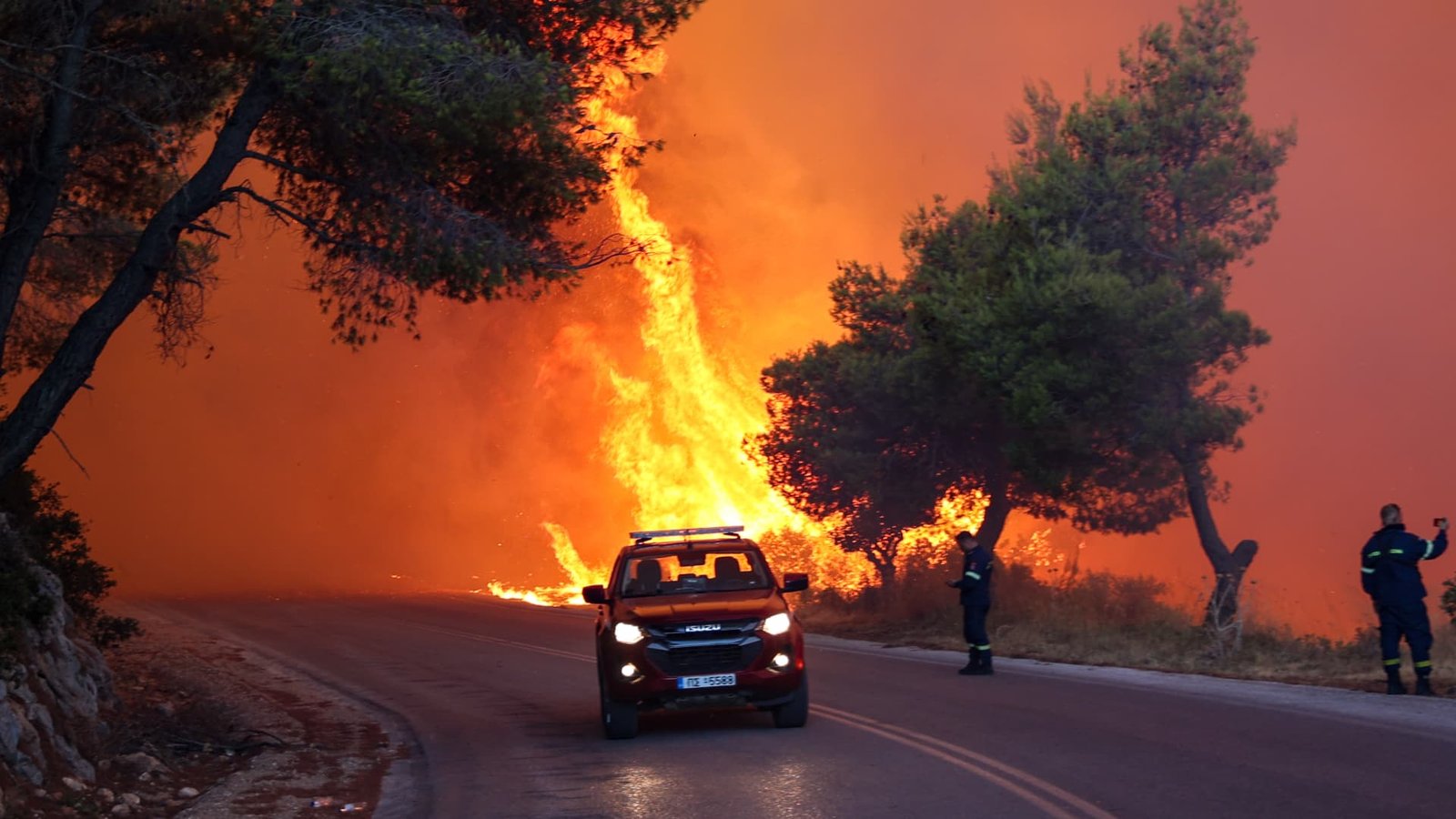
Firefighters conduct works to extinguish wildfires in Agia Paraskevi, West Attica, Greece on August 1, 2026.
Anadolu | Anadolu | Getty Images
As wildfires, heatwaves, and extreme weather are becoming a permanent feature of European summers, insurers warn that the region faces a growing “protection gap” as disaster recovery costs outpace insurance coverage.
A gigantic wildfire ravaging parts of France and Spain began in July and has destroyed over 300,000 acres of land, in what’s been described as a “clap of thunder” for the local economies. More recently, Greece saw a wildfire outbreak worsened by 100 km per hour winds.
To top it off, the region has seen several heatwaves over the summer that have prompted red alerts, threat-to-life warnings, and droughts, as temperatures have regularly exceeded 104 degrees Fahrenheit.
Some of Europe’s biggest insurance companies told CNBC this week that the region isn’t adequately prepared to deal with the risks of wildfires and weather disasters, leaving a substantial share of financial damage uninsured.
Zurich Insurance Group’s CEO Mario Greco said all weather risks are insurable, but it is becoming increasingly expensive to deal with the costs.
“We have a lot of experience from the U.S. and Australia that wildfires can be prevented, can be mitigated, but they require systemic intervention, which often countries, local jurisdictions, governments-they’re not ready to do because they don’t really visualize, they don’t feel the risk yet, but the risk is there,” Greco said in an interview with CNBC’s Carolin Roth on “Squawk Box Europe,” on Thursday.
Extreme weather can drag on the fiscal budget of countries, as costs related to cooling, healthcare, emergency infrastructure, transportation, and agriculture can weigh on the wider economy.
Additionally, Insurance companies paid out $56.3 billion in losses for wildfires in the 2010s, six times more than the $8.7 billion they paid in the 2000s, a report from Allianz Commercial noted in June. The sectors hardest hit include utility and energy, real estate, construction, agriculture, and transportation.
Protection gap
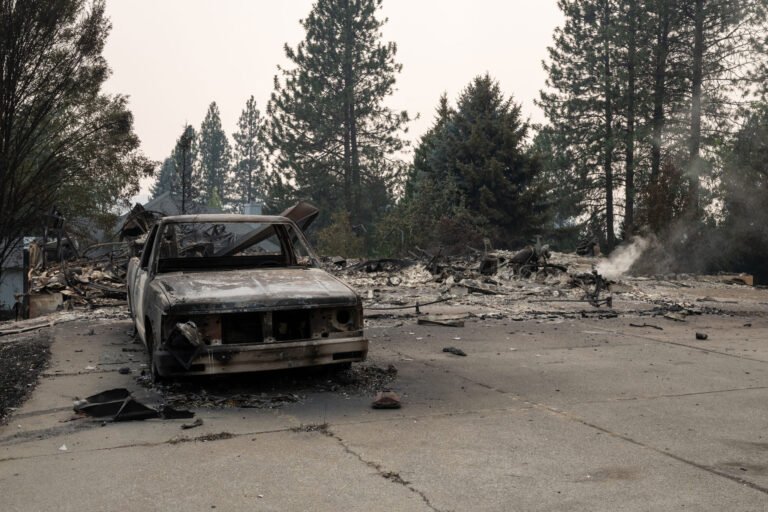
The devastating Los Angeles wildfires in January last year highlighted the destruction of assets of some of America’s wealthiest residents, costing insurance firms Munich Re and Hannover Re a combined $1.9 billion in the first quarter of 2025.
According to the Swiss Re Institute, the LA wildfires were the costliest wildfire event globally, amounting to insured losses of $40 billion and driving total natural catastrophe insured losses for 2025 up to an expected $107 billion.
The total cost of wildfires and heatwaves up to the end of July cost around 3.1 billion euros ($3.5 billion), for five Eurozone countries most exposed to the fires, including Greece, Spain, Portugal and Romania, according to calculations by the Financial Times. That’s above an average estimate of a 2.5 billion euro annual impact for the whole of the EU.
In comparison to the U.S., much of Europe’s wealth remains uninsured against natural catastrophes, said Swiss Re‘s Chief Financial Officer Anders Malmström.
“There is still a protection gap, particularly in Europe, which means there’s a lot of wealth here, but it’s not protected through insurance. But it always starts with assessing the risk, then mitigating the risk, and then you can price the risk and make sure that insurance covers the residual risk here,” Malmström said on “Squawk Box Europe” on Thursday.
He added that the risk exposure has only increased as more wealth has accumulated in these exposed areas, and the houses have become more expensive.
“So you have this combination of both, more events with a higher kind of impact. At the same time, you have more that you need to protect in these areas, and that together increases the risk overall for society,” Malmström said.

Zurich Insurance’s Greco said his company continues to talk to countries and local jurisdictions to make them aware of the risks, including setting up a unit called Resilient Solutions, which helps customers to create prevention and mitigation solutions for everyday problems from cybersecurity to climate change.
As Europe faces increasingly extreme weather, the insurance industry will play its part in building resilience and backstopping countries, Munich Re’s Chief Financial Officer Andrew Buchanan added.
“There’s a human and societal aspect to all of this,” he said, adding that insurers can help liquidity to flow in times of distress when people and businesses are facing the most difficult moments in their lives.
Both Zurich Insurance and Munich Re said their companies have limited exposure to the European wildfires.