‘Controlled burns’ could make future wildfires less dangerous in B.C. and beyond
beng
EST. READ TIME 4 MIN.
It’s peak wildfire season, and in British Columbia fires are burning in many parts of the province. Clearly, in light of recent severe wildfire damage, governments in B.C. and across the country need a smarter plan to address the risks of wildfires. According to a national database of acres burned, 2023 and 2025 rank among the largest wildfire seasons in Canada since the early 1970s.
Yet governments chronically underuse one of the most effective tools for reducing the severity of wildfires—in a word, fire.
Wildfire severity partially depends on the amount of accumulated natural fuels (dead and dried trees, shrubs, grasses) in an area. “Prescribed fires” or “controlled burns” can mitigate the risk of future more intense fires by clearing this flammable material. As wildfire expert Amy Cardinal Christianson explains, carefully planned prescribed burns replicate “lightning fires and the positive benefits they brought to the landscape and communities.” And a recent study published by the American Geophysical Union found that prescribed burns dampen the severity of future wildfires by 16 per cent and reduce air pollution from smoke by 14 per cent.
We shouldn’t be surprised. Fire is a natural and essential element of forests and grasslands. In many ecosystems, plants and animals rely on periodic fires for healthy reproduction. Wildfires can clear away dead vegetation, recycle nutrients into the soil, and spur new cycles of plant growth. But when fire suppression from people interrupts these natural cycles, flammable vegetation accumulates, increasing the risk that future fires will burn larger and hotter. Prescribed burning can help restore some of these natural processes and reduce the buildup of vegetation that contributes to fire spread.
Throughout recorded history, societies used controlled burns to manage their forests. Indigenous groups conducted planned burns for centuries in prairie and open forest areas to encourage plant regeneration, improve hunting grounds, and support cultural practices. They performed these burns in the early spring and late fall when the risk of unintended fire spread is lower. Early settler societies also used fire to thin and clear forests to make way for habitation and agriculture.
But as communities expanded towards fire-prone lands and as forests became more economically valuable, authorities shifted focus toward preventing and suppressing fires. As early as 1610, governing authorities in England made a simple order for Newfoundland: “No person shall set fire in the woods.” Every province eventually adopted rules that banned intentional wildland fires. As more people, homes and businesses expanded near forests and grasslands, authorities decided that the risks of fire and heavy smoke in settled areas was unacceptable.
Over time, preventing and extinguishing fires became the central emphasis of Canadian fire management. Improvements in fire surveillance and firefighting technology made this approach more feasible and successful. Since 1990 (the first year of available data), the area treated with prescribed burning in Canada fell from more than 35,000 hectares to just 182 hectares in 2023—a 99.5 per cent decline.
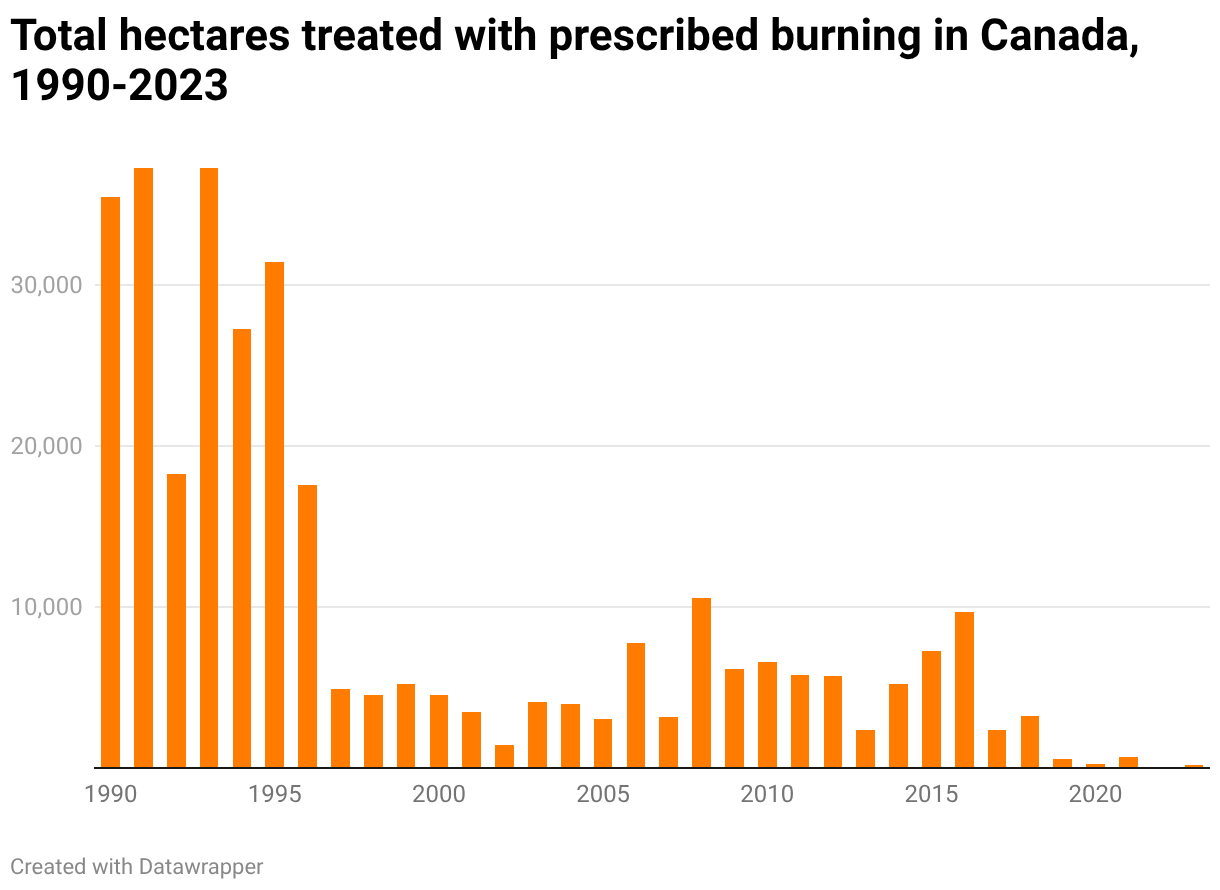
Again, decades of limiting both natural and planned fires interrupted natural cycles of debris removal. In conjunction with warmer and drier summers in many regions, this created conditions for fires to burn more fiercely and helped produce massive and sometimes devastating wildfires in British Columbia, Ontario and other provinces.
The good news is that many scientists and fire managers now advocate for prescribed fires to help reduce the severity of future wildfires. Earlier this year, the University of British Columbia and other partners launched the Canadian Prescribed Fire Training Program to provide specialized instruction on planned burns, and in May the federal government announced $47.8 million in spending over five years for “proactive wildfire risk‑reduction measures such as prescribed fire and vegetation management to reduce the build up of flammable material.”
In many parts of Canada, a warming climate is lengthening fire seasons and leading to drier vegetation that’s easier to ignite. Although prescribed fire isn’t a silver bullet, it can reduce accumulated fuels, making future fires easier to manage and less dangerous to people, property and the environment.

By: and