China Trade: President Trump Is Trapping Himself | American Enterprise Institute
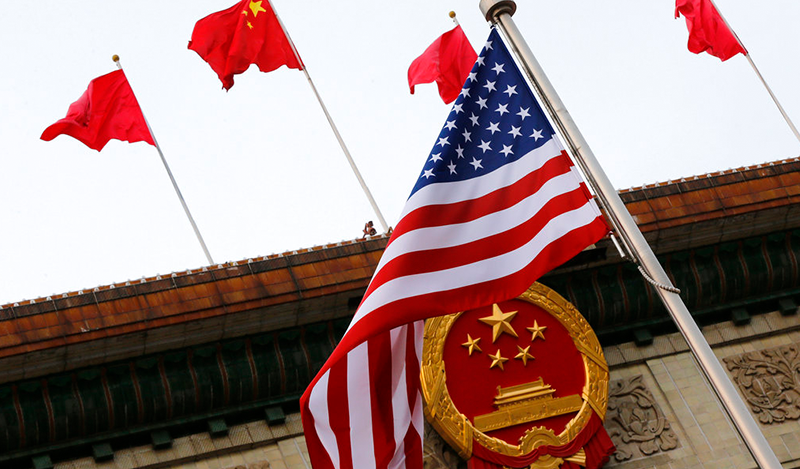
The Chinese government on Monday claimed the US has promised to cap tariffs at 20 percent. This is at least misleading and may be false. To the extent it’s accurate, it could help stabilize the Trump administration’s fluctuating trade policy. However, the cost would be prohibitively high: bizarrely favorable treatment of China, possible discrimination against better partners, a clear route to another loss in court, and a painful policy trap.
The Chinese statement is misleading in that American tariffs have multiple layers. The base of most-favored-nation rates, existing sector-specific duties, recent forced labor duties, possible overcapacity duties, plus many sizable exemptions. The PRC also faces notable tariffs from the first Trump term. The 20 percent cap must refer to active American policies – no doubt Beijing would react sharply if the US crafted new means of imposing high duties.
Even such a partial simplification would have uses. Trump’s second-term policy has been chaotic, starting with his ridiculous attack on Canada. It seems driven by the President’s mood or level of personal affinity with foreign leaders, for example antagonism toward Lula in Brazil or frequent, unpleasant praise of China’s Xi. If there’s a hard cap on China tariffs, it could be a welcome source of certainty, regardless of justification.
Stabilization would turn on whether a cap on China tariffs means analogous limits on other countries. The first Trump administration correctly identified the PRC as the main trade problem. The second term hasn’t only been less focused, China no longer seems to be a consistent priority for the White House, Department of Commerce, or Department of the Treasury. Perhaps it’s only Beijing that gets a tariff cap, and everything else stays in flux.
If so, the administration would put itself in a very small box. If there’s something to the Chinese claim, it seems to leave only a 7.5 percent tariff available to respond to an ongoing investigation into overcapacity. This would be an abdication by President Trump. In terms of conventional trade, Chinese overcapacity is the single biggest distortion of the global economy and biggest threat to the American goal of resilient supply chains.
That’s a view found in the US, in Europe, and a proper concern for other potential competitors of China. And, despite recent protestations, it’s long been a Chinese view. The Xi regime previously acted to curb overcapacity in building materials. Xi’s tenure started with reducing broad overcapacity as a goal (which did not occur). The PRC’s concerns about harm from overcapacity at home are more than 20 years old.
Recently, the State Council warned against “disorderly competition,” especially in autos. But this is only an issue at home. Overseas, Chinese firms should engage in the same behavior deemed objectionable at home because, overseas, the victims are foreign firms. Xi has said he wants to make the world more dependent on the PRC. Chinese overcapacity has existed for decades, and the explicit intent is to inflict it on the world.
A Section 301 inquiry into Chinese overcapacity could thus be highly beneficial. This one started by treating the PRC as one of many violators, grouped with fake trade threats like Norway and Switzerland. The solution is to ultimately tariff China much more highly, a solution which may have been killed off by a remarkably foolish promise. If the tariff is indeed capped at 7.5 percent, the Trump administration should just abandon the effort.
The obvious reason it should abandon the effort is it will do almost nothing – Chinese firms eat 7.5 percent cuts in their margins for breakfast. Alternately, a 7.5 percent rebate is child’s play for Beijing. But such a 301 finding would be worse than that. It will of course be legally challenged, as nearly all Trump tariffs have been. In this case, there is overwhelming evidence of Chinese overcapacity on the administration’s side.
Then it may have to tell courts 7.5 percent is a solution. Or the only available solution due to an unofficial promise to a foreign power. This will look instantly fraudulent, like the non-existent emergency at the Canadian border. A trivial tariff turns a legitimate and necessary investigation into a legal loss. And what would be next for an administration that has lost again in court and trapped itself on China? The most likely answer is two years of harmful bluster.