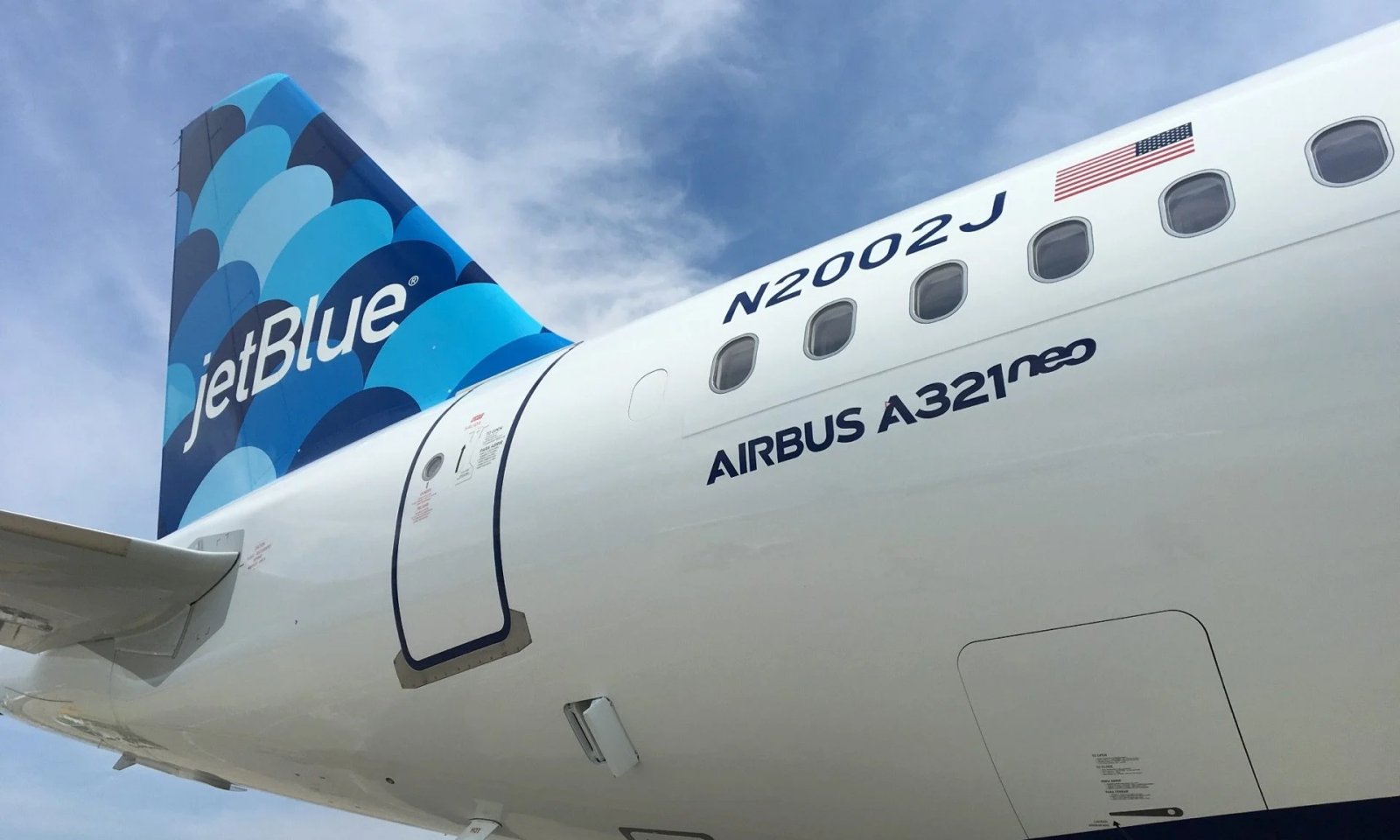
JetBlue Airways’ fare classes will look much different by the end of the year. The airline is adding new domestic first class seats to some airplanes and plans to sell “basic” versions of domestic first class and extra-legroom fares. In total, customers will choose from four different types of seats and three different fare classes.
These changes bring JetBlue closer in line with its Blue Sky partner airline United Airlines. These fare class changes also allow the carrier to capitalize on the boom in premium travel demand.
Details for the rollout are still limited, but here’s what we know so far, plus how they’ll affect your JetBlue experience.
JetBlue BlueFirst brings a much-needed revamp
Starting later this year, JetBlue will begin its rollout of BlueFirst, a domestic first class experience similar to what you’d find on United or the other full-service U.S. airlines.
Instead of lie-flat seats like you’d find with JetBlue’s highly regarded Mint business class, you can expect wider seats with deeper recline in a 2-2 configuration. JetBlue is calling BlueFirst its “newest take on premium travel.”
🤓Nerdy Tip
JetBlue will add BlueFirst to its planes that do not have Mint. BlueFirst is not a replacement for Mint, but it is a separate offering on routes that don’t offer Mint.
JetBlue has been at a disadvantage against its peers in recent years due to its lack of premium travel options for customers. However, the airline has been working to change that, including with the launch of its first BlueHouse airport lounge at New York’s John F. Kennedy International Airport in December 2025 and the expansion of benefits on the JetBlue Premier Card (the airline’s premium credit card) in May 2026.
JetBlue expands basic fare options
Prior to BlueFirst’s official debut, JetBlue will start selling more stripped-down, basic economy-style fares across almost all of its cabins, with Mint being the lone exception.
JetBlue is adopting United’s nomenclature, dubbing these “base” fares, while Delta’s are branded as “basic” fares. That’s an important distinction, since JetBlue and United flyers are now able to purchase flights on both carriers from either airline’s booking portal.
Now whenever you purchase a ticket from JetBlue, you’ll need to choose your fare type: base, standard or flex. This will apply to all cabins, except for Mint, which will only have standard and flex options.
In exchange for a cheaper ticket, passengers on a base fare will have the following restrictions:
No complimentary seat selection.
No complimentary changes or cancellations.
Lower points earning rate (1 point per $1 spent).
Meanwhile, standard and flex fares get complimentary seat selection and the ability to change or cancel a ticket with no fees. They also earn 3 points per $1 spent on airfare. The priciest flex fares also get complimentary same-day switches and standby, as well as a full refund to the original method of payment when canceling flights.
Why JetBlue’s BlueFirst matters for travelers
JetBlue’s most loyal customers have been clamoring for a premium product on domestic economy routes, and the airline is finally delivering. This will also be exciting for JetBlue’s Mosaic elites, who might get new benefits, such as complimentary upgrades from Main to BlueFirst. But there are no details yet about if or when elites might receive such benefits.
As a United Premier elite, I’m also watching to see how I might be able to benefit from elite reciprocity offered through the Blue Sky partnership. However, JetBlue hasn’t even announced an official launch date yet for BlueFirst, so I — along with many other frequent flyers — will be patiently waiting for updates.
We research all brands listed and may earn a fee from our partners. Research and financial considerations may influence how brands are displayed. Not all brands are included. Learn more. Information technology stocks including Nvidia, Apple, Microsoft and Alphabet account for a whopping 38% of the S&P 500 index, and they typically get a lot…
iStock / iStock.com Commitment to Our Readers GOBankingRates’ editorial team is committed to bringing you unbiased reviews and information. We use data-driven methodologies to evaluate financial products and services – our reviews and ratings are not influenced by advertisers. You can read more about our editorial guidelines and our products and services review methodology. 20…
jacoblund / iStock.com Commitment to Our Readers GOBankingRates’ editorial team is committed to bringing you unbiased reviews and information. We use data-driven methodologies to evaluate financial products and services – our reviews and ratings are not influenced by advertisers. You can read more about our editorial guidelines and our products and services review methodology. 20…
24-02522.pdf Anonymous (not verified) Thu, 07/16/2026 – 17:20 Case ID 24-02522 Forum FINRA Document Type Award Claimants Lea Wiviott Boracchia Marc Boracchia Respondents Michael Byrne Northwestern Mutual Investment Services Neutrals Peter H. Daly Carol Ann Jensen Kiosha L Ford Hearing Site San Francisco, CA Award Document 24-02522.pdf Documentum DocID cf13c49f Award Date Official Thu, 07/16/2026…
Editor’s Note: This story originally appeared on The Penny Hoarder. What’s in a name? A lot, actually. Especially when it comes to store brand vs. name brand grocery items. We often default to certain brands when shopping simply because of the name on the package — and the reputation that comes along with it — thanks to…
Anyone keeping tabs on orbital-launch service provider Rocket Lab (RKLB +5.31%) knows it’s working on a company-changing solution. That’s its so-called Neutron rocket, capable of lifting up to 28,000 pounds of payload. That’s a huge leap from its similarly reusable Electron rocket, with a maximum payload of 660 pounds. This medium-lift portion of the space-launch…