Blue-and-White Tile Isn’t Staying in the Kitchen Anymore

Blue-and-white tile has long belonged to kitchen backsplashes, bathroom walls, and fireplace surrounds. These rooms use the same material in a different way, extending decorative tile across door frames, window surrounds, and full walls until it becomes part of the architecture instead of a single accent.
Tile Frames Replace Painted Door Trim

The French doors are surrounded by a printed blue-and-white tile mural that extends from the baseboard to the ceiling. Instead of using wood casing with crown molding, the design creates an ornate frame with scrollwork, floral details, and a decorative pediment above the doors.
The tile continues across the lower wall, connecting the doorway to the rest of the room rather than stopping at the opening.
Window Casings Continue the Same Pattern

The same tile treatment wraps the second set of French doors, repeating the carved frame effect while carrying the mural around the corner. Every opening receives the same border, making the tile feel built into the room rather than applied after the walls were finished.
Black hardware, white doors, and woven flooring keep the blue-and-white pattern as the main visual element.
Decorative Panels Turn Blank Walls Into Murals

Large tile panels replace artwork across the lower half of the wall, each one showing oversized urns, flowers, and ornamental columns. A black chest and framed artwork sit in front of the mural without covering the overall composition.
Instead of breaking the tile into small repeating motifs, each section forms part of one continuous design that stretches across multiple walls.
Large Plants Stand Out Against the Blue-and-White Background

Broad green leaves create contrast against the detailed tile murals, giving the room another layer without competing with the pattern. The woven planter and natural fiber rug add texture while the tile remains visible behind the plant.
Repeating the same border around the window keeps the mural connected from one wall to the next.
Individual Tiles Form One Continuous Image

A closer view shows how dozens of individual tiles combine to create a single floral arrangement. Grout joints remain visible, but the artwork continues across every tile without interrupting the design.
Dark blue shading gives the flowers, leaves, and vase more depth than a repeating geometric pattern.
Floral Motifs Repeat Without Looking Identical

Each mural follows the same blue-and-white palette while introducing a different arrangement of flowers, leaves, and ornamental vases. That variation allows the rooms to share one theme without repeating the exact same image.
The decorative border also changes direction around corners, windows, and doors to complete the architectural frame.
Artwork and Tile Share the Same Palette

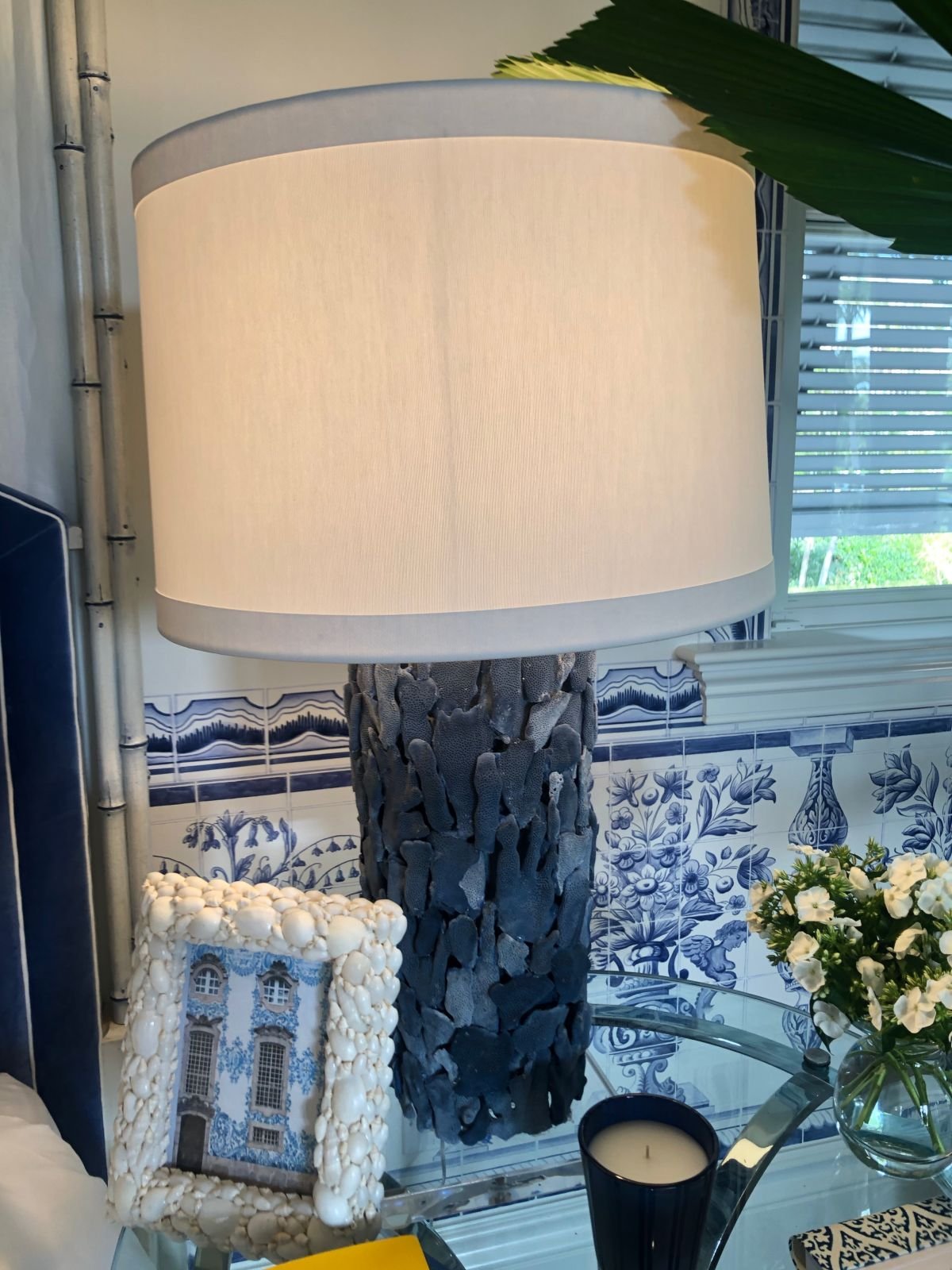
The framed vase illustration echoes the blue-and-white tile below it, connecting the artwork to the walls instead of introducing another color palette. The result is a continuous design from the floor to eye level.
The tile extends beneath both windows and wraps each doorway, keeping the pattern visible from every angle.
Tile Continues Into the Bedroom

The bedroom uses the same mural treatment beneath the windows while keeping the upper walls painted white. Blue trim on the canopy bed, pillows, and window valance picks up the same tones found in the tile.
Repeating the material outside the kitchen gives the bedroom the same visual language as the adjoining rooms.
One Material Connects Every Room

The canopy bed, upholstered bench, and blue trim continue the palette established by the tile murals. French doors, windows, furniture, and wall surfaces all share the same blue-and-white theme without relying on wallpaper or painted patterns.
Instead of limiting decorative tile to wet areas, this home uses it as a permanent wall finish that carries one design from room to room.
Would you use blue-and-white tile outside the kitchen, or do you prefer to keep it where it’s traditionally found?