5 Reasons You Should Choose Big Plants for a Small Garden
The saying goes: ‘good things come in small packages’, and for gardens, I think that couldn’t be truer. They’re easier to maintain, cost less to renovate, and are full of creative design possibilities.
Though it may seem like this year’s garden window has closed, it’s actually the perfect time to get ahead with your design. While the lawn better resembles the moon’s crust than a luscious meadow, you can be planning your planting ready for autumn’s much-needed rainfall.
In fact, experts say our super-hot summers have made autumn planting even more essential for a plant’s survival. Planting earlier, while the soil is moist but temperatures have yet to drop, gives the plants a head start to develop an established root system and seek out much-needed moisture before the summer drought sets in.
Latest Videos FromLivingetc
So small garden means small plants, right? Wrong.
One of the biggest mistakes gardeners make in smaller spaces is assuming everything has to be small within it. But take a look at the top garden designers, and you’ll see the plants of all shapes and sizes weaving their way through their designs. But how do they make it work?

Hannah Gale is a chartered landscape architect and co-founder of planting app Hota, aiming to help gardeners plan their garden spaces like a pro.
1. They Add Scale and Contrast

Large plants in pots make it easy to visually punctuate a small garden.
(Image credit: Paul Raeside)
It seems counterintuitive, but larger plants are essential to create scale and variation in a garden design. Keep everything small, and, put simply, everything will look the same. But place a large plant as a focal point within smaller plants and it will not only draw the eye to the tree or shrub, but also to surrounding plants. In short, contrast matters.
Expert garden designer Hannah Gale advises, “Larger plants such as trees, shrubs and ornamental grasses give a hierarchy and a vertical focus to a garden design. A few large plants can help organise the space – giving anchor points for smaller perennials and ground cover to be arranged around.”
It’s this layering technique which Hannah says adds atmosphere to a garden design in 2026. She explains, “This kind of layering gives a border depth and makes it feel more immersive than having a selection of similar-sized plants.”
When looking at your garden space, think about which areas you want to highlight. Is there a corner by your seating area currently taken up by smaller potted plants? Think about anchoring that space with one large shrub or tree, instead of lots of smaller pieces. The added height is also ideal for hanging ambient outdoor dining lighting, like festoon lights or solar lanterns.
2. They Create Privacy
The only slight downside to smaller gardens, especially in urban areas, is other properties overlooking your space. After all, no one wants a nosy neighbor spying on your Sunday afternoon siesta. Garden screening is where larger plants and shrubs really excel in smaller designs.
The key is to look for plants which can fill vertical space, rather than sprawl out into a large footprint. Expert garden designer Hannah Gale is no novice when it comes to beautiful courtyard designs — in fact, she’s won awards for her unique concepts. She advises, “In an urban front courtyard, one generous architectural plant, like a windmill palm tree or a tree fern for shady spots, can be incredibly impactful and give year-round interest without taking up too much floor space. To help with privacy, multi-stemmed ornamental trees like amelanchier lamarkii or prunus serrulata in oversized pots make beautiful focal points whilst providing screening.” You can buy amelanchier lamarkii trees from Crocus.
If you’re after a more Mediterranean feel, large shrubs like fig trees are great for growing in small containers. By constricting the plant’s roots by container gardening, it forces it to produce fruit as opposed to leaves. Their branches can be trained along a trellis in a fan shape too to help with privacy screening. Or, simply give it free rein to create a beautiful canopy over a seating area. Birds will love the added shelter too.

Crocus
Amelanchier Lamarckii
3. They Enhance Your Vertical Canvas

Small plants leave all your planting at ground level.
(Image credit: Lynn Gaffney)
You’ll hear garden designers talk about this a lot in urban gardening — we’re talking about vertical growing.
At a time when space comes at a premium, small-space gardeners are looking for unique ways of planting and growing. Keeping your planting footprints to a minimum is crucial; after all, no one wants to be climbing over pots to get to the barbecue. Instead, designers are taking a maximalist approach to their property’s vertical space.
Expert Hannah knows first-hand how difficult smaller gardens can be. She explains, “I had a tiny garden in my first house, and we maximized the growing space by planting loads of climbers to cover the fences and grow up an existing mature tree. This gave us a vertical canvas and allowed us to make much more impact than the confines of the planted beds. When you are trying to cover a fence, the bigger the plant gets, the better.”
This applies to larger balcony areas too. Limited floor space is a great excuse to maximize vertical growing through climbers and trellises. This can even extend to fruits and vegetables, if you’re interested in growing your own. Plants like runner beans, tomatoes and strawberries are great for a sunny balcony or terrace; just make sure you keep on top of their maintenance so they don’t overrun neighbors’ balconies.
For a fast-growing choice in a small garden, Clematis montana (here from Crocus) is ideal for shadier garden walls. It’s incredibly quick to get established and will smother structures with beautiful pale pink flowers in spring. Just be sure to give it a good trim after flowering — it can quickly get leggy and out of control.

Crocus
Clematis Montana Var. Montana
4. They Create Shade

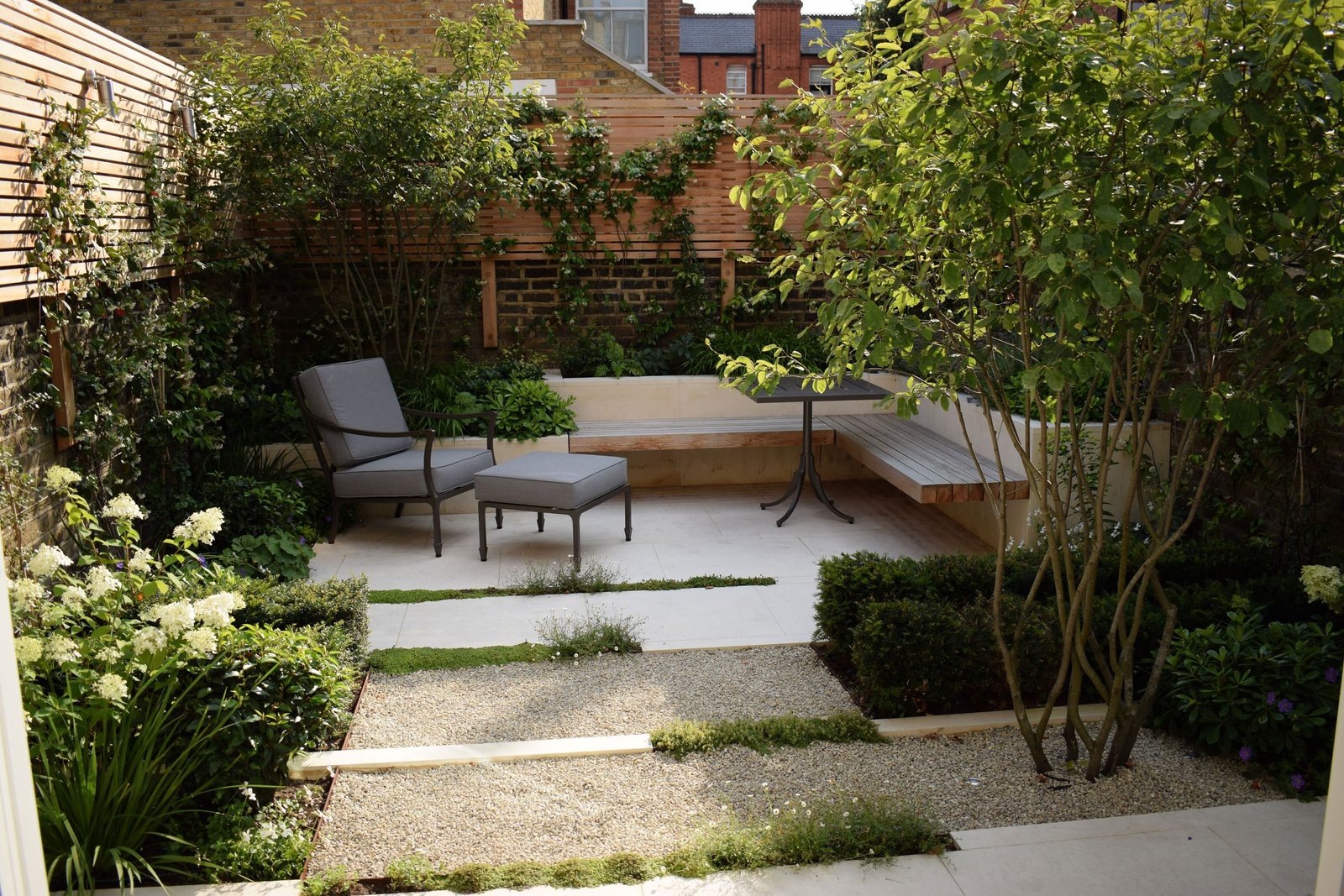
Larger, multi-stems trees are great for shade coverage while still feeling ‘light’ visually.
(Image credit: Charlotte Rowe Garden Design)
As this summer has proven, garden shade is becoming more and more essential for our outdoor spaces. Not just for ourselves, but for our plants too. According to experts, plants like hydrangeas and acers are easy victims of high temperatures. But one way to help them is with shade. Hannah thinks a natural canopy is a great way to add structure to a small space and help your moisture-loving plants.
Hannah explains, “Large plants can be a very effective tool for creating a more hospitable environment for smaller plants that can thrive beneath their shade. It’s good to opt for large plants with an open canopy (like amelanchier lamarkii or betula utilis var. jaqumontii) which allow some light through and cast dappled shade. This keeps temperatures lower whilst allowing a wide variety of perennials to thrive in partial shade.
If your garden space is north facing or particularly shady, don’t worry, a canopy can still be on the cards. Hannah recommends, “If a garden is naturally very shaded, this can be accentuated with species for full shade. Plants like Tetrapanax papyrifer can provide characterful moments if combined with ground cover plants like ferns and hostas that like shady spots.”

Crocus
Tetrapanax Papyrifer ‘rex’

Chloe Plumstead is a gardener and content creator sharing updates from her home and allotment in Suffolk. Along with co-running the garden wear brand Feverfew Garden Company, Chloe hopes to give growers and non-growers alike a reason to get outside and fall in love with beautiful blooms.
5. They Add Architectural Interest

One part architectural centerpiece, one part divider between the garden’s two ‘rooms’.
(Image credit: Ursula Armstrong. Design: Lilly-Joan Richardson. Landscaping: The Garden Builders)
If modern minimalism is more your style, larger architectural plants are your best friend. Instead of smaller dainty flowers, you have the freedom to go bold and opt for one or two show-stopping larger centerpiece plants.
Hannah is a big advocate for bamboo — but before you go planting it straightaway, she has some essential rules. “Bamboo is a wonderful singular plant for movement, and it sounds incredibly peaceful in the breeze, but be sure to plant it in a large pot, never into the ground, as it will take over! A less invasive approach to get the same sense of movement is to plant structural ornamental grasses like Calamagrostis x acutiflora ‘Karl Foerster’ and Stipa tennissima.”
For a modern feel in a shady garden, expert Chloe Plumstead loves a Fatsia. “Fatsias require practically no maintenance and are a great option for shadier corners crying out for shape. Not only are they evergreen, meaning they will offer interest through every season, they’re also incredibly versatile, working in most well-draining soils and pots, too.”

Gardening Express
Fatsia Japonica
Sometimes getting that designer look means stepping outside your comfort zone into ideas that at first seem a bit counterproductive.
By weaving larger plants into your small garden design, you’ll create focal points, scale and pockets of shade that will help your garden thrive. It’s bound to make your space feel more expensive and thought-through!