401(k) Creator Ted Benna Launches Radish Savings Plan
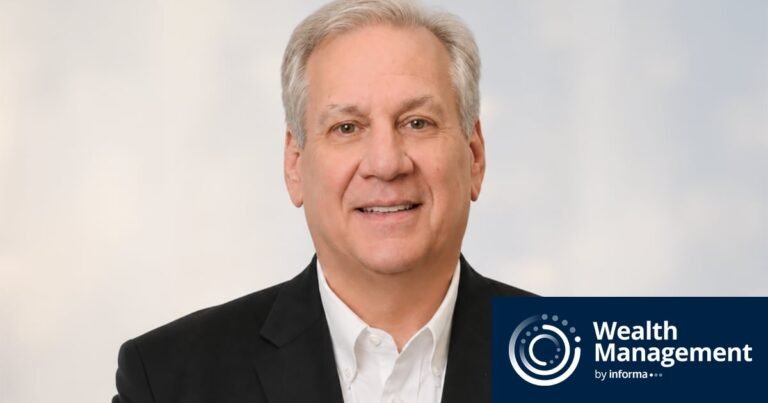
(Bloomberg) — Ted Benna, widely hailed as the father of the 401(k), has a big regret. His retirement plan has been good for high earners, but hasn’t delivered as handsomely for lower-paid workers. And, as the 84-year-old considers his legacy, he has a plan to fix that.
In Benna’s view, the retirement savings plans he helped create have grown too complex and costly, beyond the reach of workers who most need financial security — those stretching their paychecks to afford groceries, much less save money in a 401(k). More than two-thirds of private-sector workers have access to 401(k)-type plans, according to the US Bureau of Labor Statistics, but just half of those eligible participate in them.
Benna has a new project, a savings plan intended for the millions of workers who aren’t able to pay into retirement accounts. Called Radish, it’s an employer-funded incentive program that lets companies deposit money into an account for workers who hit performance goals, such as safety, tenure or on-time delivery. Workers’ Radish accounts grow over time, giving them a reason to stay on the job, and giving companies a tool to drive employee performance.
“The 401(k) isn’t working really well now for many middle- and lower-income employees,” says Benna, noting “many of them can’t afford to have money taken out of their paycheck even if they have the opportunity to do so.”
Now, as he stares down 85 from his farm in rural Pennsylvania, Benna hopes his savings kickstarter can benefit the truckers, warehouse workers, retail staff and hourly workers that got left behind last time — if he can just get it off the ground. That will require employers to think differently about workplace savings, which some experts caution may not happen.
Few ideas in finance have been as successful as the 401(k), which has helped some 70 million American workers plan for their later years and sock away $10 trillion in the process. Soaring markets have swollen the ranks of 401(k) millionaires, and companies have largely freed themselves from costly traditional pension plans in favor of self-directed, employee-funded savings that bestow tax benefits on employers and workers both. The universe of 401(k)-type plans has also spawned a vast financial ecosystem, with the plans generating some $39 billion in revenue in 2023 alone, according to McKinsey & Co.
Benna was co-owner of a small benefits consulting company in the late 1970s when he first hatched the idea that would become the modern 401(k). At the time, 38% of US private-sector workers — many of them in unionized industries — had pensions that promised income for life.
Much of Benna’s work involved helping doctors and lawyers “set up retirement plans where they got as big a tax break as possible while giving as little as possible to their employees,” he wrote in a self-published book in 2018. Uneasy that his life’s work amounted to tax strategies for the wealthy, Benna, a devout Baptist, was considering a job at a local Christian college.
He was spending a quiet Saturday afternoon in his office working on a small bank’s retirement plan when, in what he describes as a moment of “prayerful meditation,” he had an insight. A tax code provision added in 1978 cleared up uncertainty around profit-sharing plans that were used heavily by executives. Benna realized the provision could be interpreted in a way that would bring employers tax benefits while helping a far wider group of workers. His idea went beyond deferring taxes from profit-sharing bonuses. It allowed rank-and-file staff to defer money from their paycheck before taxes, with employers matching some of that amount.
He tried unsuccessfully to get a bank client to switch their profit-sharing plan to that model, so in 1981, Benna created one for his own company, covering about 50 workers. The bare-bones plan — which became known for its place in the tax code, Section 401(k) — had two investment options and razor-thin fees. Later that year, the IRS proposed rules that essentially blessed Benna’s idea, and he began pitching to clients.
By the late 1990s, the ranks of defined-contribution workers eclipsed those on pension plans.
The 401(k) wasn’t meant to replace traditional pensions. But it did, which research suggests lessened financial security for many lower earners.
Although the retirement accounts have “turned a lot of spenders into savers,” Benna says in an interview, he thinks they have become too complex and expensive, and benefit wealthier savers more than workers with the greatest need to save.
Radish aims to help fix the problem of affording retirement savings. It’s a tax-advantaged rewards plan — technically a profit-sharing plan, like the 401(k), intended for lower-earning workers. Rather than matching employee contributions, employers pay rewards into an employee’s account, and employee can see their money grow.
The hope, said Benna, is that workers develop savings habits, even one day putting their accumulated rewards into retirement accounts, or toward another goal. The plans could also be a way to keep workers around, which reduces costly turnover and motivates workers to perform, in turn boosting revenue, according to Benna.
When he first came up with the idea in 2024, the venture had a name as unassuming as its creator: the Wheat Grain Incentive Plan. (Benna, who threshed wheat while growing up on a dairy farm, chose the name because a planted wheat seed goes on to produce more seeds, a handy metaphor for savings growing over time.)
He pitched the idea around but no one bit. He did get LinkedIn messages from Kyle Bagley, an Oklahoma City-based entrepreneur who’d been reading Benna’s posts about the savings plan. Bagley, who shares Benna’s Baptist faith, had been trying to gain traction with CAREit (pronounced “carrot), another agriculturally themed incentive plan aimed at frontline workers. CAREit used an app to track employer rewards and employee progress, and Bagley and his cofounder decided to join forces with Benna to form Radish.
(Radishes, Bagley said, take root quickly and grow fast, another handy metaphor for savings. Plus, the deep greens and purples pop in an online app.)
The Radish plan is specifically designed for employees who are not highly compensated by IRS standards — those earning less than $160,000 in 2025 — and is a version of a 401(a), a plan type that has been around since the 1950s. Employers directly fund the Radish plan, and contributions don’t pass through payroll, saving the company from payroll tax on the rewards, a point that is front and center in Radish’s marketing. (Employers who offer 401(k)s avoid payroll tax on matching contributions.)
What employees get is a sort of tax-advantaged emergency savings account that grows tax-free until they opt to withdraw, though in most cases they do pay income taxes and a 10% penalty if they take out the money before age 59 and a half. Benna recommends that employers keep things simple and put the payments into a money-market fund.
Bagley says employers could contribute $5 a day for meeting goals like getting to work on time, or $1,000 as an annual retention bonus. Workers using Radish’s app to track the “radishes” or employer contributions they’ve earned, and view projections for what those rewards will add up to at year’s end if they continue hitting their marks.
A company could offer a 401(k) for all employees, and Radish incentives only for its lower earners, Benna said, putting savings within reach of more workers overall.
So far, large insurers, 401(k) plan recordkeepers, a big university and numerous others have listened to the Radish pitch, but none has signed on yet. Benna and Bagley said they’re working with a North Carolina private school and an Oklahoma retail operation to set up plans, and a pilot is soon underway among roughly 200 workers in a trucking firm.
Trucking has been a big focus for Radish, because improving metrics like on-time performance and driver safety can improve the bottom line, and savings incentives — especially when drivers can see their money grow in their app — can help stem turnover in an industry where it is rampant.
“Instability of pay is the number-one issue for drivers, and Radish brings structure to driver compensation,” said Bryon Wiebold of Tenstreet, a software provider to the trucking industry and a strategic adviser to Radish.
Broadly, employers may prefer to reward workers through payroll, said Joshua Gotbaum, a scholar-in-residence at The Brookings Institution’s Economic Studies program and director of the Pension Benefit Guaranty Corp. from 2010 to 2014. “If I’m an employer and I want my employees to do something, the most effective way to encourage employees is that if they do something great, I pay them more,” he said.
Alicia Munnell, senior adviser at Boston College’s Center for Retirement Research, questions whether rewards in such plans come at the cost of higher wages, which would also help employees put more money into savings. And since incentive rewards from Radish are not considered cash compensation, the money will not be counted as income when Social Security calculates benefits based on a worker’s 35 highest-earning years.
“I don’t think we’re doing low-income people any favors by having them have lower taxable earnings,” said Munnell.
Many lower-income employees need access to savings in the short-term, Benna said, adding: “Improved financial security now is more important than larger Social Security benefits 10 to 30 years from now.” And Bagley maintains that employer rewards come on top of regular wages.
If Radish succeeds, its founders say, some workers will see money accumulate in a savings plan for the first time, feel more financially secure and be more productive. If they save enough money, the accounts could prove a retirement savings gateway and they could roll it into their company’s 401(k) plan, if it has one, or into an IRA.
But they’re still trying to land a big company client. “With employers there is a herd instinct,” Benna says. “That’s what happened with the 401(k). People said it wasn’t legal, that it would never work, and it was the same issue.”
Even if it does gain more traction, Benna says, chuckling, that he’ll be remembered more for the 401(k) than for the Radish plan: “I probably won’t be alive when this takes off.”
To contact the author of this story:
Suzanne Woolley in New York at [email protected]