4 Transitional Colors That Feel Perfect for Bedrooms
With today’s interior design musings in mind, and perhaps without even realizing it, many of us have a ‘transitional’ style in our homes. It’s that timeless mix of contemporary styles with vintage pieces. And while it’s easier to conceive this decorating style when thinking of furniture and decor, how does it translate to color? And how should you use ‘transitional’ colors?
“Transitional colors are versatile shades that sit comfortably between warm and cool tones, making them incredibly adaptable within the home,” explains color expert Donna Taylor, the color and design manager at Johnstone Paint. “They are often found within color groups such as soft neutrals, earthy browns, muted greens, gentle blues, and warm grays, all of which have a timeless quality that works across a range of interior styles”, (including, obviously, transitional style.) For this reason, they are a fabulous choice for sleeping spaces, both in line with and defying bedroom color trends.
“Transitional colors are particularly effective in spaces that experience changing light throughout the day, retaining their depth and character in both natural and artificial light,” adds Donna. This makes them especially well-suited to bedrooms during the autumn and winter months, when reduced daylight hours mean creating a warm, inviting atmosphere becomes even more important. Here’s everything you need to know about the best transitional colors for a bedroom, and how to use them.
Latest Videos FromLivingetc
1. Warm Taupes

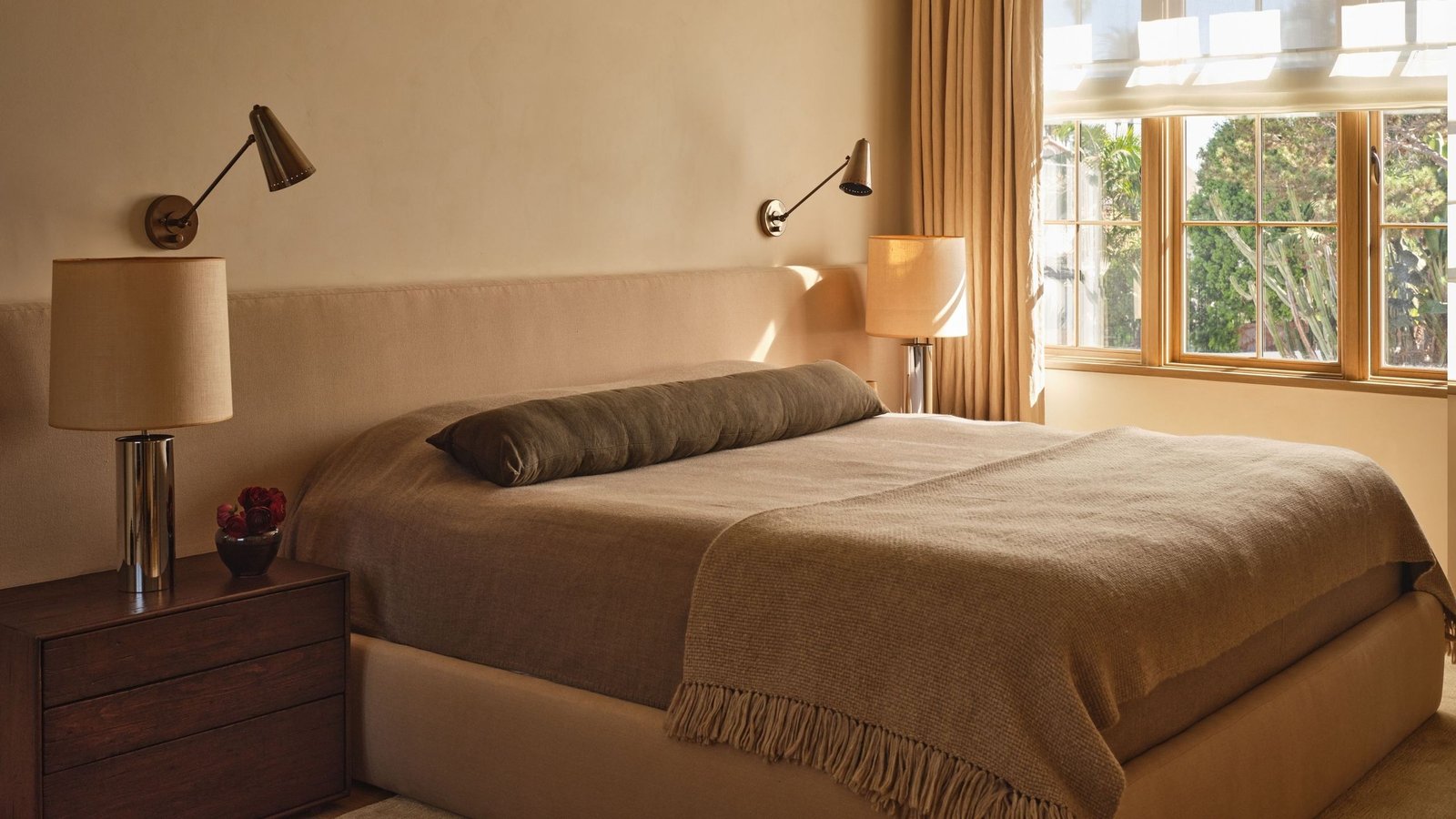
Not only is taupe an easy color to style amongst different schemes, but here you can see that mix through the contemporary bedding and more traditional decor.
(Image credit: Sarah Solis Design)
When you hear the phrase ‘transitional colors,’ the mind naturally goes to neutrals, and in this case, a neutral bedroom scheme. And while neutrals are absolutely transitional colors, you don’t have to stick to something pared back just for it to feel like it will last across styles or seasons. Neutrals can still be exciting. For instance, warmer neutrals are gaining a lot of traction this year, and Donna Taylor says the taupe color trend is the perfect transitional color to incorporate into your sleep space.
As we slowly head into this autumn/winter season, “we’re seeing demand for warm neutrals and nature-inspired shades,” she shares. “Warm, gentle taupes and mushroom tones are all excellent options for bedrooms, creating a grounded and welcoming feel.” Deep, warm taupes have a slightly pink undertone, which makes the color more visually interesting, yet still very comforting.
Pair it with aged brass accents to bring out its more traditional side, or a chrome accessory to call on its 2026 appeal. It can be lightened with linens in summer, or fluffed with wool throw blankets in the winter. It’s a jack-of-all-trades sort of neutral.

Benjamin Moore Paint
Taupetone


H&M Home
Cotton Double/King Duvet Cover Set in Mole
Donna Taylor is the trade color design manager at UK-based paint company Johnson’s Paint. Donna has over 20 years of experience and sits on Johnston’s Global Color Team, and is constantly up-to-date on what’s trending and the colors that actually work in real homes.
2. *Slightly* More Adventurous Greens

There are so many shades of green to experiment with that will still feel natural and grounding in the bedroom.
(Image credit: Barbara Corsico. Design: Studio Greca)
Green sits between cool and warm colors on the color wheel and also holds its place as a neutral in an earthy color palette. All of this to say, it’s a fabulous transitional color and one that works well in the bedroom. Green connects us to nature, and its calming characteristics make it a great color to help improve sleep as well. “For those looking to introduce subtle color while maintaining a calming environment, muted greens are an excellent choice,” says Donna.
But don’t think you have to play it completely safe by sticking to sage, forest, or olive green. Opt for slightly more character by incorporating a more contemporary green trend, such as Johnstone’s Paints Feature Wall paint in Amphibious. “They offer the ideal balance between a neutral and a more characterful hue,” adds Donna.
Or embrace green’s deeper, blue-leaning side for an even more characterful and cocooning space. Livingetc’s color expert, Amy Moorea Wong, says, “Smoky jade (like this Jungle Green from Mylands) is also a strong contender at the moment, straddling blue and green without taking either’s side — it brings the bit-of-this, bit-of-that atmosphere that transitional spaces rely on.”
However, you want to keep in mind how you will interact with this in your sleeping space. A full-color drench would help create an enveloping environment and make a more adventurous green feel more livable, while a sour green accent wall might be a touch overstimulating for a sleeping space. For a green to live between stylish and timeless, there needs to be balance.


Rise & Fall
Relaxed & Refined Linen Duvet Set in Olive

Scandi Living
Dune Mohair Throw in Olive

Amy Moorea Wong is a color authority and contemporary interior design writer who has specialized in all things decorating for over a decade. Alongside being Livingetc’s Color Expert, she also contributes to an array of global publications and has a book, Kaleidoscope: Modern Homes in Every Colour. Amy is an ardent believer in the power of color in a home and how creative design should never be intimidating.
3. Earthy Pinks

Pink in the bedroom feels both fresh and comforting, making it a practical choice for a range of styles and seasons.
(Image credit: Eve Wilson. Design: Tiano Studio)
Similarly to taupe, decorating with pink is having a renaissance in interior design. And the more natural, muted, and dusty variations make the perfect transitional colors for bedrooms.
It may seem a bit surprising, but “muted, powdery pinks and dusty rose shades such as Johnstone’s Paint Rosebud can also act as transitional colors within a bedroom, bridging seasonal trends and timeless design,” says Donna. As we saw last year, dusty pink became one of autumn’s most favored colors, but of course, the warmth and coziness have a grounding effect year-round.
“Paired with rich browns, soft taupes, and other earthy tones, muted pinks add warmth, comfort, and personality without disrupting the overall sense of calm,” says Donna. That said, you might not want to venture into bolder pink trends — like magenta or digital pink — as these can create an overstimulating sleeping environment.
“As cool as the latest pigment-heavy color trend is, you lean most on the bedroom when you’re either winding down and ready to sleep or your eyes are still adjusting to the morning sunlight. It’s not a time for high-octane hues,” says Amy.

Abigail Ahern
Baked Madagascar

Bedfolk
Relaxed Cotton Bedding in Rust

Oka
Isla Cushion Cover in Earthy Red
4. Muted Blues

Blue is one of the most beloved shades for good reason.
(Image credit: Christian Bense)
And lastly, decorating with blue in the bedroom may be one of the most classic transitional color choices. The main reason is that blue is not tied to a certain season or design style — not only is it a primary color, but it’s one of the most used and loved shades throughout history. So, there is a certain staying power that makes blue feel continually timeless and fresh.
Plus, muted blues are a very sensory-conscious paint color, meaning they will always work to calm the senses and promote a sense of restfulness in your bedroom.
That said, I’m the first to admit that blue can feel a little bit expected in the bedroom. If you’re feeling a bit ‘been there, done that’, lean a little more lavender. “They feel fresh and undiscovered as well as timeless enough to support an antique dressing table as well as a sculptural contemporary bed,” says Amy.
Otherwise, you can have a little fun with blue to really strike that contemporary balance. For instance, Little Greene’s new color trends point to blue as the new ‘it’ color to bring into your home this year — think a muted, but still bright, blue (like Soft Celeste) or a tonal drench that feels more modern.


Bed Threads
Lagoon 100% French Flax Linen Flat Sheet

Nina Campbell
Clabon Indigo Blue Rosebury Square Footstool
A perfectly balanced transitional sleeping space can be hard to achieve, but nailing down a color that feels contemporary, flexible, and still conducive to a good night’s rest is the best place to start.
“A muted, transitional palette is right at home in the bedroom — a space that builds itself upon relaxation, intimacy, and a sense of serenity,” adds Amy. Now all that’s left is to start sourcing transitional bedroom decor to perfectly balance and layer your space.
For more inspiration, be sure to subscribe to the Livingetc newsletter, or you can always try our personalized Find service, where our Design Lab by Livingetc stylists will source a piece specifically for you.