$10,000 in Axon Stock a Decade Ago Would Be Worth About $329,000 Today. The Stock Is Down Over the Past Year.
Ten years ago, Axon Enterprise (AXON +9.29%) was a small-cap company best known for its TASER stun guns. A share cost about $17 when 2016 began. As of this writing, the price is near $553 — a gain of more than 3,100%, enough to turn a $10,000 investment into about $329,000.
The recent chapter looks nothing like that, though. The stock sits more than 35% below the record closing high of $870.97 it set on Aug. 7, 2025 (almost exactly one year ago). Since that peak, shares have traded as low as $339.01.
And the stock slid again this week after the company’s second-quarter report, even with the business still growing 35%.
So, has something actually changed at the company — or just at the price? I lean toward the second answer.

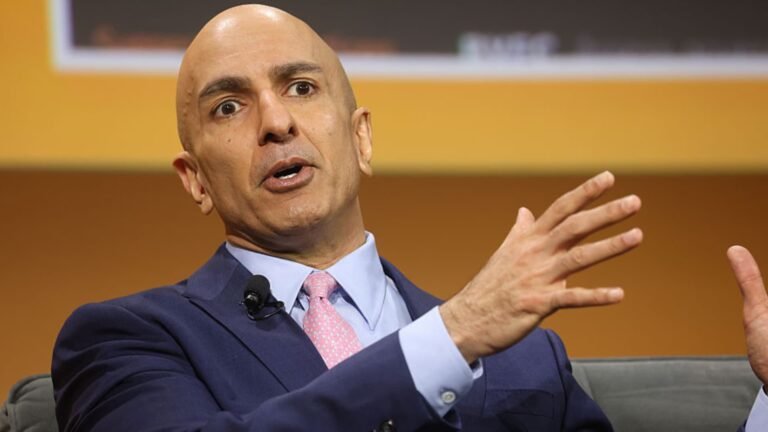
Image source: Getty Images.
Where the decade of gains came from
Axon’s 33-fold run wasn’t luck. Over the past decade, the company turned itself from a weapons manufacturer into something closer to a software company for public safety. It still sells TASER devices, but it pairs them, along with its body cameras and drones, with subscription software for storing footage and managing digital evidence.
The second quarter showed that model working. Revenue rose 35% year over year to $904 million, a quarterly record, and the growth was nearly identical on both sides of the business: Software and services revenue climbed 36% to $398 million, while connected devices grew 35% to $507 million. Growth even accelerated a touch from the first quarter’s 34% pace, making this the company’s 10th consecutive quarter of revenue growth above 30%. Annual recurring revenue, the subscription base underneath it all, reached $1.64 billion, up 39% year over year. And customers already under contract represent $15.1 billion in future bookings, up 41% from a year earlier. That’s more than four times the revenue the company is on pace to produce this year.
Existing customers keep spending more, too. Net revenue retention came in at 126%, meaning that base is spending 26% more on Axon’s software than it was a year ago.
Management also lifted its full-year forecast, its second raise this year. Axon now expects 2026 revenue growth of 32% to 34%, up from the 30% to 32% it guided in May and the 27% to 30% it started the year with. In short, the business arguably looks healthier than the stock chart.
What the sell-off is actually about
The slide has less to do with the business than with the price the stock reached last summer. Even after a year of declines, shares cost about 75 times the company’s adjusted earnings from the past quarter, annualized. A stock priced that way can get punished for small disappointments, and the second-quarter report contained one.
Adjusted gross margin slipped to 62.9%, down slightly from a year earlier, as lower-margin professional services and newly scaled products made up more of sales.
Profitability is also thinner than the headline numbers suggest. On a generally accepted accounting principles (GAAP) basis, second-quarter net income was just $29 million against an adjusted figure of $155 million.
Still, a margin dip driven by mix is a footnote next to 35% growth. To me, the bigger issue was always the multiple, and a year of a falling stock price set against a growing business has been working that problem down.

Today’s Change
(9.29%) $48.55
Current Price
$571.01
Key Data Points
Market Cap
Day’s Range
$525.01 – $572.68
52wk Range
$339.01 – $844.15
Volume
1.6M
Avg Vol
1.1M
Gross Margin
59.41%
So, does the decade-long case still hold? I think it does. The formula that produced the 33-fold return (recurring software revenue attached to hardware that police departments replace on a schedule) is growing faster than the company as a whole, and contracted bookings stretch years into the future.
Zoom out, and the past year looks like the valuation resetting, not the business.
Of course, a multiple like this one still leaves no room for a true slowdown, and if growth ever cools toward 20%, the stock could fall a long way from here. What would change my mind is growth stepping below 30% while the margin keeps slipping. Neither happened this quarter.
The price is the part that requires patience. Axon remains an expensive growth stock even after the decline, and I wouldn’t rush in all at once. But for the first time in about a year, the price looks like a reasonable place to start.