10 Plants To Prune In August For A Healthier, Flourishing Garden In The Fall
It’s August. You may be feeling the heat, and your garden definitely is. But, never fear — cooler weather is on its way, giving your plants a chance to put on a second show before the cold of winter sets in. To help your garden look its best when autumn rolls around, there are a few garden tasks to complete in August, such as pruning popular garden additions like lavender, boxwood, and creeping phlox.
Generally, think of pruning in August as giving your plants a light trim rather than a full makeover. It’s time to focus on re-shaping the plant and keeping its size in check. As you move later into summer and into fall, heavy pruning often becomes more detrimental for many plants, because it promotes new growth that may not be prepared to handle cold temperatures. Removing spent blooms and out-of-control growth will help your plants look their best in the fall and prepare them for the winter to come. For best results, break out the pruning shears on a relatively cool day, or prune first thing in the morning, before the heat sets in. If your area has been experiencing a drought and your plants are stressed, it’s best to wait until after they’ve had a good watering to prune.
Lavender
When August rolls around, you’ve likely enjoyed the last of the pretty purple flowers your lavender (Lavendula spp.) has to offer. After the final flowers have faded, it’s time to give the plant a trim to clean it up and keep its stems from becoming too woody. When pruning, cut away the flower stems and as far down as one third to one half of the plant. Don’t trim too far, though, as lavender will not grow on old, woody stems.
Wisteria
Wisteria (Wisteria spp.) grows vigorously, which can seem perfect if you’re a fan of its beautiful, trailing purple flowers. It is possible to have too much of a good thing, though, which is why you want to prune wisteria twice a year — once in the late winter and once in August. The August pruning sets you up for an easier winter pruning. This is the time to remove side shoots that come off of the main vine. Trimming the side shoots now keeps the plant neat and tidy and supports the development of buds for next season.
Roses
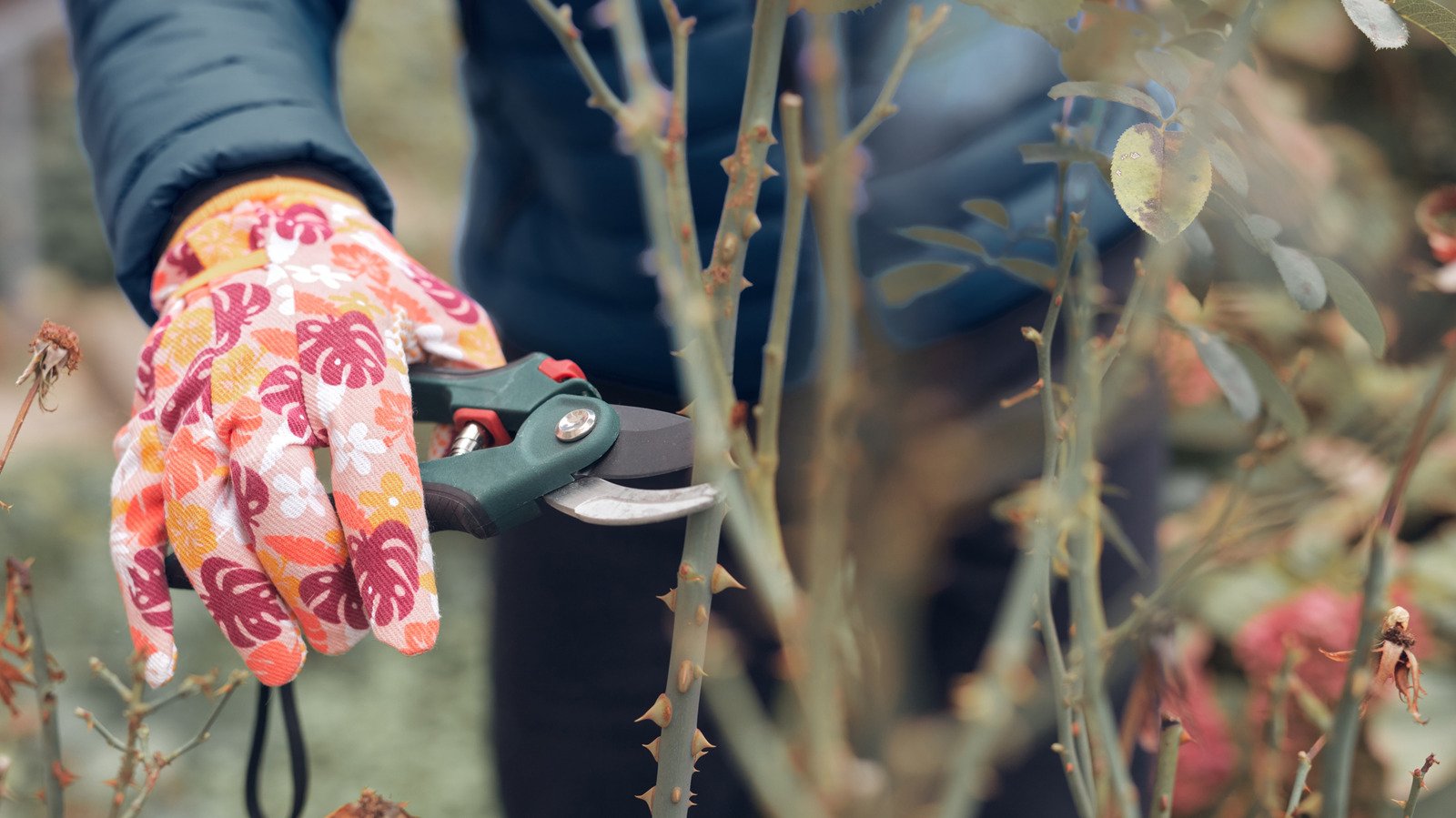
August can be the perfect time to prune roses (Rosa spp.) so they produce another round of fall blooms, depending on the type of rose. Rambling roses and shrub rose varieties may need a few seasons in your garden to get established before it’s okay to prune them. Lightly prune other types, removing spent flowers, overly tall or dead canes, and weak-looking canes that are thinner than a pencil to improve air circulation. When removing flowers, make a cut at a 45-degree angle just above an outward-facing bud.
Climbing hydrangeas
The best time to prune hydrangeas depends on the variety. While panicle hydrangeas (Hydrangea paniculata) are one plant you should prune in February, the best time to prune climbing hydrangeas (Hydrangea petiolaris) is in August, after it blooms. The vine’s flowers grow on the previous year’s growth, so pruning too late or in early spring can mean you don’t get any blooms the next season. When pruning climbing hydrangeas, cut back long shoots to a set of buds and remove spent flowers. The plant grows slowly and may not need pruning during its first few years.
Thyme
Like lavender, thyme (Thymus spp.) can get woody and scraggly if its growth is left unchecked, so it’s another herb that’s due for a trim in August. Cut the plant back after it’s finished flowering, removing the flowering stems and a few inches of green growth. Doing so will encourage new leaves to grow and will keep the plant compact. However, never cut into the woody stems of the plant, as it won’t be able to grow back.
Jasmine
Whether August is the right time to prune jasmine (Jasminum officinale) depends on your climate zone and location. If you’re in a cooler zone, the plant will likely finish blooming in August and be ready to prune. In warmer zones, you may not be able to prune until September. Pruning jasmine after it flowers gives it time to produce new growth before a frost. It’s on that new growth that next year’s blooms will appear. When you prune, remove spent stems down to a sideshoot and cut away any that look weak or thin.
Boxwood
Boxwood, or box, (Buxus spp.) is often grown in topiary gardens or as a hedge. Whether yours is cut into a fancy shape or a simple one, pruning it in August cleans it up before winter arrives. When pruned in August, boxwood will typically hold its shape throughout the winter months and won’t become too overgrown. However, avoid pruning after mid-August, as new growth may not harden off in time for the first frost.
Creeping phlox
Also known as moss phlox, creeping phlox (Phlox subulata) grows low to the ground, producing a blanket of colorful flowers in the late spring. Once the plant has finished flowering, which may be in August, it’s time to trim phlox, cutting it back by about one third to one half its size to keep a desirable shape. Even if you’ve already cut back the flowering stems once in the early summer, you may want to give the plant another trim in August to tidy it up and keep its growth in check.
Bottlebrush
Known for its dramatic, bristly red flowers, the bottlebrush plant (Callistemon spp.) can reach up to 15 feet high if left to its own devices. When grown in the garden, though, it’s usually trimmed and kept between 3 and 5 feet in height. To keep your bottlebrush under control, prune it back by up to one third after it finishes flowering in August. Remove the spent flowers and cut back leggy stems. Pruning in August gives the plant time to produce new growth before winter arrives. Keep in mind that bottlebrush is only hardy in zones 8 through 11.
Honeysuckle
Common honeysuckle (Lonicera periclymenum) is a deciduous vining plant known for its fragrant flowers. The plant blooms starting in the spring and may continue flowering through the summer. To keep it looking neat and to encourage new growth, prune honeysuckle in August, after it’s finished flowering. Cut the plant back by about a third to generally tidy it up. You may cut some old stems down to the ground to prevent the development of bare spots, but don’t go wild, as honeysuckle flowers form on old growth.