People Are Switching From Gas to Induction, But Not for the Reason You Might Think

Gas has long been the choice for cooks who want fast heat changes, visible flame, and control from a physical knob. Induction is challenging that advantage without trying to reproduce the flame.

Testing from Australian consumer organization CHOICE found induction transferred about 85% of its energy into cookware compared with 32% for gas, and induction came out ahead in its water-boiling test. Cooks who have used both systems point to differences that matter beyond speed: less heat escaping into the kitchen, fewer parts to clean, and fast response when the power changes.
The switch still comes with tradeoffs. Compatible cookware is required, glass replaces durable burner grates, touch controls can frustrate some users, and converting a gas kitchen may require electrical work.
Induction Removes the Burner Without Giving Up High Heat

The comparison shows how little induction needs above the counter. Gas requires burner heads and grates between the flame and cookware, while induction places the pan on a flat glass surface.
The difference is not just visual. Induction creates a magnetic field that heats compatible cookware, rather than producing heat below it and transferring part of that energy into the surrounding air.
Gas Sends Heat Where You Are Not Cooking

A gas flame extends beneath and around the pan, which is why standing over several burners can add noticeable heat to a kitchen. Induction concentrates the heating process in the cookware.
That difference becomes more relevant during summer or when several burners run at once. Less waste heat also means the burner does not need a visible flame to produce strong cooking performance.
Gas No Longer Owns the Temperature-Control Argument

Gas earned its reputation against older electric stoves. Turn a burner down and the flame drops at once, while traditional electric elements retain heat after the setting changes.
Induction removes much of that delay. The cookware responds to changes in power without waiting for a conventional heating element to cool. Gas keeps one advantage some cooks still prefer: the flame itself shows what the burner is doing.
Gas Still Handles Cooking Methods Induction Has to Adapt Around

This wide range provides several open burners with enough room for large cookware. Pots and pans do not need magnetic bases or flat contact with a glass cooking zone.
That matters with round-bottom woks and cooking methods that use direct flame. Induction can supply high heat for stir-frying, but a traditional wok sitting over an open burner remains a different setup.
Grates Become Part of the Cleanup

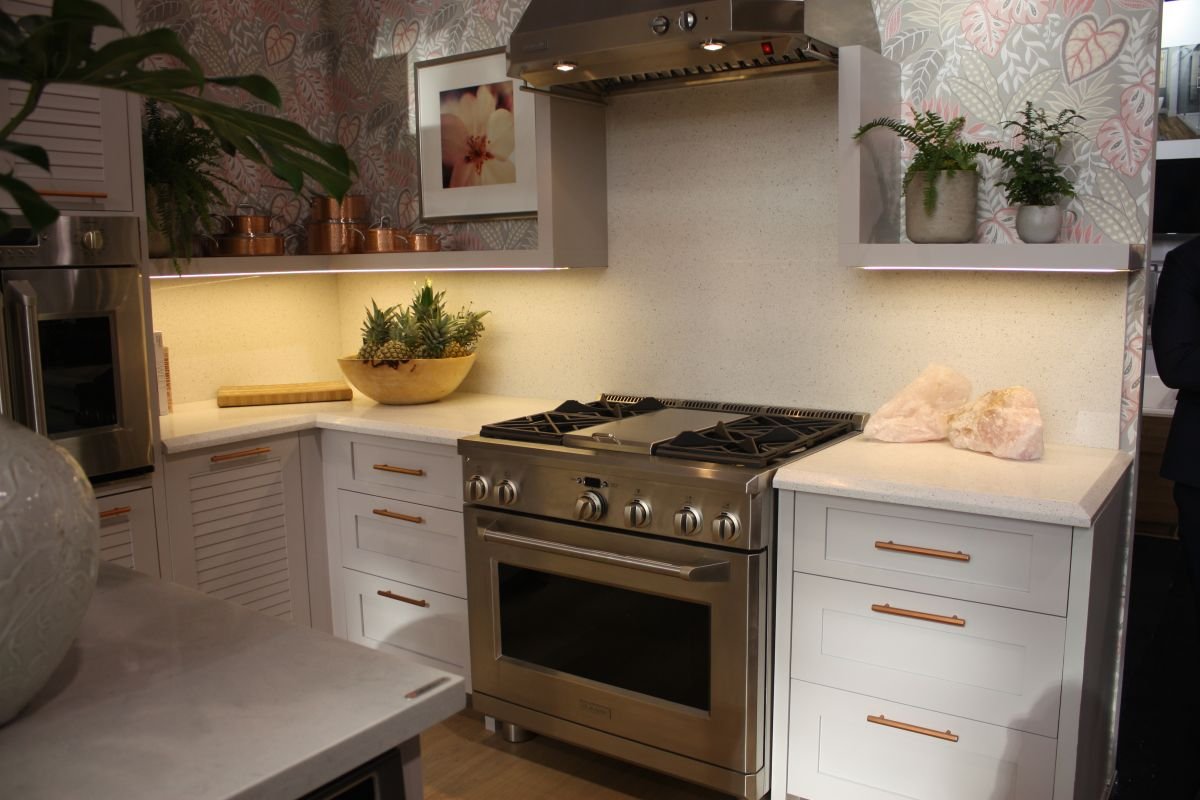
The decorative range surround draws attention here, but the cooktop shows a practical difference between the two systems. Spills around gas burners can reach the grates, burner caps, recessed areas, and the surface below.
An induction cooktop removes those separate parts. After the surface cools, most cleanup stays on one sheet of glass rather than around a burner assembly.
Open Flame Changes What Ventilation Has to Handle

A six-burner gas range occupies the center of this kitchen, with a large hood directly above and a slab backsplash covering the wall behind it.
Cooking itself produces smoke, grease, moisture, and particles regardless of the stove. Gas adds combustion inside the room, giving ventilation another source to remove. Induction eliminates that combustion at the cooktop, but it does not eliminate the need for a hood.
Your Existing Pans May Decide Whether Induction Works

The black induction surface fits into the counter without raised hardware, but the technology depends on the pan placed on top.
Cast iron and many steel or stainless steel pans work, while glass, ceramic, copper, and aluminum cookware need a compatible magnetic base. A magnet sticking to the bottom of a pan is a quick way to check whether existing cookware can make the move.
Glass Trades Gas-Stove Maintenance for Another Concern

Four cooking zones share one glass surface here, making spills easier to reach than they would be beneath cast-iron grates.
The same surface can scratch or chip, so heavy cookware, dropped bottles, and abrasive cleaning introduce concerns gas grates do not have. Reddit users who switched to induction praised the cleanup and heat control but also raised glass damage and touch controls among the drawbacks.
Switching From Gas May Require More Than a New Stove

Replacing a gas cooktop with induction is not always an appliance swap. The new unit needs enough electrical capacity, and some homes require a dedicated circuit or service upgrades before installation.
That cost can matter more than cookware or the cooktop itself. For kitchens with the electrical setup already in place, induction removes several reasons cooks once chose gas by default. For others, gas remains the simpler system to keep.
Would you give up a gas flame for faster heating and easier cleanup, or would you still choose gas?