
Best Wealth Management Firms and Teams in Canada: 5-Star Advisory Teams
How Canada’s best advisory teams manage downside risk
STENNER WEALTH PARTNERS+
CG Wealth Management, British Columbia
As one of the best wealth management firms and teams in Canada, Thane Stenner’s 13-person team has spent 25 years perfecting downside protection. Managing 53 ultra-high-net-worth (UHNW) clients with a minimum of $10 million in liquid assets or $25 million in net worth, Stenner Wealth Partners+ relies on a unique all-serve-all structural model that ensures no client is ever assigned to a single advisor.
Performance insight: Over the past five years, the team’s discretionary global ETF portfolio beat the S&P 500 while carrying 40 percent less risk. In every one of the 22 months during that period where the S&P 500 posted a negative return in Canadian dollar terms, the team outperformed on the downside.
Growth mandate: The most recent 12-month growth mandate returned over 50 percent.
Long-term track record: In the 2008 calendar year, when the S&P/TSX Composite Index fell approximately 35 percent, the team’s predecessor strategy was down approximately 12 percent – evidence of a downside-protection philosophy consistent across market cycles.
Proactive contact: Clients receive customized proactive touchpoints between 24 and 60 times per year, depending on individual needs, without waiting for the client to initiate contact. “In our industry,” Stenner says, “the number one complaint made by clients is that there’s not enough proactive interaction. So, we build customized client service plans for each client. We reach out 24 to 60 times a year, without them contacting us.”
Client selectivity: The team takes on only eight new clients out of 100-plus potential introductions per year. “Either that means we’re not very good at closing,” Stenner says, “or it means we’re just simply relational. We’re purposely capacity-constrained to keep the quality and the level of interactions extremely high.” The team declined one prospective client with a net worth of $500 million. The reason: “He was a little cranky. If he’s this cranky before he’s even a client, life’s too short.”
Team structure: Daily team debriefs, clear KPIs for every team member, and two external US coaches providing monthly feedback maintain alignment and service quality under pressure. The team is “very collegial,” Stenner says. “We are not very tolerant of ego. We’re here to serve clients first, team interest second, professional interest third. If you do that, life’s good.”

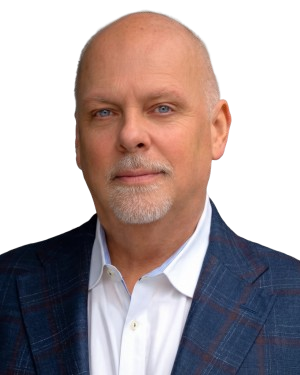
“Wealthy investors want to be wealthy once, not twice. They want to stay wealthy. You protect capital in bad times, and they remember it”
Thane StennerStenner Wealth Partners+, CG Wealth Management
“Volatility creates opportunity,” Stenner says. “You can either wilt away or you can lean into it and try to do something about it.” He is equally direct about the consistency that underpins the team’s results. “This is an industry that always comes back to, ‘What have you done for me lately?’ You can’t get too comfortable. You’ve got to apply a methodology, be consistent, and not get too high or too low. At the end of the day, what clients want most is consistency. You consistently show up – that’s where the credibility comes from.”
The result is a team that can absorb the administrative intensity of extreme volatility periods without service deteriorating for any client – a resilience that Stenner sees as non-negotiable at this end of the wealth curve.
Building portfolios Canadian wealth management clients won’t abandon
Caldwell Asset Management
Caldwell Securities, Ontario
Tony Ciero leads the wealth management team within Caldwell Asset Management, a division of Caldwell Securities, a firm with a long institutional heritage. Ciero joined the Ontario firm three years ago, bringing experience from Bank of Montreal and UBS, and his team has been operating in its current form since then.
“I jokingly said they should have found me 10 years earlier,” Ciero says. “But I guess I needed to go through the experience to really appreciate what I have here.”
While Stenner’s team serves the UHNW segment with a minimum asset threshold, Caldwell’s operates without one, giving it access to a broader range of HNW clients.
Portfolio philosophy: Portfolios are constructed from the outset to never breach the client’s comfort zone, so that when markets fall, clients do not panic sell and miss the recovery. The team describes this as an architectural approach to volatility management. “Our goal is, ‘How can we help this person in front of us today?,’” Ciero says. “It’s not, ‘How much money can I make off them’? Here, you have to prove you’re adding value – and our clients can see that.”
Volatility performance: When markets fell 10 percent during the March 2026 geopolitical shock, Caldwell clients experienced losses of approximately two percent. When the Liberation Day selloff struck in April 2025, the outcome was the same. “I can’t tell you how rewarding it is,” Ciero says, “when clients call in a little bit of a panic and say: ‘Markets are down 10, how much am I losing?’ And my answer is: ‘You’re down two. And they’re like, ‘Oh, okay – how are the kids doing?’”
Onboarding model: “Thousand-piece puzzle” approach: the team assembles every element of the client’s financial life – objectives, family dynamics, tax position, risk tolerance, and life stage – before presenting any investment strategy. “You’ve thrown me your puzzle pieces,” Ciero explains. “We have to build it, we have to create it, and only when it makes sense do we show you the result. If there’s a missing piece, we go back to the drawing board.”
Client philosophy: Win-win: the team will walk away from any relationship where the fit is not mutual. “It needs to be a win-win situation,” Ciero says. “The client needs to win and we need to win. If only one side’s winning, we’ll walk away or we advise the client to walk away.” The firm operates without minimum AUM thresholds – a deliberate contrast to the $2 million minimums Ciero encountered at UBS. “We want to help anybody who knows they need our help,” he says. “The assets just come with it.”
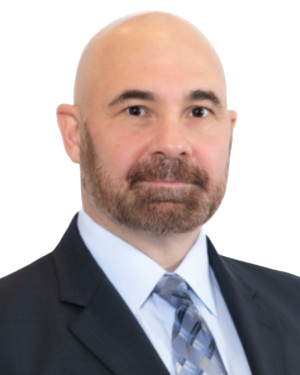
“I love when there’s volatility, I sleep better at night. It validates the risk-based portfolio construction we’ve done. When markets drop 10 percent and we’re down two, the client shifts from anxious to calm”
Tony CieroCaldwell Asset Management, Caldwell Securities
He also candidly says that the past year’s market swings exposed the fragility of less carefully constructed portfolios elsewhere, creating an opportunity to demonstrate Caldwell’s approach to prospective clients. The big banks, he notes, often apply a cookie-cutter approach to asset allocation – balanced, standardized, and not necessarily aligned to what individual clients actually need. “And that’s where we try to come in and say, ‘Give us a try.’”
Tropea of EY Canada sees this dynamic playing out sector-wide. “Holistic, integrated advice is non-negotiable,” she says. “The strongest teams are bringing together specialized expertise to deliver complete, end-to-end advice rather than operating in silos.”
Proactive client contact: what Canada’s top wealth management firms do differently
Harvey Morrison Private Wealth
Wellington-Altus Private Wealth, Saskatchewan
Krissy Morrison, senior investment advisor and co-lead of Harvey Morrison Private Wealth at Wellington-Altus Private Wealth in Saskatchewan, runs a team model that looks quite different from either Stenner or Ciero, but arrives at the same place. The eight-person team, rebuilt entirely in January 2025, rebuilt its culture from the ground up.
“We all had each other’s backs,” Morrison says. “Even if you run into a hurdle, bring it to the team meeting. It’s not your problem, it’s our problem.”
Client base: Small business owners and professionals: farmers, dentists, and other self-employed Canadians navigating business equity, retirement planning, and generational transition. Many are within three years of retirement and often less prepared than they realize, sometimes despite having other advisors. “The biggest thing is we’re finding a ton of people retiring right now,” Morrison says. “They’re within the next three years and don’t feel prepared. They might have another advisor, but there seems to be a gap. That’s where they reach out.”
Proactive strategy: Rather than waiting for worried clients to call, the team identifies which clients are most likely to be anxious and reaches out first. “You know your clients who are going to be a little bit more worried when markets move,” Morrison says. “So those are the ones you reach out to before they get a chance to question and wonder. I find that takes a lot of the stress away. At every client meeting the team re-educates: here’s what’s in your portfolio, here’s why it would be good in all these scenarios – so that when something comes up, you can call them and say, ‘Hey, remember we talked about this? You’re fine.’”
Volatility philosophy: “Volatility is our friend as an advisor,” she says. “Clients don’t like it, but it’s actually really good for them.” When markets fall, the team actively encourages clients to buy. “We’ll say: markets are down, let’s buy. About 25 percent of clients will say, I’m in. The other ones say, ‘Nah, I just gotta wait. It’s like, it’s on sale. We don’t pay full price at the retail stores.”
Success metrics: “One of the things I find success is that we all still want to come to work every day – I think that’s a huge sign of success,” Morrison says. “If we’re having fun, our clients will want to come as well.” On the client side: “Retention is huge. It tells you so much more than new money coming in. If you can have clients who stay with you and give you referrals, that’s huge success – and that’s what I look at more so than just the dollars.”
AUM milestone: The team surpassed $400 million in assets under management during the past year.
Client engagement model: “Three Wise Person” events: educational evenings combining market and planning content with social activities such as chocolate tastings or flower arranging. “I like it because it tries to bring in a little bit more female representation,” Morrison explains. “A lot of finance is dominated by males. This can sometimes bring the wives, or just females, to events where they’re like, ‘I don’t really care about the products, but I’ll come for the chocolate tasting’ – and then they learn something. Education is huge in this field.”

“Volatility is a buying opportunity, and we want our clients to see it that way. But you have to get to them before they pick up the phone in a panic”
Krissy MorrisonHarvey Morrison Private Wealth,
Wellington-Altus Private Wealth
The recognition itself carries its own meaning for Morrison. “Sometimes doing the best for clients is doing nothing at all — just staying invested,” she says. “To be recognized for that, and for just handholding with clients, is a nice honour.” Morrison attributes the team’s growth to the compounding effect of relationships sustained through difficult conditions, rather than aggressive new client acquisition.
Key trends shaping Canada’s best wealth management firms and teams
The past year’s volatility exposed structural differences between advisory teams across the industry. The patterns observed among the teams interviewed for this report, and reflected across the 2026 submission data, point to four consistent trends that separated Canada’s best wealth management firms and teams from those that struggled.
Trend 1: Structure determines service quality under pressure
Volatility drove a sharp spike in client demand for contact. Teams without the capacity or operating model to handle that volume experienced service breakdowns, losing client trust at precisely the moment when trust mattered most. Teams with clear client service plans, structured communication protocols, and sufficient professional depth absorbed the demand without dropping the ball. The Stenner team’s all-serve-all model – in which no client is assigned to a single advisor – is one example of a structural choice that pays dividends specifically during high-demand periods.
Trend 2: Holistic advice became non-negotiable
Clients increasingly expected holistic advice rather than isolated investment updates. Market movement triggered questions about retirement timing, tax planning, estate readiness, and insurance coverage all at once.
“Teams that integrate insurance, estate planning, and tax deliver complex needs as personalized solutions at scale,” Tropea says. “Clients place more weight on the breadth and depth of services when choosing a provider.”
Among the 2026 winners, 77 percent hold at least one CFP designation and 69 percent hold a CIM – credential combinations that reflect exactly the breadth of planning and investment expertise clients were demanding during the volatile period.
Trend 3: Technology created capacity – or exposed its absence
Advisory teams that relied on manual workflows, fragmented systems, or sole-advisor models found themselves unable to meet demand. Teams that had invested in technology – such as AI-assisted meeting preparation, CRM automation, financial planning software, or discretionary portfolio management platforms – created capacity for advisors to spend more time on client relationships.
The Mahrt Investment Group at Wellington-Altus Private Wealth in British Columbia took the unusual step of hiring a dedicated software engineer to build internal automation and AI integration. Morrison uses AI daily for research and portfolio review.
“I’ve been playing with it – trying to tighten up portfolios, doing a bit of research,” she says. The team’s focus for the second half of 2026 is incorporating AI more systematically into administrative workflows: “We can streamline things a little bit better so our associates have more time in their day as well.”
Trend 4: The wealth transfer blind spot is a commercial opening
The single most significant commercial opportunity for the best wealth management firms and teams in Canada over the next decade is also the industry’s most conspicuous failure. According to the JD Power 2026 Canada Investor Satisfaction Study, released in April 2026 and based on responses from 4,529 advised investors, only 31 percent of investors over the age of 60 say their advisor discussed the elements needed for future wealth transfer planning. Even fewer – just 11 percent – say their advisor met with or suggested meeting with family members to discuss the topic. JD Power described this as “a critical industry blind spot and a missed opportunity for advisors to retain assets and build relationships with the next generation of clients.”
For Canada’s 5-star teams, which already operate proactive, multigenerational, family-engagement models, this blind spot is a competitive opening. The Chernick James Tse & Associates team at Richardson Wealth in British Columbia, for example, specializes in donor-advised funds and multigenerational estate planning. Karen Erickson and Kayla Caruana’s team at IG Private Wealth Management in Kelowna held 258 estate planning meetings in 2025 alone. These are not peripheral activities for the best teams – they are core to what makes them the best.
The outlook for Canada’s best wealth management firms and teams
Canada’s advisory landscape is unlikely to return to the quieter conditions of the decade before 2022. Geopolitical uncertainty, interest rate complexity, and the ongoing Canada–US trade relationship all point to continued volatility as a structural feature of markets rather than an anomaly. The teams best positioned for the decade ahead are the ones that have already built the infrastructure, the credentials, and the client relationships to perform when conditions are hardest.
The $1.2-trillion wealth transfer: the scale of what is at stake
Canada’s largest-ever intergenerational wealth transfer is accelerating. More than $1 trillion in wealth is being transferred between Canadian baby boomers and their Gen X and millennial heirs between 2023 and 2026 – described by CPA Canada as the largest generational transfer of wealth in Canadian history (CPA Canada, Pivot magazine, September 2023). Looking forward, Edward Jones Canada – citing the JD Power 2026 Canada Investor Satisfaction Study – projects a further $1.2 trillion in wealth transfer over the next eight years. Statistics Canada’s Q4 2025 data reinforces the scale of what is at stake: with household net worth up 5.3 percent in 2025 and financial asset gains of 9.9 percent concentrated at the upper end of the wealth distribution, the assets in motion have grown larger, not smaller, through the volatility of the past year.
EY’s research adds a competitive dimension. While roughly three in four clients say they are likely to use the same advisor as the grantor of an inheritance, 39 percent say this is only “somewhat likely” – a significant proportion that represents both risk and opportunity for teams that invest in multigenerational relationships now. According to Tropea, the top actions that retain clients through a wealth transfer are transparent communication and a strong understanding of specific financial goals – both of which depend on the proactive, deeply relational model that characterizes Canada’s 5-star teams.
Why demand for human financial advice is rising, not falling
The JD Power 2026 Canada Investor Satisfaction Study also signals a structural tailwind for full-service advisory teams. Nearly half (47 percent) of affluent do-it-yourself investors with $250,000 or more in assets say they plan to engage a human financial advisor within the next 12 months. Among those already using a robo-advice platform, more than half (52 percent) intend to enlist a human advisor, suggesting that digital tools are not replacing human advice but instead revealing the complexity that drives investors toward it. For Canada’s 5-star advisory teams, the pipeline of prospective clients has rarely looked stronger.
The teams that will benefit most from the coming decade are the ones already doing the work: building structures that hold up under pressure, developing the bench depth to serve all clients in all conditions, and treating volatility not as a threat to be managed but as the condition in which their real value is demonstrated.
What separates Canada’s best wealth management teams from the rest
Across the 35 teams recognized in this report, the patterns are consistent. The best wealth management firms and teams in Canada are not simply good at markets. They are good at relationships, and they have built the organizational structures to prove it when conditions are hardest.
They build portfolios that clients can actually hold through a bear market. They reach out to anxious clients before the phone rings. Some, like Stenner’s team, treat extreme selectivity in client intake as a direct expression of service quality: if you cannot serve a client at the standard you have set, you do not take them on. They invest in technology that creates capacity for the work that matters. And they define success not by what they accumulated in a bull market, but by what they protected and what trust they deepened when everything fell.
Volatility, it turns out, is not the enemy of a great advisory team. It is the clearest proof of what makes one.