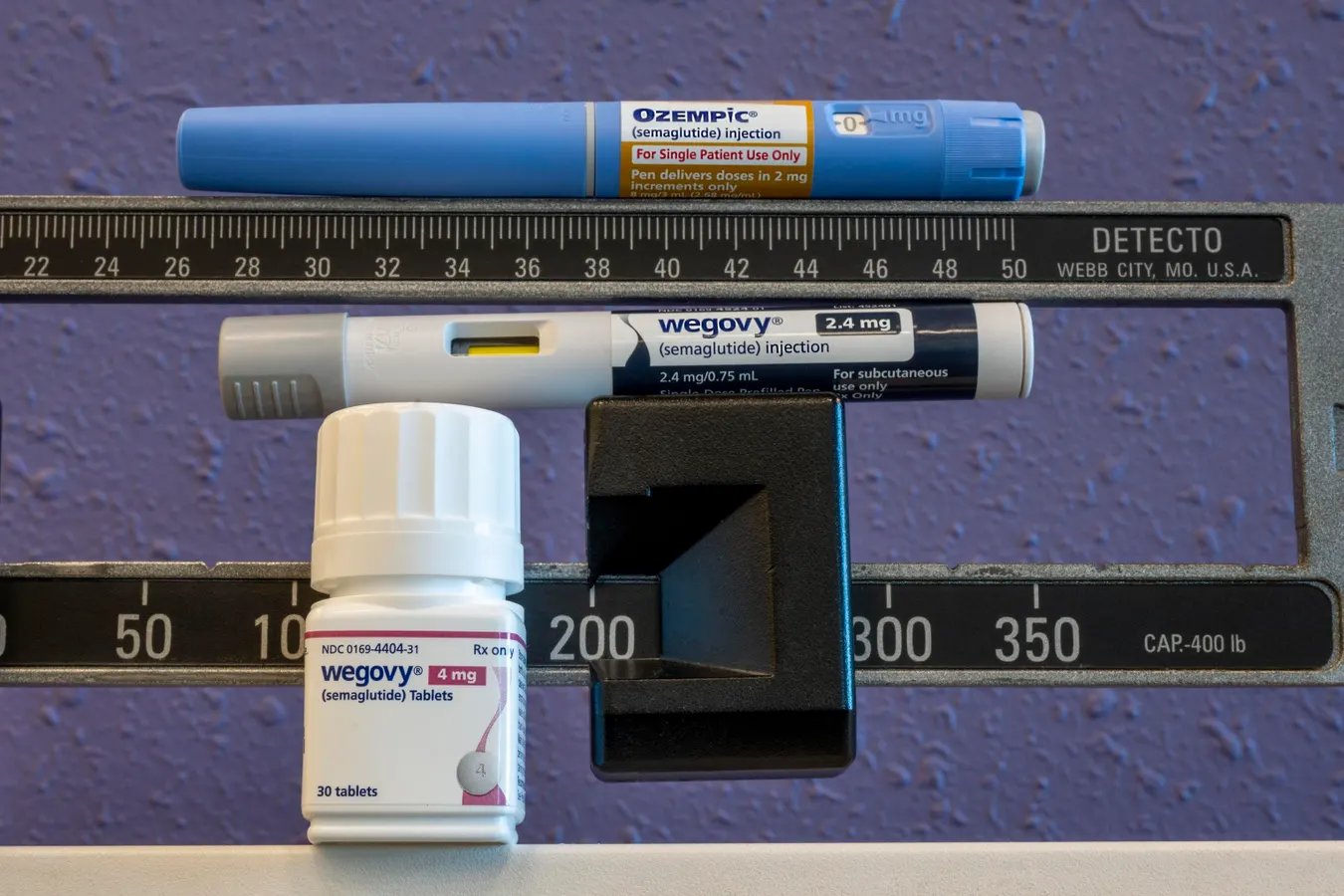
Medicare Pays Billions For Obesity’s Consequences. Its GLP-1 Bridge Offers A Better Way

“If the Bridge demonstrates what the clinical evidence already suggests, policymakers shouldn’t let the program expire,” says health expert Sally Pipes. “They should make effective obesity treatment a permanent part of Medicare.”
UCG/Universal Images Group via Getty Images
Medicare spends billions of dollars each year treating heart disease, diabetes, kidney disease, cancer and other illnesses caused or worsened by obesity. Yet for decades, federal law has barred the program from covering medicines prescribed to treat obesity itself.
In other words, Medicare has been willing to pay for the costly consequences of excess weight—while refusing to pay for drugs that could address the underlying disease.
The Trump administration has finally begun to correct that contradiction.
This month, the Centers for Medicare and Medicaid Services launched the Medicare GLP-1 Bridge, a demonstration program that gives eligible Medicare beneficiaries access to certain anti-obesity medicines for $50 a month.
The program will run through the end of 2027. It should be the beginning of a permanent change—not a temporary exception to the longstanding rule.
More than 40% of American adults have obesity, according to the Centers for Disease Control and Prevention. Among Medicare beneficiaries, roughly two-thirds are overweight or have obesity. In other words, this isn’t a niche problem. Obesity is a major driver of chronic illness and healthcare spending nationwide.
That prevalence makes Medicare’s longstanding coverage policy difficult to defend. Obesity is not merely a cosmetic concern or a failure of willpower. The medical community recognizes it as a chronic disease that can lead to years of declining health and costly treatment.
The GLP-1 Bridge reflects that medical consensus—and recognizes that new therapies have fundamentally changed what’s possible in obesity treatment.
The clinical evidence is striking. In one major trial, patients taking semaglutide, the active ingredient in Wegovy, lost nearly 15% of their body weight, on average. In trials of tirzepatide, the active ingredient in Zepbound, patients receiving the highest dose lost roughly 20%, on average.
The effects extend well beyond the number on the scale. Semaglutide has been shown to reduce the risk of cardiovascular death, heart attack and stroke in adults who have established cardiovascular disease and obesity or are overweight.
Researchers are continuing to discover additional clinical uses. Zepbound is now approved to treat moderate-to-severe obstructive sleep apnea in adults with obesity, while certain GLP-1 medicines have also demonstrated important kidney benefits in patients with type 2 diabetes.
Despite this evidence, broader Medicare coverage remains contentious, largely because of the potential price tag. Critics frequently cite a Congressional Budget Office analysis estimating that broad Medicare coverage of anti-obesity medicines would increase federal deficits by about $35 billion from 2026 through 2034.
But conventional budget estimates are not designed to capture the full health and social value of treating obesity—particularly gains that emerge over longer periods or improve patients’ quality and length of life without producing immediate federal savings.
Effective obesity treatment could mean fewer hospitalizations, slower progression of chronic disease, greater mobility and more years of independent living.
Other researchers reach a more optimistic conclusion than CBO does. An analysis from the University of Southern California’s Schaeffer Center estimated that broad access to weight-loss therapies could generate between $175 billion and $245 billion in savings for Medicare during the first decade, largely through reduced inpatient and skilled-nursing care.
The same analysis projected nearly $1 trillion in broader social benefits from longer and healthier lives.
The Medicare GLP-1 Bridge offers an opportunity to begin evaluating those competing projections against real-world experience.
The program will give CMS valuable information about utilization, access and program spending. Over time, claims data may also shed light on whether wider use is associated with reductions in other forms of medical care.
Just as important, thousands of Medicare beneficiaries will gain access to treatments they otherwise might not be able to afford.
The Bridge represents a long-overdue correction in Medicare’s priorities. Paying for the complications of obesity while refusing to cover some of the most effective treatments for the disease itself has never made medical or economic sense.
CMS deserves credit for beginning to rethink that approach. If the Bridge demonstrates what the clinical evidence already suggests, policymakers shouldn’t let the program expire. They should make effective obesity treatment a permanent part of Medicare—rather than continuing to pay far more for the diseases obesity leaves behind.