There are few better ways to enjoy a sunny afternoon or entertain guests than on a backyard deck. Whether you’re building a new deck or upgrading an older one, one of the first decisions you’ll need to make is choosing between composite and wood decking.
Both materials have their advantages, but they differ in costs, appearance, maintenance, durability, and longevity. Understanding the key differences of composite vs. wood decking can help you choose the best decking material for your budget, lifestyle, and outdoor space.
What is composite decking?
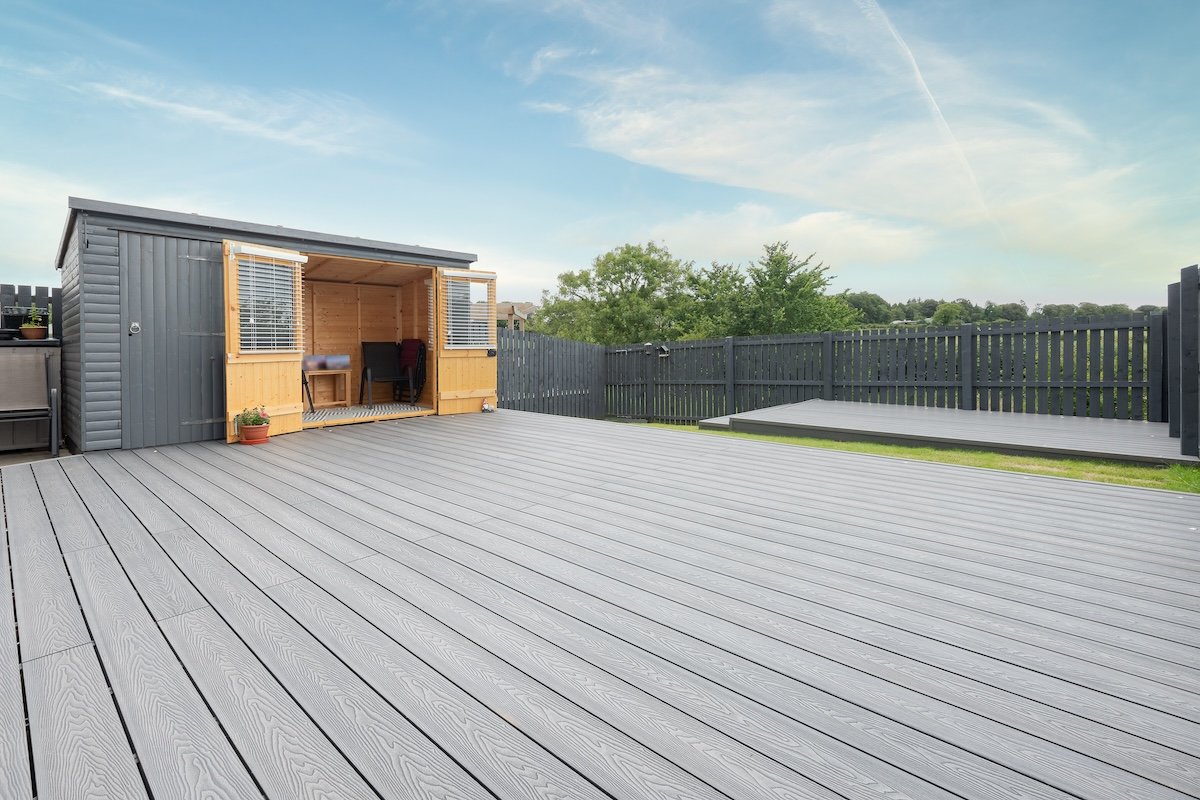
Composite decking is a manufactured decking material made from a blend of recycled wood fibers, plastics, and bonding agents. Many products are capped with a protective polymer shell that improves resistance to moisture, stains, fading, and scratches. Popular brands such as Trex, TimberTech, Fiberon, and Deckorators offer a wide range of colors, finishes, and performance levels, making composite decking a popular low-maintenance alternative to natural wood.
Pros
- Requires little maintenance beyond occasional cleaning
- Resists rot, insects, and moisture damage
- Won’t splinter or require regular staining or sealing
- Available in a wide range of colors and realistic wood-grain finishes
- Typically lasts 25 to 30 years or more
Cons
- Higher upfront cost than most wood decking
- Can become hotter than wood in direct sunlight
- Scratches and damage can be difficult to repair
- Less authentic appearance and feel than natural wood
- Not all composite products are fully recyclable
What is wood decking?
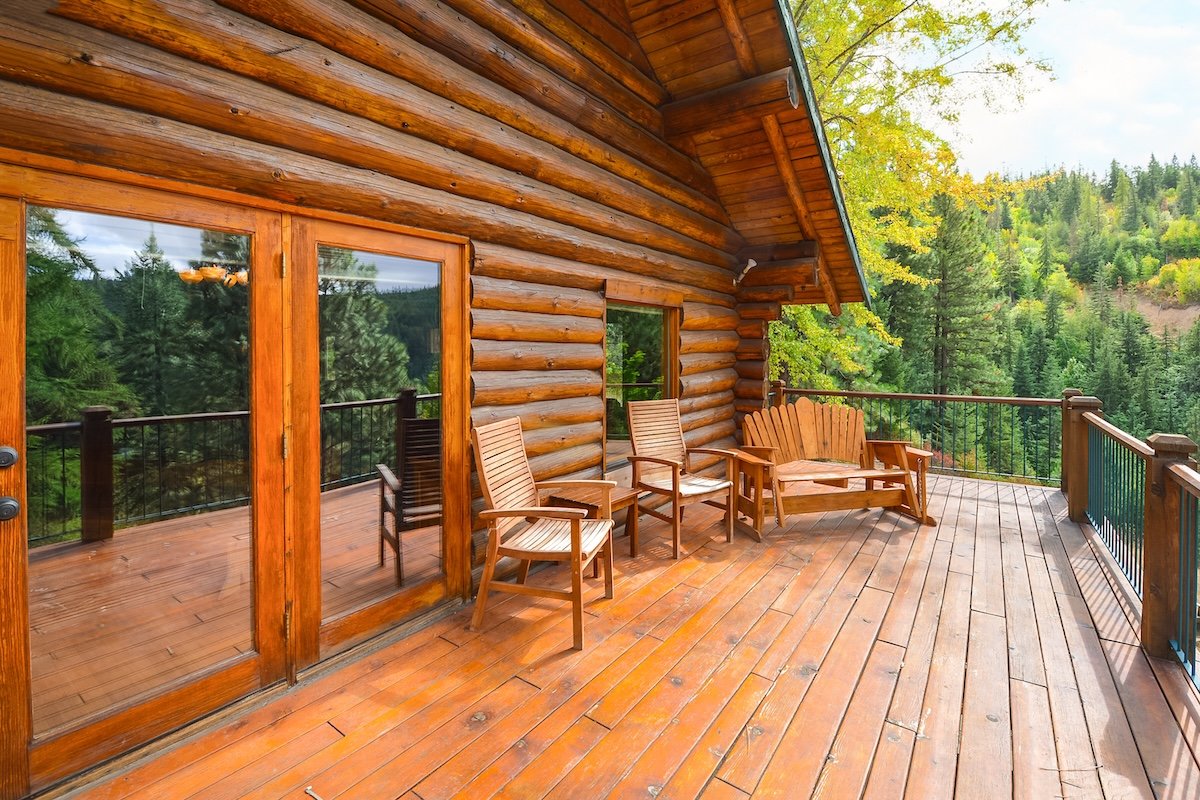
Wood decking is made from natural lumber and is a popular choice if you prefer the authentic look and feel of real wood. Common options include pressure-treated pine, cedar, redwood, and premium hardwoods like ipe and mahogany. Pressure-treated pine is the most affordable and widely used option, while naturally durable species such as cedar, redwood, and hardwoods offer greater resistance to rot and insects at a higher price.
Pros
- Natural beauty with unique grain patterns
- Typically costs less upfront than composite decking
- Stays cooler than many composite products in direct sunlight
- Easier to sand, refinish, and repair
- Can be stained or painted to suit different styles
Cons
- Requires regular staining or sealing to protect against the elements
- More susceptible to rot, insects, warping, and splintering
- Shorter lifespan than most composite decking
- Ongoing maintenance increases long-term ownership costs
- Untreated softwoods are generally not suitable for outdoor decking
Differences Between Composite and Wood Decking
| Feature | Composite Decking | Wood Decking |
| Upfront Cost | Higher initial investment | Lower initial cost (especially pressure-treated pine) |
| Appearance | Uniform colors and realistic wood-grain finishes | Authentic natural grain; each board is unique |
| Maintenance | Occasional cleaning; no staining or sealing | Requires regular staining or sealing and periodic repairs |
| Lifespan | Typically 25 to 30+ years | Typically 10 to 20 years, depending on species and maintenance |
| Durability | Resists rot, insects, moisture, and splintering | Can warp, rot, crack, and splinter over time |
| Installation | Similar to wood but is more time-consuming since it often uses hidden fasteners and manufacturer-specific systems | Straightforward installation with standard carpentry tools and fasteners |
| Heat Retention | Can become very hot in direct sunlight | Generally stays cooler underfoot |
| Sustainability | Often made with recycled materials; recyclability varies | Renewable resource when sourced from responsibly managed forests |
| Best For | Homeowners wanting low maintenance and long-term value | Homeowners prioritizing natural beauty and lower upfront costs |
Cost
Wood decking is generally the more affordable option upfront, particularly if you are using pressure-treated pine, though exact costs vary by wood species and the complexity of the installation.
Homeowners often focus on upfront cost, but ongoing maintenance can significantly affect the total cost of ownership. Mike Onderko, director of product marketing at Trex, says “many buyers overlook the long-term expense of cleaning, sanding, staining, and sealing a wood deck.”
Composite decking cost is usually higher initially because the boards cost more and some products require proprietary fastening systems. However, the reduced maintenance requirements and longer lifespan can make composite a better long-term value, especially for homeowners planning to stay in their home for many years.
Material
Composite decking is manufactured from a blend of recycled wood fibers, plastics, and binding agents, with many products featuring a protective cap that resists moisture, stains, fading, and scratches. The result is a consistent appearance with minimal natural variation.
Many homeowners still assume composite decking looks obviously artificial, but that’s becoming less true with newer products. “Today’s generation of composite decking mimics the look of wood grain texture and color variation so well that guests will be hard-pressed to notice the difference,” says Manny Kavouklis, president of CMK Construction Inc. in Tampa, Florida.
Wood decking is milled from natural lumber, with pressure-treated pine, cedar, redwood, and tropical hardwoods among the most common choices. Each board has unique grain patterns and color variations, giving wood a natural appearance that many homeowners prefer.
Installation
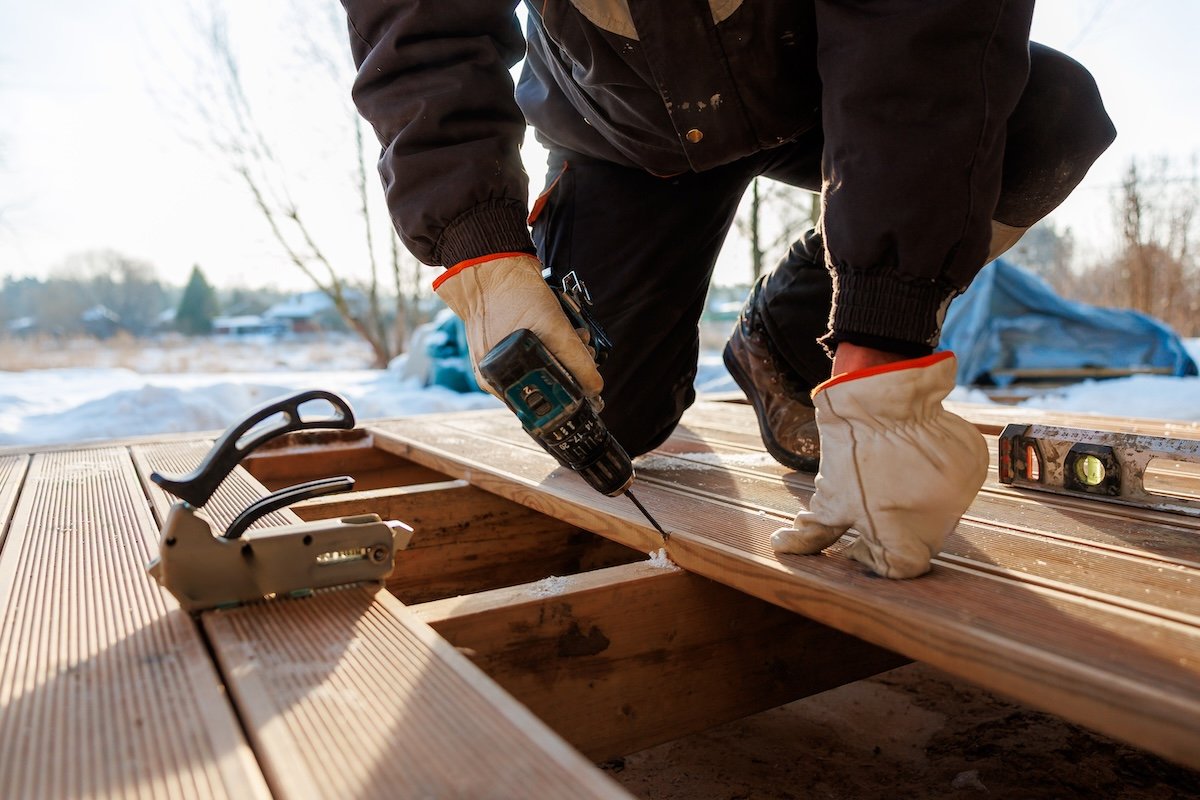
Both composite and wood decking can be installed by experienced DIYers using standard carpentry tools, though composite products often require picture-frame detailing and manufacturer-specific fasteners, spacing requirements, or hidden clip systems. Composite boards are also heavier than wood, which can make handling them more difficult.
Despite the extra hardware, the core process isn’t wildly different from a standard build.
“Many people think composite needs different or more advanced installation methods, but it builds just like a wood deck.”
—Thomas Gooch, senior manager of product management at Fiberon
Wood decking is generally easier to cut, fasten, and modify on-site, making it a forgiving choice for custom layouts. Regardless of the material, proper framing, drainage, and ventilation are essential for maximizing a deck’s lifespan.
Maintenance
Composite decking requires little more than occasional sweeping and washing with soap and water to keep it looking its best. It doesn’t need regular staining, sealing, or painting, although it can still develop surface scratches, mildew, or stains if neglected.
“The biggest thing homeowners misunderstand is that composite is ‘maintenance-free.’ It’s lower-maintenance, not no-maintenance,” says John Humphreys, founder and principal of BigDecks in Austin, Texas. “It still needs cleaning.”
Wood decking requires more routine care. To help prevent moisture damage, fading, cracking, and rot, homeowners should clean the deck regularly and apply a quality stain or sealer every 2 to 3 years. Individual boards may also need to be repaired or replaced as they age.
Longevity
Composite decking typically lasts 25 to 30 years or longer, depending on the product and how well it’s maintained. It resists rot, insect damage, moisture, and splintering, making it a durable option for many climates.
Wood decking generally lasts 10 to 20 years, though premium hardwoods can last considerably longer with proper care. Regular maintenance plays a significant role in extending the life of any wood deck, while neglected wood is much more susceptible to weathering, decay, and insect damage.
Which decking material Is best?
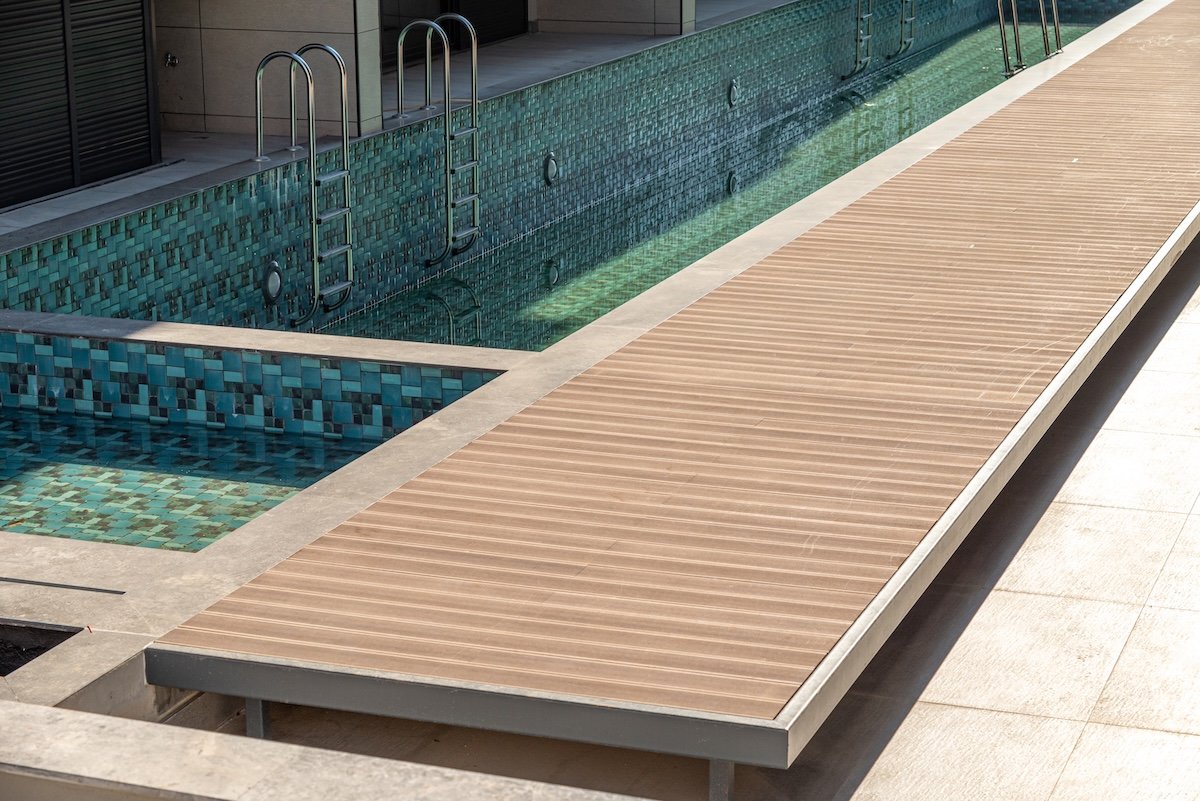
The best decking material really just depends on your budget, maintenance preferences, and the look you want to achieve. If you’re looking for the lowest upfront cost and appreciate the natural beauty of real wood, pressure-treated pine, cedar, or redwood can be excellent choices (as long as you’re willing to keep up with routine maintenance).
Composite decking is often the better investment if you prioritize durability and low maintenance. Although it typically costs more initially, it can save time and maintenance expenses over the life of the deck while offering excellent resistance to moisture, insects, and weather.
Before making a final decision, compare warranties, review manufacturer installation requirements, and consider how much time you’re willing to spend maintaining your deck. Choosing the right material now can help ensure your outdoor space looks great and performs well for years to come.
“Selecting a decking material is more about one that fits your budget, lifestyle, and project.”
—Bryan Rocha, VP of Ashby Lumber in Berkeley, California
FAQ
It depends on your priorities. Neither material is outright better than the other. Composite decking is usually the better choice if you want minimal maintenance and a longer lifespan and your deck isn’t in direct sunlight as it can get quite hot to the touch. Wood decking usually costs less upfront and gives you the authentic appearance and feel of natural lumber, but it requires regular sealing or staining to protect it from weather, moisture, and insects.
Yes. The three main categories are wood-plastic composite (WPC), PVC decking, and mineral-based composite (MBC). Most homeowners choose either capped composite (WPC with a protective polymer shell) or PVC decking because they offer excellent resistance to moisture, stains, and fading while requiring very little maintenance.
The best wood depends on your budget. Pressure-treated pine is the most affordable and widely used option. Cedar and redwood offer natural resistance to rot and insects with less maintenance than pine, while premium hardwoods such as ipe provide exceptional durability and longevity but come at a much higher price.
No. Most modern composite decking, especially capped composite, is highly resistant to pet urine and other household stains. It’s still a good idea to rinse the area with water and mild soap soon after an accident to prevent odors or surface residue from developing.

Curb Appeal Updates You’ll Appreciate Even If You Aren’t Selling Your Home