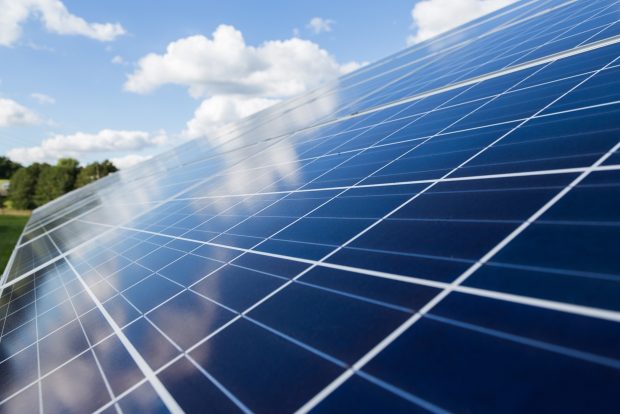
Image by torstensimon from Pixabay
Renewable energy generation around the world grew by nearly 10%, according to new figures from the International Renewable Energy Agency, which show “the world is rallying behind electrification as a cornerstone of the energy transition”.
The 2024 figures show that the increase of 9.8% in 2024 put the proportion of global electricity generation from renewable sources at nearly one-third (32%), with the amount of electricity generated by non-renewable sources growing by a smaller amount – 1.4% over the same period.
Francesco La Camera, director general of IRENA, said that the figures showed that the world is rallying behind the energy transition, and this “growing support for global electrification reflects a shared recognition that clean electricity strengthens energy security, resilience and competitiveness”.
“The shift to clean energy is charging ahead,” Simon Stiell, the executive secretary of the United Nations Framework Convention on Climate Change (UNFCCC) added.
Record growth rates
The increase was dominated by solar and wind power, with these energy sources accounting for 73.8% and 22.9% of added renewable capacity respectively. The remaining capacity expansion was driven by hydro, bioenergy, and geothermal energy.
Solar and wind are the primary renewable energy sources in the world, with solar alone accounting for nearly half (47%) of total global renewable energy capacity, followed by wind and hydro power at 25% of global renewable capacity each.
IRENA found that this growth was primarily driven by Asian countries, which accounted for 74.2% of added capacity and already makes up over half (56.1%) of total global renewable capacity.
Europe and North America contributed most of the remaining new capacity, accounting for 11.1% and 6.1% respectively.
While the majority of renewable growth did occur in the places in which renewables already have the largest presence, the report noted that “most other countries also expanded their renewable capacity in 2025 compared to 2024.”
Read more: UK ‘well placed to take advantage of opportunities of climate adaptation’
Looking ahead of the transition
Despite the positive findings of the report, IRENA emphasised that there are gaps in the global energy transition and the world will need to further hasten its green transition in order to avoid the worst consequences of climate change.
According to the report, there remains a 6.02TW gap between 2025 renewable energy capacity and the 2030 capacity that IRENA determined would need to be necessary in order to keep climate change from exceeding 1.5°C above preindustrial levels.
In IRENA’s 1.5°C scenario, the electrification of processes that currently run on fossil fuels, will cause electricity will rise from “around 23% of global final energy consumption today to 35% by 2035 and above 50% by 2050.”
The upcoming UN Climate Change Conference COP 31 has announced that securing this 35% target will be a key part of its agenda.
Stiell highlighted that every nation in the last COP had unanimously agreed that the global transition was now ‘irreversible’ and this new data is powerful new evidence.
“With renewable power generation clocking its fastest growth ever, the shift to clean energy is charging ahead, because it’s now cheaper, safer and faster-to-market, in stark contrast to this year’s ongoing fossil fuel cost chaos – driving inflation painfully higher for every economy, millions of businesses and billions of households.
“But despite this vast progress, the shift to clean energy is still far from fast or inclusive enough, and many vulnerable nations need significant support, making full and timely delivery of all climate finance pledges essential.”
La Camera concluded that while achieving the 2035 target will “require renewable electricity generation to expand at an unprecedented pace over the next decade”, the “technologies are available [and] the economics are compelling.”