When Simone Bodmer-Turner moved from an apartment and studio in Brooklyn to a 19th century farmhouse in a rural corner of Western Massachusetts, her initial settling-in period became known as”the year of living without a kiln.” During that time, the artist-designer, best known for her sculptural ceramic vases, worked with bronze, plaster and wood, creating chairs, one-of-a-kind standing lamps, and fireplace surrounds in refined, organic shapes that could be mistaken for 1930s French.
Recently, she’s begun firing again—SB-T Studio, her new, dedicated ceramics setup, is located in a historic mill building in the Pioneer Valley. Having spent her post-college years working for restaurants and farms—and for Good Eggs, an online ethical grocery in SF that connects urbanites with local growers and bakers—Simone has also, she says, returned to her “food roots” and been gardening and doing a lot of cooking herself. The time felt right to create her first tableware line.
As she often does, Simone teamed up with collaborators—two ceramic artists with deep knowledge of glazing and production—and spent months fine-tuning exactly what she was after: stoneware plates, platters, and mugs in a nuanced ghostly glaze, pieces of rarified beauty intended for everyday use. Join us for a look.
Photography by Myrthe Giesbers, unless noted, all courtesy of Simone Bodmer-Turner (@sbit.studio and @simonebodmerturner).
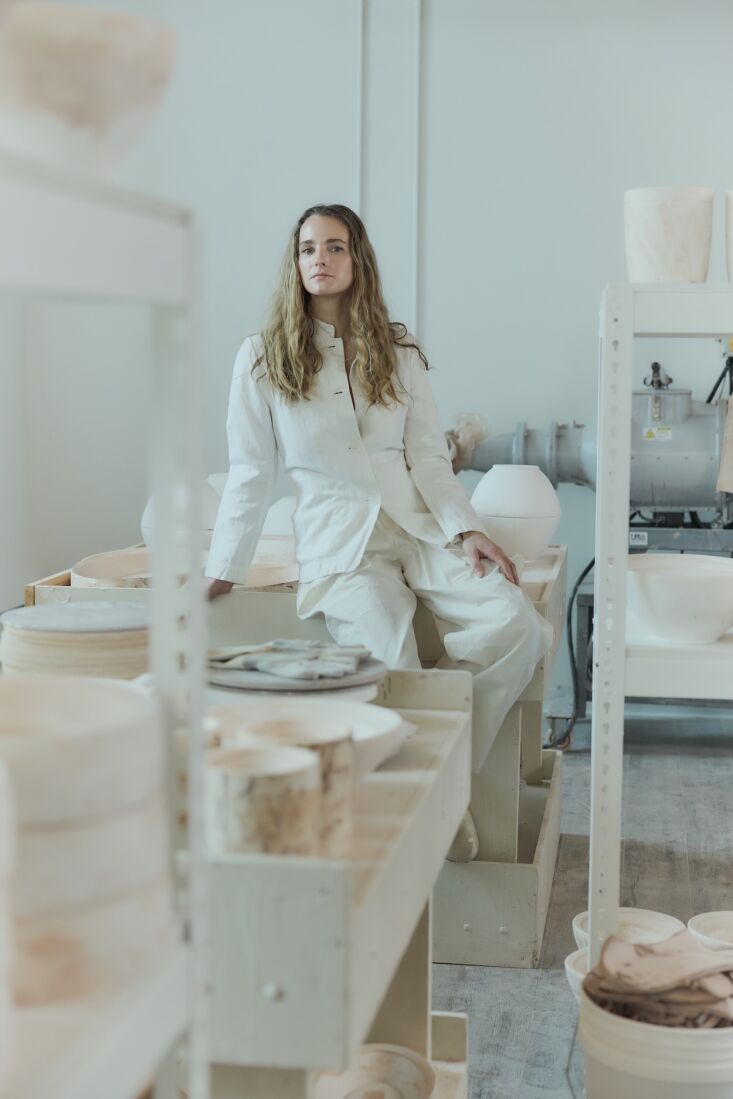 Above: Simone in her new studio—she spent part of her childhood not too far away in Manchester-by-the-Sea, Massachusetts. A longtime collector of tableware, Simone studies ancient vessels for inspiration and says she wanted her dishes to pair “the delicacy of Japanese glazing” with “the durability of English ironstone.”
Simone was an English major at the College of Charleston. It was post-college that she began her ceramics practice; in lieu of grad school, she traveled, studying firsthand in a series of workshops in Japan.
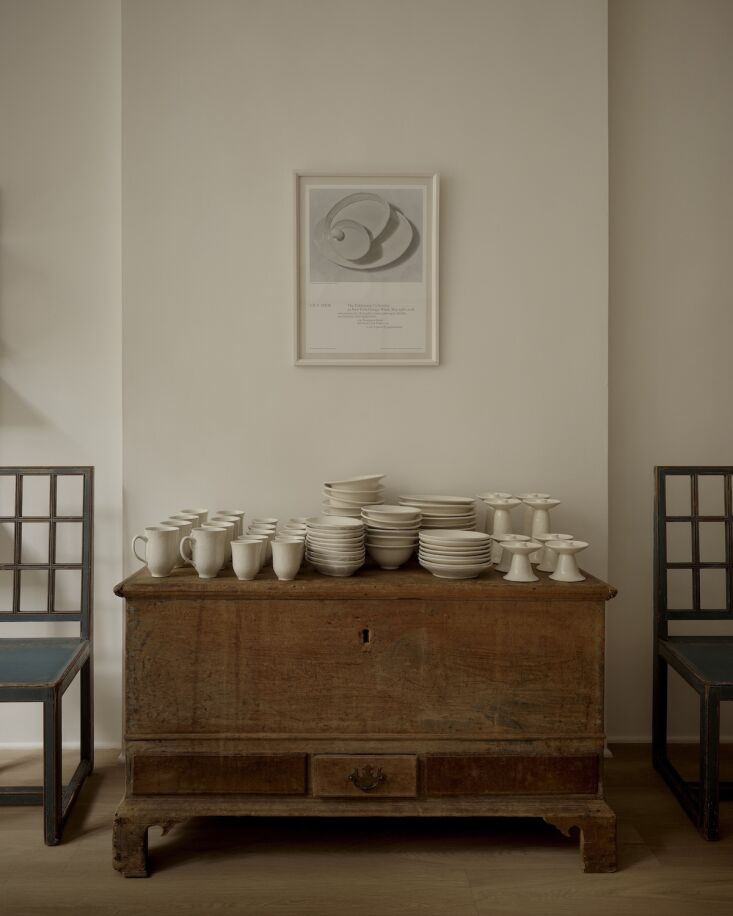 Above: The 12-piece SB-T Tableware Collection debuted in a Soho pop-up shop during New York’s design week paired with furniture from antiques dealer Christopher Cawley “The pieces need to be seen and handled firsthand,” Simone says. “They’re not just white plates.” Photograph by Sean Davidson.
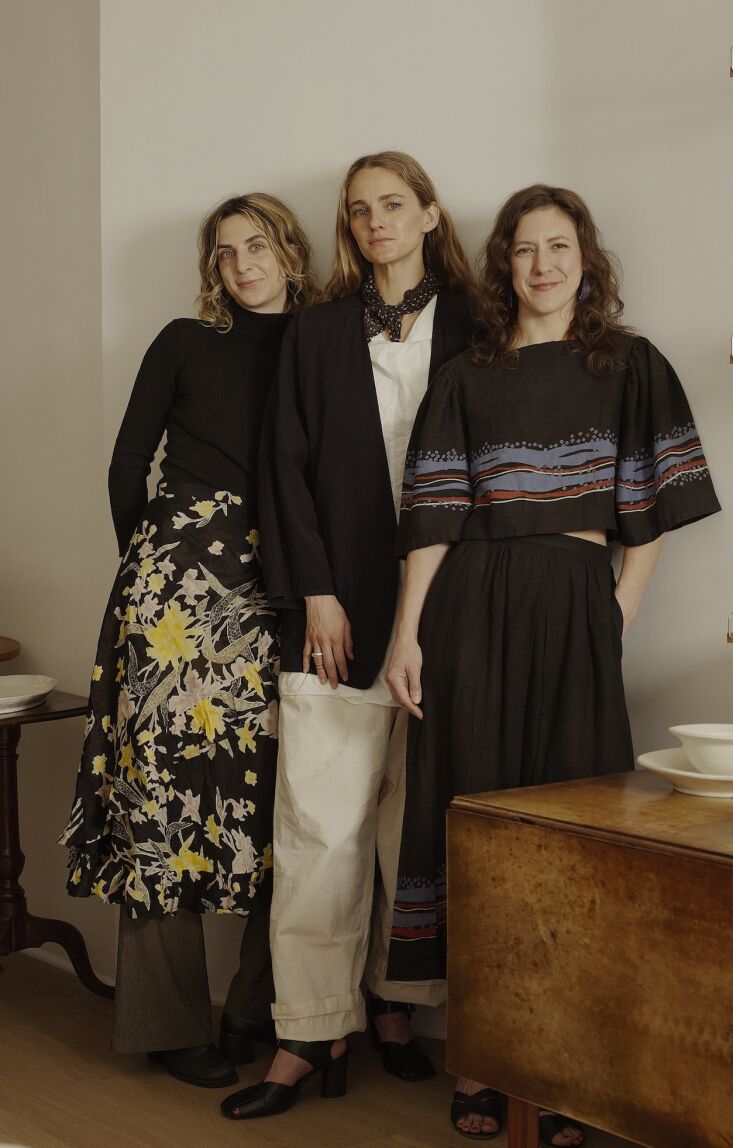 Above: Simone with the SB-T Studio ceramic artist team: Hannah Schwartz (L) and Justine Barrett Figura (R). “They’re the ones making the tableware. I am, too,” says Simone. “Justine is our director of ceramics development—she went to Alfred University and is knowledgeable about the chemistry and molecular level of ceramics. Hannah is her right hand.” Photograph by Sean Davidson.
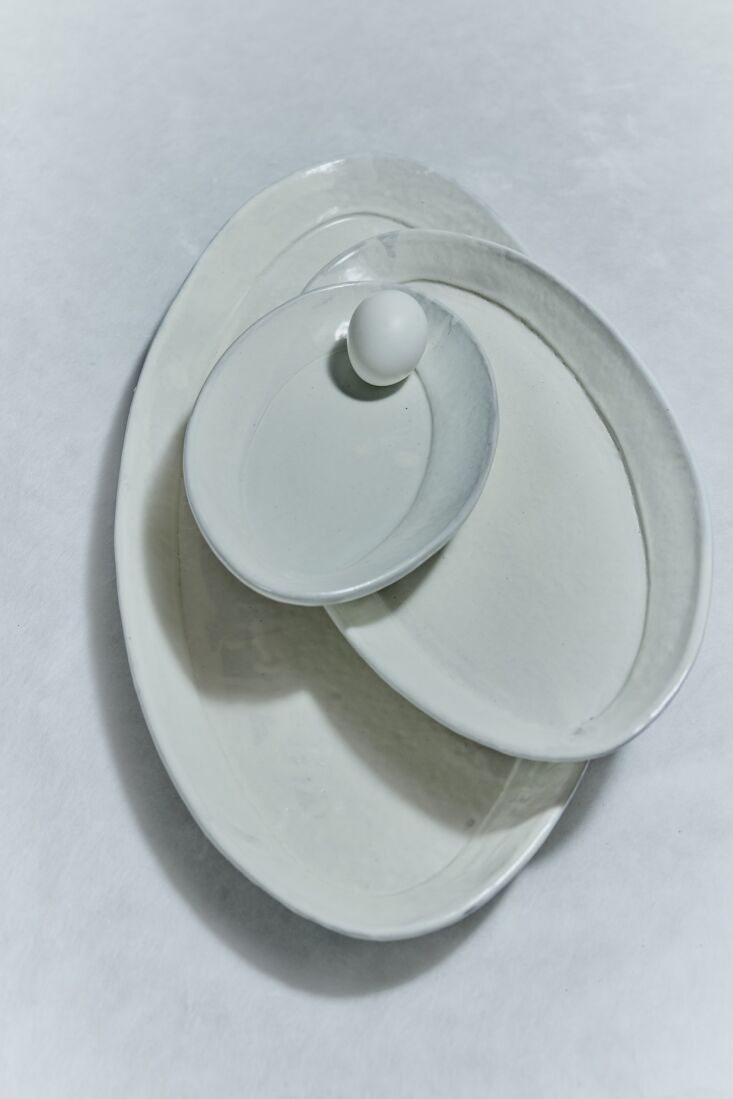 Above: “Our tableware is made of red stoneware,” notes the studio website. “Each piece is part cast, part hand-formed—both processes intended to preserve the marks of the human hand.” The mottled surfaces are created by coating each piece in a milky white slip followed by a clear, durable glaze. Shown here, a trio of platters; the smallest, the Oval Pickle Plate, is $95.
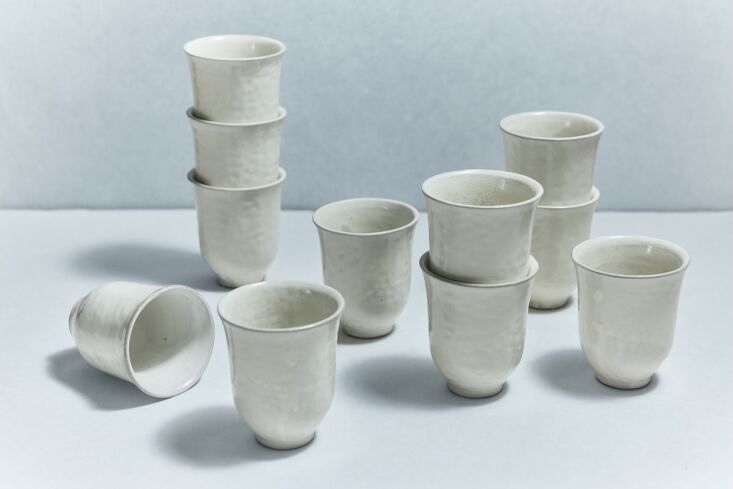
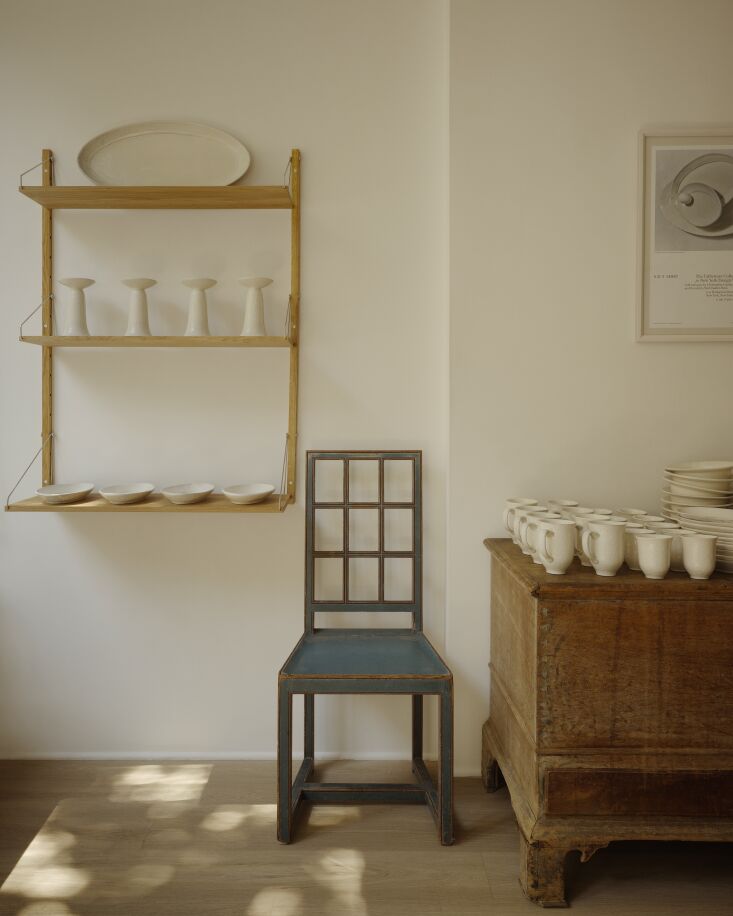 Above: Tall Taper candleholders, $250, on oak shelves by Frama and a lineup of Mugs, $125, and Cups, $75. Each piece is stamped with the studio’s mark, the mark of the maker, and the mark of the glazer—and has a notable heft. All are microwave safe and machine washable. Photograph by Sean Davidson.
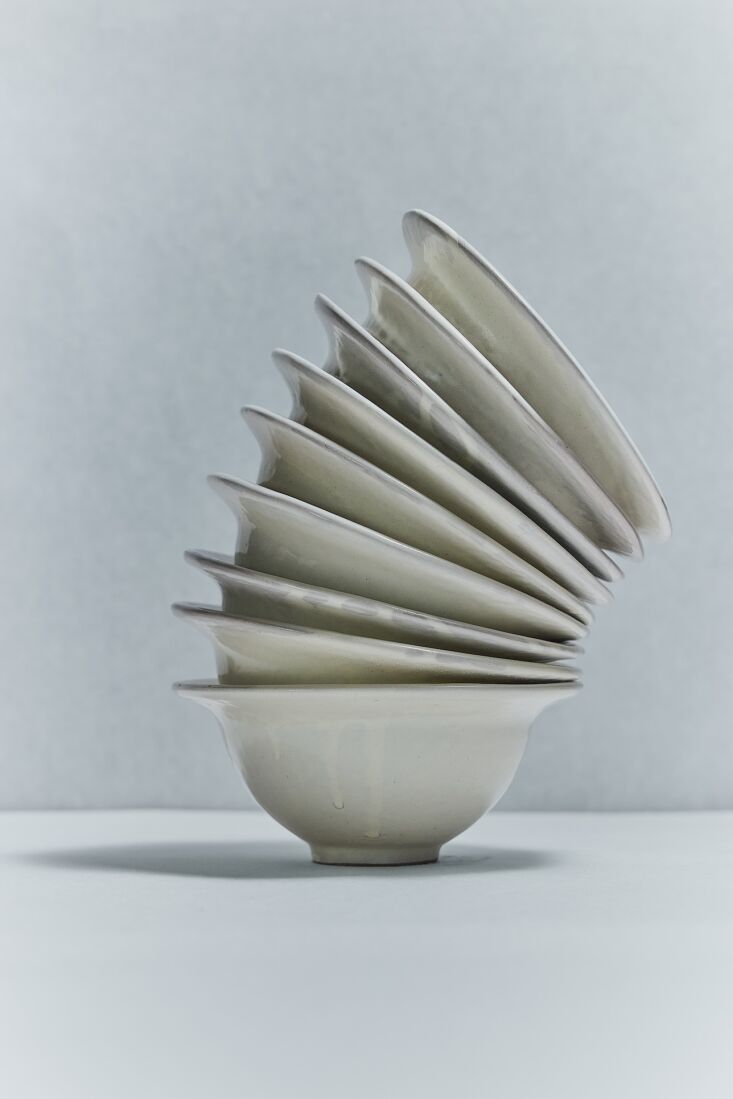 Above: Tall Bowls are $175 each. Writes Simone on Instagram: “I had a very specific idea about the surfaces that I wanted to achieve…surfaces that I was mainly finding on gas-fired Japanese and Korean pottery. But anything that is created by wood- or gas-firing is really hard to recreate in an electric kiln. So the challenge was to create something that felt like every piece was unique.”
“We add one more layer than what most production pottery would do—a dark clay body, a white slip, and a glaze,” continues Simone. “Somebody’s hands are taking each piece, dipping it and then shaking the slip off, so that you see the movement and the slip running across.”
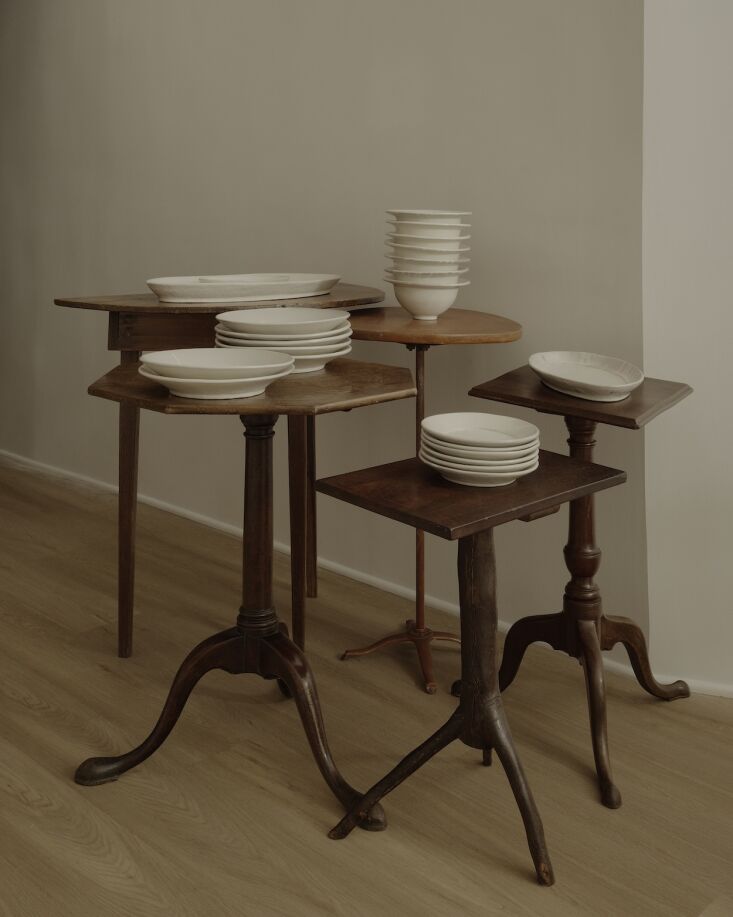 Above: Dinner Plates, $95; Bread Plates, $75; Tall Bowls, $175; and platters on a collection of Christopher Cawley antique candle stands. The ceramics are just about indestructible, Simone notes, but should any break or chip, she connects clients to Brooklyn-based urushi lacquer artist Yuko Gunji for traditional Japanese kintugi repair. Photograph by Sean Davidson.
 Above: Wanting to help support sustainable agriculture, growing education, and food security in New England, Simone is donating 3 percent of the studio’s profits to a nonprofit each year starting with Seeds of Solidarity, a Western Massachusetts farm and education center that among other things teaches regenerative agriculture practices.
In addition to the studio’s own shop, the tableware is newly available in NYC at Quarters, In Common With’s concept store in Tribeca.
Browse the Remodelista Tableware Archive for more favorites, including: