Economic relations between Poland and the United States have entered a new phase of development. Over the past three decades, cooperation—initially driven primarily by manufacturing investment and trade—has gradually expanded to include professional services, technology, infrastructure, energy, and defense. At the same time, the global economic environment is evolving. Alongside traditional measures of efficiency, increasing importance is being placed on supply chain resilience, energy security, access to talent, and regulatory predictability. In this context, Poland is playing an increasingly important role in the European strategies of many international investors.
Poland remains one of the fastest-growing major economies in Europe. Since the beginning of its economic transformation, GDP per capita has increased nearly sevenfold, while the country has demonstrated strong resilience through successive economic crises. Poland also offers access to a domestic market of 37 million consumers and full integration into the European Union’s Single Market, serving approximately 450 million people. These factors, combined with a well-developed industrial base and a growing pool of highly skilled workers, have strengthened Poland’s position as a strategic location for both regional and international operations.
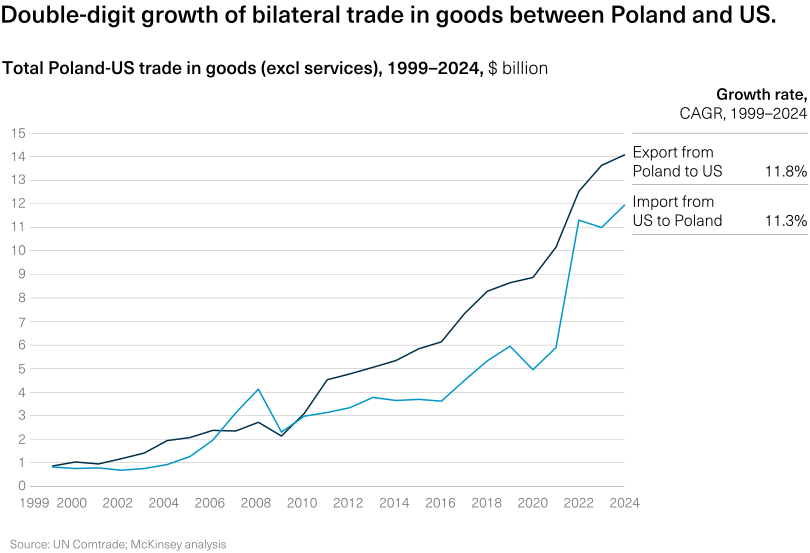
The scale of economic integration between Poland and the United States has increased significantly. Bilateral trade has expanded more than tenfold since Poland joined NATO, reaching over USD 26 billion annually.
The United States is now the second-largest foreign investor in Poland in terms of foreign direct investment stock. More than 1,600 companies with American capital operate in Poland, employing approximately 329,000 people and accounting for a substantial share of the assets and revenues generated by foreign-owned enterprises in the Polish economy.
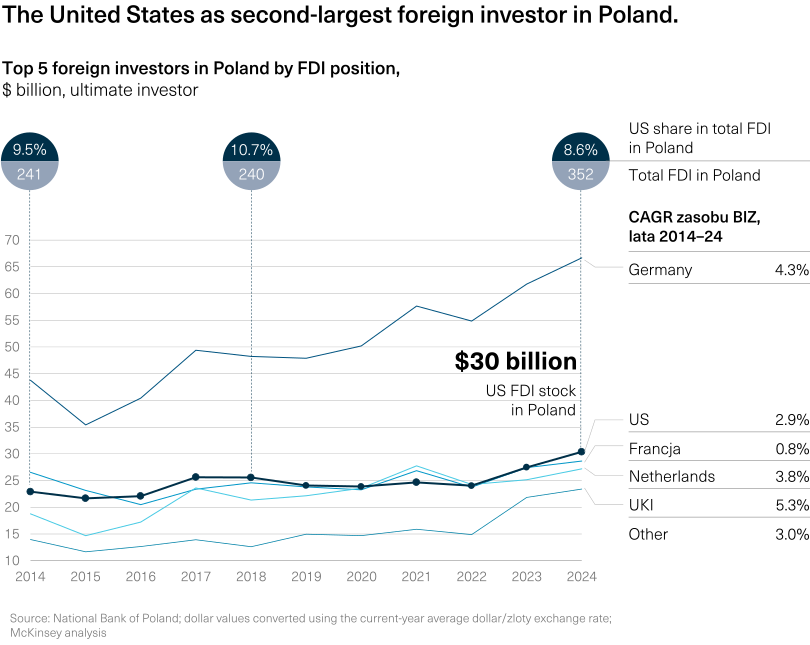
The analysis nevertheless indicates that, despite these strong foundations, there remains considerable scope for further deepening bilateral economic ties. Relative to the size of its economy, Poland continues to attract lower levels of U.S. investment than some other countries in Central Europe. At the same time, the research and development activities of American companies remain concentrated primarily in Western Europe, while Polish investment in the United States is still relatively limited. This suggests that the next phase of economic integration will depend less on further growth in trade and more on expanding high-value-added activities, technology investments, and innovation-driven collaboration.
One of Poland’s key competitive advantages remains its human capital. The country ranks among Europe’s leaders in the number of STEM graduates, while its well-established business services and technology sectors have developed strong capabilities in engineering, information technology, data analytics, and business processes. At the same time, demographic pressures, rising labor costs, and intensifying competition for talent mean that Poland’s future competitiveness will increasingly depend on productivity, innovation, and skills development rather than cost advantages alone.
A survey conducted among members of the American Chamber of Commerce in Poland indicates that most U.S. companies operating in the country view Poland as an attractive location for further expansion. More than three-quarters of respondents reported growth in their operations over the past five years, and most expect to increase investment over the medium term. Companies consistently highlight the quality of available talent, market potential, and macroeconomic stability as Poland’s key strengths. At the same time, they identify regulatory predictability, a stable tax system, competitive energy prices, continued infrastructure development, and stronger collaboration between business and academia as the most important conditions for sustained investment and growth.
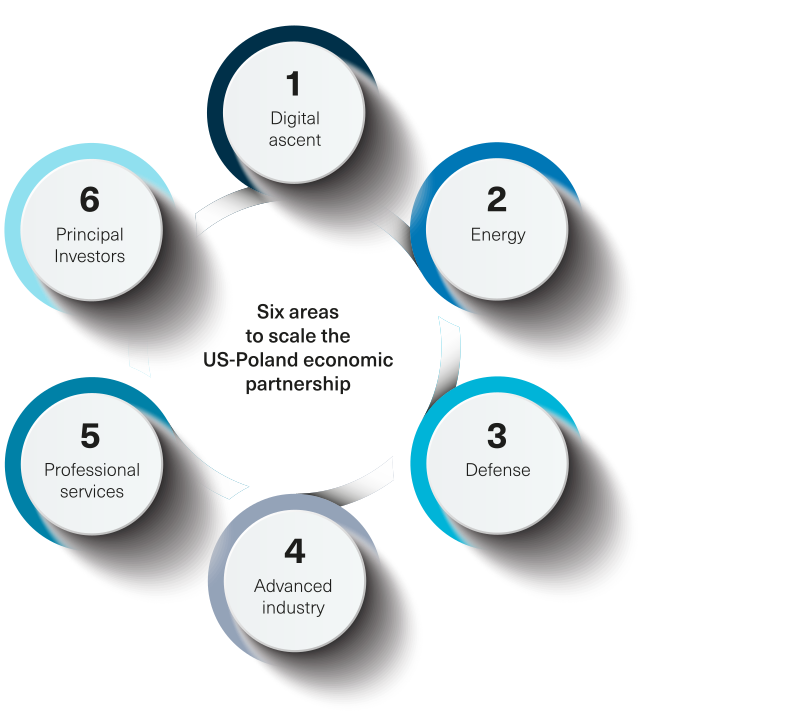
The report identifies six areas that are likely to play a particularly important role in the next stage of Polish–American economic cooperation: digital technologies and artificial intelligence, the energy transition, defense industry development, advanced manufacturing and electronics, professional services, and the mobilization of private capital to finance large-scale development projects. These are areas where Poland’s transformation needs align closely with the expertise, technologies, and investment capacity of American companies.
Looking ahead, the prospects for deeper economic integration will depend on the ability to translate these opportunities into concrete investment projects, stronger capabilities, and the effective implementation of transformation programs. Over the longer term, the success of Polish–American economic cooperation will be measured not only by the scale of trade and capital flows, but also by their contribution to productivity, innovation, and the long-term resilience of both economies.