Whether you want to carve out more free time or reduce your carbon footprint, a robot lawn mower could be the answer. We’ve tested robotic mowers for 4 years in a row, and they keep getting better. Gone are the days of boundary wires, collision sensors, and random-pattern cutting.
Today, AI-enhanced navigation and obstacle avoidance technology combine with advanced app-based controls to leave lawns with a perpetually fresh-cut appearance. These mowers are easy to use and more powerful than any we’ve tested in the past. They run longer per charge, offer more customization options, and cut better than ever.
Our favorite is the Segway i2 Series Navimow. Equipped with on-demand all-wheel drive, it cuts complex lawns using vision-enhanced satellite navigation. The price is competitive, too, but it has a maximum area limit of about a third of an acre.
For smaller budgets or larger yards, we have other great options to choose from. In the reviews ahead, we discuss how each selected robotic mower performed on our test turf. Afterwards, keep reading to learn about the criteria we used to select the best robot lawn mowers and find one that’s right for your lawn care routine.
- Robot mowers are evolving rapidly. New models feature AI-enhanced navigation and app-based controls for efficient, eco-friendly lawn care.
- Segway i2 Series Navimow tops the list. Offers vision-enhanced satellite navigation and all-wheel drive for complex lawns.
- Options for every budget and yard size. From the budget-friendly Eufy E15 to the large-capacity Segway X430, there’s a model for every need.
- Advanced obstacle avoidance and customization. Models like the Ecovacs Goat A3000 excel in navigating obstacles with precision.
Bottom line: Robot lawn mowers offer cutting-edge technology for efficient, customizable lawn care, with top picks catering to various budgets and yard sizes.
- BEST OVERALL: Segway Navimow i206 Robot Mower
↓ Jump to Review - RUNNER-UP: Sunseeker X3 Plus Robotic Mower
↓ Jump to Review - BEST BANG FOR THE BUCK: Eufy E15 Robot Lawn Mower
↓ Jump to Review - BEST OBSTACLE AVOIDANCE: Ecovacs Goat A3000 LiDAR Pro Robot Lawn Mower
↓ Jump to Review - BEST FOR COMPLEX LAWNS: Mammotion Luba 3 3000H
↓ Jump to Review - BEST FOR LARGE LAWNS: Segway Navimow X430Robot Lawn Mower
↓ Jump to Review
Best Robot Lawn Mowers Compared
Our Top Picks
Best Overall
Photo: Amazon
What We Like
- Zero-turn all-wheel drive doesn’t damage grass
- Onboard AI-enabled camera obstacle detection
- Automatic mapping without an antenna
- Effective on slopes up to 45 percent
What We Don’t Like
- Lacks edge-trimming ability
Product Specs
-
Coverage area:
0.15 acre -
Mowing height range:
2 to 3.6 inches -
Slope rating:
24 degrees
Our Ratings
| Ease of Use | 4.8/5 | Cut Quality | 5/5 | Performance | 4.8/5 | Durability | 5/5 | Value | 4.8/5 |
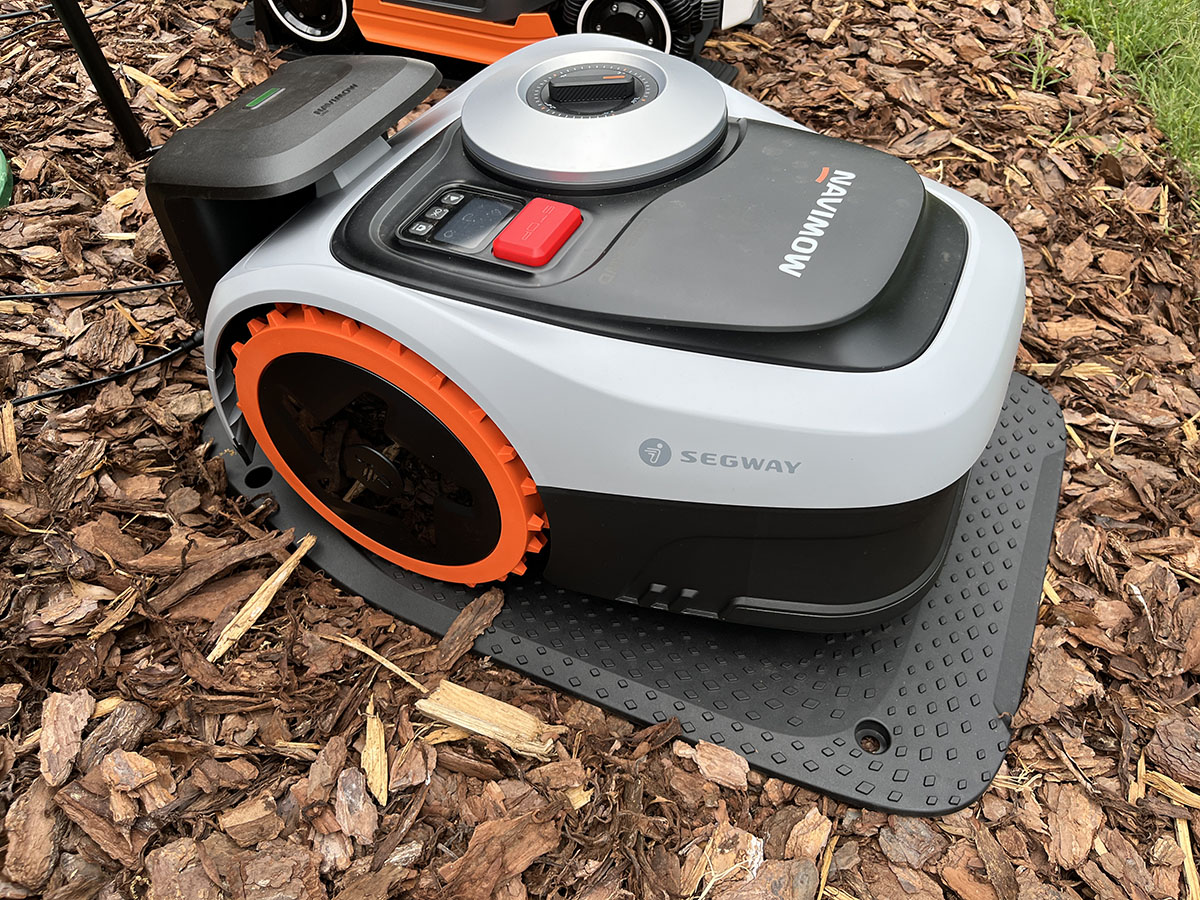
Segway’s i2-Series Navimow robotic mowers are designed for small to midsize lawns from .15 acre (i206) to .5 acre (i215). Both models feature advanced EFLS 2.0 antenna-free navigation and maneuver safely on slopes up to 45 percent. We tested the i206, which is equipped with a 5-blade cutting disc that mows a 7.1-inch swath per pass and has a manually adjustable mowing height range of 2 inches to 3.6 inches.
The i206 is the second Navimow i-series we’ve tested and we love the improvements. A year ago we thought the i110 was one of the best options around, but the i206 rolled out several timely upgrades to the i-series navigation, traction, and steering systems. These new and improved mowers come with electronically stabilized all-wheel drive that enables maneuverability on slopes up to 45 percent (compared to the i110’s 34 percent) and a zero-degree turning radius without damaging the grass.
EFLS 2.0 positioning provides another major upgrade. The i206 uses tri-frequency network RTK paired with AI-enabled cameras to construct a stable 3D visual backup map. The accuracy is notably improved when the programmable lawn mower is working under dense tree cover and inside narrow corridors. The new navigation system eliminates the need for an RTK antenna in most locations and enables accurate auto-mapping.
What our tester says: “The Navimow i-series got a couple of dramatic upgrades this year, with no dropoff in basic mowing functionality. It continues to outshine the competition with agile, quiet, and dependable mowing.”—Mark Wolfe, Product Reviews tester and writer
Get the Segway Navimow i2 robot lawn mower at Amazon, The Home Depot, or Segway.
Runner-Up
Photo: Amazon
What We Like
- Precise EFLS satellite navigation system
- Sensitive 3D camera obstacle detection
- Intuitive app mapping and scheduling
- Up to 6 zones and corridor mapping
What We Don’t Like
- Antenna is difficult to stake and stabilize in hard ground
Product Specs
-
Coverage area:
0.3 acres -
Mowing height range:
1.6 to 3.2 inches -
Slope rating:
17 degrees
Our Ratings: Ease of Use 5/5; Cut Quality 5/5; Performance 5/5; Durability 5/5; Value 4.5/5
Our Ratings
| Ease of Use | 5/5 | Cut Quality | 5/5 | Performance | 4.5/5 | Durability | 5/5 | Value | 4.5/5 |
Looking to keep your lawn in perfect condition? The Sunseeker X3 Plus shaves grass to 1.6 inches for a low, clean cut. Of course, you can raise the blade as well, but the lower cutting option is effective and leaves shorter grass than many other models.
With a 0.3-acre range and up to 6 cutting zones, it’s super easy to custom-program the settings. We used this mower for nearly a month on a tricky property with one big front yard, another small strip of grass in the front, and a backyard with a hot tub and garden area to avoid. We ended up creating several mow zones with passageways to travel between each zone.
The intelligence on this electric robot lawn mower is really impressive. Using the app, we were able to create precise mow zones that require no wires. Setup took roughly one hour, and we especially appreciate the easy-to-follow in-app instructions. The only challenge involved finding a place for the satellite receiver. The rod has a generous length, and the cord is extra long, but it does require stakes to really secure the rod. A roof mount option would be really nice.
Once set up and running, this mower was a clear favorite. The blades cut well and are ultra-sharp, plus it came with extra blades and installation hardware. It also does great on slopes and didn’t get stuck once during testing—although we did fill in a few holes and cleared obstacles.
The other area of high performance involved trees and planter boxes in the yard. The cameras were excellent, and the mower worked well around these obstacles. We spent some time testing the camera by walking in front of the mower and by introducing random objects like dog toys. It sensed everything and didn’t run over a single object. The camera system is pretty next-level.
Get the Sunseeker X3 Plus robot lawn mower at Amazon or Sunseeker.
Best Bang for the Buck
Photo: Amazon
What We Like
- Syncs with popular EufyHome app
- No perimeter wires or RTK antenna needed
- Several incorporated safety features
- Onboard camera for real-time view
What We Don’t Like
- Best for low-growing grass
- Wi-Fi range limited to about 50 feet
Product Specs
-
Coverage area:
0.2 acre (up to 8,712 square feet) -
Mowing height range:
1 to 3 inches -
Slope rating:
18 degrees
Our Ratings
| Ease of Use | 4.5/5 | Cut Quality | 4/5 | Performance | 4/5 | Durability | 4/5 | Value | 4.2/5 |
We’re big Eufy fans. So when the Eufy E15 robot lawn mower arrived for testing, we had high expectations. Setup was refreshingly simple—it’s about as close to plug-and-play as robot mowers get. The mower arrived well-packaged, and all we had to do was place the base station in a permanent location and plug it into an outlet. That’s the only wire involved.
Unlike many robot mowers, the E15 doesn’t rely on boundary wires or an RTK antenna; instead, it uses advanced visual navigation to define its mowing zone. The E15 allows height adjustment from 1 to 3 inches, but in our testing, it performed best on grass 2.5 inches or shorter—making it a solid match for low-growing grass, such as buffalo.
Once fully charged (about 1.5 hours), we powered on the mower and the EufyHome app walked us through the setup and let us define the mowing boundaries. Like most robot mowers, the E15 works best on a frequent schedule—mowing daily or every other day keeps the lawn consistently neat and prevents it from getting overwhelmed. It cut well on our buffalo grass, navigating slopes up to 18 degrees and avoiding obstacles with ease. Still, it struggled to cut thicker, taller fescue.
The only real hiccup was with Wi-Fi connectivity—the mower began dropping signal once it ventured about 50 feet from the base. That’s something to keep in mind for large yards or weak Wi-Fi coverage outdoors. However, for those looking for a hands-off way to keep low-growing grass trim and tidy, the E15 delivers. It features a safety shutoff if it’s lifted or tipped, rain detection, and even GPS tracking and app-based locking to help prevent theft.
Get the Eufy E15 robot lawn mower at Amazon or Eufy.
Best Obstacle Avoidance
Photo: Ecovacs
What We Like
- Fast seamless app set up
- Handles slopes better than the earlier version
- Excellent edge trimmer performance
- Operates very quietly
What We Don’t Like
- Mapping lawn edges takes patience
- Premium price point
Product Specs
-
Coverage area:
0.75 acre -
Mowing height range:
1.2 to 3.5 inches -
Slope rating:
27 degrees
Our Ratings
| Ease of Use | 5/5 | Cut Quality | 5/5 | Performance | 4.8/5 | Durability | 4.5/5 | Value | 4.8/5 |
We tested the Goat A3000 Pro for a month on an uneven 1,300-square-foot St. Augustine lawn. Guided by LiDAR and dual AI-enabled cameras, it navigated slopes and obstacles such as trees and garden beds effortlessly, outperforming an earlier version of the Ecovacs Goat A3000 we tested a year ago.
The TrueEdge side trimmer was a standout feature of this wireless robot lawn mower. With accurate app mapping, it was able to cut nearly flush to walls, significantly reducing the need for manual touch-ups. Performance was exceptional: the cut quality on thick grass was flawless, obstacle avoidance remained superb, and it operated quietly enough for early morning use. Setup was also vastly improved, as it connected to Wi-Fi instantly.
Efficiency-wise, the battery handles our entire lawn easily on a single charge and recharges in 70 minutes—a compelling alternative to the $150 monthly lawn services our neighbors pay.
While original Goat owners should only upgrade for automated edging or better connectivity, we highly recommend the Pro as the definitive choice for first-time buyers.
What our tester says: “The Goat A3000’s obstacle avoidance is excellent: it navigates around my tree, raised beds, dog toys, and even me when I step in front of it.”—Paul Rankin, Product Reviews tester and writer
Get the Ecovacs robot lawn mower at Amazon, Best Buy, or Ecovacs.
Best for Complex Lawns
Photo: Amazon
What We Like
- Combines NetRTK, LiDAR, and dual AI cameras
- Pro-level cut quality and striping
- AWD maneuverability for rough terrain
- Setup is fast and easy
What We Don’t Like
- Front wheels skid instead of articulating
Product Specs
-
Coverage area:
0.75 acre -
Mowing height range:
2.2 to 4 inches -
Slope rating:
38.6 degrees
Our Ratings
| Ease of Use | 4.8/5 | Cut Quality | 5/5 | Performance | 4.8/5 | Durability | 5/5 | Value | 4.7/5 |
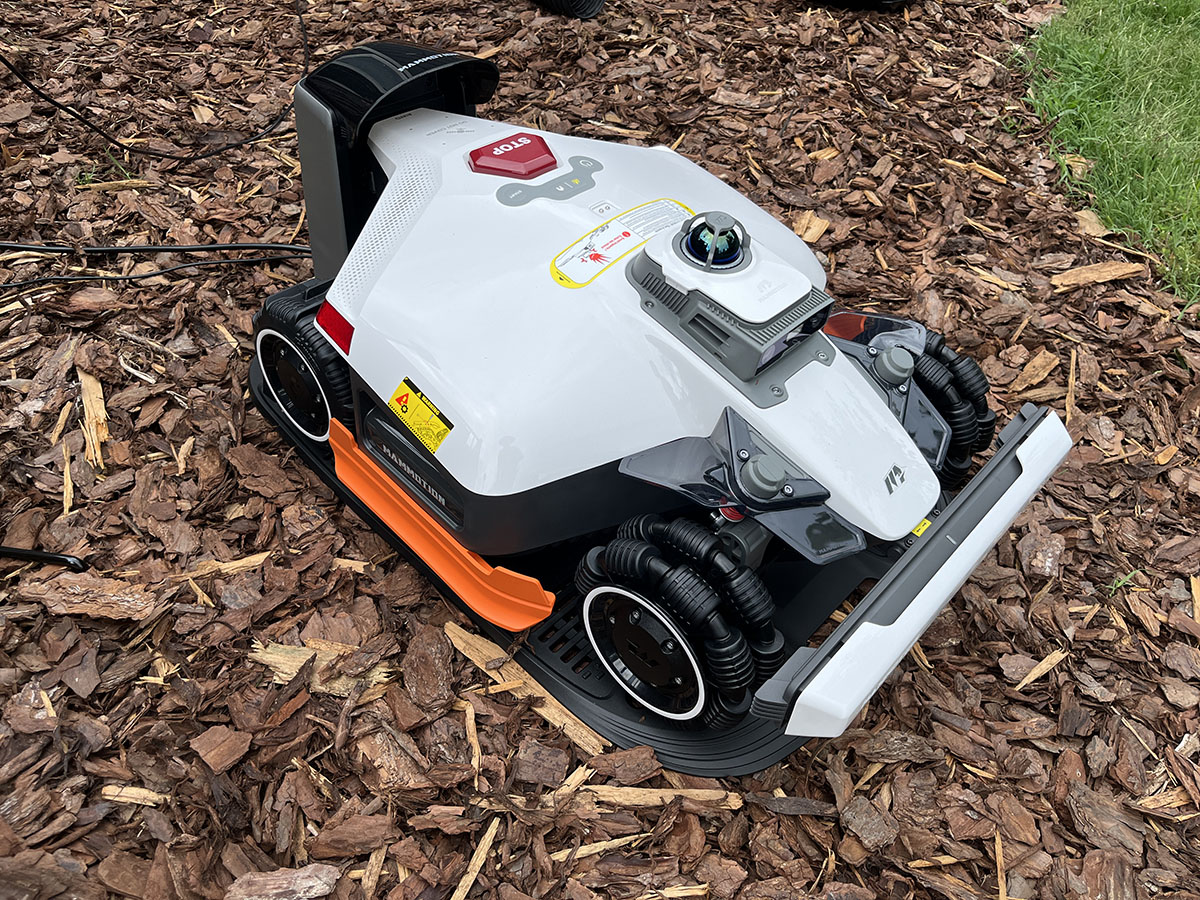
The biggest challenges for robot lawn mowers on rough terrain are maneuverability and connectivity. Mammotion Luba 3 tackles these challenges with impressive all-wheel-drive capability and a multi-layered navigation system. It features dual 6-blade cutting discs and mows a 15.7-inch swath with customizable mowing patterns.
Mammotion’s all-terrain drive system features adaptive suspension, omnidirectional front wheels, and four independent wheel motors. Luba 3 is rated for slopes up to 80 percent (4 feet of vertical change within 5 horizontal feet). In our tests, it had no problems navigating a 70-degree slope, climbing over roots and rocks up to 2 inches high, and performing zero-point turns without damaging the grass.
That extreme maneuverability would not be possible without dependable navigation. The 4G-powered NetRTK worked perfectly in our test yard outside Atlanta, Georgia; however, units sold in the US include an external RTK reference station due to patchy 4G coverage. LiDAR supports navigation by creating a precise 3D map of the yard. AI vision interprets any environmental changes in real time, enabling advanced obstacle avoidance.
We tested Luba 2 previously and really like the improvements that were rolled out in Luba 3, including the 360-degree LiDAR dome, improved AI processing, and upgraded suspension. It navigates more accurately in low light and heavy tree cover, cuts more consistent lawn stripes, and does a better job of avoiding obstacles than its popular predecessor.
Best for Large Lawns
Photo: Amazon
What We Like
- Mows large properties faster
- Outstanding maneuverability on slopes
- 360-degree obstacle avoidance system
- Recharges quickly after mowing
What We Don’t Like
- Larger and heavier than other options
Product Specs
-
Coverage area:
1 acre -
Mowing height range:
0.8 to 3.6 inches -
Slope rating:
40 degrees
| Ease of Use | 4.8/5 | Cut Quality | 5/5 | Performance | 5/5 | Durability | 5/5 | Value | 4.8/5 |
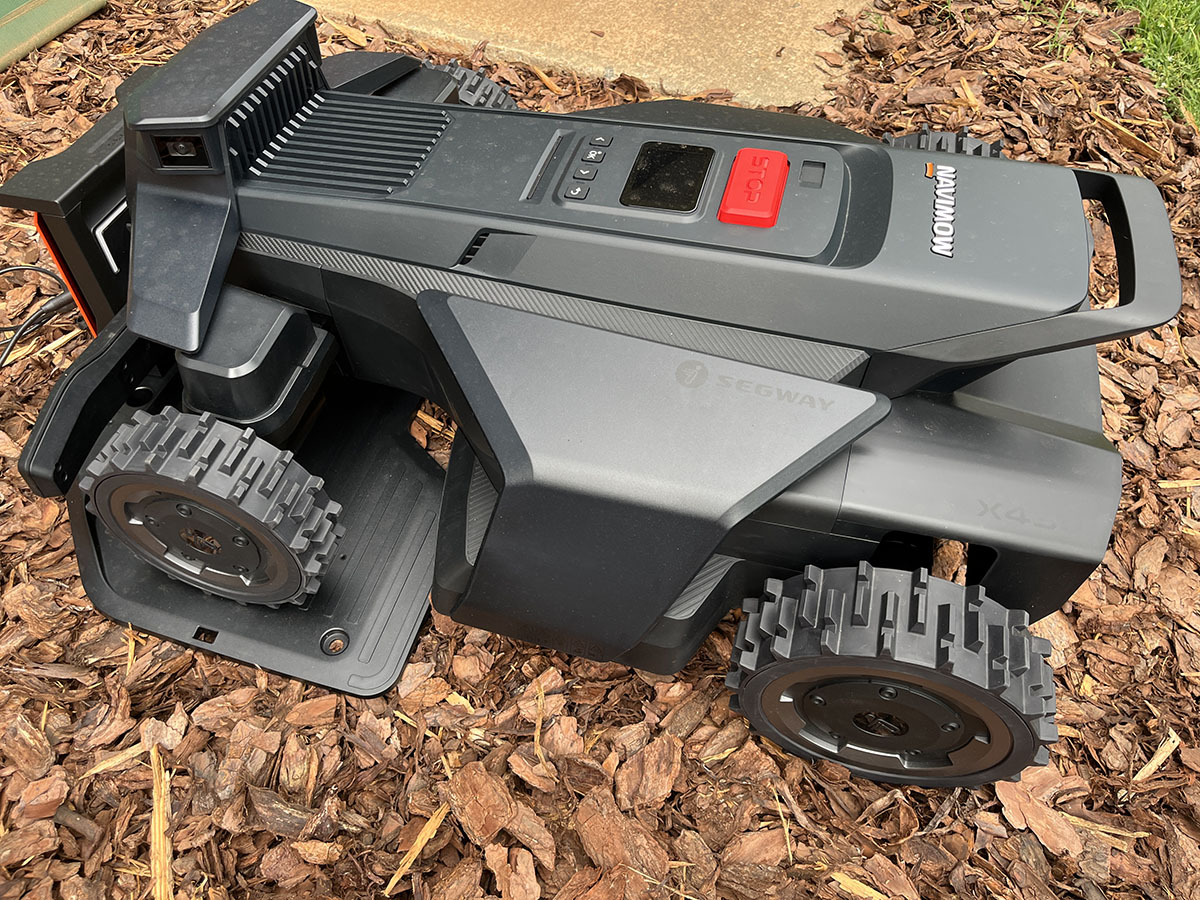
For a larger lawn, you’ll want a bigger, faster mower that can finish the job quickly without sacrificing cut quality. Segway Navimow X430 is equipped with dual 6-blade discs that cut a 17-inch swath—the widest we’ve tested—while moving 2.6 feet per second. It mows an average of about 9,600 square feet in 110 minutes before it needs a break to recharge.
Setting up the mower was a breeze. It only took about 45 minutes to unpack, assemble the charging base, and map the yard. The unit comes equipped with Network RTK (NRTK) positioning that can eliminate the need for a reference station where coverage is available, but it also includes an RTK reference station just in case. Our test lawn is covered, and the system worked perfectly. The mower never strayed off course or out of bounds throughout testing.
The app supports up to 12 mowing zones. Each zone can be customized for mowing height, frequency, pattern, etc. Creating the mowing schedule in the app was fairly intuitive: select either a single zone or all zones, then select the days and time blocks you want X430 to work.
This large lawn robot mower had no problems climbing slopes, navigating narrow corridors, or clearing obstacles like roots and rocks. Our favorite new feature was the articulating front wheels. Instead of skidding through turns, they turn like the front wheels on an automobile, enabling zero-point turns without damaging the grass. It did a really nice job, and covered a lot of ground fast.
Get the Segway X430 robot lawn mower at Amazon, The Home Depot, Lowe’s, or Segway.
How We Tested the Best Robotic Lawn Mowers
| Testing Stats | |
|---|---|
| Products tested | 18 |
| Time spent testing | 7 months |
| Tests performed | 9 |
| Price range | $600 to $5,000 |
When we started testing robot lawn mowers just a few years ago, all of them required perimeter guide wires for navigation. This year’s test group features wireless navigation using antenna-free NetRTK positioning, LiDAR mapping, and AI-empowered vision technology. Our test yards include typical obstacles and mowing challenges like trees, landscape beds, slopes, uneven ground, narrow corridors, and different types of grass. We set up each mower, programmed a mowing schedule, and let it mow for at least 2 weeks. As we monitored the results, we recorded our observations on a scoring rubric and rated each mower on ease of use, cut quality and consistency, performance, durability, and value in order to find the top overall performers.
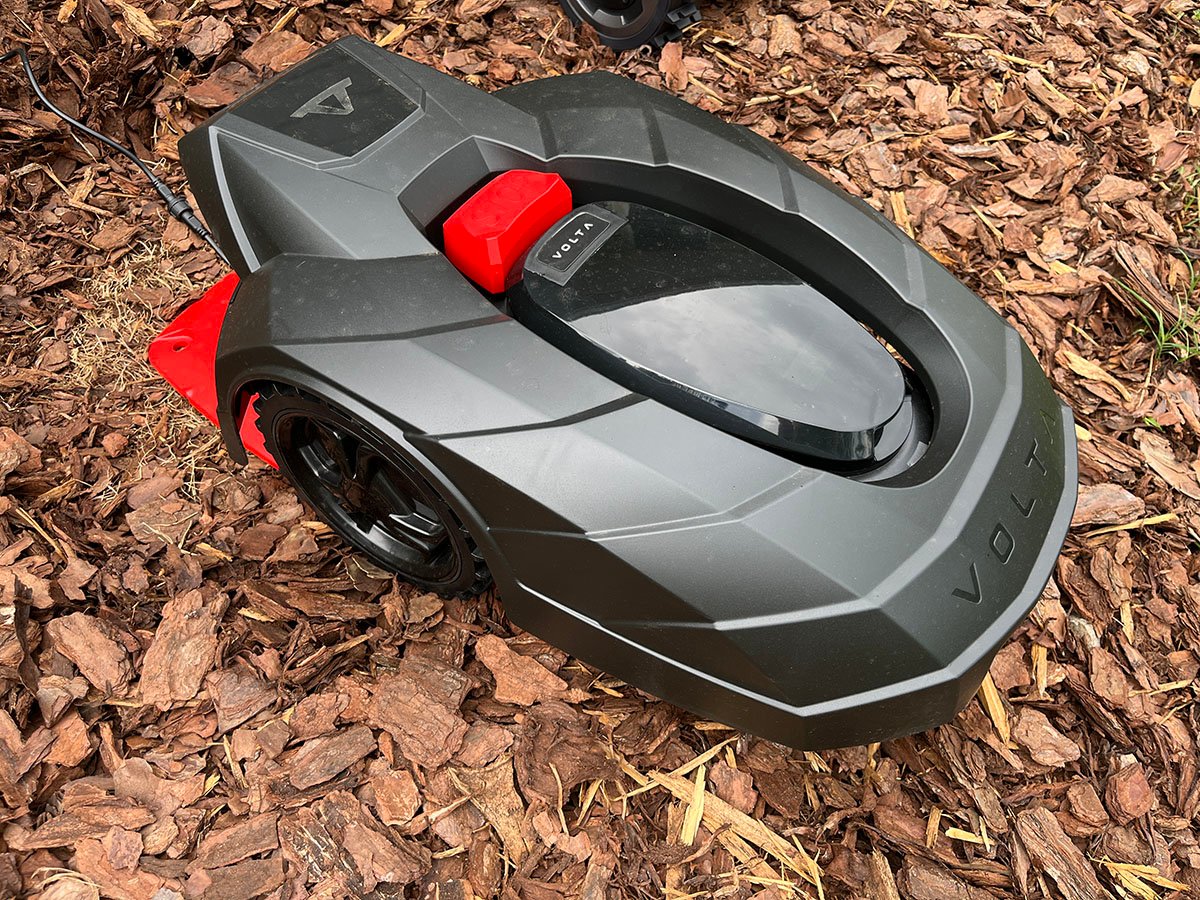
Not every smart lawn mower makes the cut. This year we tested the brand-new Volta Lawn Companion X25, which we’ll be keeping an eye on in the years to come. Operating as a monthly subscription service, Volta doesn’t require a huge payment up front, and getting started is as close to “drop-and-mow” as they come. It didn’t make it to our list of top picks this year because it mows in a random pattern instead of stripes, doesn’t handle slopes well, and (since only one model is available) larger yards require multiple units. Other robot mowers that we tested and recommended last year were supplanted by newer, more advanced models this year, including Segway Navimow i110 and Navimow X390, Sunseeker X5 Robot Lawn Mower, and Anthbot Genie 3000 Robot Lawn Mower.
Our Testing Scores
What to Consider When Choosing a Robot Lawn Mower
Shopping for a self mowing lawn mower is a lot like shopping for a normal one, but there are a few extra things to consider when assessing this new gadget for your home. The following factors should help decide which robotic lawn mower is right for you.
Yard Size
To begin the search for a new self-mowing robot, get an accurate measurement of the area it will mow. Measure the lawn’s square footage, not the size of the lot, and exclude square footage taken up by the house, driveway, landscape beds, and any other feature that is not grass. Often only half of the square footage of a residential lot is lawn space, and sometimes even less.
Light-duty or portable lawn mowers are best for areas up to a quarter acre, or about 11,000 square feet. Midsize models cut up to a half acre, or about 22,000 square feet. Large machines can cut an acre, or 43,560 square feet, or even more.
Factors that affect how much space a mower can cut include battery runtime per charge, the mower size, and the speed it travels. The “up to X square feet” amount that manufacturers claim is calculated with ideal mowing conditions in mind. Mowing conditions that include slopes, obstacles, and irregular lawn shapes, as well as grass type, thickness, and growth rate, may all inhibit a mower’s efficiency and capability.
Look for a mower that can cut the entire yard on a single battery charge, if possible. For larger yards, it may be necessary to divide the lawn space into two or three smaller mowing zones that the mower can cut on different cycles. Not all robotic mowers have the ability to create and schedule multiple zones, so be sure to buy a mower with that capability if necessary to suit the property size.
Terrain Handling
Basic robot mowers work on flat yards and slopes of up to 15 percent (1.5 feet of rise per 10 feet of linear distance). Yards with garden beds, boulders, pathways, and/or steeper slopes require a more capable model. Look for a self driving lawn mower with onboard collision-detection systems, GPS, all-wheel drive, and/or multizone programming capability to navigate complex yards.
Mowing Height
Grass type, weather conditions, and terrain influence a lawn’s optimal mowing height. Warm-season grasses like Bermuda, zoysia, and centipede should be mowed to from 1 to 3 inches high, while cool-season grasses such as fescue, bluegrass, and perennial ryegrass should be mowed to between 2.5 and 4 inches.
That said, allowing grass to grow taller than normal in extreme heat and drought helps protect the roots from dieback. Smooth, flat ground makes it easier to mow lower, while rough terrain requires additional clearance. We recommend buying a robotic mower that allows as much mowing height flexibility as possible within the range for the particular lawn type.
Controls
Robot and remote control lawn mowers are kept in the yard either by a low-voltage electric perimeter boundary wire or more commonly by satellite guidance or AI-supported vision technology. The wire or the smart features help the mower locate the edges of the lawn and steer around permanent obstacles like trees, paved areas, and buildings. An onboard computer tells the mower when to mow and when to recharge. Just program the mowing schedule and set the blade height, and the lawn mower does the rest. Many robotic lawn mowers are Bluetooth-capable or Wi-Fi connected, so it’s an option to program them with an app on a smartphone.
Power Source and Battery Life
Robot mowers charge automatically at a home base station. The base station serves as the charging port and the boundary wire hub. The same power source that charges the mower’s battery also sends a low-voltage current through the boundary wire, if installed, to guide the mower. A single power cord plugged into a nearby ground-fault circuit interrupter household outlet provides the needed electricity.
These mowers typically use rechargeable lithium-ion batteries, though some use lead-acid batteries or other types. Depending on the model and mowing conditions, an electric mower can operate between 1 and 2.5 hours per battery charge. Batteries typically need 30 minutes to an hour to recharge. Robot lawn mower batteries tend to last approximately 3 years on average.
Smart Technology
Onboard sensors, Bluetooth connectivity, mobile apps, and compatibility with personal digital assistants all let users program a robotic mower. On its programmed mowing schedule, the mower starts and recharges itself, returning to its docking station when it has finished the job. The mowers’ programming keeps it on the lawn and protects non-grass areas.
Some robotic mowers have a manual mode used to trim enclosed spaces. In manual mode, the robot mower can be moved to a secondary location—inside a fenced area of the yard, for example—and it will mow without further programming.
Many robot mowers will alert smartphones when there is a problem, such as if its blades need to be changed, or if the machine is moved off the premises. Mobile apps can also allow the remote lawn mower to be monitored and controlled via a smartphone or digital assistant.
Noise Levels
Robotic mowers are quiet but not silent. They produce an average of 50 to 70 decibels, which is similar to the sound levels of a quiet refrigerator, a calm conversation, or the noise inside a car traveling at 60 miles per hour. A gasoline-powered push mower produces 95 decibels, or about 50 percent more noise than a self-cutting lawn mower.
Security
Robot lawn mowers are small enough that a thief could carry one away. For that reason, many models require a PIN for operation. Others feature alarms, security alerts, and GPS tracking that kicks in if the unit is removed from the owner’s property. Since robot lawn mowers are fairly quiet, people often program them to run at night as a theft deterrent.
Safety Features
Robot lawn mowers have safety features to protect the user and others in their cutting area. The machine moves slowly so pets, children, and others can see it coming and get out of the way. Collision sensors slow or redirect the mower as it nears an obstacle. An automatic shutoff kicks in if the machine is lifted, stopping the blades from moving. And the mower has recessed blades mounted away from the edges of the machine to reduce the chance of cutting hands and feet that come too close.
Weather Protection
Most motorized lawn mowers are built to withstand outdoor conditions during the mowing season. Some robotic mowers can run in the rain, but it is not recommended since wet grass doesn’t cut as smoothly, and wet conditions can spread fungal diseases to the lawn. Some robot lawn mowers have rain sensors that stop, skip, or delay a scheduled mowing in rainy conditions. Other robot mowers can have their cutting schedule manually overridden, so users can turn them off if rain is in the forecast. Still others link to a weather app that will turn the mower off if rain is predicted.
Docking stations are weatherproof during the robotic lawn mowing season. Still, in stormy weather where lightning is predicted, unplugging the system provides the best protection. Extended periods of damp, subfreezing weather shorten the mower’s lifespan, so the mower and its docking station should both be stored indoors in the winter.
FAQs
An automatic lawn mower can be a great asset for homeowners who want to spend less time mowing their lawn. Still not sure if a robot mower is right for you? Read on for info and tips to facilitate your decision.
Robotic mowers should cut at least 2 or 3 times per week. When grass is growing really fast, the robot mower may need to run every day. Follow these other best practices for how to mow a lawn.
Yes, many grass cutting robots can operate in the rain. However, mowing only while the grass is dry results in a cleaner cut and reduced disease spread in the lawn.
A properly maintained robot mower should last 10 years or more. Mower blades last 1 to 2 months. They cannot be easily sharpened; they must be replaced—think of them as disposable razor blades. Rechargeable batteries for robot mowers last about 3 years, on average.
Robot lawn mowers come with lawn area ratings to help you determine if they are right for your yard. Some can mow an acre or more, while others are designed for small yards and properties. Bear in mind that slopes, obstacles, irregular lawn shapes, grass type, thickness, and growth rate may all affect how much a mower can handle.
Robotic mowers have vastly improved in recent years, but they still have some disadvantages in comparison to other methods. They cost more up front than traditional lawn mowers. Many have performance limitations such as inconsistent mowing patterns, inability to cut edges, and inability to cut tall or dense grass. Site-specific issues, like slopes and complex lawn shapes, can also be problematic for many models.
No, robotic lawn mowers operate quietly. They produce an average of 50 to 70 decibels, which is similar to the sound levels of a refrigerator. In comparison, a gasoline-powered motorized lawn mower produces 95 decibels.
No, an automated lawn mower is not designed to mulch large quantities of leaves. The mulching function on these mowers is intended for grass clippings, although they will chop up a few incidental leaves.
Meet the Testers
Mark Wolfe is a writer and product tester with a background in the nursery and landscaping industry where he mowed, edged, planted, pruned, cultivated, irrigated, and renovated beautiful landscapes. Now he tests and writes reviews about the latest outdoor power equipment, hand tools, lawn care products, and other outdoor living goods.
Paul Rankin is a home improvement writer and product tester, specializing in reviewing tools, outdoor gear, and smart home products. Whether it’s assembling grills or evaluating robotic lawn mowers, he focuses on what actually matters to homeowners—ease of use, performance, and long-term value.
Glenda Taylor is a product tester and writer specializing in the construction, remodeling, and real estate industries. She tests a wide range of power tools as well as other home improvement, household, and lawn-and-garden products.

All You Need to Care for Your Lawn & Garden