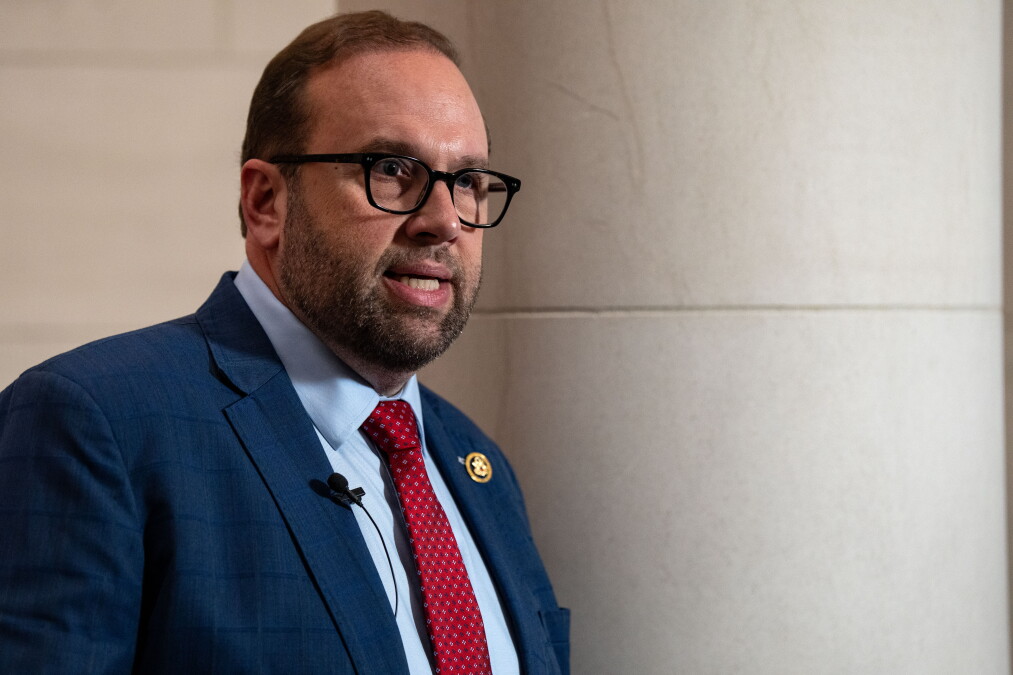
The House Ways and Means Committee held a markup session Wednesday to consider three pieces of tax legislation: the Digital Asset Tax Certainty Act, EFIN Verification Act and FULL HOUSE Act.
Processing Content
The first bill, which was introduced Monday by the committee’s chair, Rep. Jason Smith, R-Missouri, with input from other members, aims to reform the tax treatment of digital assets and remove the barriers to the use of digital assets such as cryptocurrency and stablecoin as a medium of exchange. Other provisions would provide parity between digital assets and comparable traditional financial assets, making digital assets eligible for two existing safe harbors in the Internal Revenue Code, enabling charitable donations of many common digital assets to be eligible for the same streamlined tax rules as publicly traded securities, and allowing digital asset dealers and traders to use mark-to-market accounting.
It would also apply existing tax anti-abuse rules to digital assets, including the “wash sale” and “constructive sale” rules along with other anti-abuse rules such as those pertaining to financial derivatives, U.S. territories and foreign corporations. It would also direct the Treasury Department to establish a voluntary disclosure program specifically focusing on digital assets, providing reduced penalties and a clean slate, to mitigate uncertainty, high compliance costs and unnecessary tax forms.
“This is a historic moment for this committee: After more than a year of working together, Republican and Democrat members have come together to establish the first-ever tax framework for digital assets,” Smith said in a statement. “This wasn’t built overnight. Through months of careful study and input from members, the committee has worked to create the right rules of the road for an industry that has grown into a more than $2 trillion part of the global economy.”
Another provision would have clarified the tax treatment of crypto mining and staking rewards, providing sourcing and character rules to clear up longstanding uncertainties and make it easier for exchange-traded investment products to engage in staking without jeopardizing their tax status. However, some of the language was removed during the markup after coming under criticism by the banking industry.
“ABA thanks Chairman Jason Smith and the Ways and Means Committee for removing the staking and mining deferral provision from the digital asset tax package that passed out of committee today,” said American Banking Association president and CEO Rob Nichols in a statement Wednesday. “Taxing similar income the same way, regardless of the asset that produces it, is a bedrock principle of a fair Tax Code.”
The committee voted 38-5 to advance the overall bill, but the vote came less than a day after a higher-profile cryptocurrency bill called the Clarity Act failed to overcome a procedural hurdle in the Senate, despite heavy lobbying by the crypto industry. The bill would have divided regulatory oversight of the crypto market between the Securities and Exchange Commission and the Commodity Futures Trading Commission. Its failure to advance this week in the Senate may doom its prospects for the current congressional term.
The various tax bills advanced by the Ways and Means Committee on Wednesday probably won’t pass the full House and Senate by the end of the congressional term either, as lawmakers are departing to campaign for the midterm elections, but they may be revived next year.
On Wednesday, House Speaker Mike Johnson, R-Louisiana, canceled Thursday’s session and sent lawmakers home after Wednesday’s votes, a day earlier than expected. They are not expected to return until the second week of November, after the election.
Fighting tax fraud
The EFIN Verification Act was
“Every year, criminals use stolen or compromised Electronic Filing Identification Numbers to file fraudulent returns in other people’s names, stealing those taxpayers’ returns and leaving them to fight the agency to get what they rightly deserve,” said Smith. “This bill would require the Treasury to establish a real-time validation program confirming whether an EFIN is active and authorized before it can be used to file a return — giving tax preparers and taxpayers alike more confidence in who is filing on their behalf.”
The Facilitating Useful Loss Limitations to Help Our Unique Service Economy, or FULL HOUSE, Act was introduced in January by Rep. Max Miller, R-Ohio, and Steven Horsford, D-Nevada. It would restore the full 100% deductibility of gambling losses against winnings after that percentage was lowered to 90% by the One Big Beautiful Bill Act.
“When the Senate amended the One Big Beautiful Bill, it reduced the deduction for gambling losses to 90% of winnings, leaving taxpayers owing taxes even when they broke even or lost money overall,” said Smith. “This legislation includes Representative Miller’s fix that restores the full deduction for gambling losses, up to the amount of their winnings, so Americans are not taxed on money they didn’t actually keep.”
The bill advanced by a vote of 38-5, with the support of the gambling industry.
“While we all recognize the work is not yet done, today’s committee action marks a critically important step toward protecting our workforce and restoring fairness to the Tax Code,” said Wynn Resorts CEO Craig Billings in a statement. “It has taken bipartisan leadership from Chairman Smith and hometown Congressman Horsford to get us to this point. We commend them for their efforts, and we look forward to supporting them as they work to pass this important legislation before this Congress comes to a close.”
“The American Gaming Association is grateful for this critical step forward in restoring the 100% gambling tax deduction,” said association president and CEO Bill Miller in a statement. “We encourage Congress to pass the FULL HOUSE Act to ensure that consumers choose the legal market where protections exist and are not taxed on phantom income. Thank you to the Ways and Means Committee as well as Representatives Horsford and Miller for their leadership in advocating for this bipartisan measure.”