With strikes on both sides seeming to shatter the U.S.-Iran ceasefire, mortgage rates have been moving higher. Rates had started the week looking a little softer, but that took a turn as tensions flared overseas. The deterioration of the U.S.-Iran ceasefire promptly sent oil prices and 10-year Treasury yields higher, and mortgage rates were right there with them.
The average rate on a 30-year fixed-rate mortgage rose 11 basis points to 6.39% APR in the week ending July 9, according to rates provided to NerdWallet by Zillow. (A basis point is one one-hundredth of a percentage point.) We calculate our weekly average using daily APRs recorded over the past five business days.
While the Iran war had a strong influence over mortgage rates during the spring, June’s memorandum of understanding and more definitive ceasefire put the conflict on the back burner. Lately, economic data and news about the Federal Reserve has driven rates’ bigger movements.
If we’re truly seeing a resumption of aggressions, mortgage rates are likely to keep rising — definitely a disappointment if you’ve been holding out for lower rates. (On the other hand, potential home buyers whose math is adding up can move forward. The market doesn’t have to be amazing for it to be a good time to buy for you.) Here’s what’s happening now and what’s likely coming next for mortgage rates.
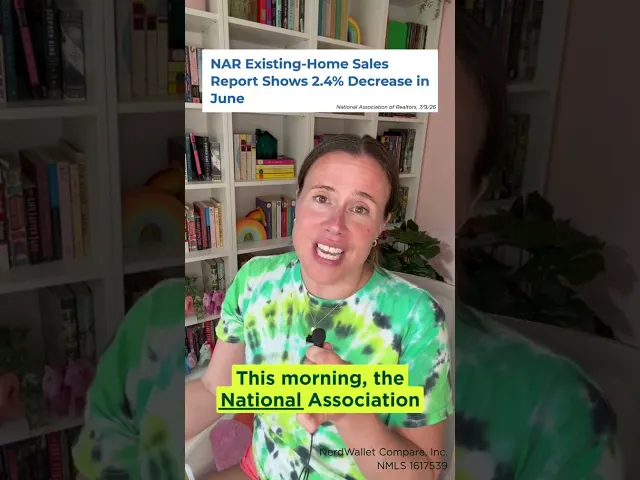
🤓 Kate on Rates: July 9, 2026
Why the Iran war’s pushing up mortgage rates …
The Iran conflict pushing up gas prices feels pretty obvious; mortgage rates, not so much. But there’s a connection, and higher prices on everyday purchases are very much part of it.
Many mortgage lenders peg their rates to the yield on the 10-year Treasury note, a specific bond that’s pretty similar in terms of length and risk to a mortgage. (Even though most mortgages are 30-year loans, few homeowners go that long without refinancing or selling.) Mortgage lenders add a margin on top of the yield — which is the amount of interest investors get for holding onto a bond — to cover their costs, generate profit and account for mortgages being a little riskier than T-notes.
Investors usually see bonds as safer bets than stocks during times of uncertainty, but that has not been the case with the Iran war. Since bonds offer fixed returns, investors know that no matter what’s going on, they’ll get that return. But because the Iran conflict affected a vital trade route (and in an oil-producing part of the world to boot), inflation quickly became the biggest risk. When bonds’ fixed returns have less real value, investors demand higher yields to make their investments worthwhile.
On Wednesday, when President Trump said that he felt the Iran ceasefire was over, 10-year Treasury yields promptly spiked — and mortgage rates were soon to follow.
Explore mortgages today and get started on your homeownership goals
Get personalized rates. Your lender matches are just a few questions away.
Won’t affect your credit score
… but rates were likely to go up anyway
If it’s any consolation, mortgage interest rates were pretty likely to shift higher anyway as the Federal Reserve looks headed for a rate hike. The Fed doesn’t set mortgage rates, but its actions influence the entire U.S. economy, and mortgage rates are no exception.
New chair Kevin Warsh has already set a precedent of less communication, notably by removing forward guidance, which describes the Fed’s outlook and potential plans. Warsh has, however, repeatedly emphasized the central bankers’ commitment to returning inflation to the Fed’s target level of 2%. It’s been above that for over five years, and next week we’ll get fresh numbers for June. Those are predicted to be slightly better than May, but still nowhere near 2%.
The Federal Reserve generally seeks to slow inflation by raising the federal funds rate, which is the short-term borrowing rate the central bankers control. Though it’s still relatively unlikely we’ll see a rate hike when the Fed meets later this month, the same can’t be said about the three other meetings remaining in 2026. Wednesday’s release of the minutes from the central bankers’ June meeting showed that some of the committee members already felt there was a case for raising the funds rate.
If markets start to feel stronger rate hike vibes from the Fed, that’s likely to push mortgage rates higher. And if the situation in Iran continues to worsen, well, that’ll increase the upward pressure, too. Right now, the best-case scenario for mortgage rates is a slow increase rather than a rapid rise, since all signs seem to be pointing up.
Despite all of this, it’s worth noting that mortgage interest rates are still almost half a percentage point below where they were a year ago. So hey, if that’s when you bought your home, today’s rates might put you in the money on a refinance — and it’s worth checking your refinance math. If you’re a buyer and today’s rates work for you, you don’t need to wait for a quote-unquote better market. When you’ve found the right home at a price you can manage, it’s the right time.