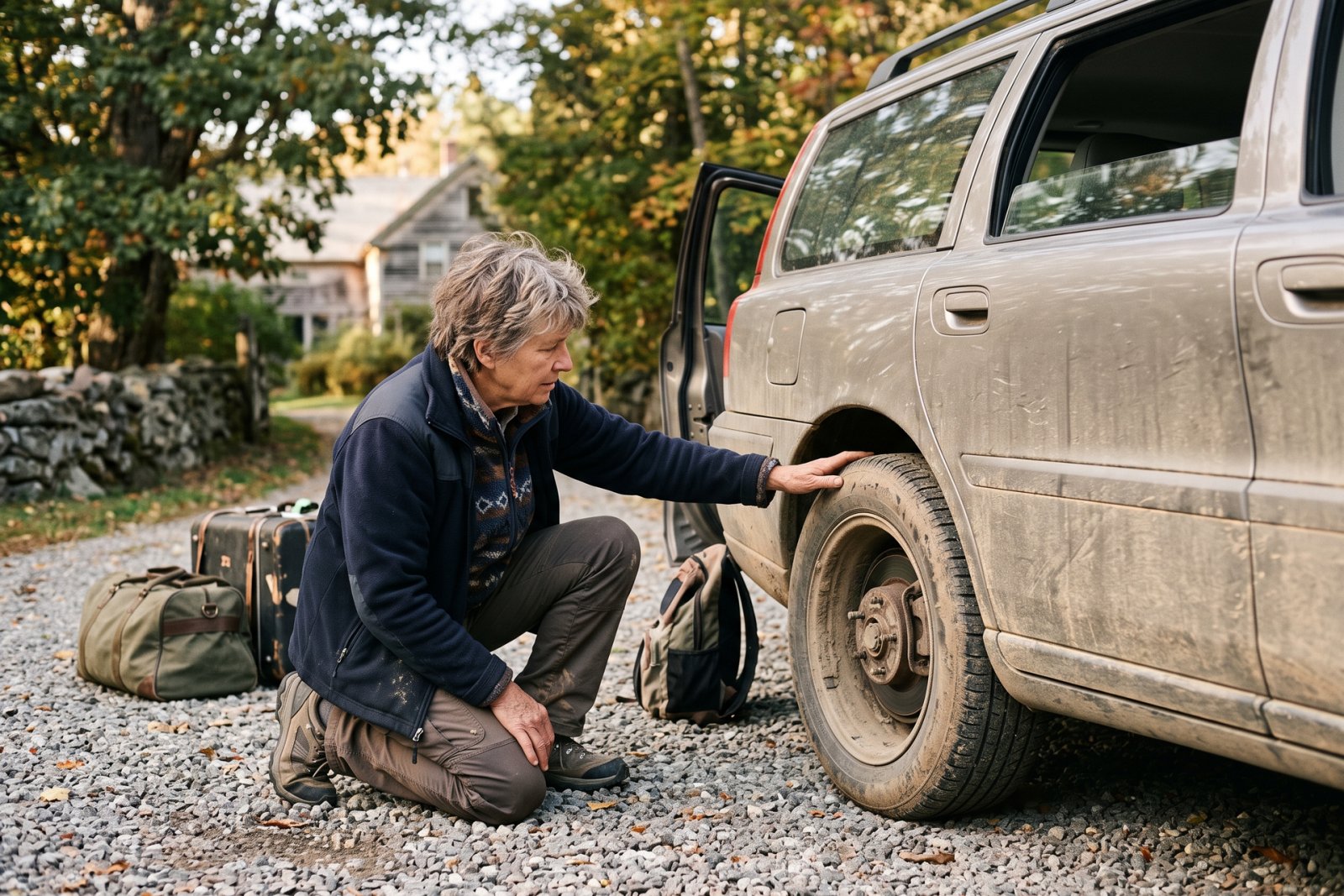
The Hidden Car Damage That Often Shows Up Weeks After a Road Trip
You unpacked the car, did the laundry and settled back into your routine. Then, weeks later, a new squeal, a pull to one side or a dashboard light shows up out of nowhere. That’s not a coincidence.
Long drives strain your brakes, tires, suspension and fluids, and the wear often doesn’t surface until you’re back to your normal driving routine. Here’s what the USA TODAY team wants you to know about car problems after a road trip: what breaks, what it costs and whether an extended auto warranty can help cover it.
At a Glance
- Road trips put extra strain on brakes, tires, suspension and fluids, and the resulting damage often doesn’t show up until weeks after you get home.
- Post-trip repairs can range from $187 for a wheel alignment to $6,500 or more for a new transmission. Brakes, tires and batteries are among the most frequent fixes.
- A quick post-trip inspection can catch small issues while they are still cheap to fix, and your car’s warranty may cover some repairs.
5 Signs Your Road Trip May Have Led to Car Damage
- New squealing noise
- Vehicle pulling to one side
- Vibration at highway speeds
- Dashboard warning light pops up
- Fluid spots under the vehicle
Why Road Trips Can Reveal Hidden Vehicle Problems
A road trip asks more of your car than a daily commute does. Highway driving can build sustained heat in your brakes, tires and engine, while mountain descents can work your brakes harder than stop-and-go traffic. Having luggage in your trunk adds weight that may stress your suspension and tires, and unfamiliar roads mean more potholes and curbs than your car is used to.
None of these necessarily cause a breakdown at the end of the trip itself. Instead, they can accelerate wear on parts that were already close to the end of their life, and the symptoms surface days or weeks later, once the part finally gives out under normal driving.
“The thing most people get backward is that a long highway trip is actually the easiest driving your car ever does. Steady speed, light braking, stable temperatures …” says Steven Lazaroff, an auto expert at CompareMechanic, an online tool for finding local mechanics. “So the car feels perfectly fine on the drive home, and drivers assume they got away clean.”
Your road trip is where the damage might stem from, but you may not notice it until you’re back sitting in stop-and-go driving on your daily commute, since that type of driving is harder on your vehicle. “That is why so much of this surfaces two or three weeks later,” Lazaroff says.
Most Common Repairs Needed After a Road Trip
Brakes tend to go first, but they are rarely the only thing on the list. Tires, transmission, suspension, alignment, hoses and battery all take on the same kind of hidden stress, and they tend to fail in roughly that order of frequency.
Here’s what causes each one, what it typically costs to repair and what happens if you put it off.
Brake Wear
- Why it happens: Mountain descents, stop-and-go traffic and a fully loaded car force your brakes to work harder and run hotter, accelerating pad wear.
- Average repair cost: $330 to $390 for brake pad replacement
- Consequence of delay: Worn brake pads left unaddressed can score and warp your rotors, turning an inexpensive fix into a pricier one.
Brake wear is one of the most common repairs mechanics see after a road trip, and it usually shows up gradually rather than suddenly. You likely won’t notice anything on the highway, where braking is light and infrequent. It’s only once you’re back to city driving that the squeal finally shows up.
Tire Damage
- Why it happens: Hours at highway speed build heat that can expose a weak spot, and potholes or curbs on unfamiliar roads can nick a sidewall.
- Average repair cost: $100 to $500 for new tires, depending on the vehicle’s size and performance
- Consequence of delay: A slow leak or sidewall bulge in a tire can turn into a blowout, and uneven wear shortens the life of the whole tire set.
Tires absorb more punishment on a road trip than almost any other part of the car. Hours of sustained highway speed build heat inside the rubber, and a pothole or curb hit on an unfamiliar road can nick a sidewall without you ever feeling it happen. A slow leak from that nick might not show up for days, and even tires that survive the trip intact can come home with wear patterns that were not there before. It’s one of the reasons a full tire inspection is worth doing, even if nothing feels wrong.
Transmission Problems
- Why it happens: Towing, mountain grades and prolonged high-speed driving raise transmission temperatures and stress the fluid.
- Average repair cost: A fluid change costs between $280 and $350, and a transmission rebuild can range from $6,000 to $6,500
- Consequence of delay: Overheated, degraded fluid accelerates internal wear, turning a simple service into a full transmission repair.
Transmission stress is easy to overlook because the symptoms are quiet at first. Long stretches of highway driving keep the transmission working harder and running hotter than it does in daily driving, and that heat breaks down the fluid more quickly than usual.
If the fluid was already overdue for a change, the trip can push it past the point at which it can do its job well. The wear that follows is gradual and internal, so there is rarely one dramatic moment when something fails.
Suspension Damage From Rough Roads
- Why it happens: Potholes, gravel roads and unexpected speed bumps put sudden, hard impacts on your shocks and struts.
- Average repair cost: $1,120 to $1,330 for suspension shock or strut replacement
- Consequence of delay: Worn shocks and struts reduce handling and braking ability. They can also accelerate tire wear.
Suspension damage tends to be the slowest to reveal itself. A shock that started leaking or a bushing (small cushion-like car parts made of rubber, polyurethane or metal) that cracked after a hard pothole hit won’t necessarily change how the car feels on smooth, consistent highway pavement.
It’s only once you’re back on rougher city streets with potholes, speed bumps and uneven pavement that the clunking or looseness becomes noticeable. Since the damage is progressive, waiting to get it checked usually means paying for both the suspension repair and the extra tire wear it causes along the way.
Alignment Issues That Gradually Appear
- Why it happens: A hard hit to a curb or pothole can knock your alignment out instantly. Plus, thousands of highway miles can nudge it out gradually since most roads slope slightly toward the shoulder for drainage.
- Average repair cost: $180 to $275 for a four-wheel alignment
- Consequence of delay: Misalignment can cause uneven tire wear, potentially requiring a complete tire replacement.
Alignment problems differ from others on this list because they often have a specific cause, such as an impact from a curb or pothole. Rather than something failing outright, the wheels are simply pointed slightly wrong, which doesn’t always feel dramatic from behind the wheel.
You may feel a subtle pull to one side, or your steering wheel may no longer be centered when driving. Since the tire damage from misalignment builds slowly, it’s easy to miss until the tread wear is already significant, which is why a quick alignment check after a long trip is worth it.
Fluid Leaks
- Why it happens: Extended heat and mileage stress hoses, gaskets and seals. A new leak that began before or during the trip can worsen fast.
- Average repair cost: Varies by fluid and part, but a radiator hose repair runs $490 to $560
- Consequence of delay: Low coolant or oil can lead to overheating or engine damage, so a fresh leak is worth checking right away.
Fluid leaks after a road trip are usually the result of a hose, gasket or seal that was already showing early signs of wear before you left. Extended heat and the added wear of a long trip put more stress on those components than they’re typically used to, and a barely noticeable leak can turn into a real problem within days of getting home.
The tricky part is that fluid loss isn’t always obvious right away. It’s worth checking your driveway or garage floor for fresh spots after a trip, since catching a leak early is far cheaper than dealing with overheating or engine damage that can result if it goes unnoticed.
Battery Problems Triggered by Extreme Temperatures
- Why it happens: Heat is harder on a battery than cold, and an aging battery can lose capacity fast after days of driving.
- Average repair cost: $450 to $500, depending on the battery type and shop
- Consequence of delay: A weakened battery is more likely to fail without warning, often at the least convenient moment.
Battery failure after a road trip tends to catch people off guard. Heat, not cold, is what actually wears down a battery the fastest, and days of summer driving combined with brief stops give a battery little chance to fully recover between uses. A battery that was already a year or two past its prime can go from fine to failing within days of a hot-weather road trip.
What Mechanics Recommend Checking After Every Road Trip
Unless you’re noticing significant issues, you don’t need to book a special appointment the moment you get home from a road trip. A qualified technician can catch most issues that the road trip stirs up on a normal visit, as long as you mention what the trip involved.
“A mechanic would suggest a complete once-over of the vehicle before the trip as well as after the trip,” Chris Pyle, a full-time auto expert at JustAnswer and former service technician for Ford Motor Co., said. “During these inspections, they will check the tires, brakes, steering, suspension, all fluids, all lights, engine, transmission and exhaust system.”
That inspection covers a lot of ground, but a handful of items are worth flagging specifically after a long trip. Ask your shop to inspect the items below, which line up with the National Highway Traffic Safety Administration’s road trip safety checklist:
- Tire tread and pressure for uneven wear, low tread or embedded debris.
- Brake pads for thickness and any grinding or squealing when you brake.
- Fluid levels, including oil, coolant, transmission and brake fluid.
- Belts and hoses for cracking, fraying or looseness.
- Battery terminals for corrosion, and the battery’s overall charge.
- Lights and any dashboard warning lights that came on during the trip.
When Should You Schedule a Post-Trip Inspection?
Plan a check within one to two weeks of returning, even if nothing feels wrong. Many of these issues start small and quiet, and a technician can catch a thinning brake pad or a slow leak before it becomes a symptom you notice while driving.
If you notice something during the trip itself, such as an unfamiliar noise, a pull to one side or a warning light, don’t wait. Get it looked at right away instead of assuming it will resolve on its own.
Kelley Blue Book’s maintenance guide recommends testing your battery every three years and replacing it around five, so a road trip is a good prompt to check where yours stands.
Could Your Car’s Warranty Cover These Repairs?
The honest answer is that it depends on what caused the problem and on the type of warranty you have. A manufacturer’s warranty or extended auto warranty generally covers repairs caused by a defect in materials or workmanship, not routine wear and tear from driving.
A transmission that fails because of a manufacturer’s defect may be covered under most plans. Where the line gets drawn is less obvious than it sounds.
“An extended warranty, which is really a vehicle service contract, covers a part that breaks,” says Lazaroff. “It almost never covers a part that simply wears out. The test is not what failed, it is why.”
Wear-and-tear items like brake pads, rotors, tires and batteries are treated as routine maintenance and are almost always excluded, “which is painful because those are exactly the things people expect to be covered after a trip,” Lazaroff says.
Tires fall outside that coverage entirely. According to Lazaroff, they are handled by a road-hazard or tread warranty from the tire manufacturer rather than a vehicle service contract. Plenty of drivers only discover that at the worst possible moment, like when they get a flat tire.
Where a factory warranty or extended auto warranty can help is with major components. This could include items such as the transmission, engine and electrical systems. It will all depend on your level of coverage.
Most third-party extended auto warranty companies offer varying levels, from powertrain coverage, which covers your vehicle’s most vital components, to bumper-to-bumper warranties, which provide coverage for all components except those explicitly outlined in the contract.
Frequently Asked Questions
Can a Road Trip Damage Your Car?
Yes, though it’s not always obvious right away. Extended heat, added weight and rough or unfamiliar roads all add strain. That strain doesn’t turn into a real symptom until you’re back to regular, stop-and-go driving weeks later.
What Maintenance Should Be Performed After Vacation?
Check tire tread and pressure, brake pads, fluid levels, belts and hoses and battery health. Address any new noise, vibration or warning light rather than waiting for it to get worse.
Why Is My Car Making New Noises After a Long Drive?
New noises often point to worn brake pads, a developing suspension issue or a stressed belt. A squeal usually means brakes, while a clunk over bumps often means suspension.
How Soon Should I Inspect My Vehicle After a Road Trip?
A one- to two-week window is reasonable, even without symptoms. If you notice an issue during the road trip, have it inspected right away.
This article originally appeared on USA TODAY: The hidden car damage that often shows up weeks after a road trip. Reporting by Emily Mercer, Special to USA TODAY / USA TODAY. USA TODAY Network via Reuters Connect.