4 Alternative Retirement Paths And An Advisor’s Role In Helping Clients Plan For Them
Planning for an enjoyable retirement is a primary goal of many financial planning clients. For many, this means working full-time well into their 60s before leaving the workforce entirely. However, this ‘traditional’ view of retirement might not be a fit for every individual, as some might not want to wait until they reach their mid-60s to take significant time away from the workplace – while others might prefer to preserve the financial, psychological, and social benefits that can come from working past ‘traditional’ retirement age.
With this in mind, financial advisors have the opportunity to create a potential ‘aha’ moment for their clients by introducing them to alternative retirement paths that could better match their preferences. Further, because these strategies come with their own respective risks and planning opportunities, advisors are also well-positioned to support clients pursuing one of these paths on an ongoing basis.
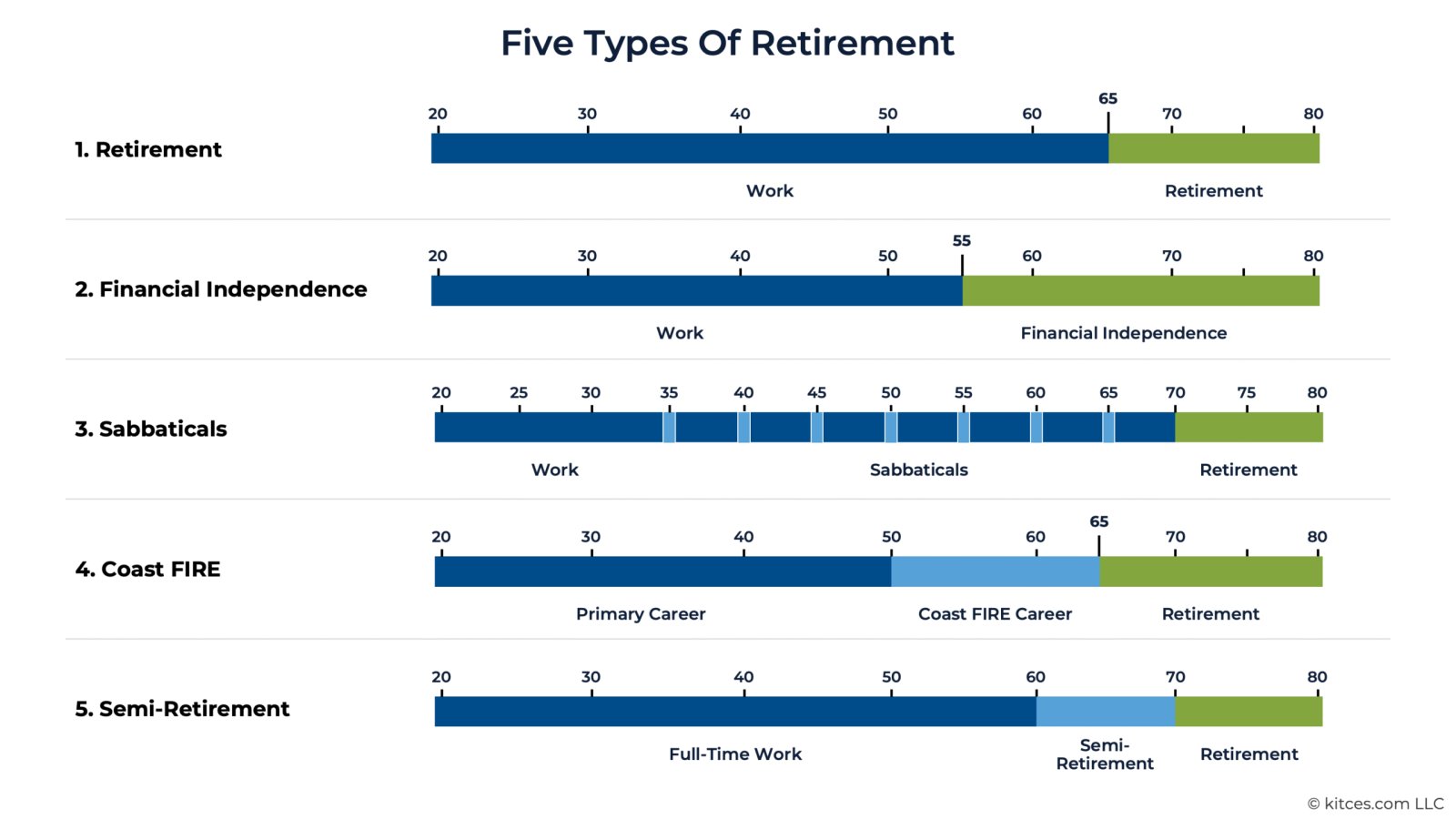
To start, clients who have amassed significant savings might be able to achieve financial independence, where paid work is no longer required to support their lifestyle expenses. While leaving the workforce before ‘traditional’ retirement age comes with direct costs (e.g., purchasing health insurance) and risks (e.g., portfolio sustainability over an extended retirement period), it can also present tax planning opportunities (such as Roth conversion and/or capital gains harvesting during lower-income years).
Rather than leave the workforce completely, some individuals might prefer to take extended breaks during the course of their career (e.g., for caretaking, or to travel while they’re in good health) while planning to return to their existing job or a similar position at a different company. These “sabbaticals” offer flexibility (in terms of their length and frequency) and require fewer assets than financial independence, but could necessitate working past ‘traditional’ retirement age (given the inability to save during the sabbatical period, and the risk that the individual won’t be able to find a commensurate job when they return to the workforce).
For those who haven’t saved enough to achieve ‘full’ financial independence but who might want to work in a more meaningful and/or less stressful (but lower paying job), “Coast FIRE” could be an attractive alternative path. An individual can take advantage of this path when their retirement savings are projected to grow – without further contributions – into a portfolio large enough to support their anticipated future retirement spending needs. At that point, they ‘only’ need to earn enough to cover their ongoing expenses while continuing to work.
Finally, under the semi-retirement path, an individual can ‘test’ retirement by reducing their work hours. In this way, they can see what it’s like to have more free hours during the week while still tapping into the financial, social, and psychological benefits that can come from work. A willingness to work at least part-time past ‘traditional’ retirement age can also be supportive of a client’s long-term plan, as it could allow them to delay Social Security benefits and mitigate sequence of return risk.
Ultimately, the key point is that financial advisors are well-positioned to introduce alternative retirement paths to clients who express interest, and to support them on an ongoing basis in navigating the resulting financial planning challenges and opportunities.
 |
And if you want to go deeper on this topic, hear directly from the author on the Financial Advisor Technician podcast . |