Tacky Decor: 9 Things That Always Look Cheap (And What to Do Instead)

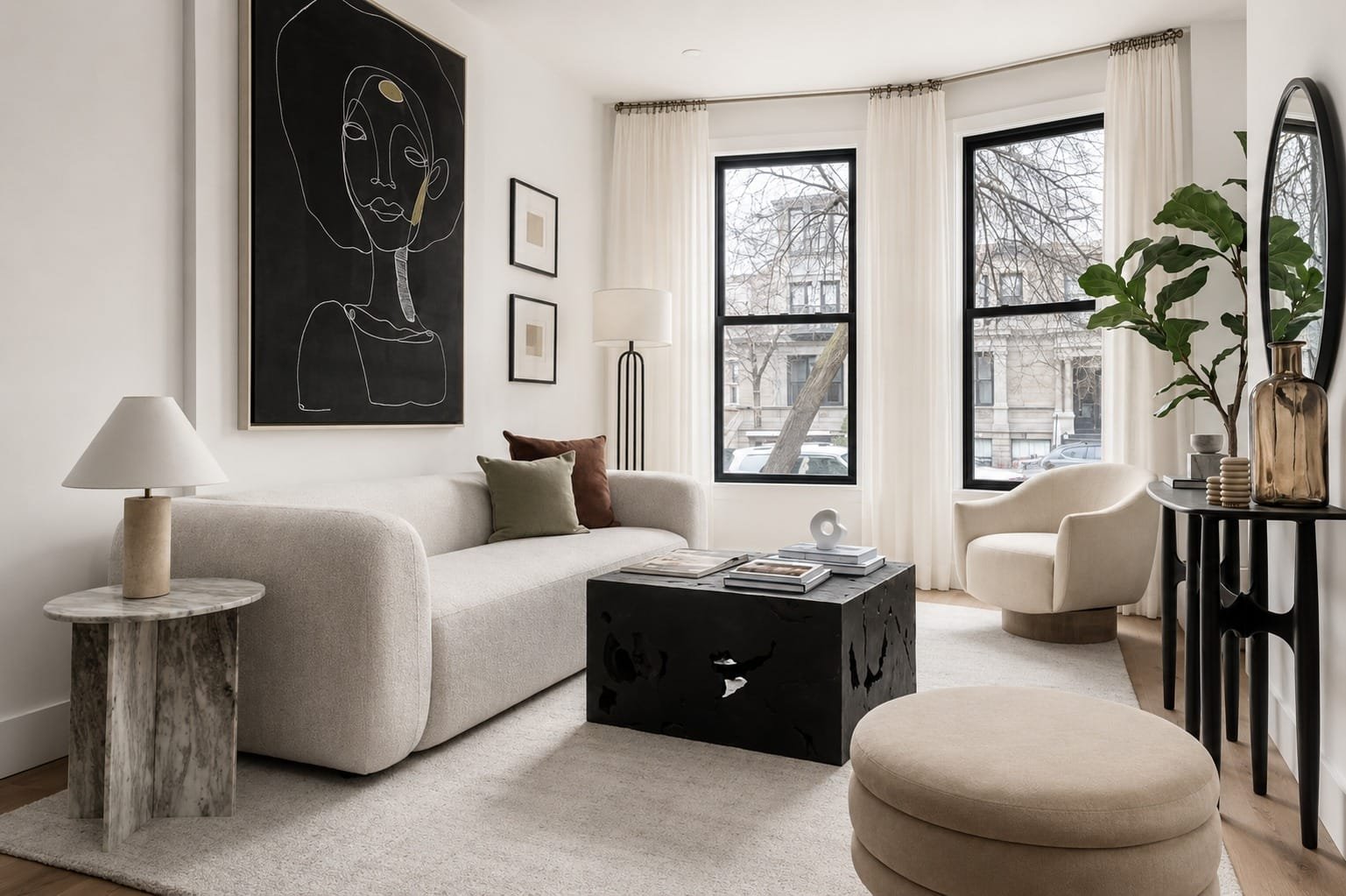
Your home should feel stylish, comfortable, and personal, not like it’s stuck in a past design trend. While taste is subjective, certain tacky decor choices can unintentionally make a space feel outdated or overwhelming. The solution isn’t starting over; it’s knowing what to change. Explore the most common tacky decor mistakes and learn simple ways to refresh your space with designer-approved ideas.
1. Matchy-Matchy Decor

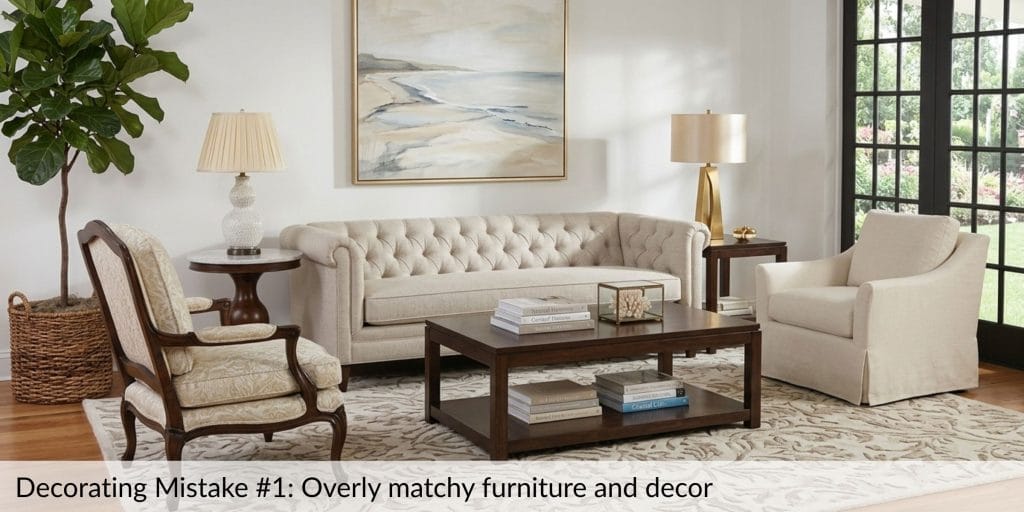
The 2026 version of tacky living room decor is subtler than before. Think a palette so fully resolved the room reads as a showroom floor, despite no two pieces technically matching. That level of coordination removes tension, and a room without tension has no sense that anything was actively chosen.

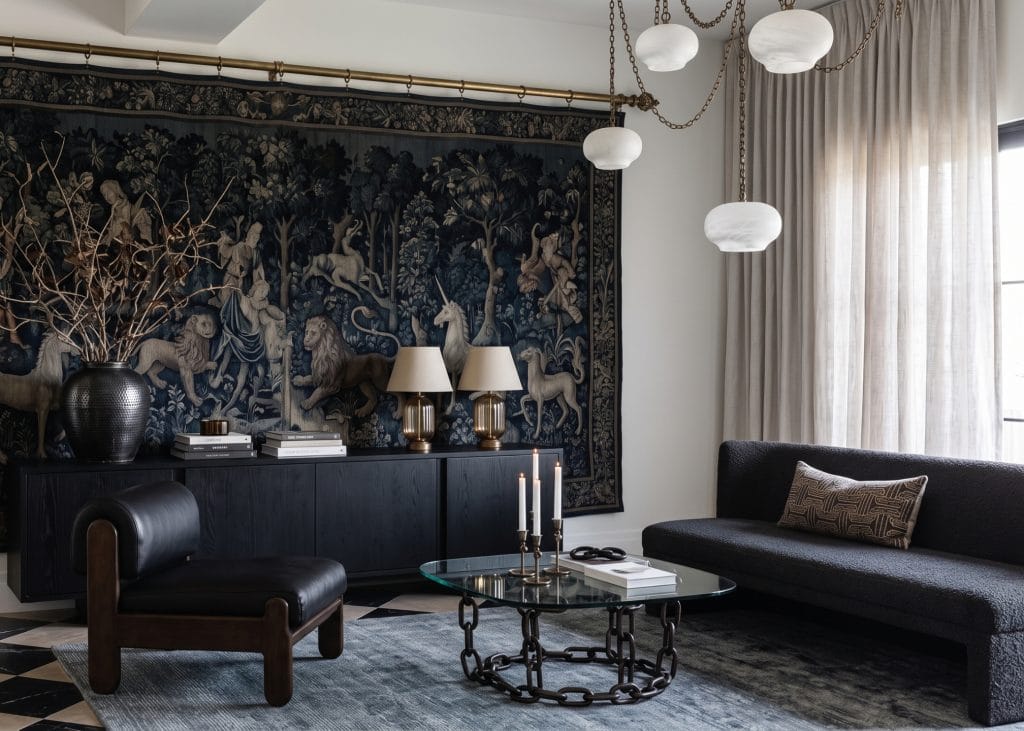
The Fix: Keep a color running through the space and let material weight do the variation. That’s the secret of great interior design: something dense against something open, a matte finish next to one with sheen.
Pro Tip: Not sure what style to follow while avoiding tacky decor choices? Try our Free Interior Design Style Quiz to discover your ideal style today!
2. Unedited Maximalism
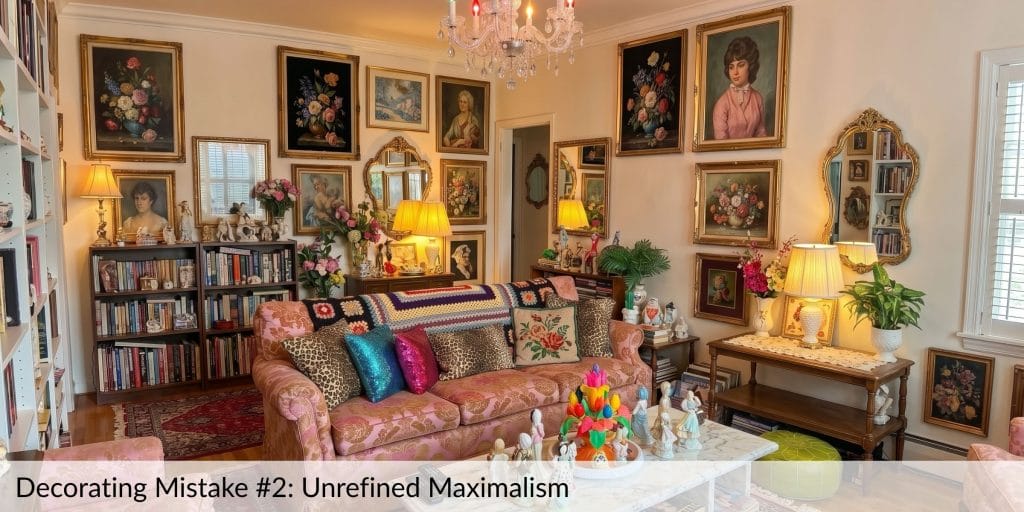
Speaking of editing, it makes all the difference between collected maximalism and visual clutter. And that’s harder to see from the inside than from the door. When you live with a lot of objects, you soon stop registering what’s there, which makes it almost impossible to self-diagnose. But a visitor sees and feels everything differently, starting from whether the room has a focal point strong enough to organize the rest of what’s in it.

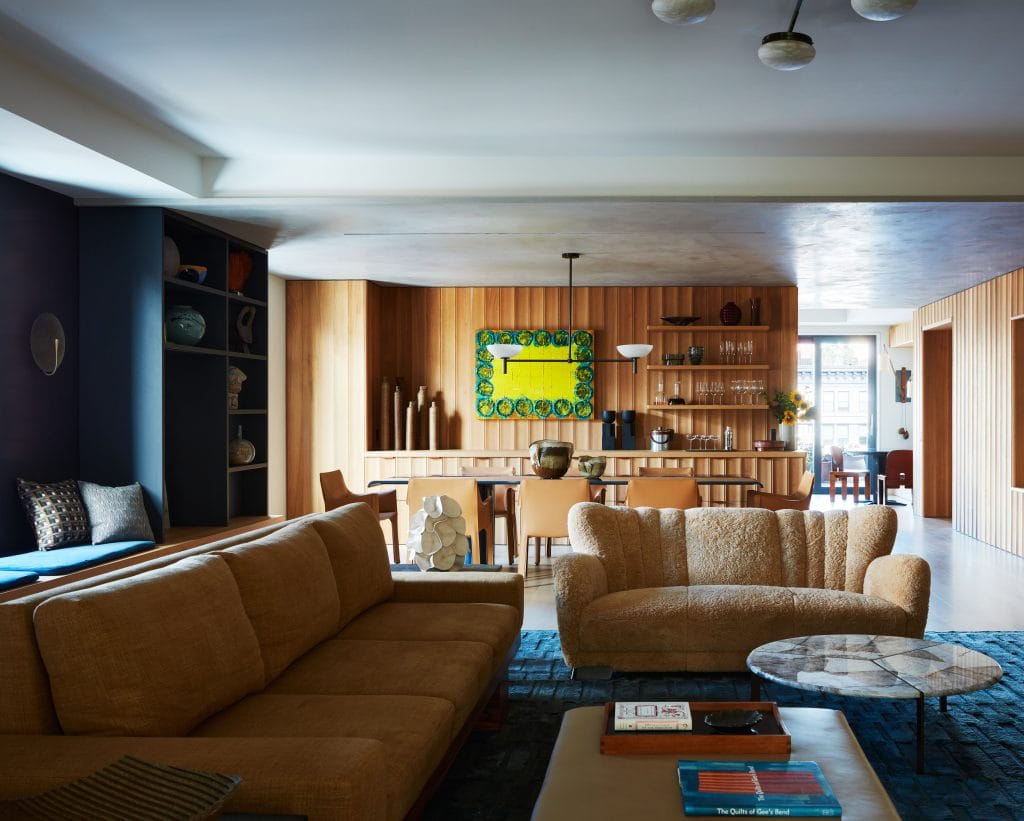
The Fix: Leave enough clear surface to give the eye somewhere to rest between the density. A color thread is a no-brainer here; when it runs through the abundance, it makes it feel like a collection. In other words, more intentionally maximalist and less like a random pile of tacky home decor mistakes.
3. Faux Anything That Reads as Fake
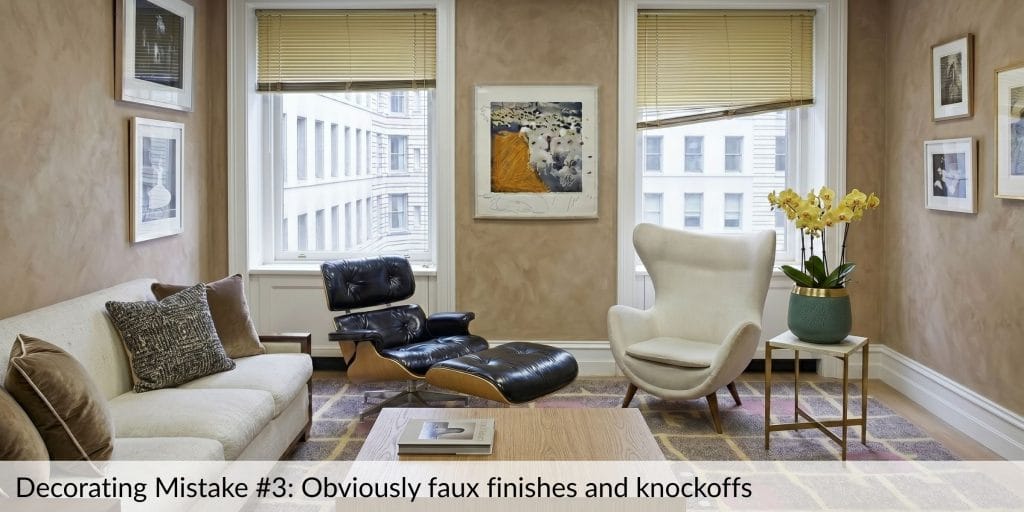
Factory-distressed furniture and knockoff versions of recognized pieces have one thing in common. They look convincing in a product photo, but turn obviously synthetic the moment light hits them at an angle in the room. An even bigger problem is that accepting one approximation raises questions about everything else on display.

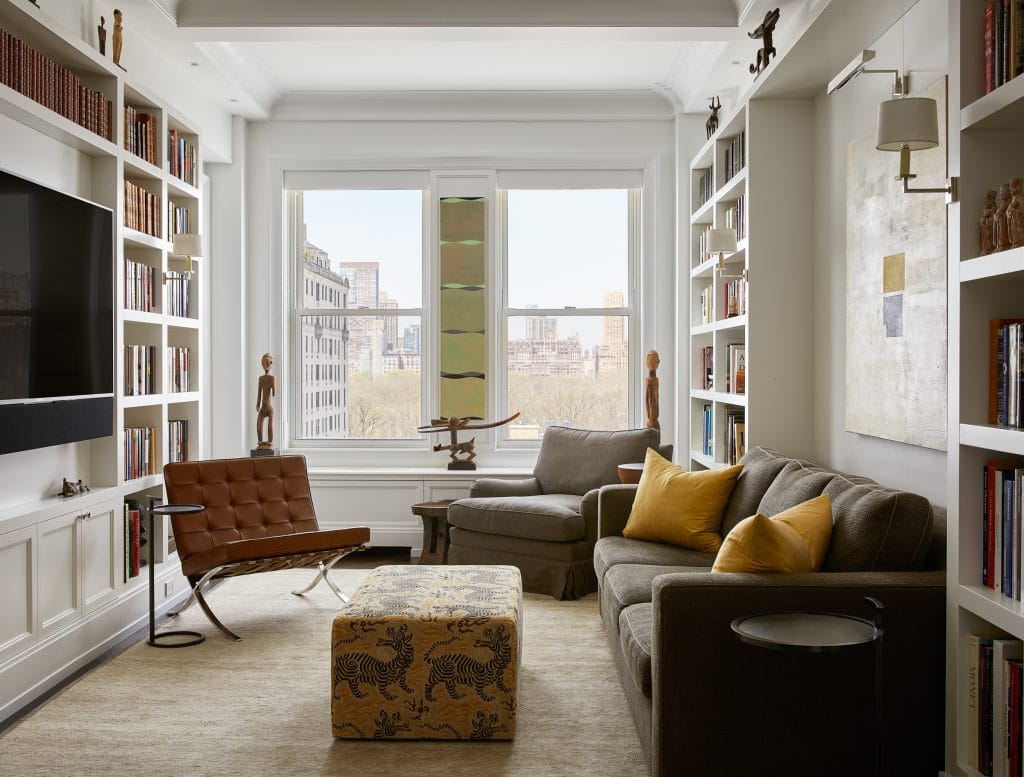
The Fix: The good news is that you can fix tacky interior design with items oozing real age or real craft changes. Thrift stores and estate sales are still the most reliable place to find those. The budget logic is also straightforward: spend it once and spend it on the piece that gets the most use.
4. Synthetic Fabrics with Performative Sheen
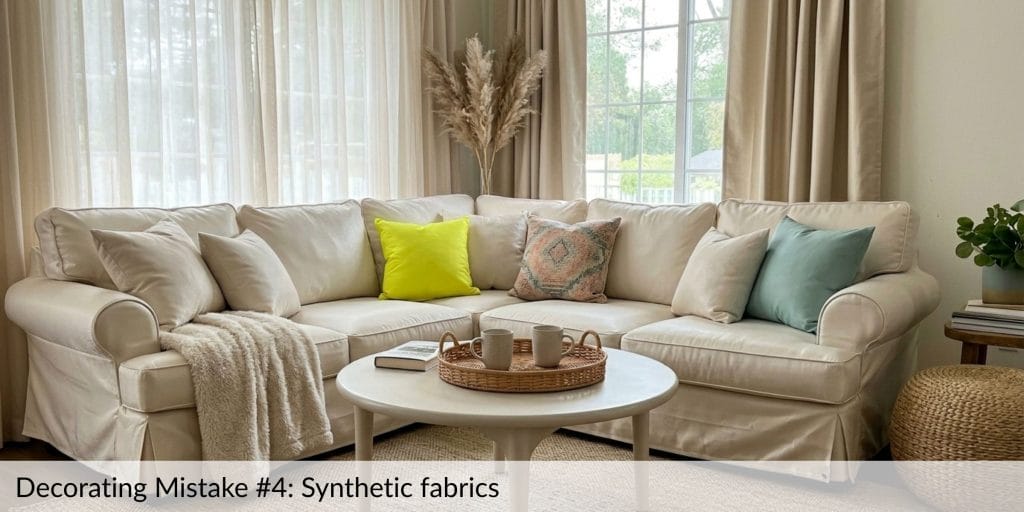
Bad upholstery is another one of the fastest ways to make an expensive room read as tacky and cheap. Synthetic sheen has a specific quality that gives itself away under real light, the kind that actually exists in a room. Faux silk and low-grade velvet are engineered to pass a visual test at a distance, and they do, right up until someone sits down or runs a hand across the surface. The tells are in the drape and the way the fabric responds to contact; it’s the particular flatness of a finish that’s imitating depth it doesn’t have.

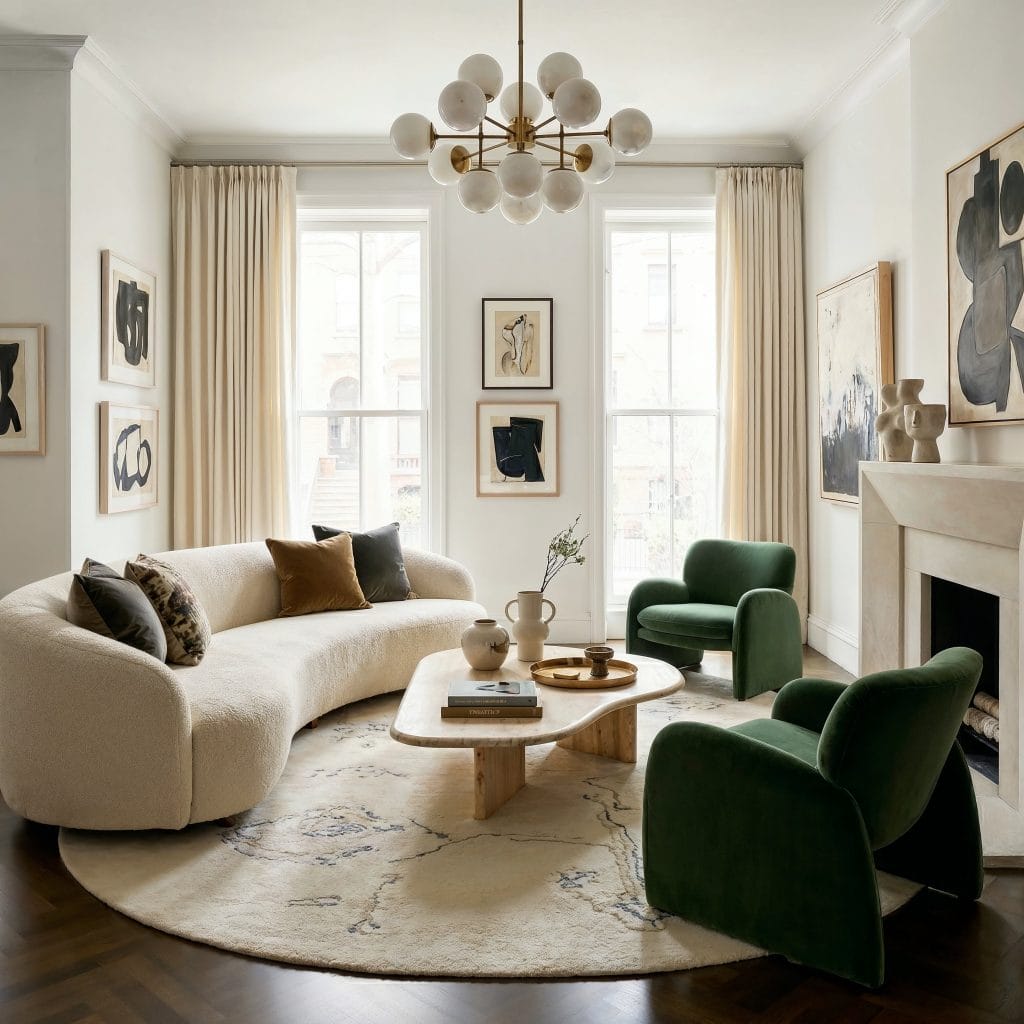
The Fix: A room can survive one piece like this; it can’t survive several, because synthetic sheen compounds. And the fix is again boring but consistent: put the budget into at least one well-made upholstered piece in a quality fabric.
5. The Overcrowded Gallery Wall
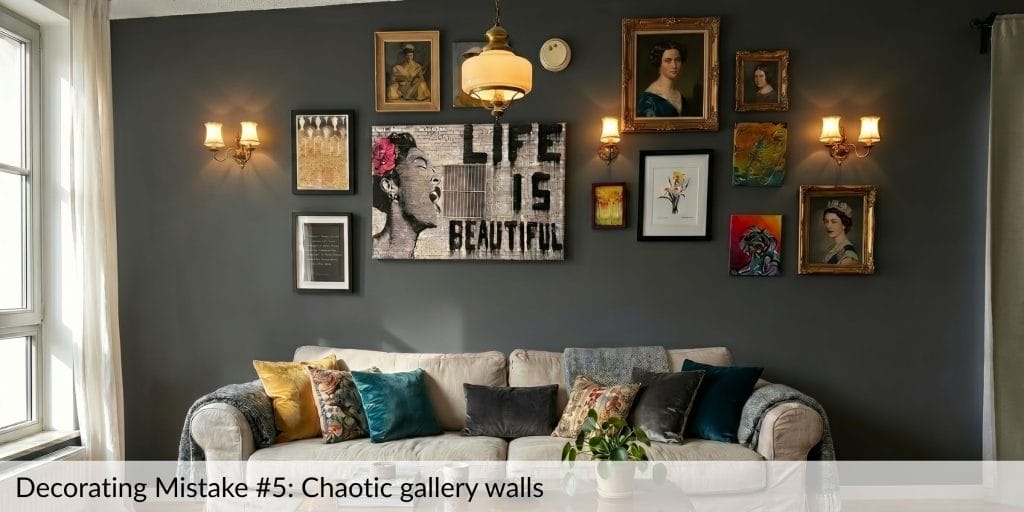
A gallery wall is one of those projects that feels manageable before hanging, but disappointing after. The most common failure isn’t too many pieces but too many decisions left unmade before anything goes up. Without a unifying logic, a gallery wall reads as an accumulation. Mixed frame finishes force the eye to resolve a conflict before noticing anything else. A mix of personal photos alongside art prints alongside decorative objects, meanwhile, creates a hierarchy problem.
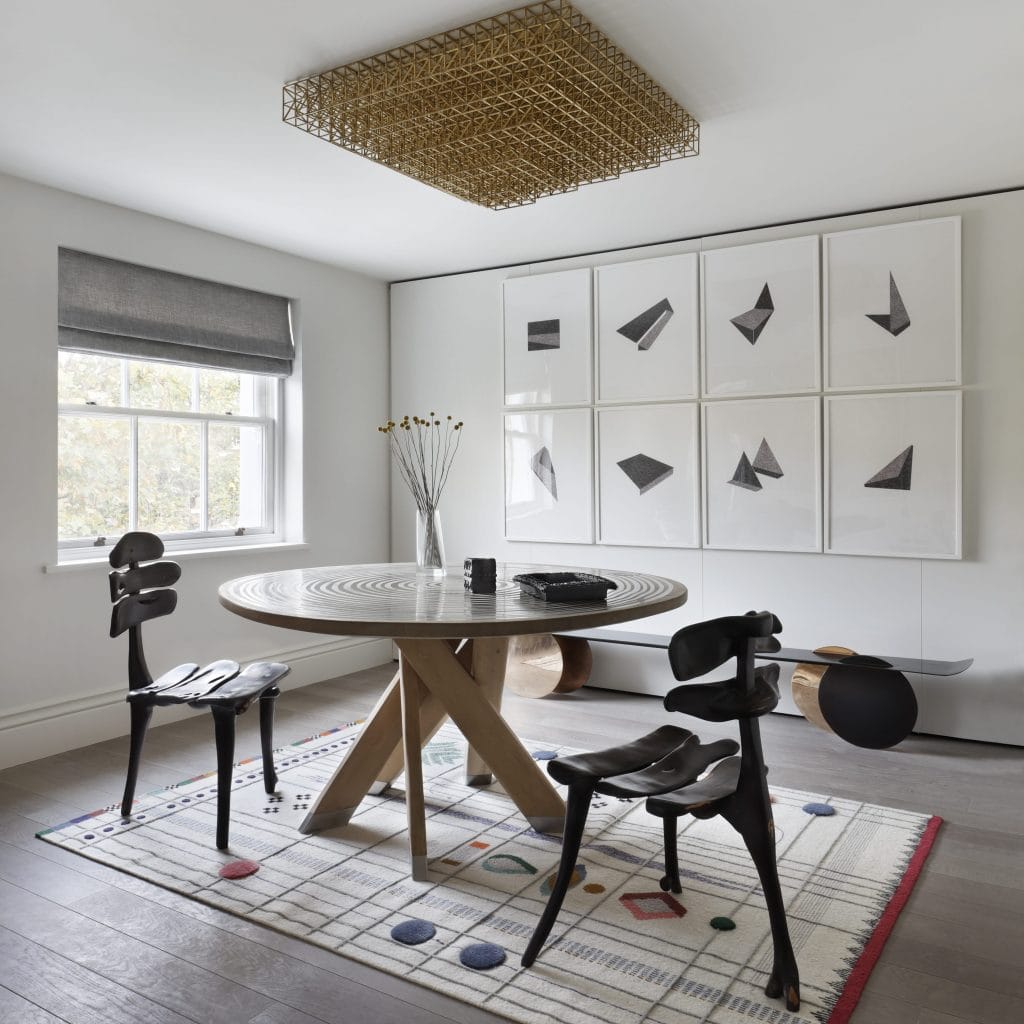
The Fix: Decide on one finish before you start; pull it back to six or eight pieces maximum. Also, leave enough space between frames to let the wall itself become part of the composition. The edit is almost always more aggressive than feels comfortable, and almost always right.
6. Tacky Decor That Looks Bought In a Single Run
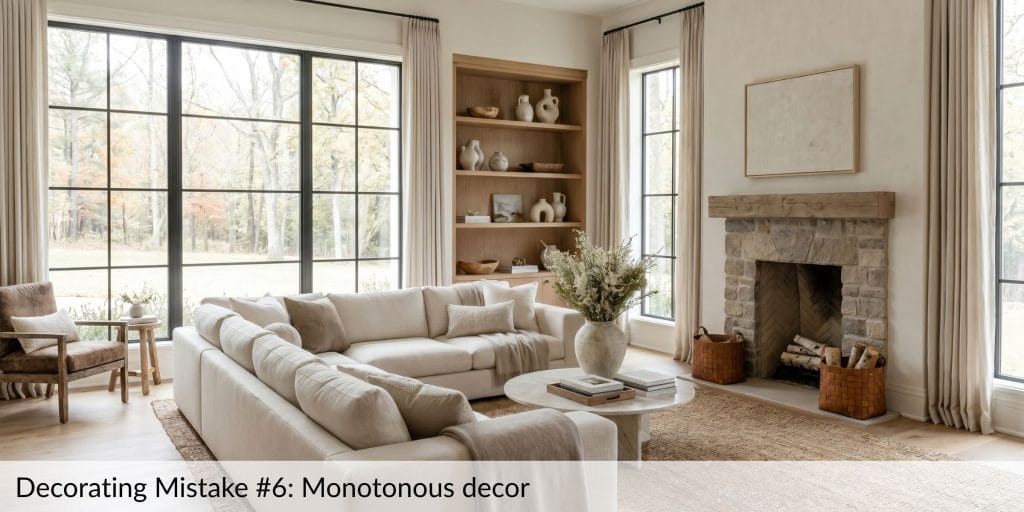
A room assembled from an aesthetic-label shopping list looks exactly like a mood board and nothing like a person. When every piece aligns to a named category, the space optimizes for type over character, and the result reads as hollow. There’s a version of this that’s easy to spot and a version that isn’t. The easy version is the room that looks exactly like a Pinterest board for a named aesthetic. The harder version is subtler: everything is tasteful but nothing is specific.

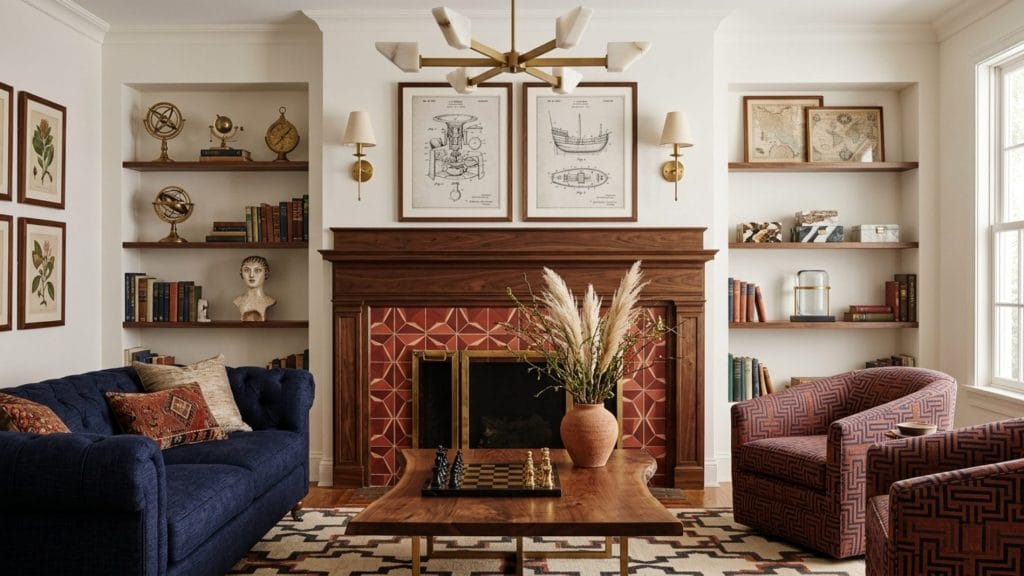
The Fix: The rooms that don’t have this problem always contain something that doesn’t come from a catalog. Start with one piece chosen for a specific, personal reason and build the room outward from that logic.
7. Overdoing a Single Trend
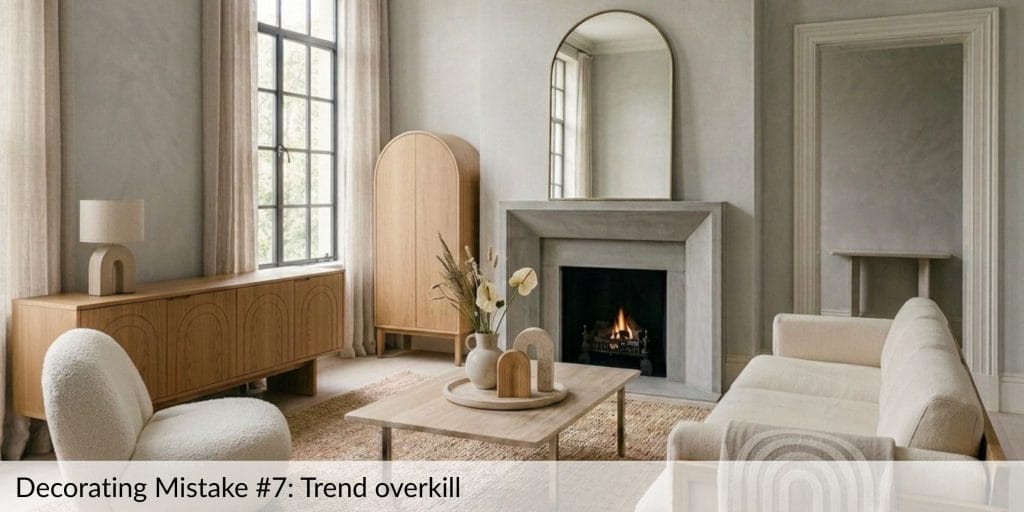
There’s a point where a good idea becomes the only idea in the room, and that’s where tacky interior design starts. The arch, for example, isn’t a problem in itself, but saturation is. An arched mirror works. An arched mirror plus an arched headboard plus arched cabinet inserts plus arched nightstands; that, on the other hand, stops being a choice and becomes a compulsion.

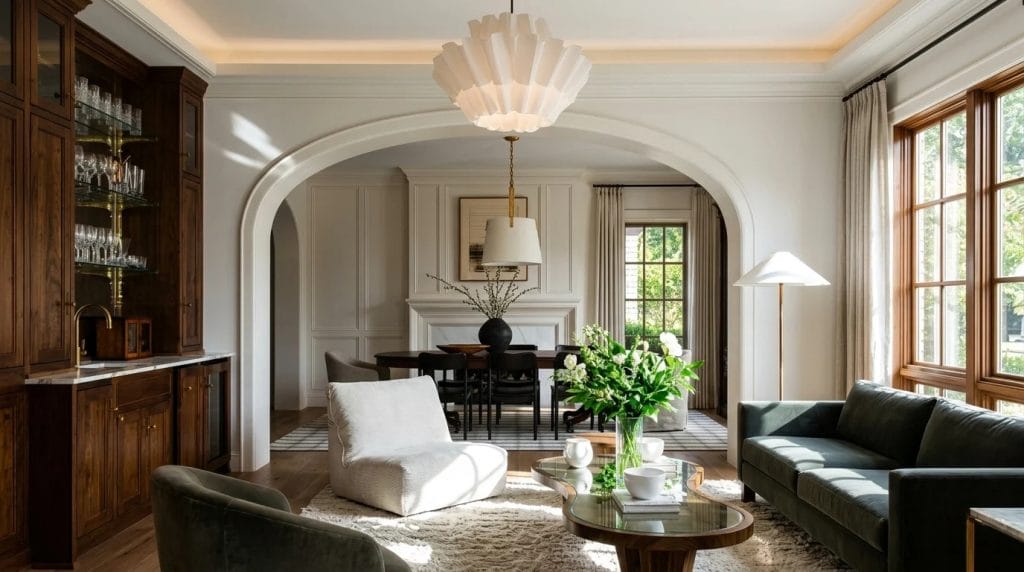
The Fix: The rooms that handle trend well almost always show restraint you can feel. So use one strong piece that carries the moment, and let everything else do something different.
8. Accent Walls as a Design Shortcut
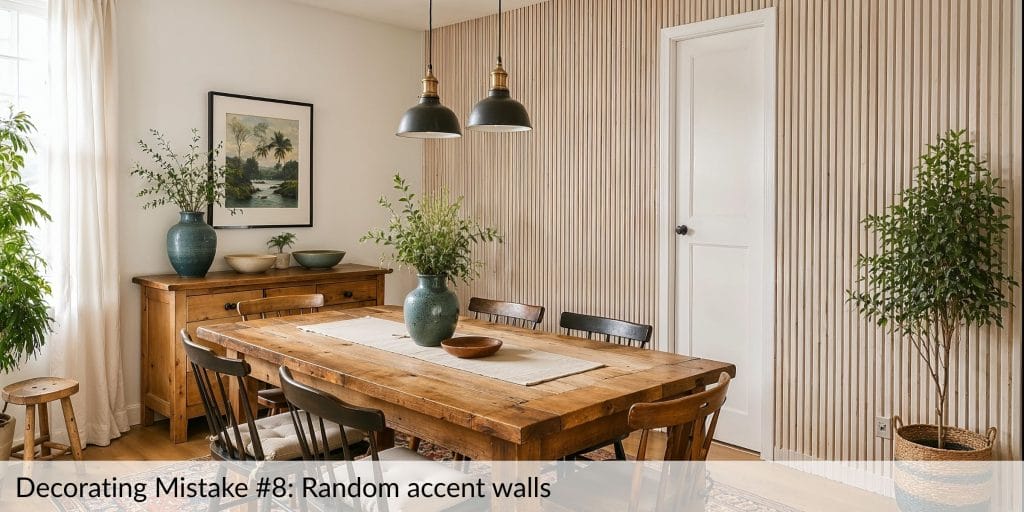
The appeal is understandable. A limewash wall or a run of fluted panels is a fast way to add character to a room that feels like it’s missing some. However, using these as an accent has become one of the most recognizable markers of tacky decor. They have been installed in so many homes at this point that the materials themselves have started to feel like a shortcut. In many cases, that’s exactly what they are.

The Fix: The treatment applied to an unresolved room has nothing to work with. Those that look genuinely good are almost always the ones chosen to reinforce something already happening in the space. Get the vibe and the style you are going for first, set a moodboard, consider the layout, and then pick the treatment that fits.
9. Candles in a Fireplace, Tacky or Considered?
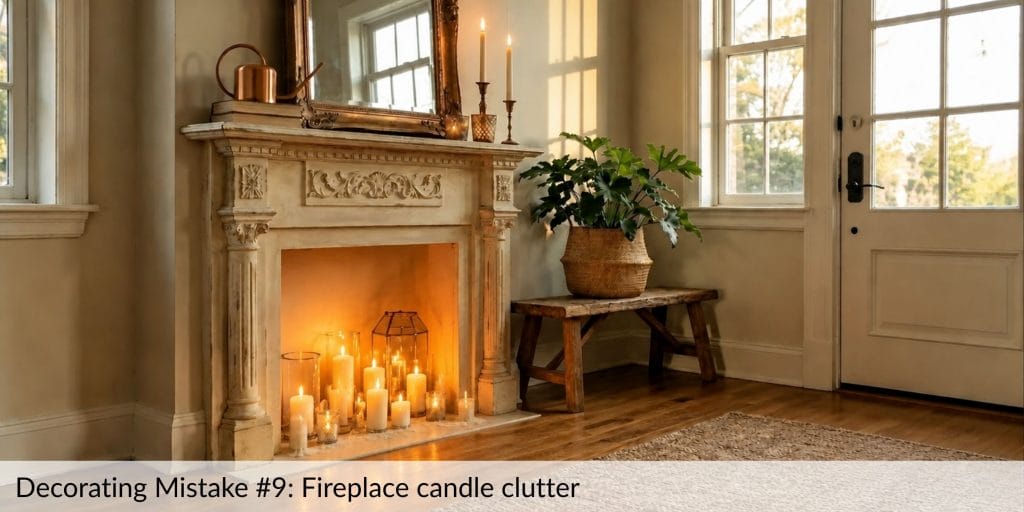
This one depends almost entirely on commitment. Whether candles in a fireplace read as tacky is a proportion question above all. A single substantial candle in a holder with real material weight, placed at the firebox floor, reads as intentional. What reads as tacky is the cluster of mismatched pillars arranged across the opening like a workaround, which is exactly what it is.
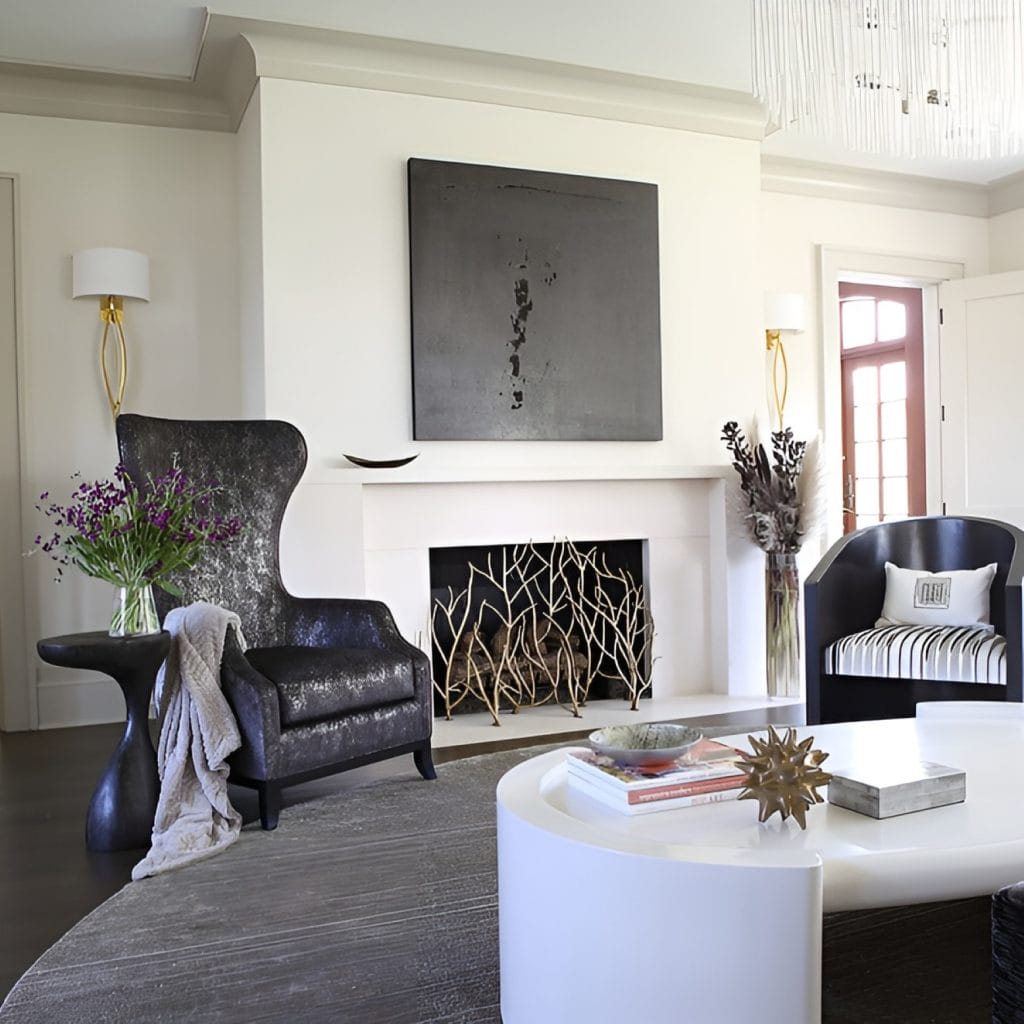
The Fix: The fireplace is a dominant architectural feature, and it knows when it’s being managed rather than used. Get the scale right, and use something with enough presence to hold the space. The point is to avoid drawing attention to the vacancy and make the setup a genuine part of the room.
Tacky Decor FAQs

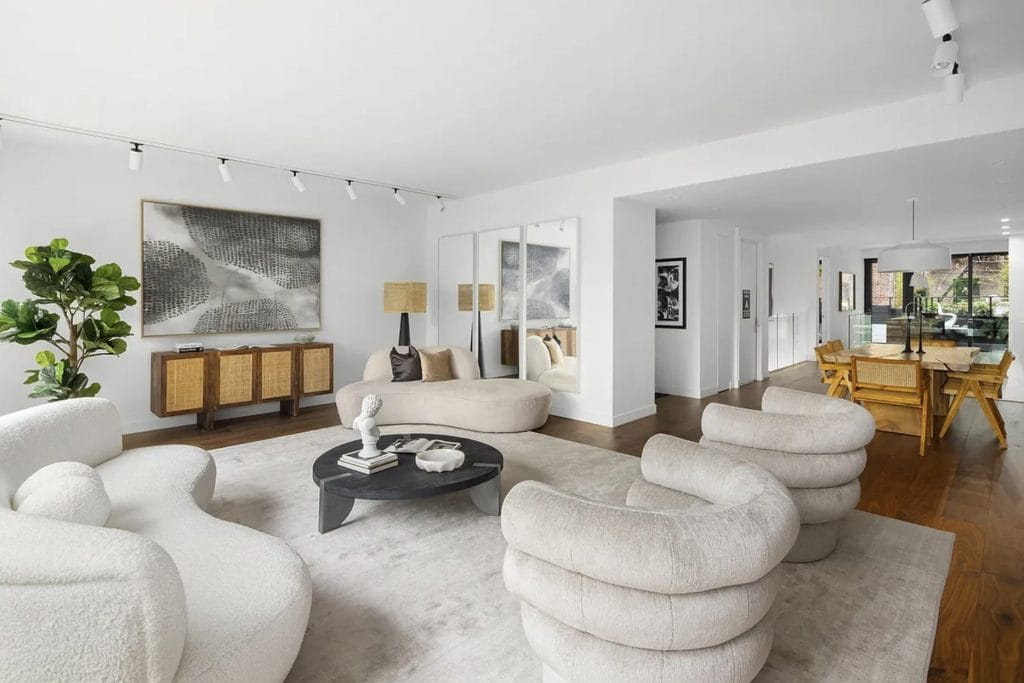
Tacky home decor most often results from a material selected for its photograph, or a trend pushed past the point of selectivity. The simplest explanation: a room reads as tacky when decorated without logic or evidence of editing in how it came together.
Over-coordination and aesthetic-label decorating produce the same result at any price point. Editing matters more than budget.
Outdated decor and tacky decor are diagnosed differently. A room can be dated and still hold together as a meaningful composition. The more useful question here is whether the space feels performative, assembled for an appearance it doesn’t achieve. That’s a coherence issue, independent of trend cycles.
Ready to Leave Tacky Decor Behind?
Create a home that feels polished, cohesive, and timeless with expert guidance from a Decorilla designer. Book your Free Online Interior Design Consultation to start today!