A Partial Solar Eclipse Is Coming. Don’t Forget These When You Look Up
A total solar eclipse will occur soon. While the U.S. may not be able to see it, certain states may be able to see a tiny part of the celestial event called a partial solar eclipse.
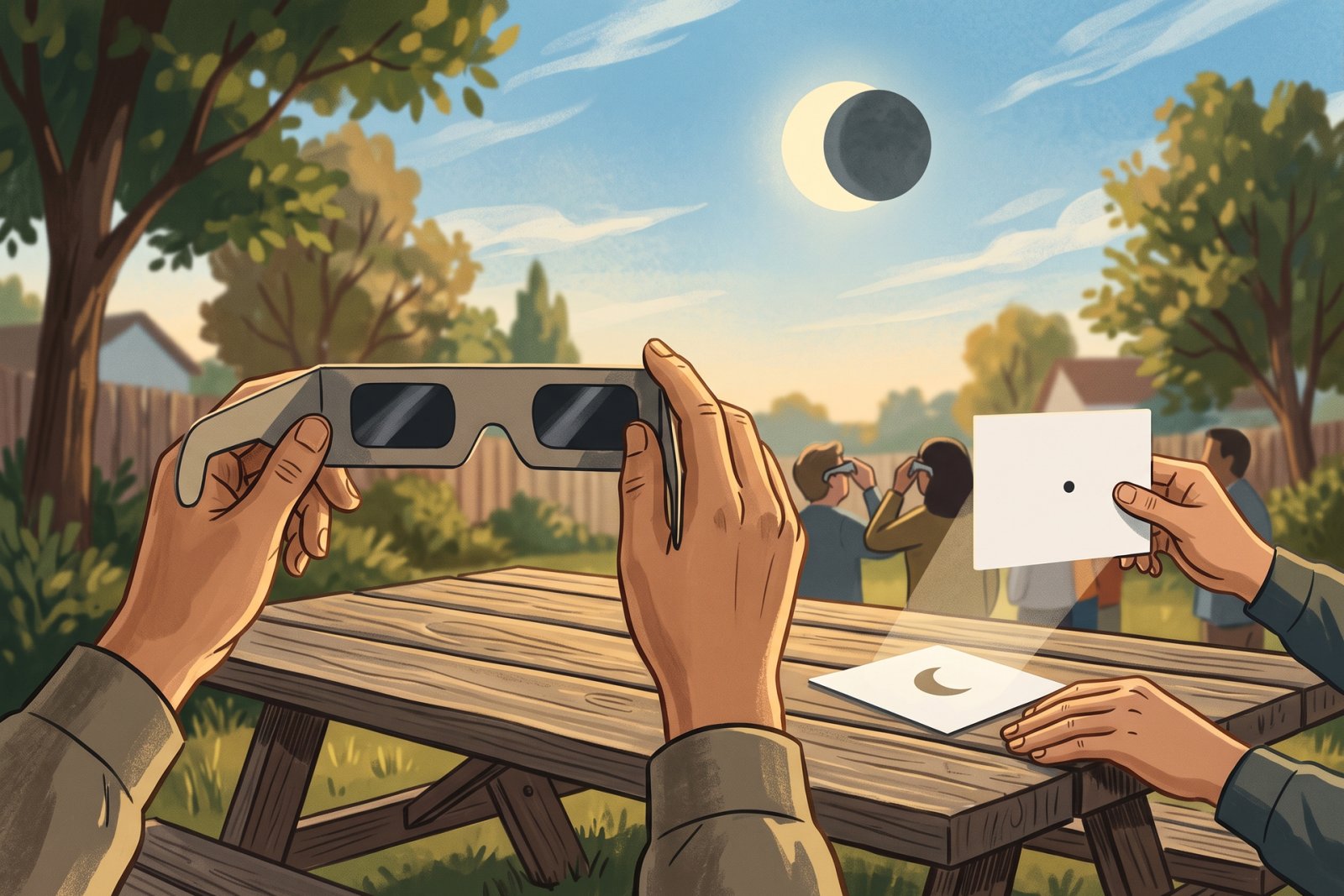
They will be able to do so using special solar eclipse glasses. The glasses are needed for those who will see the partial solar eclipse and even for those who will be in the path of the total solar eclipse during the partial phases. The only time they won’t need the glasses is when the eclipse is in totality, or when the sun gets completely covered by the moon.
The total solar eclipse will take place on Wednesday, Aug. 12, beginning at around 11:34 a.m. ET, according to Time and Date. The maximum eclipse will occur at 1:46 p.m. ET. A total solar eclipse usually only happens about once every 18 months, per Time and Date. The last total solar eclipse was on April 8, 2024.
Here’s what to know about solar eclipse glasses and where the total and partial eclipses will be visible.
Solar Eclipse Glasses Are Needed in the U.S.
People wanting to see the partial solar eclipse should never look at the sun with the naked eye and should use eclipse glasses, which are different from typical sunglasses, to view the sun during the celestial event, according to NASA.
The only time it is safe to look at the sun during a solar eclipse is during totality, which will not occur in the U.S., according to NASA.
Solar eclipse glasses or handheld solar viewers can be purchased, but should comply with the ISO 12312-2 international standard, according to NASA.
Solar eclipse glasses are very different from the sunglasses you wear every day. Eclipse glasses will protect your eyes from damage when watching the eclipse. While sunglasses can protect you from the sun’s harsh rays, they will not protect your eyes if you use them to stare directly at the sun.
How to Test Your Eclipse Glasses
While products might say that they comply with standards, there is no way to know for sure unless they have been tested in a laboratory approved by a recognized accrediting body to conduct these tests, according to the American Astronomical Society.
People wanting to see the partial solar eclipse should test the glasses they purchase before using them to look at the sun.
To test your glasses or handheld solar viewers, follow these steps:
- Use the glasses or visor indoors before taking them outside. You might only be able to see “very bright lights,” according to the society, but that’s it. You should not be able to see anything else in the room. If they pass this step, move on to the next one. If they don’t, do not use them to watch the eclipse.
- Take them outside on a sunny day, but do not look at the sun yet. If you still aren’t able to see anything except for the sun’s reflection bouncing off objects, then you can move on to the next step. If not, throw them away.
- Finally, take the glasses outside and look at the sun for less than a second. It should be “comfortably bright, with a dark background all around it,” according to the society.
If your glasses or visor pass all three tests, they should be safe to use. If they don’t, or they’re damaged, do not use them. If you’re still unsure whether they’re safe, do not use the glasses. It’s better to be safe than sorry, and not wearing the proper protection could cause extreme damage to your eyes.
No Glasses? Try a Pin-Hole Projector
If you don’t have the proper equipment to watch the eclipse, you can turn a cardboard box into a pinhole projector by taping a white sheet of paper on one opening and a piece of aluminum with a pinhole on the opposite side, according to NASA. Leave a space next to the aluminum that you can use to look into the box, and with your back toward the sun, look into the box to see the projection created by the pinhole in the aluminum.
Where Will the Eclipse Be Visible?
The Aug. 12 total solar eclipse will only be visible from Greenland, Iceland, Spain, Russia and parts of Portugal.
The following states will be able to see the partial solar eclipse on Aug. 12, according to USA TODAY’s previous reporting and National Eclipse, an organization that provides information on upcoming eclipses:
- Alaska
- Connecticut
- Delaware
- Illinois
- Iowa
- Indiana
- Maine
- Maryland
- Massachusetts
- Michigan
- Minnesota
- Montana
- New Hampshire
- New Jersey
- New York
- North Carolina
- North Dakota
- Ohio
- Pennsylvania
- Rhode Island
- South Dakota
- Vermont
- Virginia
- West Virginia
- Wisconsin