The Extractive Trap Has a Green Exit by Désiré Assogbavi & Renata Albuquerque Ribeiro
For resource-rich developing countries, decades of resource extraction have produced income concentration, economic dependency, external vulnerabilities, and the weakening of other productive sectors. Achieving broad-based prosperity requires a new approach, one which leverages South-South cooperation to build green industries.
DAKAR/RIO DE JANEIRO—For five centuries, raw materials have flowed out of Africa and Brazil at low cost to be used as inputs elsewhere—often returning to their source countries embedded in expensive finished goods. The energy transition offers a critical opportunity to escape this extractive dynamic. The key for these economies is to leverage their vast resources, as well as mutual cooperation, to build thriving green industries of their own.
The current global energy crisis has made the energy transition all the more urgent. Supply disruptions and rising costs have put pressure on governments, households, and businesses in many countries, weakening productivity, straining food supplies, and exacerbating economic inequality.
The effects of the crisis are particularly acute in many African countries, which already struggle with persistent poverty, limited energy access, and inadequate infrastructure. Africa’s energy-producing countries are not immune, not least because they often export crude oil while importing costlier refined products like diesel and gasoline.
But the problem runs far deeper than the current crisis. As a recent Oil Change International report shows, decades of extraction have produced income concentration, economic dependency, external vulnerabilities, and the weakening of other productive sectors.
Achieving broad-based development requires a new approach, one which leverages South-South cooperation to advance green development and sustainable industrialization. Brazil and African countries, such as Kenya, Namibia, South Africa, and Tunisia, are particularly well-suited to spearhead such a strategy, acting not only as diplomatic partners, but as co-producers of a green industrial transformation.
Since returning to the presidency in 2023, Brazil’s Luiz Inácio Lula da Silva has emphasized the importance of South-South cooperation, not least to advance the climate and development agenda. Moreover, he has resumed official visits to African countries, such as Mozambique and South Africa, whose leaders have reciprocated with visits to Brazil. Such diplomatic initiatives have been matched by concrete cooperation in agriculture, health, education, defense, energy, and other areas. But it is in green industry that this partnership can take on real strategic significance.
Brazil and Africa have important comparative advantages in two sectors that are central to the global energy transition. The first is critical minerals. African countries have significant reserves of cobalt, graphite, lithium, and manganese—critical inputs in batteries, electric vehicles, and renewable-energy technologies. Brazil also has reserves of graphite and lithium, as well as nickel and rare-earth elements.
The United Nations reports that trade in raw and semi-processed critical minerals reached roughly $2.5 trillion in 2023, accounting for more than 10% of global trade. That total is projected to triple by 2030. According to the International Energy Agency’s Global Critical Minerals Outlook 2025, lithium demand alone could grow fivefold by 2040, while cobalt and rare-earth demand might rise 50-60%.
If Brazil and Africa focus on meeting this exploding demand with raw exports, they will find themselves ensnared by the same old extractive trap. But by building shared production chains and pursuing technology-transfer agreements, joint research, and industrial policies focused on adding value locally, they can finally translate their resource wealth into sustained growth and development.
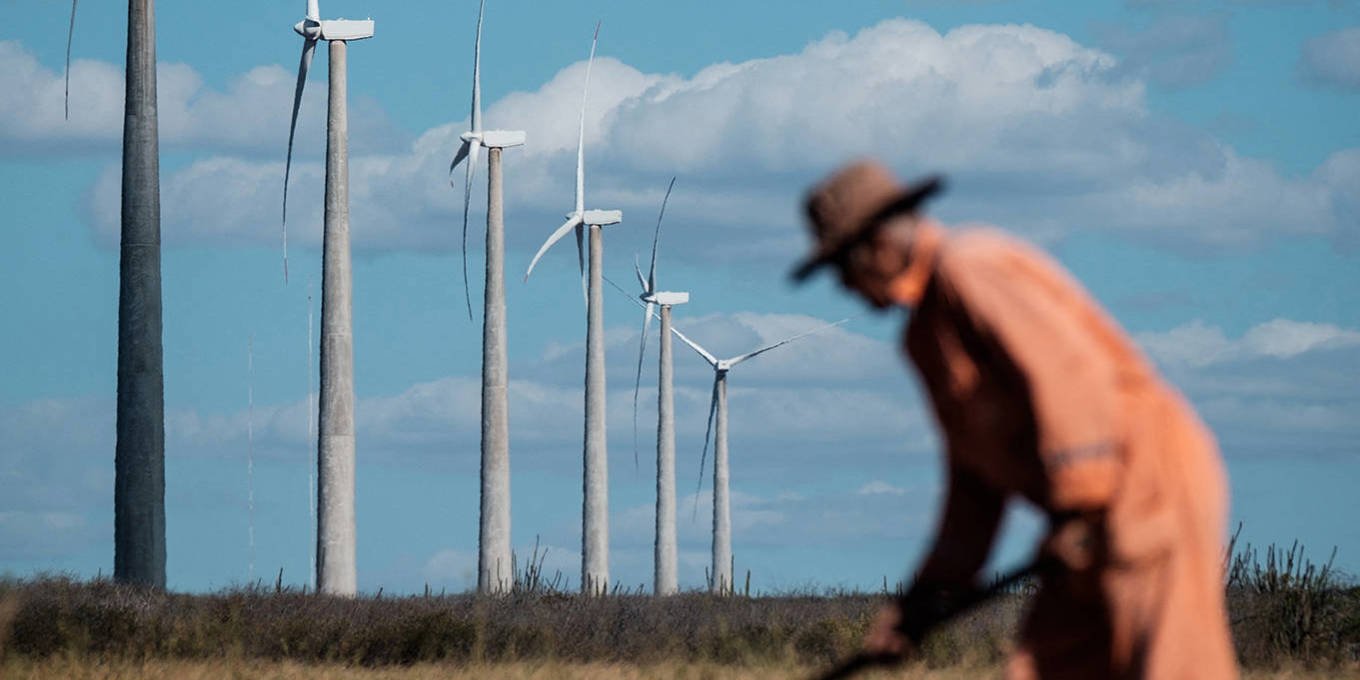
Africa and Brazil also stand to benefit from some of the best conditions in the world for solar- and wind-power generation. Already, decentralized solar-power installations are proliferating in many African countries, expanding access to electricity in rural areas and urban peripheries. In many cases, this is a bottom-up energy transition, with families and small businesses purchasing and installing solar panels, often using pay-as-you-go solutions.
Brazil, for its part, is a global leader in biofuels and hydropower technologies. According to the IEA, the country contributes almost 7% of the world’s renewable-energy production, despite accounting for only 3% of its population and 2% of its GDP. And Brazil continues to invest heavily in expanding and “greening” energy access. The Amazon Energy Program aims to replace diesel-based power generation in the Isolated Systems of the Legal Amazon with clean, renewable energy sources.
Cooperation on renewable energy can help Africa and Brazil alike. Brazil can contribute its technical and institutional capacities. Its Luz para Todos program, which has connected more than 17 million rural Brazilians to electricity since 2003, is precisely the kind of initiative that can be adapted to African contexts. African countries, for their part, can share the innovative solutions they have developed for expanding energy access, including pay-as-you-go solar home systems and micro-generation of energy.
But installing renewable-energy infrastructure alone will not deliver green development. That requires countries to increase their productive capacity, enhance their technological capabilities, and train and employ skilled workforces. A green industrial transformation must generate jobs—the third critical area for cooperation.
The International Renewable Energy Agency projects that the energy transition could create millions of jobs in Africa by 2030, especially in solar energy, electrical infrastructure, and green manufacturing. The same applies to Brazil, which seeks to shift its industry toward sectors linked to the low-carbon economy.
But major roadblocks remain—none greater than finance. This is particularly true for Africa, which, despite holding 60% of the world’s best solar resources, receives only about 3% of global energy investment and 2% of clean-energy investment. African countries also face extremely high borrowing costs. Alternative cooperation mechanisms and joint South-South financing initiatives, as well as increased support from development banks and greater private-sector participation, are needed to advance green industrialization.
For too long, Africa and Latin America have served as mere suppliers of raw commodities, preventing them from achieving broad-based prosperity. By working together, however, developing economies can transform their strategic resources into the industrial, technological, and political capacity they need to build robust, dynamic, and sustainable economies.