Brown Recluse Vs. House Spider: How To Easily Tell The Difference
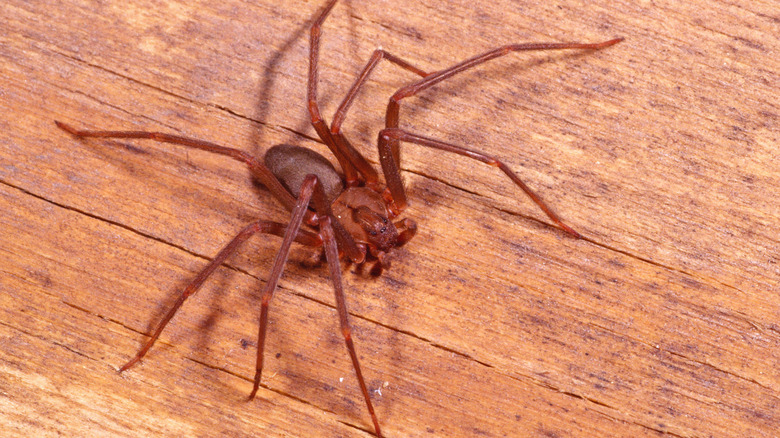
Thoughts of the potentially deadly brown recluse spider are enough to make you recoil in fear at any arachnid that loosely matches its description. Fortunately, if you find yourself face-to-face with an eight-legged houseguest that fits the color palette, know that there are a number of harmless spiders that look like the brown recluse, including the common American house spider (Parasteatoda tepidariorum). And the house spider is much smaller than the brown recluse, with completely different patterns found on their bodies.
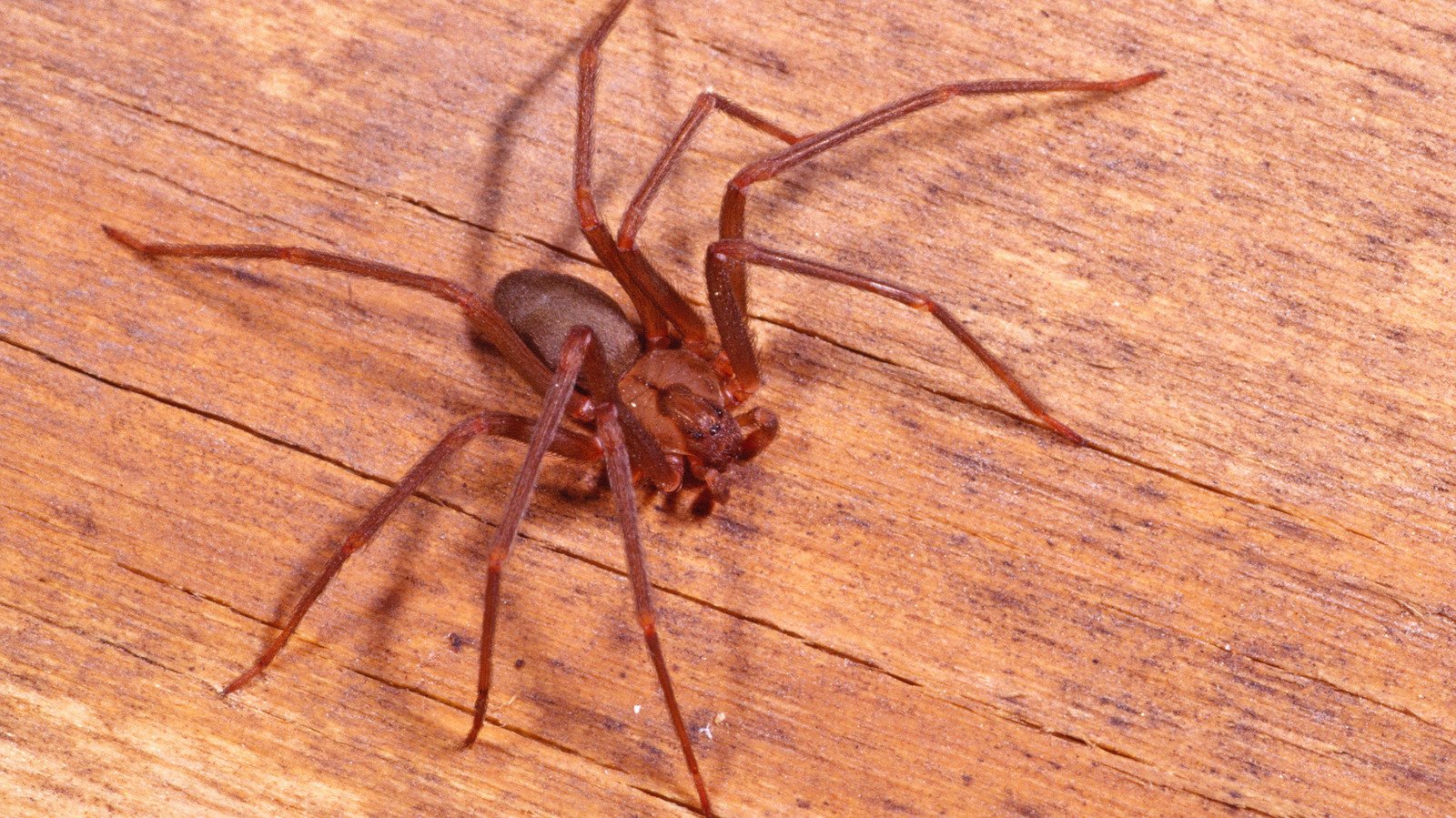
The brown recluse (Loxosceles reclusa) and house spider are two spiders commonly found in homes with several visual characteristics that can help tell them apart. Brown recluses are typically larger, measuring about ½ to 1 inch with their legs fully extended, and they have dark violin-shaped markings on the front half of their bodies. Their overall color ranges from tan to dark brown, though they’re most often a golden brown hue. Adult brown recluses usually have a plain, uniformly colored abdomen and long, slender legs without stripes or bands.
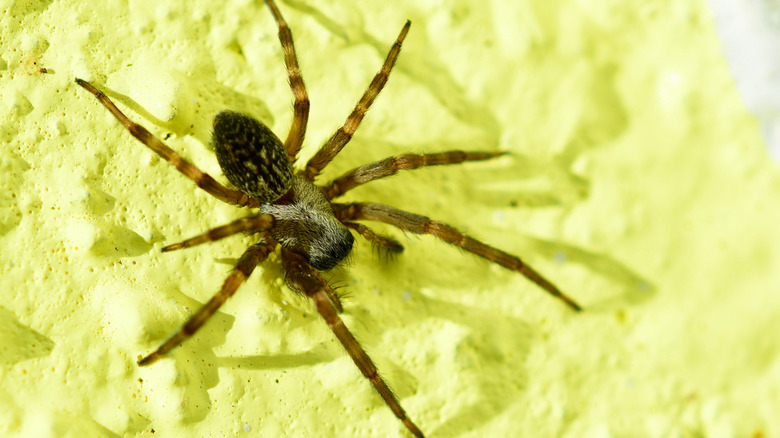
Common house spiders, on the other hand, are much smaller, averaging around ⅕ to ⅖ of an inch long. They have streaks, V-shaped markings, and other mottled patterns instead of a plain body, often accompanied by a small whitish patch on the upper abdomen. Their yellowish legs also have dark rings, giving them a much busier-looking appearance than the smooth, unbanded legs of a brown recluse.
Behavioral differences between brown recluse spiders and common house spiders
Besides their appearance, another helpful way to distinguish these spiders is by looking at their webs and behavior. When identifying a brown recluse spider’s web, look for messy, sporadic webs that the spider uses as a way to hide, rather than a sticky and intricately spun web that acts primarily as a trap for insect prey. These “retreat” webs are often tucked away in dark, undisturbed areas within basements, attics, crawl spaces, closets, or garages. Meanwhile, common house spiders build messy, three-dimensional cobwebs in the corners of walls, windows, and doors, where they wait for their insect prey to become trapped.
True to their name, brown recluses are shy, solitary spiders that tend to avoid people. In contrast, house spiders are much more likely to remain out in the open in their webs, even in the presence of humans, although some of this bravery may simply be a result of their poor vision. Despite being preceded by their deadly reputation, brown recluse spiders generally aren’t aggressive and bite only when they’re trapped against someone’s skin, such as inside a shoe or beneath clothing. When they do bite, however, they can occasionally cause serious complications, including painful necrotic wounds that require medical attention. House spiders, by comparison, pose very little risk to people. Although they can bite if handled, the reaction is usually limited to minor redness, slight swelling, or itching, similar to a mild bee sting.