Americans’ aspirations for economic mobility
The American story has long featured economic mobility, with its promise that people can create a better future for themselves and their families, exercise autonomy over their lives, and experience dignity and belonging. For the more than 130 million households in the United States today, that promise is reflected in everyday aspirations: working hard to create more financial stability for their families, advance in their careers, build community, and invest in the next generation. While achieving this promise continues to be uneven across groups, the belief in the possibility of economic mobility remains at the core of the nation’s most closely held ideals.
Yet today, the promised future feels increasingly uncertain. Profound shifts are reshaping the experience of economic mobility. The costs of housing, childcare, healthcare, and education have risen faster than many households’ incomes. Technological changes, including the rapid adoption of AI, are reshaping work and creating new questions about the labor market and economy. At the same time, wealth has become increasingly concentrated, leaving many Americans feeling like they are on diverging economic paths where underlying divides are not new, but have deepened as asset ownership and income gains have become more unevenly distributed. Across the United States, families continue to work hard toward their goals but often with a growing sense that the path is less predictable and the margin for error is shrinking.
As America navigates these shifts and marks the 250th anniversary of its founding, this moment offers an opportunity to reflect on how American households experience economic mobility today. While economic mobility is often technically measured through outcomes such as income and wealth, a growing body of research recognizes that a better life encompasses more than just economic advancement alone. It also includes factors such as health, belonging, meaningful work, and the ability to shape one’s future (see sidebar “What is economic mobility?”).
Understanding how Americans are experiencing economic mobility requires listening, directly, to people and how they define opportunity and progress in their own lives. How people perceive their economic circumstances can influence the decisions they make, the risks they take, the institutions they trust, and how they plan for the future. It can provide early signals of broader economic trends, such as consumer spending, growth, and even inflation. If economic growth and economic mobility are to be achieved, society should take seriously how people interpret their circumstances, the tradeoffs they face, and what progress looks like in their daily lives. Doing so can build trust and lead to better policies, programs, and investments that accelerate economic growth and enable upward mobility.
To better understand how Americans experience economic mobility today, the McKinsey Institute for Economic Mobility surveyed more than 30,000 American adults across all 50 states, conducted in-depth interviews with dozens of people across the country, and engaged hundreds more via focus groups (see sidebar “About the research”). We captured perspectives across generations, races and ethnicities, genders, income levels, and communities from rural towns to major metropolitan areas. We asked questions across four core dimensions: What are people striving for? What stands in their way? How do they feel about their future? And what can institutions and leaders do to enable greater opportunity?
From these lines of inquiry, what emerges is a picture that is at once unifying and deeply nuanced. Despite widespread and well-documented perceptions of polarization, our research finds substantial common ground in what people are striving for. That shared foundation is itself a reason to be hopeful; the challenge is making economic mobility a reality for more people. At the same time, the barriers people face, the opportunities available to them, and the confidence they have in the future vary meaningfully across life stages, backgrounds, and individual circumstances.
Several themes emerge from this research:
- Americans share more common ground than today’s public discourse often suggests. Across demographic groups and geographies, respondents consistently describe their core aspirations as greater financial security, health, meaningful work, and opportunities for the next generation.
- The rising cost of living is the defining challenge. Regardless of age, income, race and ethnicity, or geography, respondents identify the rising cost of living as a major barrier to getting ahead, with six in ten respondents citing rising cost of living as a top barrier. Nearly four in ten respondents (39 percent) describe themselves as either financially vulnerable or struggling to meet basic needs.
- Community connection is a powerful force. Respondents who feel strongly connected to their communities are more than twice as likely to feel they have a say in their lives, more than three times as likely to feel in control of their future, and nearly four times as likely to feel their lives have momentum, even controlling for demographics. The challenge: Only one-third of respondents report feeling this strong sense of connectedness.
- Place plays a role, but it’s not the whole story. Geography shapes some priorities. For example, when asked to identify the most needed changes, rural respondents select better jobs and healthcare, while urban respondents more often cite affordable housing and safety. Even so, local conditions such as poverty, housing costs, and overall economic dynamism explain relatively little about how people experience mobility. The stronger predictors are individual traits like income, race and ethnicity, and age.
This report begins with a view of aspirations, barriers, and outlook. It then examines how these realities play out across key stages of life and what they suggest for leaders seeking to expand opportunity in the years ahead.
Responses from more than 30,000 Americans reveal a picture that is remarkably thematically consistent but nuanced. Americans voice many of the same aspirations and concerns, yet their experiences of economic mobility diverge in important ways depending on their circumstances and stage of life. Four insights that emerge most clearly from the research are Americans’ common ground, concern about affordability, and desire for connection, as well as the limited role of geography in explaining variations among responses.
Insight 1: Americans share more common ground than today’s public discourse often suggests
Other research finds that many Americans perceive the country as deeply divided. For example, 81 percent of Americans polled by NBC News in May and June 2026 say there is more that divides than unites the wealthy and those who aren’t wealthy, and more than a third of Americans say divisiveness has made getting along with friends or family more difficult. Nevertheless, our research points to a striking degree of common ground.
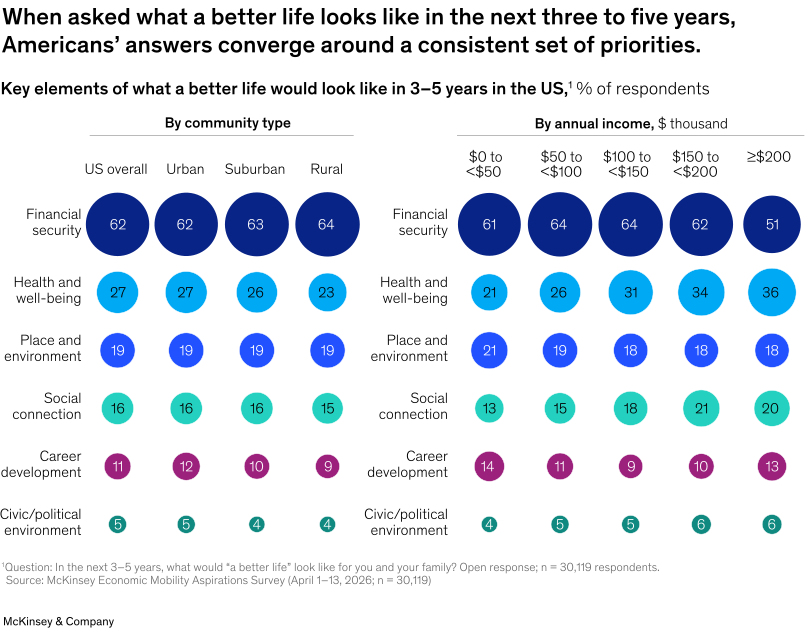
When we asked what “a better life” looks like in the next three to five years, Americans’ answers converge around a remarkably consistent set of priorities. Across demographic groups and geographies, financial security dominates—cited by nearly two-thirds of respondents—followed by health and well-being, place and environment, and social connection (Exhibit 1).
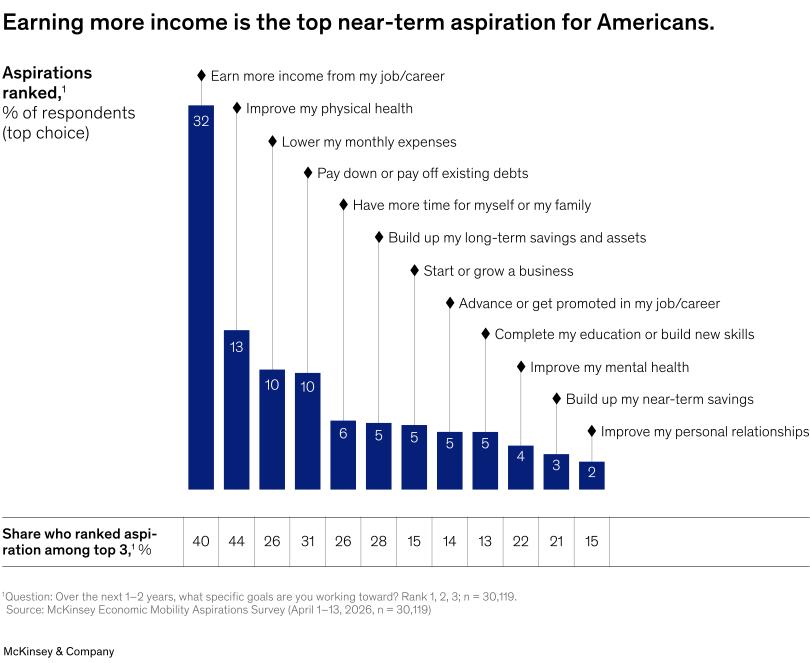
These aspirations are not abstract. In the near term, financial security translates into an urgent and concrete priority. Even after controlling for income, age, race and ethnicity, gender, education, employment status, and parental status, respondents are nearly two and a half times more likely to rank “earn more income” as their top goal for the next one to two years than to select the next-highest response option (Exhibit 2). This pattern holds across states and community types, from urban centers to rural communities.
These findings were echoed in qualitative interviews. Miguel, a 35-year-old from Dearborn Heights, Michigan, describes a better future for his family as “being able to buy a home and afford all the basic necessities—rent, utilities, car, food, healthcare—as well as being able to have enough left over to save for the future for retirement and vacations.”
When respondents were asked about the next generation, their focus shifted. Rather than income, they most often highlight aspirations related to health and well-being: 44 percent of open-ended responses fall into this category, with their children’s happiness, self-sufficiency, and physical and mental health among the commonly cited themes. As Josefina, a 31-year-old from Charlotte, North Carolina, states, “I’m working hard for them to be happy and well educated, but for them to be happy, mainly. Sometimes we want so many things for our kids, and we forget that the main thing is for them to be happy.”
Insight 2: The rising cost of living is the defining challenge of this moment
If Americans largely agree on what they are striving for, they are equally aligned on what stands in their way: the rising cost of living. Across places, age groups, income levels, and races and ethnicities, affordability consistently emerges as the most frequently cited barrier to getting ahead. Recent years of elevated inflation have increased pressure on household budgets, raising the cost of necessities such as housing, childcare, transportation, and groceries. Against this backdrop, 60 percent of survey respondents rank the rising cost of living as among the top three barriers to their progress (Exhibit 3).
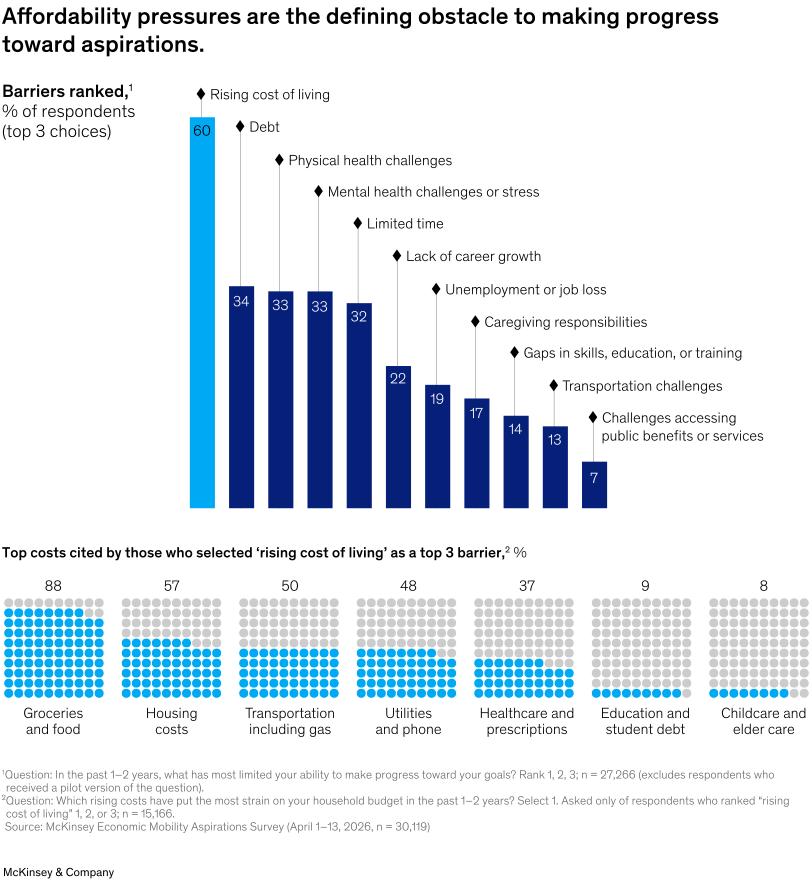
Notably, these concerns are not isolated to lower-income respondents. Respondents with household incomes above $150,000 are slightly more likely than those earning less than $50,000 to cite the rising cost of living as a top three barrier to progress (59 percent and 57 percent, respectively).
Respondents appear particularly sensitive to costs they encounter in their daily lives. Nearly nine in ten respondents cite groceries and food as a top cost concern, compared with 57 percent for housing, 50 percent for transportation, and 37 for healthcare. This finding aligns with existing research from Purdue University’s Center for Food Demand Analysis and Sustainability, which demonstrates that the frequency with which consumers interact with a cost category can amplify its salience in how rising costs are perceived. In that study, 56 percent of consumers identified food as the category with the largest year-over-year price increase in 2024, despite official inflation data showing that insurance, housing, and childcare prices rose faster than food prices over the same period.
These affordability pressures also surfaced in open-ended survey responses and interviews. For some, the challenge is the rising cost of everyday necessities. Robert, a 60-year-old man from West Virginia, says, “I have cut back on a lot of things just so I can afford to buy the groceries.” Joanna, a 27-year-old graduate student from Southern California, points more broadly to the cost of essentials: “What would make things easier would be more affordable food, housing, and gas.”
These pressures do more than increase costs; they shape how financially secure people feel. Four in ten respondents describe themselves as either “getting by but financially vulnerable” or “struggling to meet basic needs.” That burden falls unevenly across demographic groups. Forty-seven percent of Black respondents and 45 percent of Latino respondents describe their financial situation as “getting by but financially vulnerable” or “struggling to meet basic needs,” compared with 37 percent of White, non-Latino respondents.
And the desire for a greater financial cushion is broadly shared. Forty-three percent of respondents say their household would need more than $50,000 in readily available savings to feel financially secure. These responses suggest that Americans are not only concerned about meeting day-to-day expenses but also seeking protection against larger risks, such as job loss, housing instability, or unexpected health costs.
Insight 3: Community connection is a powerful force
Economic mobility is more than financial. It also depends on whether people feel connected, supported, and able to shape their own circumstances. Respondents who report feeling strongly connected to their communities are more than twice as likely to feel they have a say in the direction of their lives, more than three times more likely to feel in control of their future, and nearly four times more likely to feel their lives have momentum, even after controlling for demographic characteristics.
That finding is especially salient in historical context: Over the past half century, scholars and survey researchers have documented a softening of many forms of civic and social connection, from declining participation in community organizations to lower levels of generalized trust and thinner ties among neighbors, resulting in high levels of loneliness. Strengthening community connection may therefore represent not only a source of support today but also a powerful area of future focus for expanding mobility and resilience. For Jasmine, a 40-year-old teacher from Ben Wheeler, Texas, that sense of community is built into everyday actions: “I know kids, I know parents,” she says. “I go to the grocery store, and little kids run up to me and give me a hug. I think our community and our neighborhood is a great place.”
Despite the strong association that community connection seems to have on feelings of autonomy, agency, and momentum, most Americans say it’s rare. Only one-third of survey respondents say they feel very connected to their neighborhood or community, and even fewer say people like them have a meaningful say in decisions affecting their local area (Exhibit 4). More common was the sense of disconnection. “We’re not too connected with our community and neighborhood,” says Ali, a 61-year-old from Los Angeles. “There are a few people that we know, but for the most part, most people keep to themselves.”
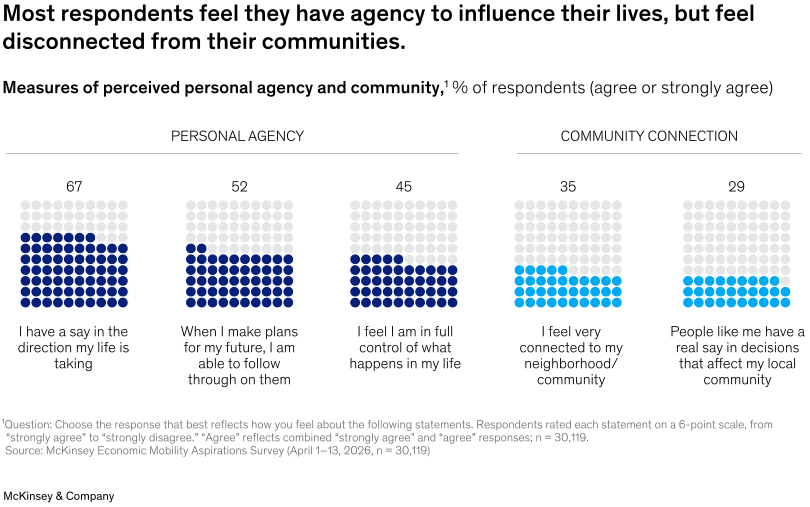
Taken together, the findings reinforce that barriers to economic mobility may not be solely economic. Financial vulnerability often coexists with weaker feelings of agency, influence, and belonging, while feelings of stronger community connection are associated with greater confidence, control, and optimism. Progress may depend not only on people’s financial resources but also on whether they feel connected to their communities and empowered to shape their lives.
Insight 4: Place plays a role but is not the whole story
Where people live shapes some of what they need and want. Rural respondents are nearly twice as likely as their urban peers to name more good jobs with career pathways as the top change that would improve opportunity in their community (21 percent versus 11 percent), and they are slightly more likely to name better access to healthcare and social services (7 percent versus 5 percent). Urban respondents, meanwhile, are about 1.3 times more likely as rural residents to name affordable housing (20 percent versus 15 percent) and twice as likely to name improved safety as priorities (10 percent versus 5 percent).
But when it comes to how people experience their lives, place alone explains surprisingly little. Across measures of financial security, personal agency, and community connection, place-based factors such as local poverty rates, economic health (real GDP), unemployment rates, and housing costs account for a limited share of the observed variation. This is not to say geography is inconsequential. Extensive research, including work by Opportunity Insights and others, documents how neighborhood conditions influence long-term outcomes. But the attitudes and experiences captured in this survey are predicted more consistently by individual characteristics than by local economic conditions.
These findings highlight that understanding economic mobility requires looking beyond geography alone. Place shapes opportunity, but in this research, the sharpest differences in how people describe their aspirations, barriers, and outlook emerge not across geographies but across life stages.
Research on economic mobility increasingly emphasizes the importance of life transitions and key developmental milestones in shaping long-term outcomes. A few of these transitions—namely, entering the workforce, raising a family, and preparing for retirement—seem to bring distinct aspirations, pressures, and trade-offs that shape how people experience opportunity. At each stage, people are asking similar questions about what it means to move forward: Can I build a secure future? Am I creating opportunities for the next generation? Will the effort I put in today lead to greater stability tomorrow?
These moments matter because they are often when aspirations become more concrete, financial pressures intensify, and the choices available to people can have lasting consequences. Although Americans share many of the same goals, the barriers they face and their confidence in achieving those goals often vary depending on where they are in life.
To better understand this nuance, we examine three common life stages: young adults entering adulthood, parents balancing work and family responsibilities, and adults approaching retirement. While no single story can capture the diversity of American experiences, the profiles that follow illustrate broader patterns that emerged from our research and highlight the nuanced realities that Americans at different life stages are facing.
Entering adulthood: Ambition amid uncertainty
Maya, a 24-year-old in Austin, Texas, is approaching a turning point she has been working toward for years. After finishing college and spending a year teaching, she realized the profession wasn’t the right fit and decided to change course. Now she is on the cusp of receiving her master’s degree from the University of Texas. Financial aid helped make full-time study possible, but she also worked throughout school as well—just “what the situation called for,” she says. Her hopes are clear and grounded: find a full-time job, move closer to family in Dallas, and build a meaningful career.
Yet even with an advanced degree, a clear sense of purpose, and a stable living situation, Maya finds the path forward uncertain. The job market feels “more daunting than anything,” especially when landing a good role with strong pay, benefits, and work–life balance often requires navigating lengthy interview processes while juggling school and work. Income is her top concern. As she puts it, “It’s very hard to work toward other things when you’re not stable on a day-to-day basis.”
Despite these challenges, Maya is hopeful. Her career transition has opened doors that didn’t exist a few years ago, even if broader concerns about the economy and her economic stability temper that optimism. She estimates she controls about 60 percent of her future, while the rest is shaped by markets, policies, and systems that can feel entrenched. While excited about her own future, she wants leaders to recognize and act on a simple reality: People cannot focus on higher aspirations when they are struggling to meet basic needs. Stability has to come first.
Maya’s experience reflects a broader pattern among young adults today: strong ambition paired with significant uncertainty about how to achieve it. Young adults aged 18 to 24 years old are the most career-oriented age group in our survey. Nearly eight in ten identify advancing their career or earning more income as a top aspiration over the next one to two years—nearly twice the rate of respondents overall. More than any other group, they are focused on building skills, establishing financial security, and creating the foundation for the future.
The challenge is that many young adults are attempting to do so during a period of profound economic uncertainty, with new college grads facing the toughest labor market in decades. At the same time, many have spent their entire lives hearing that education is the primary pathway to opportunity, only to encounter growing questions about the changing nature of entry-level work, uncertainty about the future impact of AI on traditional career paths, and the return on an investment in a college education. AI has provoked questions not simply about which jobs might exist but also about how careers should be built and what skills and experiences are needed for advancement. According to the Federal Reserve Bank of San Francisco, the share of job postings requiring a college degree decreased by nearly one-half between 2010 and 2020.
It’s no wonder that young adults are more likely than older respondents to cite unemployment, job loss, and gaps in skills, education, and training as top barriers to getting ahead. These concerns surfaced repeatedly in interviews. Reflecting on her own experience, Maya says, “The job search process is very strenuous. Opportunities that pay well, offer good benefits, and provide a reasonable work–life balance aren’t very common. And when they are, it’s even more difficult and takes a very long time to get into those roles.”
Economic uncertainty is only part of the story. Another challenge cuts across income levels, educational backgrounds, and geographies: mental health. Thirty-four percent of young adult respondents cite mental health as their top barrier to progress, more than twice the rate of other respondents (14 percent of older adults). This pattern holds for both low-income and high-income young adults, college grads and nongraduates, and respondents in both rural and urban communities. Our findings align with broader evidence that mental health challenges are especially prevalent among young adults. According to the National Institute of Mental Health, more than one in three young adults experience mental illness in a given year, just under twice the rate among adults over 50. While some of the difference may reflect changes in diagnosis and reduced stigma around seeking help across generations, the broader pattern holds.
Importantly, mental health is not only a health issue, it is also an economic-mobility issue. A growing body of research finds that mental health challenges in youth can affect educational attainment, employment prospects, earnings, and long-term economic security. When unmanaged, conditions such as ADHD, anxiety, conduct disorder, and depression can affect school performance, grade progression, delinquency, and human capital development, all of which shape young adults’ ability to pursue their education, work, and achieve financial stability. Left unaddressed, mental health challenges can impede economic opportunity.
And yet, one of the most surprising findings from our research is not the barriers young adults face but their outlook despite those barriers. On nearly every measure of outlook, agency, and momentum, young adults show more positivity than older respondents. This finding was statistically significant and meaningful even when controlling for other demographics (race, ethnicity, income, educational attainment, and employment status). Young adults are more likely to believe their financial situation will improve over the next five years, to feel they are making progress toward their goals, and to feel their lives have momentum. Our results could indicate that even with the challenges and anxieties facing younger generations, many young Americans resist dwelling in existential dread about their futures. Chance, a 22-year-old in Houston finishing his aviation degree while doing gig delivery work to make ends meet, captures this outlook directly. “I’ve always been the type to motivate myself even when I feel like my spirits are diminished or feeling like I’m blocked or cornered,” he says. “I always feel like I’m able to wiggle my way out or find a new way to just keep grinding and pushing myself forward.”
This combination of ambition, pressure, and optimism defines the experience of many young adults today. They are deeply aware of the obstacles in front of them but remain determined to move forward. In many ways, their outlook reflects a central tension running throughout our research: Americans continue to aspire, even when the path toward those aspirations feels increasingly difficult to navigate.
Raising a family: Balancing many demands under increased pressures
Reg, 49, jokes that he used to be a “Debbie Downer.” But becoming a father changed the way he thinks about the future. Raising four children forces him to think less about his own frustrations and more about the example he wants to set. Eight years ago, he purchased a home—a milestone he once doubted he would reach. He is proud of his Philadelphia-area house, though it remains a constant work in progress. Repairs are ongoing, and each unexpected expense—a broken washer and dryer, a maintenance issue—forces him to shift money away from other goals. As a parent, he describes life as a constant exercise in balancing priorities: cutting cable before essentials, cooking at home instead of eating out, and finding lower-cost outings for his family. The sacrifices, he says, are part of trying to build stability not only for himself but also for his children.
Reg’s aspirations, like those of many parents across the country, are rooted in creating a stronger foundation for his children. One day, he would like to buy another property, travel overseas with his family, and help expand a family childcare business. But his most immediate goals are more practical. He wants to be able to pay for a class trip for his children without worrying about the cost, help a relative through a financial emergency, and give his children the opportunities he did not always have growing up. Success, he says, is not about living extravagantly. It is about being comfortable enough to provide for his family, support others when they need help, and teach his children the values of responsibility, gratitude, and self-sufficiency.
Americans across the country share Reg’s story—working to create opportunities for their children while balancing financial pressures, career demands, and family needs. Parenthood today is increasingly defined by economic strain. Beyond any single expense, the broader cost of raising a family has become a stark challenge for millions. According to the Urban Institute, nearly half of American families lack the resources to cover essential living expenses, as housing and childcare costs have structurally outpaced income growth. Childcare costs are unaffordable for nearly two-thirds of American families, including essentially all lower-income families. For many families, the costs associated with raising a family can add strain to already tight household budgets and reduce parents’ capacity to save, pay down debt, and build assets during their prime working years.
Parents feel stretched, but like young adults, they are more likely than respondents overall to believe their financial situation will improve in the next five years, feel in full control of what happens in their lives, and feel connected to their communities. Jessica, a 35-year-old mother of two from Plano, Texas, describes a belief in steady progress, even after welcoming a new baby and navigating financial strain. “I expect to go up, but up now doesn’t have to be fast,” she says.
While parents report more positive outlook measures than nonparents, mothers and fathers share different experiences. Fathers tend to report more positive measures of outlook relative to mothers, and those differences remain even when controlling for income, employment status, household status, and age.
Mothers and fathers also report meaningfully different barriers to progress. Survey respondents who are mothers say caregiving responsibilities and the rising cost of living weigh more heavily on them. A recent Moms First report finds that while childcare breakdowns occur at similar rates for mothers and fathers, the workplace consequences are often greater for women, including women having around 21 percent more time absent from work than their male counterparts. “As a single parent, not having affordable and consistent childcare has been really difficult,” says Veronica, a 42-year-old from Cupertino, California. “Trying to figure out how I can piece it all together while going to work can be really hard to say to an employer. I want to move up in my career, but how can I do that and tell my employer about my limitations with childcare?”
Fathers, by contrast, are more likely to point to career and skills-related constraints, such as lack of career growth and gaps in skills, education, or training (Exhibit 5). These patterns persist even after controlling for income and employment status, suggesting that parenthood itself, not just economic circumstance, shapes how mothers and fathers experience the barriers to getting ahead.
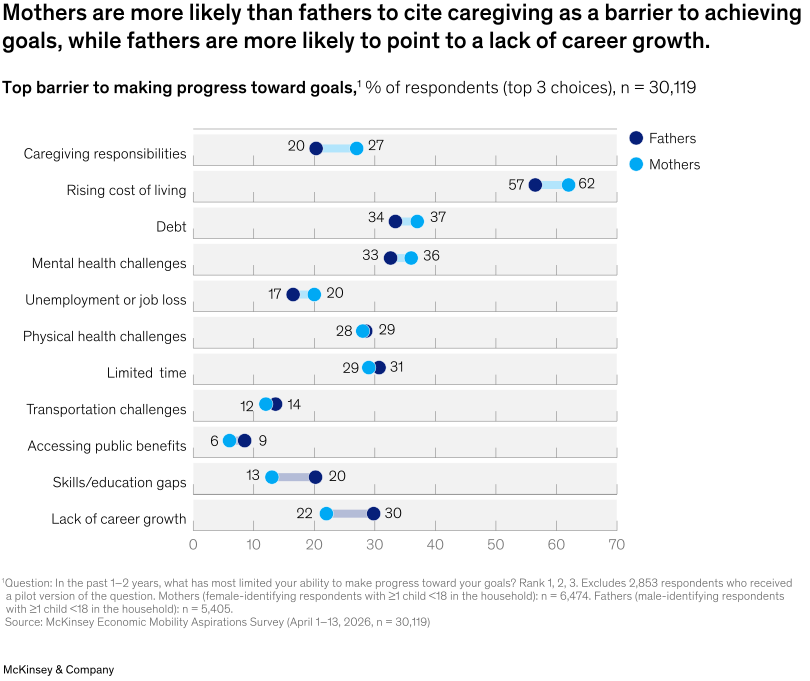
Research suggests that these differing experiences could be reflective of unequal distribution of parenting responsibilities. Despite broad changes in women’s workforce participation and a clear shift to more involved fatherhood, mothers continue to shoulder more of the labor involved in modern parenting. They spend more time on chores and engage more in the often-invisible physical and cognitive labor. Mothers’ somewhat diminished outlooks may therefore reflect a more direct experience of the day-to-day demands that modern parenting requires.
Parents’ experiences also differ significantly by income. Whereas higher- and lower-income parents alike identify cost-of-living concerns as a top barrier, lower-income parents are more likely to cite physical and mental health challenges and unemployment or job loss as barriers. Higher-income parents, by contrast, are most likely to cite time as a barrier. For Kelli, a 55-year-old from Nevis, Minnesota, who is a business owner and parent of a teenager, these pressures resonate daily. She is focused on expanding her client base, keeping up with developments in AI, and eventually reaching a point where she may not need to work long days, all while balancing spending time with her family. As Kelli notes, “I think the day-to-day grind is the working moms, the working dads, the ones who are juggling the schedules, the ones who are getting dinner on the table, and the ones who are working, you know, ten-to-12-hour days.”
Approaching retirement: Anchoring on security
For Joan, 48, retirement is not a finish line so much as the latest milestone in a decades-long effort to build financial security. Growing up in poverty in rural Minnesota, she experienced periods of homelessness and learned early how quickly stability can disappear. Today, after years of paying down student loans, credit card balances, and other debts, she is within sight of a goal she once thought was out of reach: owning her Florida home outright. With only $15,000 remaining on her mortgage, she says she can almost taste the finish line.
Yet even as she nears that goal, new pressures continue to emerge. Rising electric bills, never-ending home repairs, healthcare premiums, and the cost of managing chronic health conditions all compete for resources. A recent shower leak damaged her living room floor. Her diabetes medication would cost $1,200 a month without insurance. Each expense is manageable on its own, but together they are reminders that financial security still must be actively maintained.
Today, Joan’s focus is on preserving stability and creating greater freedom over how she spends her time. She describes retirement not as a future without work but as a future where she is no longer “chasing the dollar every single second.” She thinks carefully about aging in place, making modifications to her home, saving for healthcare costs, and eventually moving into a continuing-care community so she will not become a burden to her family.
After years of financial hardship, Joan believes she has learned how to navigate setbacks and prepare for what comes next. At the same time, she worries that younger generations may face steeper obstacles than she did. She and her husband have already begun discussing ways to leave something meaningful for their nieces and nephews, whether through savings, investments, or other assets. Having spent much of her life navigating financial insecurity, Joan hopes young people will start from a stronger foundation than the one she inherited.
For millions of Americans like Joan, the years before retirement are not a glide path; they are a race to pay off debt, protect their health, and build enough savings to make the next stage of life a dignified choice. Like Joan, many Americans have saved diligently and paid off debts during prime working years but do not feel they have the financial footing to retire in the traditional sense.
This challenge reflects broader shifts in how Americans prepare for and experience retirement. More responsibility has shifted to individuals, with private sector defined-benefit pension participation falling by more than 40 percentage points, from 60 percent in 1989 to 20 percent today. The consequences are visible in Americans’ balance sheets: For workers who have retirement savings, the median balance is just $40,000—a far cry from the roughly $1.5 million Americans say they need to retire comfortably. According to the AARP, one in five adults over 50 has no retirement savings at all, and more than 60 percent worry their money will not last through retirement. Yet for many, working longer is not always an option. More than half of workers over 40 report experiencing age discrimination. At the same time, poor health and disability can force workers out of the labor force before they are ready to retire. These changes occur alongside healthcare costs that have risen, with premiums rising at more than double the rate of inflation, a burden that falls disproportionately on adults approaching Medicare eligibility.
Our research finds that adults nearing retirement age increasingly prioritize financial security. The share of survey respondents who identify “saving for the future” as a top aspiration increases by nearly 20 percentage points between ages 35 to 44 and ages 55 to 64 (Exhibit 6).
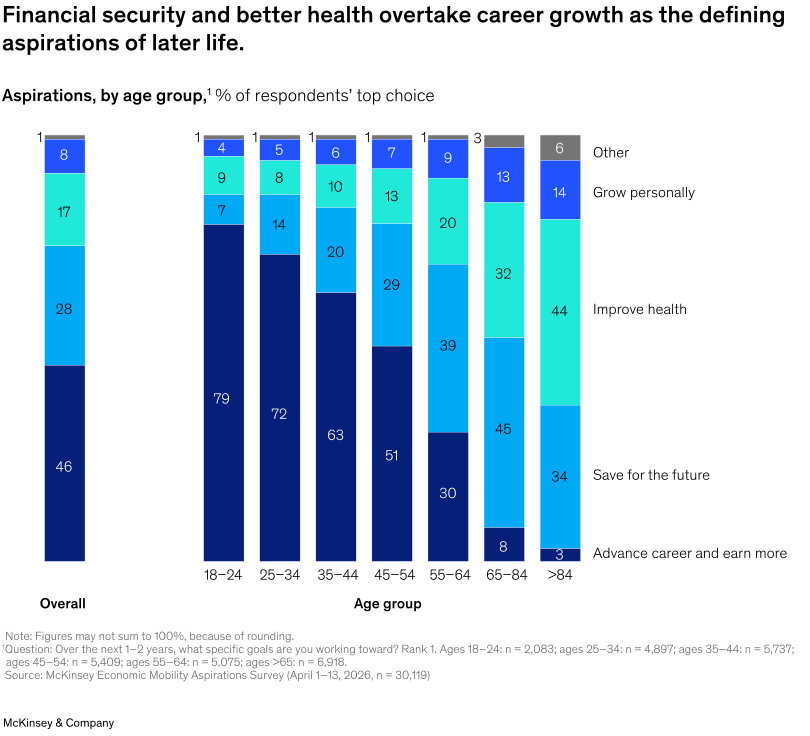
Not all Americans approach retirement from the same place. Low-income respondents over 55 and Black and Hispanic respondents over 55 remain more focused on increasing earnings, while higher-income and White respondents over 55 are more likely to prioritize long-term savings. This may reflect broader economic realities in terms of retirement readiness among groups.
Approaching retirement also appears to shape how people view their future. Across demographic groups, as respondents near and enter retirement, outlook measures generally decline—particularly perceptions of progress and financial trajectories. Just 37 percent of respondents aged 55 to 64 agree that their “life has momentum” and that they are “making significant progress toward their goals,” compared with 43 percent of overall respondents.
This decline may reflect a simple reality: Many of the traditional milestones associated with getting ahead may appear harder to achieve later in life, particularly as financial and health-related concerns become more salient. “Looking into the future, right now we’re planning for [retirement],” says Lawrence, the 65-year-old from Bonney Lake, Washington. “We are saving lots of money [and] paying off our household loan quicker than if we just made standard payments. We think we’re getting closer to our goals.” For people approaching retirement, then, getting ahead may become more about protecting the stability, independence, and choice they have worked to build.
Throughout this research, respondents of all backgrounds consistently pointed to institutions as important partners in helping them achieve their aspirations and overcome barriers. To better understand these expectations, we asked two questions: Which institutions do you think should be most responsible for helping people like you get ahead? And which institutions or groups have made the most difference in helping people like you get ahead?
The answers reveal an important distinction. Respondents do not view all institutions in the same way. Some are seen as carrying greater responsibility for expanding opportunity, while others are viewed as more effective in people’s day-to-day lives.
Governments: Viewed as highly responsible but with room to deliver more
Government stands out as the institution Americans believe bears the greatest responsibility for expanding opportunity. Across demographic groups and regions, roughly 60 percent rank federal, state, and local governments among the top three institutions responsible for helping people like them get ahead, more than 20 percentage points higher than any other institution (Exhibit 7). Similarly, in Gallup research, 64 percent of Americans said the federal government has “a great deal” of power to make a positive impact on people’s lives, compared with 35 percent saying so for businesses and 25 percent for charitable organizations. Respondents to the Gallup survey also ranked state and local governments high on the power to make a positive impact, with 60 percent saying state and local institutions have a “great deal” of influence.
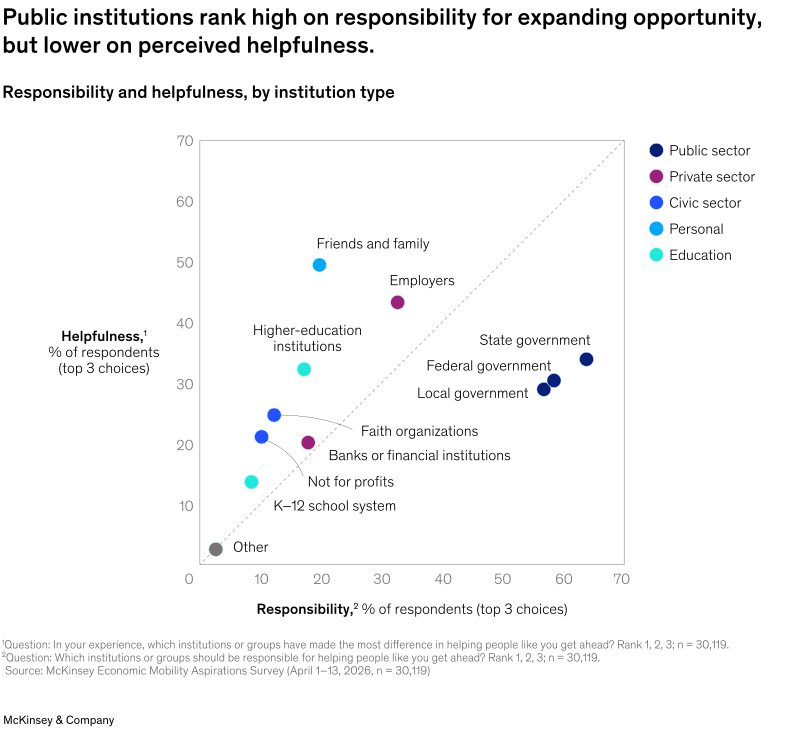
For many survey respondents, expectations do not always match experience. When asked which institutions have contributed the most to helping them get ahead, the share selecting government falls to roughly 30 percent. This gap mirrors a longstanding distinction in public opinion research between the responsibilities people assign to government and people’s perceptions of government’s effectiveness. The Gallup research finds that Americans often see government as powerful and consequential but trust it less and rate its effectiveness lower.
Employers: Highly helpful and supporting pathways to mobility
People view employers in a different light. Outside of friends and family, employers are among the institutions respondents most frequently identify as having helped them get ahead in the past—a pattern that holds across most racial, income, employment, and age groups. For example, full-time employed respondents making less than $50,000 per year are just as likely as respondents overall to rank employers among the most helpful institutions, suggesting that perceptions of employer helpfulness extend beyond compensation alone.
This finding is consistent with broader research showing that employers and businesses are often viewed as effective contributors to people’s lives, even when respondents do not describe them as having primary responsibility for solving societal challenges. While Gallup finds that relatively few Americans view businesses as having a great deal of power to improve people’s lives, substantially more tell Gallup that businesses are effective in making a positive difference—a greater share than for any level of government. Similarly, the Edelman Trust Barometer has consistently found that people place greater trust in employers than in many other institutions.
Participants in our interviews describe the ways in which employers have helped them get ahead—not only by providing income and economic stability, but also by creating pathways to opportunity. “Although I did get laid off and it was a contract role, I was there for eight years, and it really built a solid foundation for my résumé,” says Eric, a 50-year-old from Seattle, Washington, of his former employer, a large technology company. “It’s probably helping me get interviews, and it looks good to future employers.” Others pointed to managers, mentors, or colleagues who helped them build skills, gain visibility, navigate career transitions, and access new opportunities. “I’m consistently taking advance certification courses and networking with senior leadership,” says Crystal, a 36-year-old from North Carolina. “Their mentorship and my ongoing professional development are key factors helping me progress.” In this way, respondents often view employers as contributors not only to their current financial situations but also to the achievement of their future goals.
At the same time, employers’ role is inherently nuanced. While employers can support economic mobility through wages, benefits, and opportunities for advancement, their decisions regarding hiring, workforce investment, and organizational change can also shape the challenges workers must navigate.
Social-sector institutions: Filling gaps and meeting specific needs
Several social-sector institutions—including K–12 schools, higher-education institutions, faith-based organizations, and nonprofits—occupy a nuanced position. Respondents generally rank these institutions below government and employers on responsibility and helpfulness. Just 10 to 20 percent of respondents place these institutions among the top three responsible for helping people get ahead; a similar share ranks them among the most helpful.
At first glance, these findings diverge from broader research, which often finds nonprofits to be among the most trusted institutions in society. One possible explanation is that our survey asked specifically about helping people “get ahead.” In that context, respondents may place greater weight on institutions they perceive as having the resources, scale, and authority to address challenges such as the rising cost of living and a rapidly changing labor market. Social-sector institutions may be viewed as addressing important needs but in targeted ways or with less direct influence on shaping long-term opportunity.
At the same time, perceptions vary meaningfully across groups, suggesting that these institutions may fill different roles for different communities. For example, rural respondents are five percentage points more likely than respondents overall to include “faith institutions” in their top three most helpful institutions. Low-income respondents are eight percentage points more likely to include nonprofits in their top three most helpful institutions. And young adults are eight percentage points more likely to include higher-education institutions in their top three. These patterns suggest that social-sector institutions often serve as important sources of support for particular groups and needs.
While Americans differ in their experiences and circumstances, reflecting on the lived realities of more than 30,000 Americans suggests four overarching priorities that leaders and institutions could explore: expanding affordability, investing in health as economic infrastructure, and building pathways to opportunity through work and community. These priorities are not new, but the research suggests they are particularly salient to how Americans experience economic mobility today. Addressing them will require collaboration across the public, private, and nonprofit sectors, drawing on each sector’s reach, resources, and trust.
Make everyday life more affordable
Affordability is the clearest and most cross-cutting challenge cited in the research responses. Across backgrounds, geographies, incomes, and life stages, respondents point to the rising cost of everyday life as a major barrier to getting ahead. Their aspirations often center on earning more income, while their concerns center on keeping up with the costs of housing, childcare, transportation, healthcare, and groceries.
Meeting this challenge will require action on multiple fronts, from supply-side approaches to demand-side supports. These include expanding the supply of essential goods and services to improve affordability, strengthening household purchasing power, and helping families build financial resilience against economic shocks. There is precedent for this kind of collaboration in affordable housing, though such efforts require careful attention to inclusion and displacement risks. For example, when Atlanta’s Beltline redevelopment project threatened to displace longtime residents, local government, foundations, and private partners established the Atlanta Land Trust in 2009—removing land from the speculative market and selling homes at below-market prices to help low- and moderate-income residents stay in their neighborhoods as redevelopment accelerated. As of January 2026, the land trust had sold homes to 89 buyers (saving them each $150,000 on average) with more than 1,000 applicants in the pipeline.
In Cincinnati in 2003, local government, civic leaders, and private sector partners worked together through the Cincinnati Center City Development Corporation (3CDC) to revitalize the Over-the-Rhine neighborhood, combining affordable housing, redevelopment of blighted properties, and investments in public spaces to expand opportunity for residents. This effort has catalyzed more than $1.7 billion in investments and sparked similar models in cities across the country. And in Michigan, employers, workers, and the state have partnered to share the cost of childcare through the state’s “MI Tri-Share” program, showing what becomes possible when institutions align around a common burden.
Improving affordability is also where sectors can innovate, especially in the areas where Americans feel the greatest pressures. An acute concern is the cost of groceries, with nearly nine out of ten survey respondents saying food prices are a source of financial strain. Efforts such as Too Good to Go connect consumers with discounted surplus food from grocery stores, restaurants, and cafés, while Imperfect Foods delivers products that might otherwise go unsold because of cosmetic imperfections or excess inventory. Community-owned grocery models such as Detroit Food Commons represent an approach being tested to expand affordable food access while reinvesting in local neighborhoods. No single model is sufficient on its own, but these examples illustrate avenues for cross-sector experimentation that may help relieve pressure on household budgets.
Treat health as critical economic infrastructure
Throughout the research, respondents pointed to health as both a quality-of-life issue and an upward-mobility issue. Young adults identify mental health as a barrier at roughly twice the rate of the overall population. Rural respondents are more likely to cite healthcare access as a challenge. Across respondents, physical health is most likely to be cited as a top three barrier.
Public, private, and social-sector leaders can support health as critical infrastructure and as an investment in economic mobility and societal resilience. A recent McKinsey Health Institute report found that scaling proven health interventions could create $12.5 trillion in annual economic value by 2050, equal to about 7 percent of global GDP. In practice, that could mean making physical and mental healthcare more affordable, prevention oriented, and compatible with people’s daily lives, including work schedules, caregiving responsibilities, transportation constraints, and community context. For example, the Philadelphia Partnership for Nutrition and Health (PPNH) has focused on advancing equitable access to nutrition and preventive care, while California is reshaping how behavioral health supports are delivered to children, youth, and families. These approaches could help reduce health-related obstacles to labor force participation, productivity, and mobility across life stages. Together, these efforts demonstrate different ways institutions can collaborate to make care more accessible and responsive to people’s lives.
Expand access to good jobs and career pathways
Meaningful work remains central to how Americans define progress. As mentioned earlier, eight out of ten young adult respondents identify career advancement or earning more as a top aspiration. Financial security remains the most commonly shared aspiration across demographic groups and income brackets. Yet our research also suggests that access to good jobs and career pathways feels increasingly uncertain for many respondents. “I think it’s very strenuous to try to go through the job-hunting process for opportunities that pay well with good benefits and have a reasonable work–life balance,” says Maya, the 24-year-old graduate student from Austin. “Those are just not that common.” Young adults are more likely than older respondents to cite unemployment, job loss, and gaps in skills and training as barriers to getting ahead, while rural respondents are more likely to identify the need for additional jobs and career opportunities in their communities.
Expanding opportunity will require collaboration among all institutions—employers, schools and universities, workforce development organizations, and government—to help create more pathways into stable, well-paying jobs. As labor markets evolve and AI reshapes many occupations, helping workers build skills, navigate career transitions, and access emerging opportunities will likely become increasingly important to enabling upward mobility. Recent reports from the McKinsey Global Institute and McKinsey Health Institute find that most human skills will endure as AI spreads, though how and where they are applied will evolve, making adaptable, skills-based pathways more valuable than ever.
Several initiatives offer examples of what this collaboration can look like. Organizations such as Work for America and Govern for America partner with state and local governments to create service year and public sector career pathways, helping young professionals gain experience while addressing critical staffing shortages in local communities. States are expanding apprenticeship models that combine paid work with structured training. Programs such as CareerWise, which spans several states, and Wisconsin’s Youth Apprenticeship initiative connect students directly to employers and have demonstrated how earn-and-learn pathways can prepare workers for in-demand careers. Internationally, Singapore offers another example, recently reorganizing its workforce development agencies to help workers build AI-related skills and adapt to a rapidly changing labor market. While these efforts differ in design, they share a common goal: helping more people access the skills, experiences, and opportunities needed to thrive in the economy of the future.
Strengthen community connection and voice
Only about one in three respondents report feeling connected to their communities, and even fewer feel they have a meaningful voice in local decisions. Yet one of the clearest findings in our research is the relationship between community connection and perceptions of agency, momentum, and outlook.
Local institutions across sectors could help strengthen trust by creating more consistent and accessible opportunities for residents to share their needs, shape priorities, and see how their input translates into action. Expanding opportunity may depend not only on economic resources but also on people feeling connected to and empowered within the places they live.
Several initiatives illustrate what this can look like. Participatory budgeting programs such as Boston’s Youth Lead the Change and New York City’s The People’s Money give residents a direct say in how public funds are spent, creating visible links between community input and government action. Other efforts focus on strengthening connections among residents themselves: Reimagining the Civic Commons uses parks, libraries, and other shared public spaces across the country to foster civic engagement and interaction across diverse groups, while Cortico’s Local Voices Network convenes structured community conversations and uses technology to help leaders better understand and respond to local concerns. Finally, nonprofits such as Einhorn Collaborative are investing in social cohesion programming nationwide, recognizing the value of fostering meaningful connection across communities.
Across backgrounds, geographies, and life stages, Americans share many of the same aspirations: financial security, good health, meaningful work, strong families, and the opportunity to shape their own futures. At the same time, they face similar macro challenges like the increased cost of living, and they experience different barriers depending on their circumstances and stage of life. Despite these differences, common ground is often broader than it appears.
The challenge for leaders and institutions is not simply to understand these aspirations but also to respond to them. Targeted, collaborative action across sectors, sustained attention to the barriers Americans identify most clearly, and a willingness to leverage their everyday expertise in the solutions put forward can increase opportunities for economic mobility.
Listening to Americans is an important starting point. By understanding how people define progress and what they believe stands in the way, we can build a more grounded conversation about economic mobility and a clearer path to expanding opportunity in the years ahead.