Should You Put a Rug Under a Dining Table? Designers Decide
A rug underneath a dining table might be one of the more divisive design decisions. On the one hand, a rug grounds a room, making it feel more complete and, of course, cozier. But a rug where crumbs will fall and drinks may spill? Not to mention chairs constantly being pulled and pushed. A floor covering under the dining table starts to make less sense. So, do the two ever belong together?
UK-based interior designer Antonia Winkler von Stiernhielm says yes. “A rug beneath a dining table is one of the simplest ways to anchor a dining space,” she adds. “It defines the setting, introduces warmth and texture, and creates a more considered, layered interior.” Plus, in open-plan homes, this rug placement visually centers the dining table and helps zone the space.
And from this perspective, why wouldn’t you include a rug in your dining room idea? Rugs definitely add to the space visually, but to ensure a functional dining environment, there are a few tricks to keep in mind. Placement, scale, and material are the difference between good and bad design — here’s what you need to know.
Latest Videos FromLivingetc
The Pros and Cons of a Rug Under the Dining Table

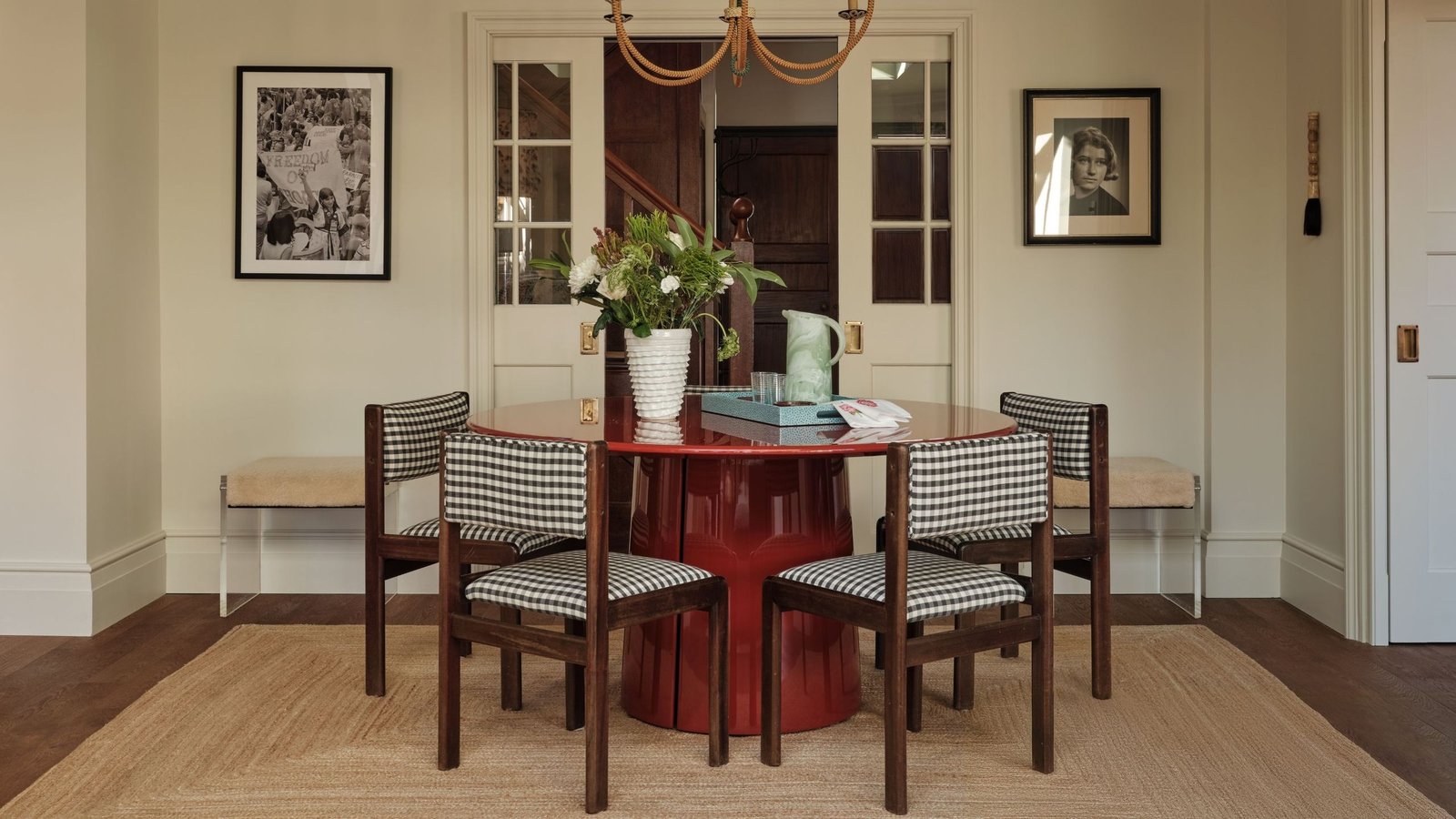
This jute rug has a great, flat texture that makes it a practical choice for dining spaces.
(Image credit: Studio Anton)
As mentioned, the main reason for choosing to style a rug under the dining table is that it will help anchor the space, making your table and chairs feel more centered. Brussels-based interior designer Victoria-Maria almost always incorporates a bold rug in her dining room designs. “A rug under a dining table is one of the most transformative decisions you can make in a room,” she shares.
“It grounds the space, defines the dining zone as its own world within a larger interior, and adds warmth and texture that a hard floor alone simply cannot provide,” Victoria-Maria adds. Plus, a rug can make a dining room feel cozier and more lived-in. Part of why formal living rooms have gone out of style, or been ‘rebranded’ in a more casual way, is that they can read really cold. A rug helps solve that issue, making the space feel far softer and more inviting.
On the other hand, the main downside or major consideration of a dining room rug is practicality. Antonia Winkler von Stiernhielm says, “If you have very young children or are in the thick of the weaning years, it may be worth waiting until everyday spills become less frequent.”
Though design-forward form is always important, function is slightly more important when it comes to putting rugs under a dining table. “Success comes down to selecting the right material and ensuring the rug is generous enough in scale,” Antonia adds. You don’t want to make any rug mistakes that will lead to dinner party disaster.
“There are very few situations where a rug under a dining table shouldn’t work — it is more a question of choosing the right one than avoiding it altogether,” says Victoria-Maria. So let’s explore the best rugs to choose.
Victoria-Maria is a German-born interior designer based in Brussels and the founder of Victoria-Maria Interior Design. Victoria-Maria is known for effortlessly mixing and matching antique and contemporary pieces in her designs. Managing to keep up with current trends all while retaining uniqueness.
Tips for Styling a Rug Under Your Dining Table

It’s not necessarily whether you should put a rug under a dining table, and more which type of rug you should choose.
(Image credit: Rett Peek Design: Meet West Studio)
So, what types of rugs work best under a dining table? And how do things like scale and color come into play? Well, first, it depends on your dining room’s design scheme, the layout, and what rug trends you are incorporating. Get an idea of the kind of rug you want, then narrow down how to make it work in your space.
To begin, “The most important rule is proportion,” says Antonia. “The rug should be large enough that every chair remains comfortably on it, even when pulled out, avoiding the awkward imbalance that comes from chair legs catching the edge.” Though it may not seem it, a rug can be a fabulous thing to put in a small dining room, but it just needs to make sense proportionally.
To that, Victoria-Maria says, “Always size up. This creates a generous, intentional frame rather than a precarious island.”

Antonia Winkler von Stiernhielm is a UK interior designer based in Cambridge and the founder of Studio Anton. Antonia’s design style blends contemporary style and lived-in comfort. Rugs are the base of many of her designs, and she doesn’t shy away from a rug underfoot in the dining room.

A rug under your dining table should ideally still fit all chairs when pulled out.
(Image credit: Prue Ruscoe. Styling: Jase Sullivan.)
Next, the material of your dining room rug will make a huge difference in how effective it is in the space. Natural fibers — wool, silk blends, and jute — are an excellent choice because they age well, have a beautiful tactile quality, and are very durable. Flatweaves and low-pile rugs are also smart choices for the same reasons. “However, the best choice will always reflect how the room is used,” says Antonia.
As for color, try to find tones that complement rather than match the furniture. “A rug that echoes one of the secondary colors in the room creates a sense of intention and cohesion without feeling too coordinated,” says Victoria-Marie. And you also might want to avoid particularly light colors. In such a high-traffic area, keeping a light rug clean may be more trouble than it’s worth.
But beyond the physical sizing, consider the scale of the pattern itself. A very large-scale motif under a small table can feel overwhelming, while a fine, intricate patterned rug under a grand table may disappear entirely. “The pattern should feel in dialogue with the furniture — a beautiful balance between what is above and what lies beneath,” says Victoria Maria.

Westwing Collection
Handwoven Jute Rug Almir With Fringes
Jute weaves don’t always have to be plain. A subtle pattern is quite effective when it comes to blending form and function in a rug.

West Elm UK
Pierce & Ward Elise Handwoven Wool Rug

Ruggable UK
Owl & Willow Green Rug by William & Morris
Ruggable’s washable rugs are a great choice for dining rooms. And this darker, medium-sized print also has lots of colors that can complement a larger scheme.
So, there you have it: decorating with rugs doesn’t have to be a design choice reserved for the living room or bedroom. Rugs work well when styled under the dining table; it’s just a matter of choosing the right size, material, and colorway.
For more inspiration like this, be sure to subscribe to the Livingetc newsletter.